Like
Share
멍실장
강아지 기관지확장증 증상과 원인, 진단·치료와 관리 포인트 총정리

Canine Bronchiectasis: Symptoms, Causes, Diagnosis, Treatment, and Management Essentials

RespiratoryDiseasesMeongsiljang Veterinary Advisory Board

Canine bronchiectasis is a chronic respiratory condition in which the bronchial tubes become permanently widened, leading to coughing and difficulty breathing. Early diagnosis and proper management are essential.

What Is Canine Bronchiectasis?

A microscopic image of a puppy's lung tissue showing dilated bronchi.
Canine bronchiectasis is an irreversible, chronic respiratory disease in which the airways abnormally and permanently dilate and deform due to destruction of the elastic fibers and muscle components in the bronchial walls. - Bronchial dilation: When the structural integrity of the bronchial walls is compromised, mucus clearance becomes impaired, leading to recurrent coughing and difficulty breathing. - Primary causes: While congenital factors can play a role, the condition more commonly arises from chronic, persistent airway infections and inflammation. - Epidemiology: It is most frequently reported in middle-aged to senior small-breed dogs and may co-occur with other chronic bronchial diseases. - Importance of diagnosis: Because damaged bronchial walls are difficult to restore, early intervention is essential to minimize complications. - Key management strategies: Consistent medical treatment and environmental control are crucial for maintaining your dog’s quality of life.

Basic Causes and Pathogenesis

The fundamental change in bronchiectasis is the destruction of elastic fibers and muscle tissue in the bronchial walls. When chronic airway infections and inflammation recur, the epithelial cells lining the airways become damaged, and the bronchi gradually stretch and deform through a vicious cycle of injury and repair. While some cases are congenital, acquired causes are far more common. This process is progressive, and early symptoms can be subtle, making early detection difficult. However, persistent infection and inflammation accelerate structural damage to the bronchi. Since destroyed bronchial walls cannot regenerate, early management is crucial to prevent disease progression.
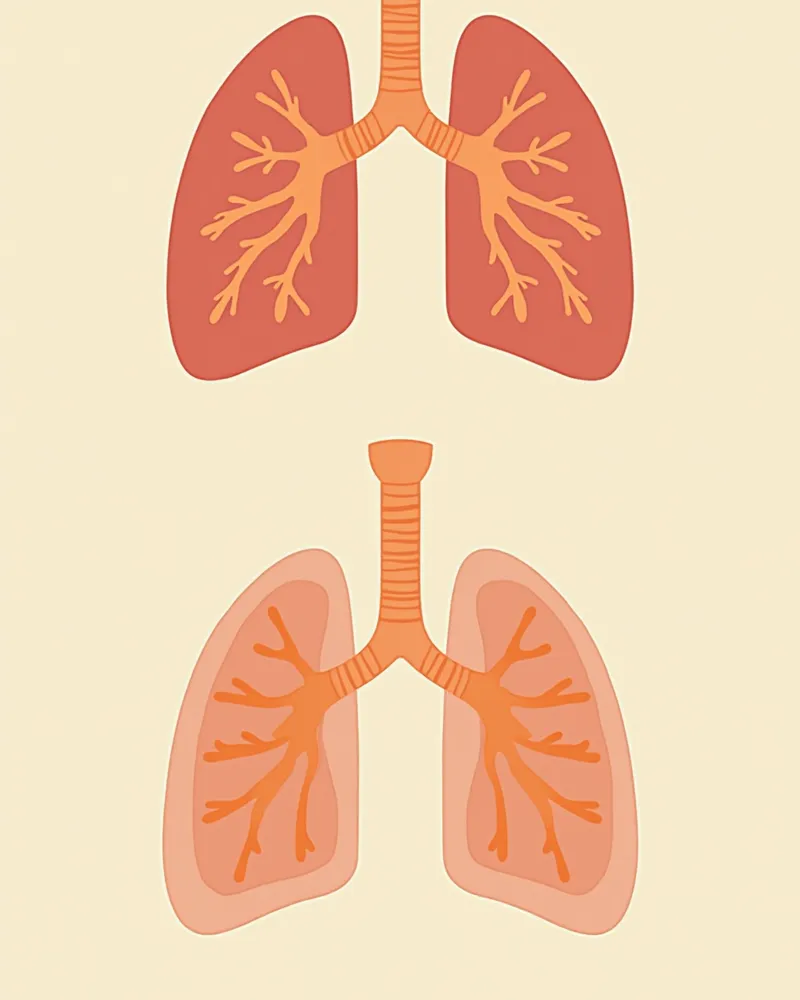
A comparison between normal bronchi and dilated bronchi

Main Symptoms and Signs

The hallmark sign of bronchiectasis in dogs is a persistent, chronic cough that recurs over time. This cough is typically productive, bringing up mucus, or may present as a hacking, gagging sound. When mucus accumulates in the bronchi and a bacterial infection sets in, your dog may experience rapid breathing or difficulty breathing. As the condition worsens, the coughing may suddenly intensify, and your dog might collapse from an inability to tolerate exercise. Systemic symptoms such as loss of appetite and lethargy can also appear. If these symptoms persist, immediate veterinary care is essential. Early detection and intervention significantly impact treatment outcomes.
A dog coughing, with mucus being expelled

Signs Requiring Immediate Veterinary Care

If your pet’s cough suddenly worsens, they experience severe difficulty breathing, their lips turn blue, or they collapse due to coughing, seek veterinary care immediately. These signs may indicate a flare-up of bronchiectasis or a worsening lung infection. Early treatment can be life-saving, so prompt action is crucial.

Accurate Diagnostic Methods
Bronchiectasis in dogs is accurately diagnosed through chest X-rays and bronchoscopy. On X-rays, enlarged airways and abnormalities in lung tissue are visible, while bronchoscopy reveals excessive mucus and thickened airway walls. When necessary, CT scans provide detailed structural analysis, and bronchial bacterial cultures help identify the underlying infection. These tests collectively guide treatment decisions based on disease severity. Accurate diagnosis is the first step toward effective management.
Chest X-ray image of a puppy showing dilated bronchi

Treatment Methods and Step-by-Step Management

Bronchiectasis is an irreversible condition, so the goal of treatment is not a cure but rather managing symptoms and slowing disease progression. The key is controlling recurrent bacterial infections, ideally by using long-term antibiotics based on culture and sensitivity test results. It is also important to support mucus clearance through respiratory therapies such as airway humidification. However, cough suppressants should be used with caution when active infection is present. In cases where the lesions are confined to a single lung lobe, surgical removal of that lobe may be performed with the hope of achieving a cure. Your veterinarian will prescribe treatment tailored to your pet’s weight and condition, and consistent medication adherence and care are essential to preventing worsening of the disease.
A veterinarian administering inhalation therapy to a puppy.

Daily Management Points at Home

Because bronchiectasis in dogs is difficult to cure completely, consistent management is essential. Environmental control is key, including using an air purifier, avoiding tobacco smoke and chemical irritants, and preventing excessive exercise. It’s also important to perform regular inhalation therapy and cough-assist exercises, and to use a harness or leash instead of a neck collar to minimize airway irritation. Following your veterinarian’s instructions for medication and treatment is crucial to prevent disease progression. These management habits directly improve your dog’s quality of life.
A puppy receiving inhalation therapy at home

Precautions for Small-Breed Dogs and Prevention of Recurrence

Bronchiectasis and chronic bronchial diseases are more commonly reported in small-breed dogs of middle age and older. Because small dogs have airways that are particularly sensitive to irritation, they are prone to chronic coughing, making regular check-ups and early management essential. Additionally, using a harness instead of a collar and avoiding tobacco smoke or other irritating environments can help reduce airway irritation and prevent worsening of the condition.

Reviewed by a veterinarian

Dr. Tony — Punnawat Phongkittirak

Dr. Tony — Punnawat Phongkittirak

Veterinarian

A veterinarian who majored in veterinary medicine at Khon Kaen University, Thailand, and completed the IVSA program at North Carolina State University in the United States. Drawing on clinical experience at animal hospitals, he works in the pet healthcare field and is dedicated to building a digital care environment that connects pet parents with veterinarians.

Frequently Asked Questions

Can bronchiectasis in dogs be cured?
Bronchial damage is generally irreversible, making a complete cure difficult; however, with proper management and treatment, symptoms can be stabilized and your pet’s quality of life maintained. In cases where the lesions are confined to a single lung lobe, surgery may offer the possibility of a complete cure.
Could my dog’s frequent coughing be a sign of bronchiectasis?
If your pet has recurring chronic coughing, it’s important to consider bronchiectasis. Especially if there’s persistent wet coughing with mucus, a veterinary examination is necessary.
How is inhalation therapy administered?
Medications prescribed by your veterinarian, as well as airway humidification therapy, are administered using an inhaler. The frequency and method of treatment will follow the schedule set by your veterinarian based on your dog's condition.
Can using a leash worsen bronchiectasis?
Since traditional collars can irritate the airway and trigger coughing, we recommend using a harness instead.
What should I do if my pet’s cough gets worse?
If your pet develops a sudden, severe cough or has difficulty breathing, take them to the vet immediately. These are signs that an infection or underlying condition may be worsening.

Share

Related Guides

References

[1] Lynelle R. Johnson, DVM, MS, PhD, Dipl ACVIM (SAIM). Small Animal Critical Care Medicine, 3rd Ed. 2022.

[2] Canine and Feline Respiratory Medicine, 3rd Edition. Elsevier, 2021.

[3] Textbook of Respiratory Disease in Dogs and Cats. Wiley-Blackwell, 2020.

This information is based on veterinary literature and does not replace diagnosis or treatment. Please consult a veterinarian for specific health concerns.

Metapet Co., Ltd. | CEO: Park Sung-yong | Business Reg. No. 417-88-02562 | Seoul, South Korea | Customer Center

Canine Bronchiectasis: Symptoms, Causes & Treatment | Meongsiljang