Like
Share
멍실장
고양이 심장 질환 조기 선별 증상과 원인, 진단·치료와 관리 포인트 총정리

Feline Heart Disease Progressing Without Symptoms — The Critical Timing for Early Screening

HeartDiseasesMeongsiljang Veterinary Advisory Board

Feline heart disease can progress rapidly because early symptoms are often subtle, making early screening crucial. Regular check-ups and recognizing warning signs are key.

Why Early Screening for Feline Heart Disease Is Important
A cat lying on a veterinarian’s examination table while undergoing a cardiac exam.
Feline heart disease is notoriously difficult to detect early because it often presents with few or no symptoms in its initial stages. The clinical signs are vague and non-specific, making it hard to notice the condition before it progresses. However, early screening allows for appropriate management that can prevent complications and help maintain a good quality of life for longer. This is especially true for hypertrophic cardiomyopathy (HCM), the most common form of cardiomyopathy in cats; the earlier it is detected during its asymptomatic latent phase, the more advantageous it is for developing an effective management plan. Since echocardiography is the most sensitive non-invasive test for diagnosing these conditions, regular health check-ups and careful daily observation are essential. The most important strategy is to identify the disease before symptoms appear, as early screening significantly improves a cat's quality of life.

Main Causes and Pathogenesis of Heart Disease
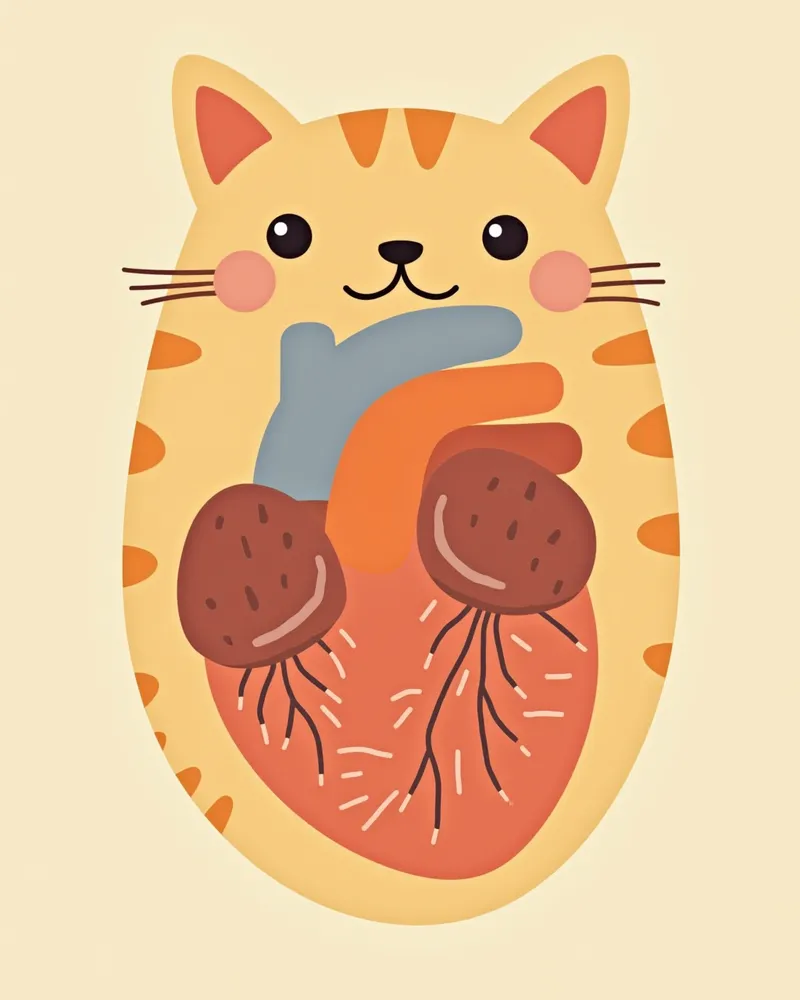
The main forms of feline heart disease are hypertrophic cardiomyopathy (HCM) and restrictive cardiomyopathy (RCM), along with dilated and unclassified cardiomyopathies. These conditions often occur in breeds with genetic predispositions, such as Maine Coons and Ragdolls. Underlying issues like hypertension, hyperthyroidism, and acromegaly can also contribute to myocardial changes. When the structure and function of the heart muscle are compromised, the heart cannot fill or pump blood effectively, leading to congestive heart failure. Because this process progresses gradually, it can worsen rapidly if not closely monitored. Identifying the cause and responding early is crucial to preventing a decline in heart function. Early management is key to slowing disease progression.
An anatomical diagram of a cat's heart, highlighting the thickened muscle and blocked blood vessel areas.

Key Symptoms and Signs for Early Screening

To catch heart disease early, watch for these warning signs. By the time symptoms appear, heart function is often already compromised, so early detection makes management much easier.
Difficulty breathing: Look for repeated episodes of panting or rapid breathing. In cats with heart failure, fast and labored breathing is a more common sign than coughing.
Increased fatigue: Your pet may sleep more than usual or lose interest in play.
Increased resting respiratory rate: If pulmonary edema or pleural effusion develops, breathing becomes faster and more difficult, even at rest.
Abdominal distension: Heart failure can lead to the accumulation of fluid in the chest (pleural effusion) or abdomen (ascites).
Sudden hindlimb paralysis: A blood clot forming in the heart (usually the left atrium) can travel to the aorta and block the arteries supplying the hind legs, causing sudden paralysis and pain.
A cat that looks tired sits by the wall, catching its breath.

Emergency Signs Requiring Immediate Veterinary Visit

If your cat suddenly starts panting heavily or appears paralyzed, you should take them to the vet immediately. This is a serious complication caused by a blood clot originating from the heart blocking a blood vessel. Since this condition can be life-threatening, prompt veterinary care is essential.

Diagnostic Tests for Accurate Diagnosis

To accurately diagnose heart disease, multiple tests are needed. The most essential test is an echocardiogram (heart ultrasound), which allows real-time assessment of the heart's structure and function. An electrocardiogram (ECG) analyzes the heart's rhythm, while a chest X-ray evaluates the size of the heart and the condition of the lungs. Blood tests help check for high blood pressure or thyroid abnormalities. Using these tests together enables accurate diagnosis and the development of a treatment plan. A comprehensive testing approach is necessary for early detection.
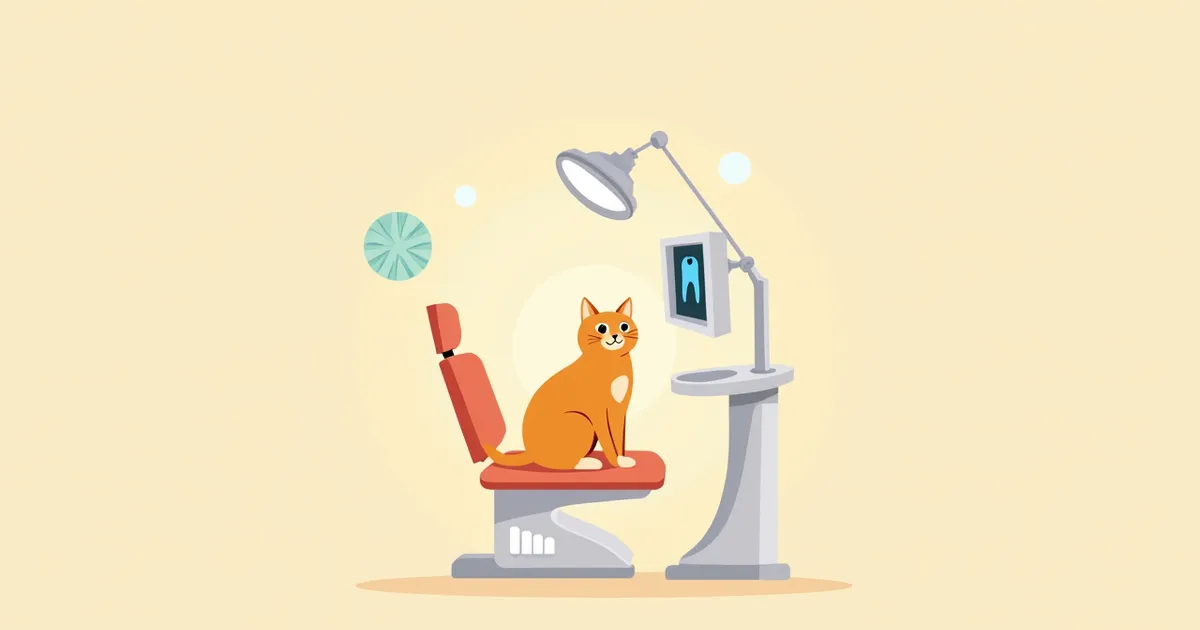
A veterinarian performing an echocardiogram on a cat, with the heart image displayed on the screen.

Treatment Methods and Step-by-Step Management Strategies

Treatment for heart disease is tailored to the specific type and severity of the condition. In cases of heart failure, we combine diuretics, blood pressure medications, and cardiac stimulants. If the heart rhythm is irregular, antiarrhythmic drugs are administered to stabilize it. In addition to medication, dietary management and limiting excessive exercise are crucial. During treatment, regular check-ups and careful monitoring of medication adherence are essential. Successful treatment begins with the cooperation of both the patient and the owner.
A cat sitting on a medication tray.

Daily Home Care and Monitoring

Home care is key to successful treatment. Administering medication at the correct times is the most important step. Monitor and record daily changes in weight, breathing, and activity levels. If sudden symptoms such as difficulty breathing or shock occur, contact your veterinarian immediately. Creating a low-stress environment also helps. It’s essential to understand and observe your cat’s daily routine. Early detection and proper management are vital for long-term health.
A serene cat sitting by the window, exuding a calm and peaceful atmosphere.

Caution Required for Certain Cat Breeds

Certain breeds, such as Maine Coons and Ragdolls, as well as long-haired cats like Persians, are known to have genetic and breed-specific predispositions to heart disease. In particular, they are at risk for hypertrophic cardiomyopathy (HCM), so regular cardiac screenings are recommended. Early detection during the asymptomatic latent stage is advantageous for effective management.

Reviewed by a veterinarian

Dr. Tony — Punnawat Phongkittirak

Dr. Tony — Punnawat Phongkittirak

Veterinarian

A veterinarian who majored in veterinary medicine at Khon Kaen University, Thailand, and completed the IVSA program at North Carolina State University in the United States. Drawing on clinical experience at animal hospitals, he works in the pet healthcare field and is dedicated to building a digital care environment that connects pet parents with veterinarians.

Frequently Asked Questions

Why is early screening important for feline heart disease?
Heart disease often shows few symptoms in its early stages, allowing it to progress rapidly. The earlier it’s detected during the latent phase, the easier it is to develop an effective management plan.
How often should regular check-ups be performed?
The frequency of check-ups varies depending on your cat’s age and risk factors. Cats with breed-specific predispositions or those who are older should have their hearts checked more often. For the most accurate schedule, it’s best to consult with your veterinarian.
Does an echocardiogram hurt?
Echocardiography is a harmless and safe procedure. It is performed while the cat is comfortably lying down.
What happens if I miss a dose of medication?
Missing a dose can worsen heart function, so it’s essential to give the medication at the exact prescribed time.
Can cats with heart disease still play?
Avoid excessive exercise and allow only light play. Consult your veterinarian to determine the appropriate level of activity.

Comparison of Symptoms and Management by Stage of Heart Disease

ItemMain SymptomsMain TestsMain Treatment
Stage A (At-risk)Asymptomatic, with genetic/breed predispositionEchocardiography, electrocardiogramPreventive management, regular monitoring
Stage B1 (Latent, low-risk)Asymptomatic, left atrium normal to mildly enlargedEchocardiography, blood testsRegular monitoring, risk factor management
Stage B2 (Latent, high-risk)Asymptomatic but with moderate to severe left atrial enlargement, increasing the risk of heart failure/thromboembolismEchocardiography, X-rayManagement according to risk, consider thrombosis prevention
Stage C (Severe)Congestive heart failure symptoms such as rapid, labored breathing, thromboembolismEchocardiography, chest imaging/blood testsHospitalization, diuretics, ACE inhibitors, pimobendan, etc.

Stage A is an at-risk group without symptoms, Stage B is the latent period with structural changes but no symptoms (B1 low-risk, B2 high-risk), and Stage C is the stage where clinical symptoms such as congestive heart failure appear.

Share

Related Guides

References

[1] Textbook of Cardiovascular Medicine in Dogs and Cats, 2023, Elsevier

[2] Feline Emergency and Critical Care Medicine, 2nd Ed, 2021, Wiley-Blackwell

[3] American Association of Feline Practitioners (AAFP) Feline Heart Disease Guidelines, 2022

This information is based on veterinary literature and does not replace diagnosis or treatment. Please consult a veterinarian for specific health concerns.

Metapet Co., Ltd. | CEO: Park Sung-yong | Business Reg. No. 417-88-02562 | Seoul, South Korea | Customer Center

Feline Heart Disease Advances Silently: When to Screen Early | Meongsiljang