
Like
Share
멍실장
고양이 기생충 인수공통 감염 위험 증상과 원인, 진단·치료와 관리 포인트 총정리

Comprehensive Guide to Zoonotic Parasitic Infections in Cats: Risks, Symptoms, Causes, Diagnosis, Treatment, and Management

Infection/ParasitesDiseasesMeongsiljang Veterinary Advisory Board

Zoonotic parasitic infections in cats can be transmitted to humans, typically through contact with parasite eggs in feces or contaminated environments. Early detection and prevention are essential.

Zoonotic parasitic infections in cats are conditions that can be transmitted to humans

A cat sitting in a litter box, with a shiny parasite icon above it.
Zoonotic parasitic infections in cats are conditions in which parasites carried by cats can be transmitted to humans, primarily through exposure to parasite eggs in feces or contaminated environments. - Parasite eggs in feces: Parasites that multiply in a cat’s intestines shed eggs in the feces, which can contaminate soil, sand, plants, and other surfaces. - Contact with contaminated environments: Larvae may be ingested when hands or feet come into contact with contaminated areas such as playgrounds, gardens, or sandboxes. - Oral ingestion: The risk of infection increases if food is eaten with unwashed hands or if contaminated food is consumed. - Immunocompromised individuals: Children, pregnant women, and people with weakened immune systems are at higher risk for complications if infected. Early recognition and strict hygiene practices are key to preventing infection in daily life.

The primary causes are parasite eggs in feces and contaminated environments

The primary cause of zoonotic parasitic infections from cats is the shedding of parasites in feces after they multiply in the cat’s intestines. - Fecal contamination by parasites: Eggs or larvae present in feces can remain in the environment—such as soil, sand, or plants—becoming sources of contamination. - Environmental transmission routes: Contact with soil where cats have defecated, such as in playgrounds, gardens, or sandboxes, increases the risk of infection. - Persistence of environmental contamination: If soil and water become contaminated with parasite eggs or larvae, the contamination can persist, posing ongoing risks if cleaning is inadequate. - Risk of oral ingestion: Infection can occur by eating food with unwashed hands or by consuming contaminated food or water. - Key prevention measures: Regularly clean your cat’s litter box and always wash your hands after going outdoors.
An image showing parasite eggs in a cat's feces under a microscope

Main symptoms include fatigue, fever, abdominal pain, and skin reactions
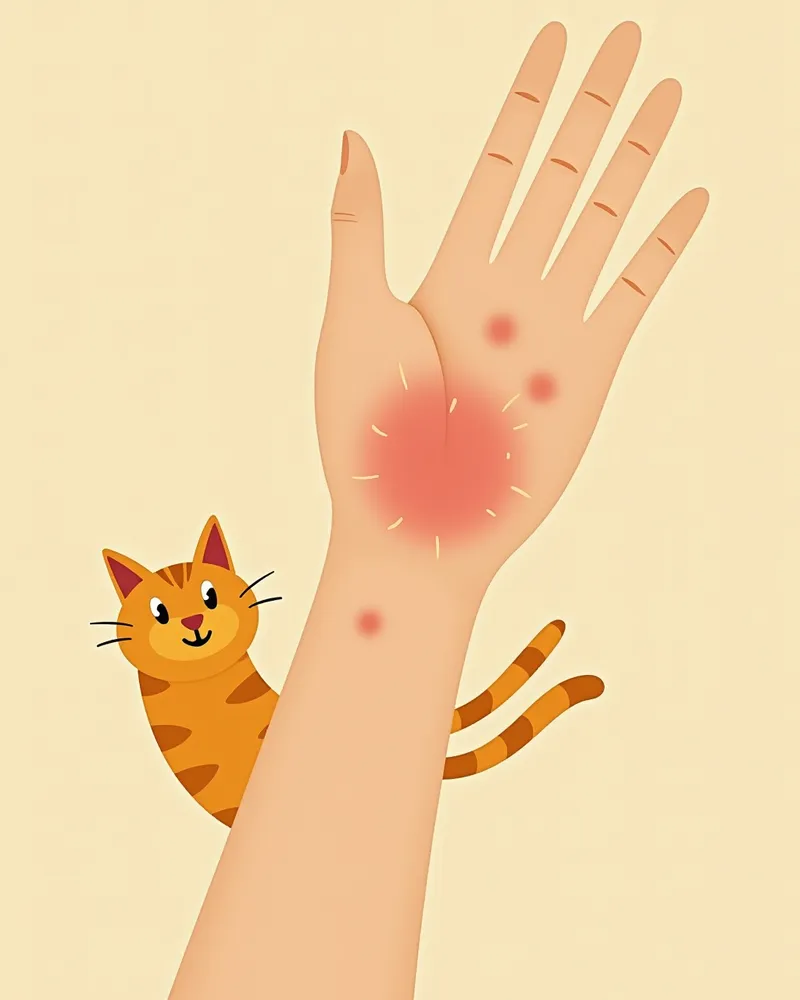
Symptoms of zoonotic parasitic infections transmitted from cats can vary depending on the specific pathogen. For instance, toxoplasmosis may present with fever, fatigue, and swollen lymph nodes, and in some cases, neurological abnormalities. Infections with parasites like Toxocara can cause abdominal pain, weight loss, and respiratory symptoms if larvae invade organs such as the liver or lungs. Hookworm infections may lead to coughing, wheezing, fatigue, and anemia. While some individuals experience no symptoms or only mild ones, pregnant women and those with weakened immune systems are at risk for serious complications. Therefore, if infection is suspected, accurate diagnosis through stool tests, blood tests, and imaging studies is essential.
An image showing a hand with a red rash and a cat nearby

Immediate veterinary visit is required if parasitic infection is suspected

If you develop persistent fever, fatigue, abdominal pain, or skin reactions after contact with a cat, visit a medical clinic immediately for testing. Children, pregnant women, and immunocompromised individuals are at higher risk of complications if infected. Early diagnosis and treatment can help prevent complications.

Diagnosis is performed through blood tests and fecal examinations

Diagnosing zoonotic parasitic infections in cats primarily involves blood tests and fecal examinations. - Blood tests: These assess the immune response to parasites to determine whether an infection is present. - Fecal examinations: This method directly identifies parasite eggs or larvae in feces, offering high accuracy. - Imaging studies: Ultrasound or CT scans may be performed alongside other tests to evaluate organ damage, particularly in the liver and lungs. - Combined testing: Since a single test may not be sufficient, multiple diagnostic methods are often used together to ensure an accurate diagnosis. - Importance of early detection: Because symptoms can be mild or absent, regular testing is essential for individuals with frequent contact with cats.
The veterinary team examines a fecal sample under a microscope.

Treatment involves antiparasitic medications and symptomatic management

Treatment for zoonotic parasitic infections in cats involves antiparasitic medications to eliminate the parasites, along with symptomatic management. - Antiparasitic medications: Intestinal parasites are treated with dewormers, while drugs such as praziquantel or epsiprantel are effective against tapeworms. - Pathogen-specific treatment: For toxoplasmosis, clindamycin or trimethoprim-sulfonamide-based medications are commonly recommended. - Medication administration: The duration of treatment varies depending on the type and severity of the infection, so it is important not to discontinue medication prematurely. - Symptomatic management: Supportive care is provided to alleviate symptoms such as fever, pain, and skin reactions. - Post-treatment follow-up: Treatment efficacy is confirmed through blood tests or fecal examinations after completing the medication course. - Prevention of complications: Early treatment can help prevent organ damage to the liver, lungs, and other vital organs.
A veterinarian administering medication to a cat.

Home management hinges on rigorous hygiene and regular check-ups

To prevent zoonotic parasitic infections in cats, effective home management hinges on rigorous hygiene and regular check-ups. - Litter box cleaning: Clean the litter box at least once a day, and remove waste immediately after your cat uses it to prevent contamination. - Handwashing habits: Always wash your hands after handling your cat or returning home from outside. - Cat inspections: Regularly check your cat’s nails, fur, and paw pads for any signs of contamination. - Environmental cleaning: Frequently clean areas such as play spaces, gardens, and sandboxes, and avoid places with a high risk of contamination. - Regular testing: Family members living with cats should undergo parasitic screening every six months. - Prevention-focused approach: Prevention is far more important than treatment after infection, so improving daily habits is essential.
A person washing their hands after handling a cat.

Pregnant women and children are at higher risk of infection and require caution

Pregnant women and children have weaker immune systems, so infections can lead to serious complications. In some cases, parasites can even affect the fetus. Always wash your hands after handling cats, and have someone else clean the litter box whenever possible. If you suspect an infection, visit a doctor right away for testing.

Reviewed by a veterinarian

Dr. Tony — Punnawat Phongkittirak

Dr. Tony — Punnawat Phongkittirak

Veterinarian

A veterinarian who majored in veterinary medicine at Khon Kaen University, Thailand, and completed the IVSA program at North Carolina State University in the United States. Drawing on clinical experience at animal hospitals, he works in the pet healthcare field and is dedicated to building a digital care environment that connects pet parents with veterinarians.

Frequently Asked Questions

How are zoonotic parasitic infections in cats transmitted?
Infection occurs through contact with parasite feces or contaminated soil, sand, or food. The risk is especially high when hands are brought to the mouth after touching these substances.
Can children get infected too?
Yes, children have weaker immune systems, making them more susceptible to infections. The risk is especially high when they come into contact with contaminated environments, such as playgrounds or sandboxes.
When do symptoms appear after infection?
Symptoms such as fatigue, fever, abdominal pain, and skin reactions may appear days to weeks after infection. Some individuals may remain asymptomatic.
What are the ways to prevent it?
Proper hygiene is the most important thing, including regular litter box cleaning, hand washing, routine check-ups for your cat, and washing your hands after coming home.
Is reinfection possible after treatment?
Yes, if parasites remain in the environment, reinfection is possible. Ongoing hygiene management and regular check-ups are essential.

Comparison of infection risks and symptoms by parasite type

ItemRoute of InfectionMain SymptomsAt-Risk Groups
Toxocara catiContact with contaminated soil or sand, or ingestion via the hands into the mouthAbdominal pain, weight loss, decreased vision (can occur in children)Children, immunocompromised individuals
Toxoplasma gondiiOocysts from cat feces, ingestion of raw meatFever, fatigue, swollen lymph nodes, neurological abnormalitiesPregnant women, immunocompromised individuals
Giardia spp.Oral ingestion through contaminated water or soilDiarrhea, abdominal pain, weight loss, nauseaAll ages, immunocompromised individuals

The route of infection and symptoms differ for each parasite, so an accurate diagnosis is necessary.

Share

Related Guides

References

[1] The Cat, Clinical Medicine and Management, 2nd Edition, 2020

[2] Plumb's Veterinary Drug Handbook, 9th Edition, 2022

[3] CDC Guidelines on Zoonotic Parasitic Infections, 2023

This information is based on veterinary literature and does not replace diagnosis or treatment. Please consult a veterinarian for specific health concerns.

Metapet Co., Ltd. | CEO: Park Sung-yong | Business Reg. No. 417-88-02562 | Seoul, South Korea | Customer Center

Zoonotic Parasites in Cats: Risks, Symptoms & Treatment | Meongsiljang