Like
Share
멍실장
고양이 형광 염색 각막 검사 증상과 원인, 진단·치료와 관리 포인트 총정리

Complete Guide to Feline Fluorescein Corneal Staining — From Procedure to Result Interpretation

Eye HealthDiseasesMeongsiljang Veterinary Advisory Board

Fluorescein staining of the cornea is an essential diagnostic test to check for corneal damage in cats. If your cat shows signs of pain, excessive tearing, or squinting, immediate examination is necessary.

What Is Feline Fluorescein Corneal Staining?

A veterinarian applying a fluorescent dye to a cat's eye.
Fluorescein staining of the cornea is an important diagnostic method for accurately assessing corneal damage in cats. After applying a special fluorescent dye to the eye, illuminating it with cobalt blue light causes the dye to adhere to damaged areas, which then glow green for easy identification. Even very minor injuries can be detected without missing them by using a magnifying lens along with the blue light. This test is relatively simple and minimally stressful, allowing veterinarians to obtain results quickly. It is particularly recommended when a cat frequently squints, experiences excessive tearing, or rubs its eyes. After the examination, any excess dye is rinsed away with saline solution, and the remaining dye naturally drains with the tears. As a result, most cats return to their normal state shortly after the procedure. Since this test greatly aids in early detection and treatment, it is essential to have it performed promptly if suspicious symptoms are observed.

Main Reasons for the Test

The main reasons a cat may need a fluorescein corneal stain test include trauma, infection, tear film abnormalities (dry eye), and eyelid or eyelash issues. - Trauma: Scratches from claws or contact with objects can damage the cornea. - Infection: Feline herpesvirus (FHV) infection, in particular, can cause keratitis and corneal ulcers. - Dry eye: Insufficient tear production in keratoconjunctivitis sicca (KCS) makes the cornea more susceptible to damage. - Corneal sequestrum: The exact cause is unclear, but this condition is more common in brachycephalic (short-nosed) cat breeds. Even if injuries from play-related bumps or fights with other cats are not visibly apparent, testing is still necessary. This test is highly valuable for early detection and treatment, so prompt examination is recommended if any suspicious symptoms arise.
The area of corneal damage in the cat that glows green after fluorescent staining

Key Symptom Checklist

Your cat may need a fluorescein corneal stain test if you notice any of the following symptoms:
Squinting or keeping the eye closed: The cat frequently squints or keeps the eye shut.
Excessive tearing: Tears continuously flow from the eye, or there is sticky discharge.
Redness: The area around the eye appears red, swollen, or bloodshot.
Lack of response to objects: The cat does not react to light or movement, or actively avoids looking at things.
Difficulty opening the eye: The eyelid trembles when trying to open the eye, or the cat avoids light.
A cat's face with tears and redness in the eyes

When to Visit the Vet Immediately

If your cat keeps its eyes closed, has persistent tearing, or avoids light, take it to the vet immediately. Corneal damage can lead to scarring or vision loss if not treated promptly.

Diagnostic Procedure and Testing Method
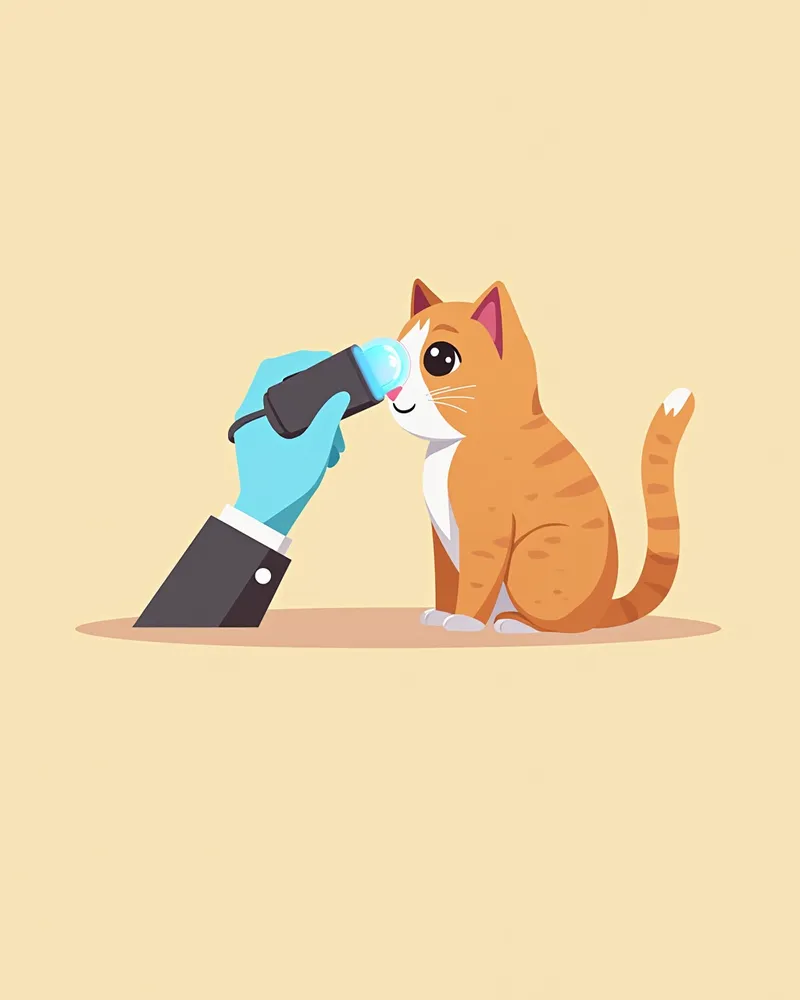
The veterinarian applies a fluorescent dye to the cat’s eyes and then shines a cobalt blue light. Damaged areas glow green, allowing for precise identification of their location and size. Even tiny ulcers can be detected using a magnifying glass along with the blue light, and the procedure is completed quickly with minimal stress.
Pre-examination preparation: Restrain the cat gently in a quiet, dimly lit environment. If necessary, use topical anesthetic drops or mild sedatives to facilitate an accurate examination.
Post-examination care: The veterinarian rinses away any excess dye with saline solution to prevent it from accumulating in the eye. Residual dye will naturally drain away with tears. If the eye becomes more painful or any abnormalities are noticed after the examination, contact your veterinarian.
A veterinarian examining a cat's eyes with a blue light.

Treatment Methods and Step-by-Step Management
Treatment depends on the severity of the injury. All corneal ulcers are initially treated with topical (eye drop) antibiotics, and deeper or progressive cases may require surgery.
Antibiotic eye drops: Used to prevent and treat infection; fluoroquinolones are used for deep ulcers or those with descemetoceles or melting (lytic) characteristics.
Mydriatics (atropine): Atropine eye drops may be administered to reduce ocular spasms and pain if reflex uveitis or discomfort is present.
Autologous serum eye drops: Used in conjunction with systemic antibiotics when the ulcer is infected or melting (lytic).
Surgery: Procedures such as lamellar keratectomy are necessary if the cornea is deeply damaged or if corneal sequestrum is present.
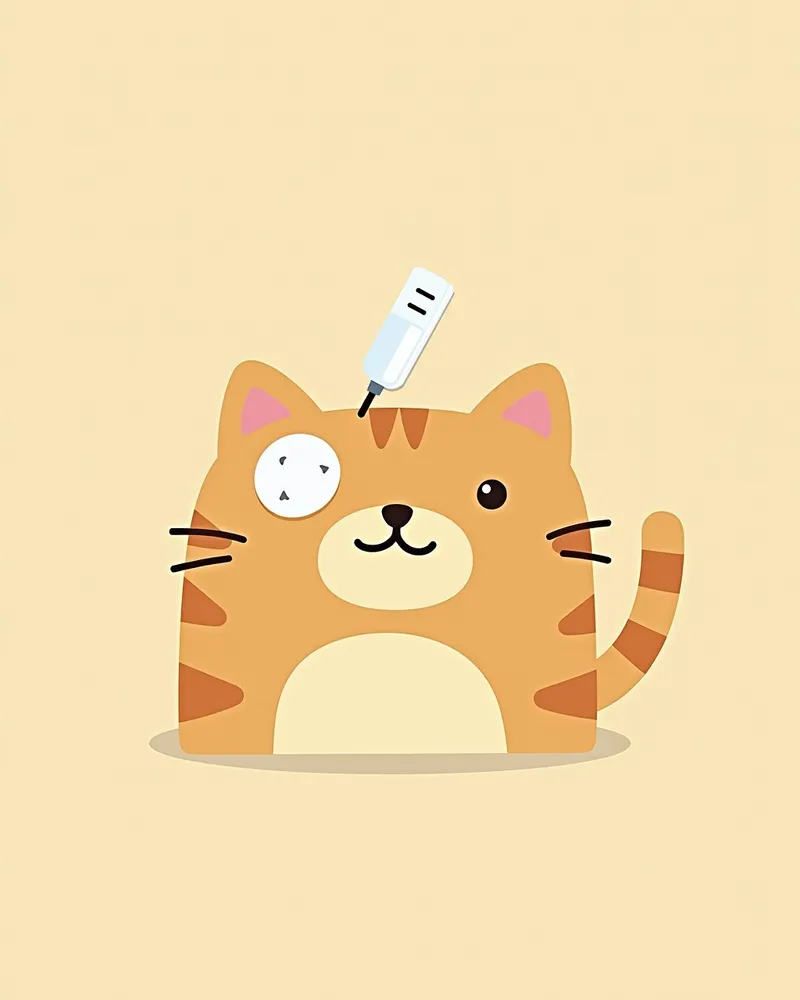
A cat wearing an eye patch receiving eye drops.

Home Care Guidelines

To keep your cat’s eyes healthy at home, follow these care guidelines:
Administer eye drops accurately: Use the medication prescribed by your veterinarian exactly as directed, adhering to the specified frequency and timing.
Protect the eyes: Fit your cat with an Elizabethan collar (protective cone) to prevent them from scratching or rubbing their eyes and causing self-inflicted injuries.
Maintain a clean environment: Avoid areas with dust or irritants, and keep your cat’s surroundings clean and safe.
Keep up with recheck appointments: Corneal ulcers are typically re-evaluated with fluorescein staining 5–7 days after treatment begins to assess healing progress. Deep ulcers require weekly monitoring until fully healed.
Monitor for symptoms: If you notice increased squinting or a rise in ocular discharge, contact your veterinarian immediately.
A cat resting comfortably in a clean environment

Breed-Specific Precautions and Recurrence Prevention

Brachycephalic cats with short noses, such as Persians and Himalayans, are more prone to corneal exposure and corneal diseases like corneal sequestrum. It is important to keep the area around their eyes clean and minimize secretions or irritation. To prevent recurrence, regularly check their eyes and seek immediate veterinary examination if any abnormalities are noticed.

Reviewed by a veterinarian

Dr. Tony — Punnawat Phongkittirak

Dr. Tony — Punnawat Phongkittirak

Veterinarian

A veterinarian who majored in veterinary medicine at Khon Kaen University, Thailand, and completed the IVSA program at North Carolina State University in the United States. Drawing on clinical experience at animal hospitals, he works in the pet healthcare field and is dedicated to building a digital care environment that connects pet parents with veterinarians.

Frequently Asked Questions

Does the fluorescent staining test hurt?
It won’t hurt. The dye may cause a slight stinging sensation upon contact with the eyes, but it will disappear immediately.
Does the eye turn green after the examination?
No. The dye naturally washes away with tears and completely disappears within 1 to 2 hours.
Is one test enough for life?
No. If there are any issues with the eyes, further examination may be necessary at any time. Especially after an injury, it is essential to have a check-up.
What should I do if my cat moves during the examination?
The veterinarian will gently calm the cat to perform the examination, and if needed, a light sedation may be used.
What should I do if the dye gets on the outside of my pet’s eyes?
Any dye that gets on the area around your pet’s eyes can be gently wiped away with water. Be careful to avoid getting it inside the eyes.

Share

Related Guides

References

[1] Featherstone, J.G. and Heinrich, C.L. (2013). Ophthalmic examination and diagnostics. In: Veterinary Ophthalmology, 5e (ed. K.N. Gelatt, B.C. Gilger and T.J. Kern), 533–613. Wiley Blackwell.

[2] Mandell, D.C. and Holt, E. (2005). Ophthalmic emergencies. Vet. Clin. North Am. Small Anim. Pract. 35: 455–480.

[3] Glaze, M.B. (2005). Congenital and hereditary ocular abnormalities in cats. Clin Tech Small Anim Pract. 20(2): 74–82.

This information is based on veterinary literature and does not replace diagnosis or treatment. Please consult a veterinarian for specific health concerns.

Metapet Co., Ltd. | CEO: Park Sung-yong | Business Reg. No. 417-88-02562 | Seoul, South Korea | Customer Center

Feline Fluorescein Corneal Staining: Procedure & Results Guide | Meongsiljang