
Like
Share
멍실장
고양이 촌충(테이프웜) 증상과 원인, 진단·치료와 관리 포인트 총정리

Cat Tapeworm Symptoms, Causes, Diagnosis, Treatment, and Management: A Complete Guide

Infection/ParasitesDiseasesMeongsiljang Veterinary Advisory Board

Tapeworms are a common parasitic infection in cats, especially those that spend time outdoors or hunt. The first sign you may notice is tiny, white segments mixed in with your cat’s feces.

What Are Cat Tapeworms?

Cross-sectional diagram of a tapeworm parasitizing the small intestine of a cat
Feline tapeworms are parasitic infections primarily caused by Dipylidium caninum and Taenia taeniaeformis. These two species are the most common tapeworms in cats and reside in the small intestine. They produce proglottids—small, white segments that resemble rice grains—which may appear in feces or attach to the fur around the anus (perineal area). Infection is especially common in cats that spend time outdoors or enjoy hunting. - Dipylidium caninum: This tapeworm inhabits the cat’s small intestine. Its proglottids are longer than they are wide, giving them a rice-grain appearance, and they may be found mixed in feces or clinging to the fur around the anus. Infection occurs when a cat ingests an infected flea (such as the cat flea, Ctenocephalides felis) while grooming. - Taenia taeniaeformis: The larval stage is transmitted through intermediate hosts such as mice, rabbits, and birds. Adult worms reside in the small intestine and can grow up to approximately 60 cm in length. Adult tapeworms interfere with nutrient absorption, and if left untreated, this can lead to malnutrition or impaired intestinal function. Although symptoms may be mild, early detection and treatment are essential.

What Are the Main Causes of Cat Tapeworms?
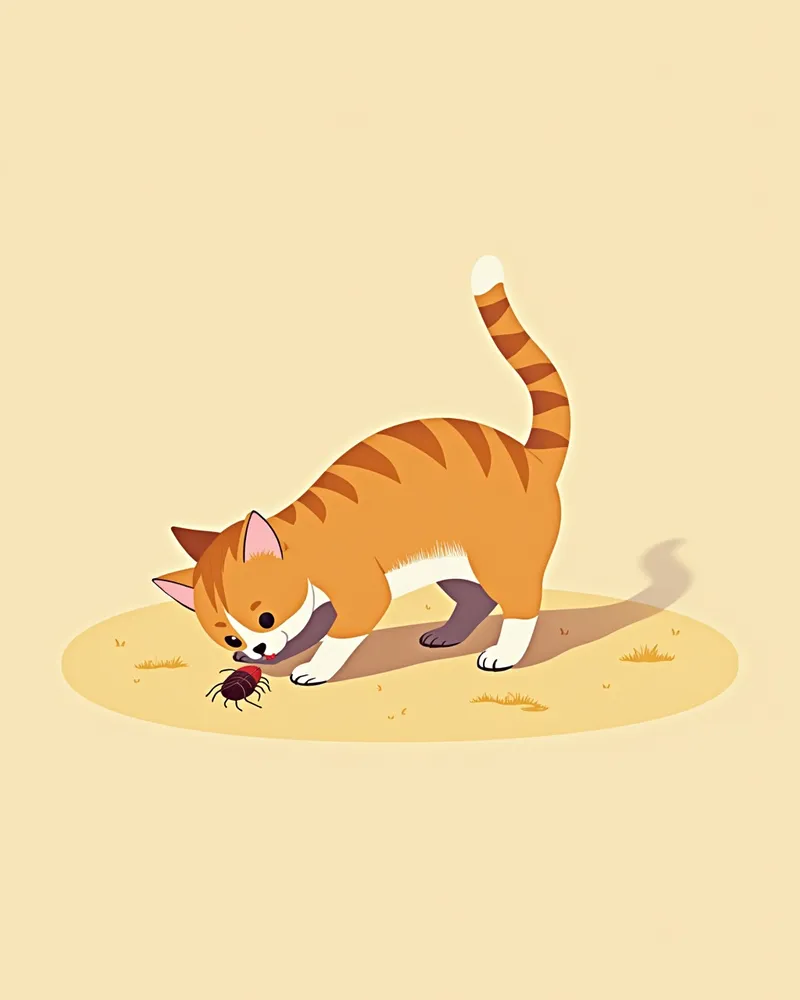
The most common cause of tapeworms in cats is the ingestion of infected fleas (specifically the cat flea, Ctenocephalides felis). When flea larvae consume eggs of Dipylidium caninum, the parasite develops into a larval stage called a cysticercoid inside the flea. If a cat swallows this infected flea while grooming, the parasite reaches the small intestine and matures into an adult worm. Additionally, cats can become infected with Taenia species tapeworms by hunting and consuming intermediate hosts such as mice, rabbits, or birds. Consequently, cats that enjoy hunting or spend significant time outdoors are at a higher risk of infection.
An image depicting a situation where a cat might ingest ticks

What Are the Main Symptoms of Cat Tapeworms?

The most common sign of tapeworms in cats is the presence of small, white, rice-like segments in their feces or clinging to the fur around the anus. These segments are called proglottids, which are the reproductive units of the tapeworm. Additionally, due to itching, cats may exhibit increased behavior of scooting or rubbing their anal area (perineum) on hard surfaces. Some cats may also show symptoms such as diarrhea, decreased appetite, weight loss, lethargy, and a dull coat. Although these symptoms can be mild, tapeworms can affect nutrient absorption over time, making early detection and treatment important.
Tapeworm segments found around a cat’s hind legs

When to Visit the Vet Immediately

If your cat persistently drags or rubs its anal area (perineum) on the floor, experiences ongoing diarrhea, suffers from sudden weight loss, or loses its appetite entirely, you should visit a veterinarian immediately. These symptoms may indicate a severe tapeworm infection or other intestinal issues. Kittens and cats with weakened immune systems, in particular, require prompt treatment.

How Are Cat Tapeworms Diagnosed?

Feline tapeworms are primarily diagnosed through fecal examination. If you notice small, white segments attached to your cat’s stool or the fur around its anus, these can be collected and examined under a microscope to identify proglottids (tapeworm segments) or parasite eggs. - Fecal examination: This reliable method uses techniques like fecal flotation to detect eggs. Your veterinarian will analyze the sample to confirm the presence of parasites. - Microscopic examination: This is used to analyze the morphology of proglottids and eggs. *Dipylidium caninum* eggs are found in egg packets containing multiple eggs, while *Taenia* species have eggs with thick shells. However, accurately distinguishing between species may require PCR or DNA sequencing, and in practice, treatment is often administered without specifying the exact species. A professional veterinary assessment is essential for an accurate diagnosis, and early detection significantly improves treatment success rates.
A veterinarian examining a cat's stool sample under a microscope

How Are Cat Tapeworms Treated?

Tapeworm infections in cats are treated with praziquantel-based dewormers. This medication effectively eliminates both immature stages and adult worms of Dipylidium caninum and Taenia taeniaeformis. It is typically administered as a standalone treatment, though it is often combined with pyrantel pamoate or febantel to provide broader coverage against other internal parasites. Your veterinarian will determine the correct dosage based on your cat’s weight. However, since reinfection can occur if the source of infection—such as fleas or prey—is not eliminated, it is crucial to continue preventive measures after treatment and regularly monitor for reinfection through veterinary check-ups.
A veterinarian administering medication to a cat.

Home Management and Prevention Tips for Cat Tapeworms

Consistent parasite prevention is the cornerstone of managing tapeworms in cats at home. Regular deworming is especially important for cats that spend time outdoors or enjoy hunting. To prevent Dipylidium caninum, it is essential to thoroughly eliminate fleas, which are the source of reinfection. For Taenia taeniaeformis, regular deworming is necessary for hunting cats. Veterinary organizations commonly recommend monthly administration, though the frequency can be adjusted based on the level of infection risk. It is also advisable to encourage indoor living to minimize outdoor exposure, properly dispose of feces to prevent soil and water contamination, and wash your hands thoroughly after cleaning the litter box. Maintaining a clean home environment also helps prevent infection.
A scene of a cat being combed with a flea-prevention comb

Breed-Specific Precautions and Preventing Reinfection

Cats with a strong hunting instinct or those that spend a lot of time outdoors are at higher risk of tapeworm infection. Hunting cats are particularly susceptible to reinfection with Taenia taeniaeformis through infected prey. Additionally, kittens and cats with weakened immune systems may experience slower recovery after infection. Consistent parasite prevention and maintaining a clean home environment are essential even after treatment. Regular check-ups and preventive deworming are necessary to prevent recurrence. Since hunting cats are prone to frequent reinfection, it is advisable to consult your veterinarian to develop a personalized prevention and deworming plan.

Reviewed by a veterinarian

Dr. Tony — Punnawat Phongkittirak

Dr. Tony — Punnawat Phongkittirak

Veterinarian

A veterinarian who majored in veterinary medicine at Khon Kaen University, Thailand, and completed the IVSA program at North Carolina State University in the United States. Drawing on clinical experience at animal hospitals, he works in the pet healthcare field and is dedicated to building a digital care environment that connects pet parents with veterinarians.

Frequently Asked Questions

Can tapeworms in cats be transmitted to humans?
Both Dipylidium caninum and Taenia taeniaeformis are zoonotic parasites that can be transmitted to humans. However, direct person-to-person transmission is rare; infection typically occurs accidentally when an infected flea is swallowed or through exposure to intermediate hosts. Young children may experience symptoms such as abdominal discomfort or itching. Therefore, maintaining good hygiene, including regular handwashing, is essential.
When should I retest my cat after tapeworm treatment?
It is recommended to confirm that parasites have been eliminated through a fecal test a few weeks after treatment. Regular preventive care is necessary to prevent reinfection, and for cats with hunting behavior, it is best to consult with your veterinarian to determine the appropriate testing frequency.
Should I give my cat a deworming medication for tapeworms every month?
It is generally recommended to administer deworming medication once a month. However, for cats that spend a lot of time outdoors or enjoy hunting, your veterinarian may adjust the dosing schedule based on their assessment, so it is important to establish a personalized prevention plan.
Will my cat lose weight if it gets tapeworms?
Yes, tapeworm infections can lead to weight loss and decreased appetite. If left untreated for an extended period, they can worsen your pet's nutritional status, so early diagnosis and treatment are essential.
How do cats get tapeworms?
Tapeworm larvae typically infect cats when they ingest fleas or intermediate hosts such as mice, rabbits, or birds. Once ingested, these larvae establish themselves in the small intestine and grow. Consequently, cats that spend a lot of time outdoors or enjoy hunting are at a higher risk of infection.

Share

Related Guides

References

[1] The Veterinary Workbook of Small Animal Clinical Cases, Case 14, 2023

[2] Plumb's Veterinary Drug Handbook, 10th Edition, 2022

[3] Handbook of Veterinary Pharmacology, IV. Anticestodal Drugs, 2021

This information is based on veterinary literature and does not replace diagnosis or treatment. Please consult a veterinarian for specific health concerns.

Metapet Co., Ltd. | CEO: Park Sung-yong | Business Reg. No. 417-88-02562 | Seoul, South Korea | Customer Center

Cat Tapeworm: Symptoms, Causes, Diagnosis & Treatment | Meongsiljang