
Like
Share
멍실장
고양이 촌충감염 증상과 감염 경로, 치료·예방법 총정리

Rice-grain-like segments in my cat’s stool — Symptoms, transmission routes, and treatment of tapeworm infection in cats

Infection/ParasitesDiseasesMeongsiljang Veterinary Advisory Board

Tapeworm infection in cats is an internal parasitic disease that is easily contracted through fleas or by hunting rodents. We’ve compiled essential information, from identifying rice-grain-like segments around the anus to treatment with praziquantel and preventing recurrence.

What is tapeworm infection in cats?

A cat resting comfortably
Tapeworm infection in cats is an internal parasitic disease caused by tapeworms (cestodes) that inhabit the small intestine and deprive the host of nutrients. The most common species in cats are Dipylidium caninum, which is transmitted via fleas, and Taenia taeniaeformis, which is acquired through hunting rodents. Even indoor cats can become infected if just a single flea is present. If you notice rice-grain-like segments around the anus or observe unexplained weight loss, tapeworm infection should be suspected.

How cats get infected with tapeworms

Dipylidium — Flea Route: Flea larvae ingest tapeworm eggs and develop into adult fleas. When a cat grooms itself and accidentally swallows one of these fleas, the tapeworm grows in the small intestine. Even indoor cats are at risk if they are exposed to environments with fleas.
Taenia — Hunting Route: Infection occurs when a cat hunts and eats intermediate hosts such as mice, birds, or rabbits that harbor tapeworm larvae. This is most common in cats that spend time outdoors or have a strong hunting instinct.
In both cases, if the source of infection—fleas or prey—is not controlled, reinfection can occur even after treatment.

Suspect tapeworms if you see these symptoms
Rice-grain-like segments around the anus: This is the most characteristic sign. After defecation, small white, rice-grain or sesame-seed-shaped fragments may be seen attached to the area around the anus or on the feces. These segments turn yellow as they dry.
Itching around the anus: The segments irritate the anus, causing the pet to scoot its hindquarters along the floor or excessively lick the anal area.
Weight loss and changes in appetite: Tapeworms steal nutrients, so your pet may lose weight even if it continues to eat normally.
Vomiting and diarrhea: In severe cases of infection, gastrointestinal symptoms may also appear.
Lethargy and poor coat condition: Overall condition declines, and the coat becomes dull and brittle.
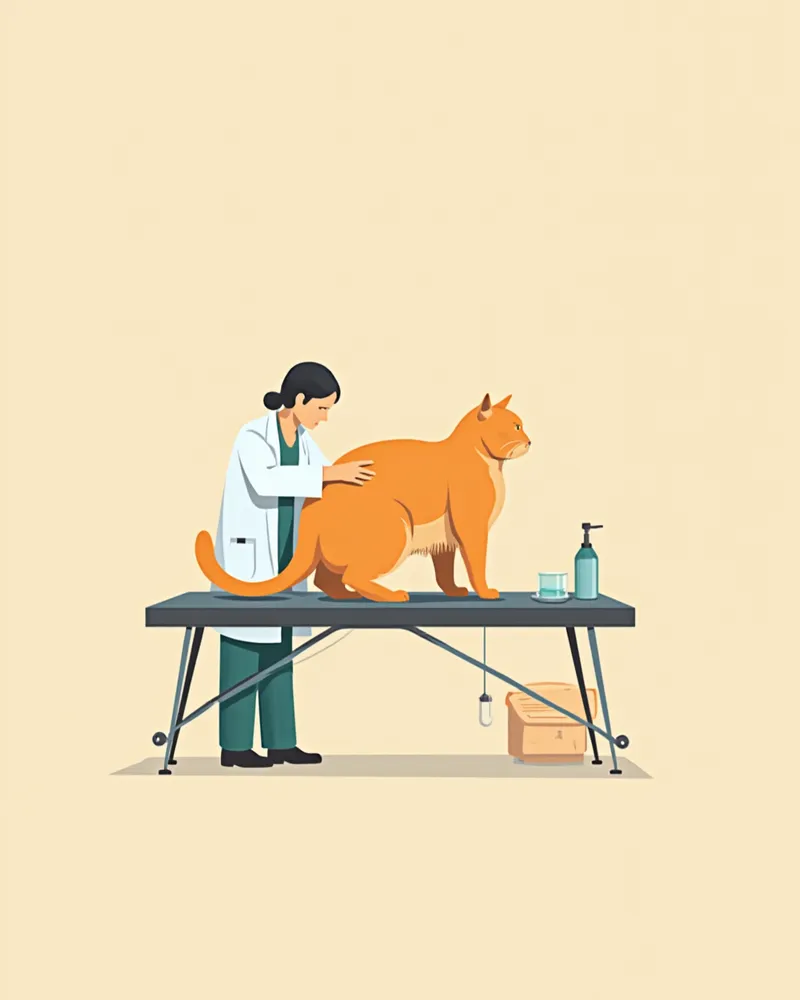
A veterinarian examining a cat’s perianal area for signs of tapeworm segments

Seek immediate veterinary care in these situations

Seek immediate veterinary care if vomiting or diarrhea persists for more than 24 hours, if your cat loses its appetite entirely and experiences rapid weight loss, if a young kitten shows tapeworm segments or gastrointestinal symptoms, or if blood appears in the stool. Kittens are especially vulnerable, as ongoing vomiting and diarrhea can lead to rapid dehydration.

Diagnostic methods at the veterinary clinic

Tapeworm infections are usually diagnosed through visual inspection and fecal testing.
Visual inspection: If rice-grain-like segments (proglottids) are directly observed around the anus or on the stool, it is highly likely a tapeworm infection.
Fecal flotation test: The stool is centrifuged in a special solution, and then examined under a microscope for tapeworm eggs. However, even if segments are visible, eggs may not always be detected, so visual findings remain important.
It helps with diagnosis if the pet owner takes a photo of the segments around the anus and brings it to the clinic.

Tapeworm treatment — Praziquantel is key

According to veterinary pharmacology textbooks, praziquantel is effective against all stages of tapeworms, including both adult and immature forms of Dipylidium and Taenia. After administration, the tapeworms become paralyzed and are digested and expelled from the body.
Single-agent administration: Praziquantel is available as a standalone formulation (oral tablets or subcutaneous injections).
Combination administration: It is often combined with pyrantel or febantel to simultaneously treat other internal parasites such as roundworms and hookworms.
The most critical point is that flea control must be implemented concurrently. Without eliminating fleas, Dipylidium reinfection occurs rapidly.
Administration Guide for Cat Tapeworm Medication

Home care and prevention of recurrence

Regular use of flea preventatives: This is the most important way to prevent re-infection with Dipylidium. Since eliminating fleas breaks the cycle of re-infection, use veterinarian-prescribed flea preventatives consistently.
Environmental cleaning: Frequently clean areas where fleas may reside, such as carpets, bedding, and around litter boxes, and use environmental insecticides when necessary.
Limiting outdoor activity and hunting: To prevent tapeworm infection, minimize exposure to environments where your pet may encounter prey such as mice.
Regular deworming: Cats that enjoy hunting are especially prone to re-infection, so it is best to deworm preventatively according to the schedule set by your veterinary team.
Preventing Parasites in Cats with Flea Preventatives

Pay special attention in multi-cat households and for young kittens

If you have multiple cats, it’s important to test and treat all of them if one is infected. In environments with fleas, it’s safest to assume all cats have been exposed. Kittens under three months old are especially vulnerable to tapeworm infections. If the mother has fleas, be sure to check the kittens as well.

Reviewed by a veterinarian

Dr. Tony — Punnawat Phongkittirak

Dr. Tony — Punnawat Phongkittirak

Veterinarian

A veterinarian who majored in veterinary medicine at Khon Kaen University, Thailand, and completed the IVSA program at North Carolina State University in the United States. Drawing on clinical experience at animal hospitals, he works in the pet healthcare field and is dedicated to building a digital care environment that connects pet parents with veterinarians.

Frequently asked questions

Can tapeworms in cats be transmitted to humans?
Although rare, it is possible. Humans, especially young children, can become infected if they accidentally swallow a flea carrying Dipylidium. The parasite is not transmitted by direct contact with a cat’s feces. Thorough handwashing and effective flea control are the key preventive measures.
Will a single dose of dewormer completely cure the infection?
A single dose of praziquantel eliminates the tapeworms currently infecting your pet. However, if fleas are not controlled, reinfection can occur quickly. It is recommended to use both deworming medication and flea prevention products together, and to have your pet rechecked by a veterinarian 2–4 weeks later.
Can indoor-only cats get tapeworms?
Yes, it is possible. Even a single flea brought in from outside can lead to a Dipylidium infection. It’s a good idea to keep up with regular deworming and flea prevention for indoor cats as well.
Does seeing rice-grain-like particles around the anus always mean tapeworms?
These are most likely tapeworm segments. They may move if alive, and when dried, they resemble small yellow grains. For an accurate diagnosis, it’s safest to visit a veterinary clinic. Bringing a photo of the segments can greatly assist with the diagnosis.
How often should I deworm my pet?
The frequency of deworming depends on your cat’s lifestyle. Cats that enjoy hunting or spend a lot of time outdoors are at higher risk of reinfection and should be dewormed more frequently. Multi-cat households or environments with frequent flea infestations also increase exposure risk. For the safest approach, follow the schedule recommended by your veterinary team. Consult your veterinarian to establish a deworming plan tailored to your cat’s specific needs.

Share

Related Guides

References

[1] Bowman, D.D., Georgi's Parasitology for Veterinarians, 10th Ed., Chapter 3 Helminths, Elsevier, 2014

[2] Plumb, D.C., Plumb's Veterinary Drug Handbook, 10th Ed., Praziquantel monograph, Wiley-Blackwell, 2023

[3] Riviere, J.E., Papich, M.G., Handbook of Veterinary Pharmacology, Chapter IV Anticestodal Drugs, Wiley-Blackwell, 2009

[4] Fogle, B., The Veterinary Workbook of Small Animal Clinical Cases, Case 14 (Tapeworm), Manson Publishing, 2010

This information is based on veterinary literature and does not replace diagnosis or treatment. Please consult a veterinarian for specific health concerns.

Metapet Co., Ltd. | CEO: Park Sung-yong | Business Reg. No. 417-88-02562 | Seoul, South Korea | Customer Center

Rice-Grain Segments in Cat Stool? Feline Tapeworm Explained | Meongsiljang