Like
Share
멍실장
고양이 임신·수유 관련 호르몬 이상 증상과 원인, 진단·치료와 관리 포인트 총정리

My Cat Is Acting Strange After Giving Birth — Warning Signs and Management of Hormonal Abnormalities During Pregnancy and Lactation

EndocrineDiseasesMeongsiljang Veterinary Advisory Board

During pregnancy and lactation, cats experience significant hormonal fluctuations involving progesterone, estrogen, and oxytocin. These changes can lead to complications such as dystocia, mastitis, and inadequate milk production.

What Are Hormonal Abnormalities During Feline Pregnancy and Lactation?
A pregnant cat resting quietly by the window.
During pregnancy and lactation, a cat’s reproductive hormones, such as progesterone and estrogen, undergo significant changes. Progesterone, in particular, remains elevated throughout pregnancy and then drops sharply in the days leading up to birth. One study showed that levels of about 4–5 ng/mL in late pregnancy fell to approximately 3 ng/mL one day before delivery, and dropped below 1 ng/mL immediately after birth. - Progesterone changes: As birth approaches, progesterone normally declines, triggering the onset of labor. If this decline is not smooth, it can interfere with the progress of delivery. - Mammary gland hyperplasia (fibroadenomatous hyperplasia): Swelling of one or more mammary glands is mainly caused by proliferation stimulated by progesterone (progestins) and is common in young, intact females during estrus or pregnancy. - Mastitis: Inflammation or infection of the mammary glands during lactation typically occurs when bacteria such as Escherichia coli, Staphylococcus, or Streptococcus enter through the teats. These hormonal shifts and associated issues can also affect postpartum recovery. Therefore, it is important to closely monitor hormonal changes and mammary gland condition during late pregnancy and the lactation period.

What Are the Main Causes of Hormonal Abnormalities?

Based on veterinary textbooks, the causes of parturition and mammary gland issues during feline pregnancy and lactation can be summarized as follows: - Uterine inertia (primary uterine inertia): Weak uterine contractions leading to dystocia (difficult labor) is a common cause. It is particularly frequently reported in brachycephalic and dolichocephalic breeds. - Abnormal fetal position or presentation: Incorrect fetal positioning or presentation can delay parturition. This is a common cause in brachycephalic breeds. - Mammary gland infection (mastitis): Poor hygiene or trauma can allow bacteria to ascend through the teats into the mammary glands, causing mastitis. - Hypocalcemia (eclampsia): This occurs when the body fails to compensate for the increased calcium demands during pregnancy and lactation through homeostatic mechanisms. Although rare in cats, it constitutes a medical emergency. - Inadequate nutritional management: It is important to provide proper nutrition with a balanced kitten formula during the late stages of pregnancy. These factors can directly impact the health of the mother and kittens, as well as the survival rate of the offspring.
A close-up shot of a cat's face, showing a slightly tense expression.

Check for Key Symptoms and Signs

The main symptoms to watch for during a cat’s pregnancy and lactation are as follows: Dystocia (difficult labor): Suspect dystocia if more than a week has passed since the expected due date, or if no kittens are born within 48 hours after a drop in rectal temperature. In normal cases, 86% of queens have less than a 6-hour interval between the birth of the first and last kitten. Mammary gland swelling: One or more mammary glands may become significantly swollen, potentially accompanied by pain or warmth. Pre-labor behavioral changes: During the first stage of labor, you may notice decreased appetite, vomiting, hiding, and nesting behaviors. Signs of hypocalcemia (eclampsia): Immediate veterinary care is required if you observe trembling, muscle spasms, ataxia, or rigidity. Systemic abnormalities: If your cat persistently licks or bites her vulva, or appears to be in general distress, consult your veterinarian immediately.
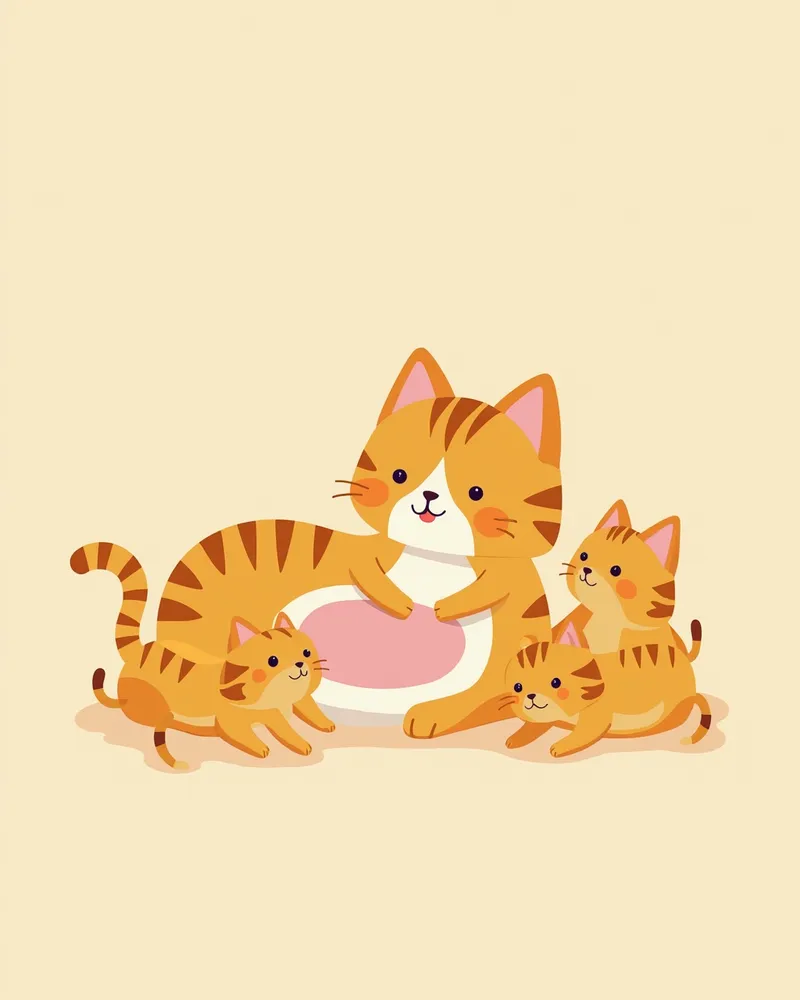
A nursing mother cat with her kittens, showing swollen mammary glands

Emergency Situations Requiring Immediate Veterinary Visit

If your cat hasn’t given birth within 48 hours of a drop in rectal temperature, if the due date has passed by more than a week, if she’s constantly licking or biting her vulva, if her mammary glands are severely swollen and accompanied by high fever, or if she shows signs of hypocalcemia (eclampsia) such as trembling, seizures, or muscle rigidity, you should visit the vet immediately. Dystocia, mastitis, and eclampsia are emergency conditions that can be life-threatening to both the mother and her kittens.

Diagnostic Tests for Accurate Diagnosis
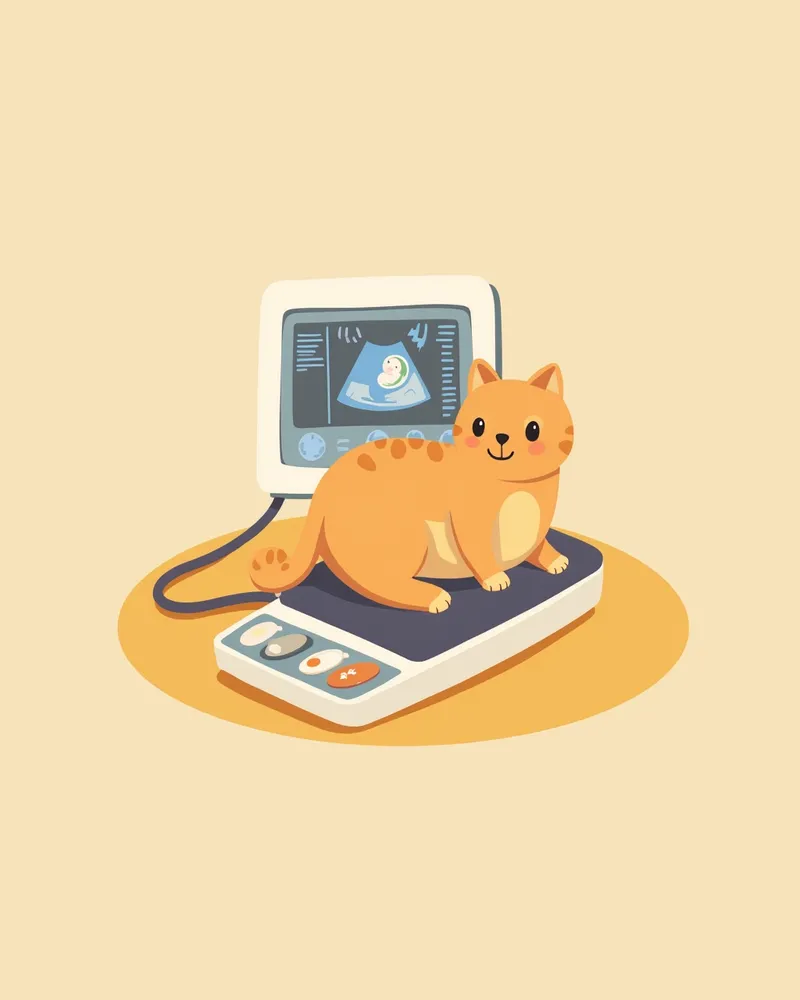
Abnormalities during feline pregnancy and lactation are confirmed through various diagnostic tests. - Hormone and blood tests: Although cats do not produce placental hormones like human hCG, making traditional pregnancy blood tests unavailable, relaxin secreted by the placenta serves as a useful marker for pregnancy. Additionally, measuring maternal serum progesterone helps estimate the timing of parturition. - Imaging tests: Ultrasound is used to confirm pregnancy and assess the condition of the uterus and fetuses, while radiographs evaluate the degree of fetal skeletal mineralization to predict the expected due date. - Physical examination and medical history: We directly assess for mammary gland swelling, pain, fever, as well as changes in appetite and behavior. - Calcium and other evaluations: If hypocalcemia (eclampsia) is suspected, calcium levels are checked. These tests enable early detection and appropriate treatment.
An image of a cat’s abdomen being scanned with an ultrasound machine, showing the fetal image.

Treatment Methods and Step-by-Step Management Strategies
Treatment for birthing and mammary issues must be tailored to the underlying cause. - Dystocia (uterine inertia): Depending on the severity, medical management or a cesarean section may be required, making veterinary assessment crucial. Brachycephalic and dolichocephalic breeds often require surgical intervention. - Mastitis: As this is a bacterial infection, treatment involves antibiotics to address the infection, along with anti-inflammatory and pain-relieving medications as needed. - Mammary hyperplasia (fibroadenomatous hyperplasia): This condition is linked to progesterone activity. Medications such as aglepristone or cabergoline and bromocriptine, which lower prolactin levels, may be used (note: off-label use in cats, depending on the country). - Hypocalcemia (eclampsia): This is an emergency condition treated with calcium supplementation, such as intravenous calcium gluconate or oral calcium carbonate. - Nutritional management: Providing a balanced diet formulated for pregnant and lactating queens during the late stages of pregnancy supports recovery for both the mother and her kittens. All treatments must be administered under the direct supervision of a veterinarian.
A veterinarian administering a hormone injection into a cat’s leg.

Home Care and Management Points

Proper home care during a cat’s pregnancy and lactation is essential.
Nutritional support: Provide an appropriate high-protein, high-calorie diet during late pregnancy and throughout lactation.
Hydration: Always ensure access to fresh, clean water, as water intake increases significantly during nursing.
A stable environment: Provide a quiet, warm space for rest.
Mammary care: Check the mammary glands once or twice a week for signs of swelling or inflammation.
Regular weight monitoring: Track weight changes to assess nutritional status.
A cozy space with a cat-specific bed, food, and water bowl under warm lighting

Certain Cat Breeds Require Extra Caution

Breeds with long skulls, such as Siamese cats, and brachycephalic (short-skulled) breeds have a higher risk of dystocia. One study found that the incidence of dystocia was 10% in dolichocephalic (long-skulled) breeds and 7.3% in brachycephalic breeds, both higher than in mesocephalic (medium-skulled) breeds (2.3%). In particular, surgical intervention was required in over 75% of cases in dolichocephalic and brachycephalic breeds. In brachycephalic breeds, abnormal fetal positioning and primary uterine inertia are common causes. Since there are also reported cases of parturition-related complications in breeds like the Maine Coon, it is advisable to consult with your veterinarian during the late stages of pregnancy to discuss birth predictions and preparations.

Reviewed by a veterinarian

Dr. Tony — Punnawat Phongkittirak

Dr. Tony — Punnawat Phongkittirak

Veterinarian

A veterinarian who majored in veterinary medicine at Khon Kaen University, Thailand, and completed the IVSA program at North Carolina State University in the United States. Drawing on clinical experience at animal hospitals, he works in the pet healthcare field and is dedicated to building a digital care environment that connects pet parents with veterinarians.

Frequently Asked Questions

Do hormonal changes during pregnancy return to normal on their own?
Progesterone levels typically drop back to normal right after delivery and then stabilize throughout the nursing period, so most dogs recover naturally. However, if you notice signs of dystocia (difficult labor), mastitis, or hypocalcemia, or if these issues recur, your dog will need to see a veterinarian.
Is it safe to give hormonal medication while nursing?
Use only when prescribed by a veterinarian. Self-prescribing can worsen your pet’s condition.
Should I give nutritional supplements during pregnancy?
During the later stages of pregnancy and the nursing period, it is most important to provide adequate nutrition through a balanced diet formulated for kittens. However, arbitrary calcium supplementation during pregnancy is not recommended, as it can actually increase the risk of postpartum hypocalcemia (eclampsia). Always consult your veterinarian before using any nutritional supplements.
What should I do if the mammary glands become swollen after giving birth?
Some degree of mammary gland swelling is common during lactation, but if it's accompanied by a high fever or pain, it could be mastitis caused by a bacterial infection. Please consult your veterinarian immediately.
How can I reduce stress during pregnancy?
Maintain a quiet, warm resting area and stick to regular feeding times. Minimize contact with other animals to provide a stable environment.

Share

Related Guides

References

[1] Margolis, C.A. & Casal, M.L. (2023). Feline Emergency and Critical Care Medicine, 2nd Edition. Elsevier.

[2] The Cat, Clinical Medicine and Management, 2nd Edition (2022). Elsevier.

[3] A Professional’s Guide to Feline Behaviour (2021). Wiley-Blackwell.

This information is based on veterinary literature and does not replace diagnosis or treatment. Please consult a veterinarian for specific health concerns.

Metapet Co., Ltd. | CEO: Park Sung-yong | Business Reg. No. 417-88-02562 | Seoul, South Korea | Customer Center

Cat Acting Strange After Birth? Pregnancy Hormone Warning Signs | Meongsiljang