Like
Share
멍실장
강아지 구강 검진 권장 주기 증상과 원인, 진단·치료와 관리 포인트 총정리

Complete Guide to Recommended Frequency, Symptoms, Causes, Diagnosis, Treatment, and Management for Dog Dental Check-ups

Oral HealthDiseasesMeongsiljang Veterinary Advisory Board

Regular dental check-ups are essential for preventive care in dogs. Routine exams allow for early detection and treatment of dental diseases.

Recommended Frequency for Dog Dental Check-ups is Key to Preventive Health Care

A veterinarian examining a puppy's mouth.
Regular dental check-ups for dogs are essential for the early detection and prevention of tooth and gum diseases. These exams do more than just assess dental health; they also help evaluate your dog’s overall well-being. Consistent check-ups ensure that early warning signs such as tartar buildup, bleeding, or pain are not overlooked. This is especially important for small breeds and brachycephalic (short-nosed) dogs, whose crowded or small teeth are prone to rapid tartar accumulation. Such buildup is not merely a cosmetic issue but can lead to gingivitis and periodontal disease. However, oral examinations performed while the dog is conscious have limitations. For an accurate diagnosis, a thorough oral exam and dental radiographs under general anesthesia are necessary, which may also influence the recommended frequency of check-ups. Therefore, it is best to consult with your veterinarian to determine an appropriate examination schedule tailored to your dog’s individual health status and breed characteristics.

Main Reasons for Dental Check-ups are Tartar Buildup and Gum Inflammation

- Tartar buildup: Food particles and bacteria adhere to the teeth and harden, irritating the gums and causing inflammation. - Gingivitis: Tartar causes the gums to become swollen and bleed, which can lead to pain. - Progression of periodontal disease: As inflammation worsens, the tooth roots can be damaged, leading to loose or even lost teeth. - Systemic effects: Bacteria from the mouth can spread through the bloodstream, affecting vital organs such as the heart, liver, and kidneys. - Importance of prevention: Regular check-ups and proper care are the most effective ways to prevent these issues. - Breed characteristics: Small breeds have crowded teeth, making them more prone to tartar buildup, so they require more frequent dental check-ups.
A dog's teeth with tartar buildup and bleeding gums

6 Key Symptoms to Watch for During Dental Check-ups

There are key symptoms to watch for during your dog’s recommended oral check-ups. These signs may indicate the early stages of dental disease, so don’t overlook them.
Persistent bad breath: If the odor is constant, it could signal problems with the teeth or gums.
Reluctance to open the mouth: If your dog won’t open its mouth or has trouble swallowing food, it may be experiencing pain.
Gum bleeding: Bleeding from the gums during brushing or while eating treats suggests inflammation.
Loose teeth: If teeth are wobbly or falling out, it may indicate severe periodontal disease.
Dropping food: If your dog drops food while chewing, it could mean the teeth have weakened.
Increased licking around the mouth: Repeatedly licking the area around the mouth can be a sign of pain or discomfort.
Your dog licking its mouth and showing signs of discomfort

Emergency Signs Requiring Immediate Veterinary Visit

If your dog refuses to open its mouth, won’t eat, or has severe bleeding from the mouth, seek veterinary care immediately. These signs may indicate serious periodontal disease, a fractured tooth, or an oral infection. Delaying treatment can lead to systemic infection or organ damage.

Diagnostic Methods for Accurate Assessment Include Intraoral Imaging and Blood Tests
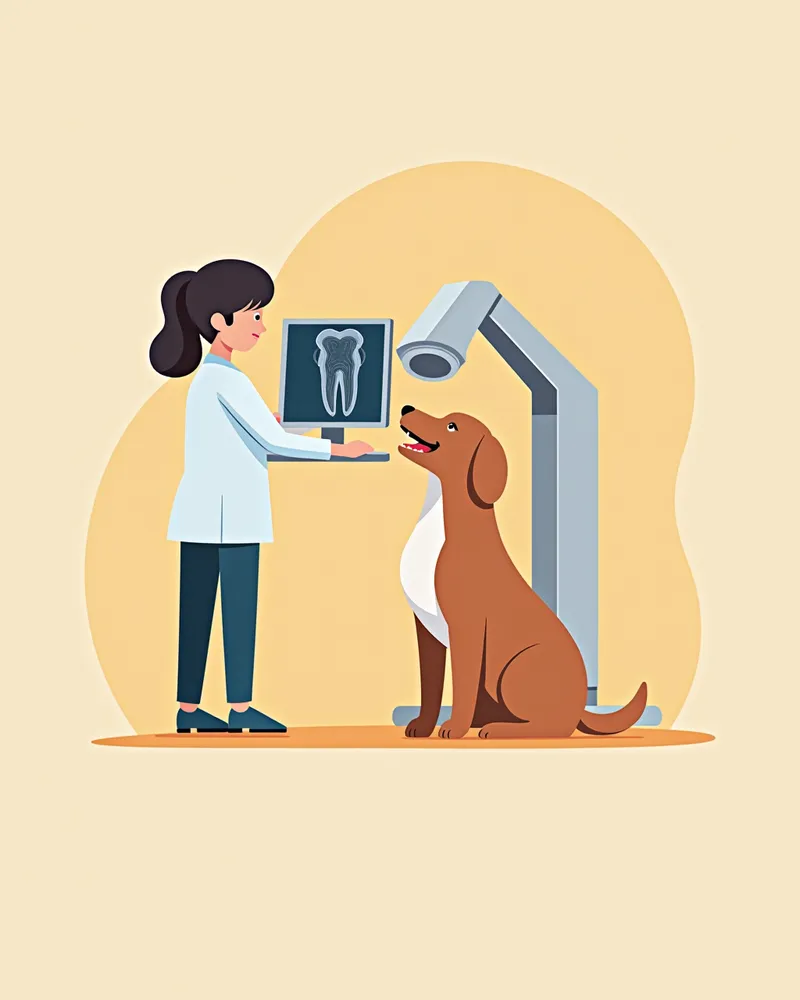
- Intraoral Imaging (Dental Radiography): This allows for a precise examination of the tooth roots and the structures beneath the gums. It is essential for identifying tooth damage or bone loss. To ensure an accurate assessment, this procedure should be performed alongside an examination under anesthesia. - Blood Tests: Complete blood counts and biochemical profiles are used to evaluate overall systemic health and check for any organ dysfunction prior to anesthesia. This is particularly important for senior dogs or those with a history of illness. - Periodontal Disease Assessment: The severity of periodontal disease is accurately determined by integrating results from the oral examination under anesthesia, dental radiographs, and blood tests. - Treatment Planning: Based on the diagnostic findings, a customized treatment plan is established, which may include scaling, tooth extraction, or antibiotic prescriptions. - Preventive Approach: Early diagnosis helps reduce the burden of treatment and enhances your dog’s quality of life. - Individualized Examination Schedule: Whether examinations should be conducted every six months depends on each dog’s specific condition. It is best to consult with your veterinarian to determine the appropriate schedule.
A veterinarian taking an X-ray image of a puppy’s tooth roots.

Treatment Methods Proceed in Stages, Including Tartar Removal, Tooth Extraction, and Antibiotic Administration

- Tartar Removal (Scaling): Under general anesthesia, tartar is removed using an ultrasonic scaler and hand curettes, followed by polishing the tooth surfaces. This step is essential for restoring gum health. - Tooth Extraction: If periodontitis is severe, causing significant tooth mobility or pain, the affected tooth may need to be extracted. - Antibiotic Administration: If infection is suspected, antibiotics are prescribed to suppress bacterial growth. - Pain Management: Analgesics may be administered alongside treatment to alleviate post-procedure pain. - Post-Treatment Care: Regular check-ups and consistent home care remain essential even after treatment. - Personalized Treatment Plan: Your veterinarian will develop a tailored treatment plan based on your pet’s weight, age, and overall health status.
A veterinarian performing dental scaling on an anesthetized puppy

Key Home Management Points are Brushing and Dental Treats

- Daily brushing: The most effective way to maintain oral health is to brush your pet’s teeth once or twice a day. - Dental treats: Choose treats designed to inhibit tartar buildup. - Water-soluble toothpaste: Using this during brushing helps protect tooth surfaces and reduce bad breath. - Dietary adjustments: Feed hard kibble rather than soft food to help strengthen teeth. - Regular check-ups: Alongside home care, have your pet examined by a veterinarian every six months. - Professional product recommendations: Using products recommended by your veterinarian can enhance effectiveness.
A puppy chewing on a dental health treat

Certain Breeds are More Susceptible to Dental Diseases, So Caution is Needed

Small-breed dogs have tightly packed, small teeth, making them prone to rapid tartar buildup. In particular, dogs weighing under 5 kg and brachycephalic breeds (those with short muzzles) are more susceptible to acquired dental diseases, so they require extra attention to oral health care. It is recommended to shorten the interval between dental check-ups and to schedule regular veterinary examinations for these dogs.

Reviewed by a veterinarian

Dr. Tony — Punnawat Phongkittirak

Dr. Tony — Punnawat Phongkittirak

Veterinarian

A veterinarian who majored in veterinary medicine at Khon Kaen University, Thailand, and completed the IVSA program at North Carolina State University in the United States. Drawing on clinical experience at animal hospitals, he works in the pet healthcare field and is dedicated to building a digital care environment that connects pet parents with veterinarians.

Frequently Asked Questions

How often should you have your dog’s oral health checked?
While we generally recommend dental check-ups every six months, an accurate diagnosis requires a thorough oral examination and dental X-rays under anesthesia. The ideal frequency for these procedures can vary depending on your pet's individual health status and practical considerations. For senior pets, or those with specific breed-related or health concerns, we advise consulting with your veterinarian to establish a customized dental care schedule tailored to their unique needs.
Can oral exams be performed without anesthesia?
Anesthesia is necessary for an accurate examination. When your dog is conscious, stress, movement, and pain can make it difficult to thoroughly assess the teeth down to the roots and evaluate the overall condition of the mouth. An examination under anesthesia ensures a more precise diagnosis.
Is brushing your pet’s teeth at home enough?
Brushing your pet’s teeth at home is very important, but it’s difficult to detect or remove lesions below the gumline (around the tooth roots) with brushing alone. Regular veterinary check-ups and professional cleanings are necessary, while home care serves as a complementary measure.
Is it necessary to treat dental tartar once it forms?
Yes, tartar and the plaque that forms its foundation can cause gingivitis and periodontal disease. Additionally, oral bacteria can impact overall health, affecting organs such as the heart, liver, and kidneys, so early removal is recommended. Treatment involves scaling under anesthesia, followed by a precise diagnosis.
How much does an oral examination cost?
The cost of a dental check-up varies depending on the region and the veterinary clinic. When anesthesia, dental X-rays, and scaling are included, the typical range is between $50 to $100. However, if additional treatments are necessary, the cost may be higher.

Share

Related Guides

References

[1] Hart, B.L. et al. (2014) Long-term health effects of neutering dogs: Comparison of Labrador retrievers with golden retrievers. PLOS ONE 9, e102241.

[2] Logan, E.I. (2006) Dietary influences on periodontal health in dogs and cats. Veterinary Clinics of North America. Small Animal Practice 36, 1385–1401.

[3] Reddy, B.S. et al. (1998) Effect on canine oral health of adding chlorhexidine to a dental hygiene chew. J. Vet. Dent. 15 (3): 129–134.

This information is based on veterinary literature and does not replace diagnosis or treatment. Please consult a veterinarian for specific health concerns.

Metapet Co., Ltd. | CEO: Park Sung-yong | Business Reg. No. 417-88-02562 | Seoul, South Korea | Customer Center

Dog Dental Check-Ups: Recommended Frequency, Symptoms & Care | Meongsiljang