
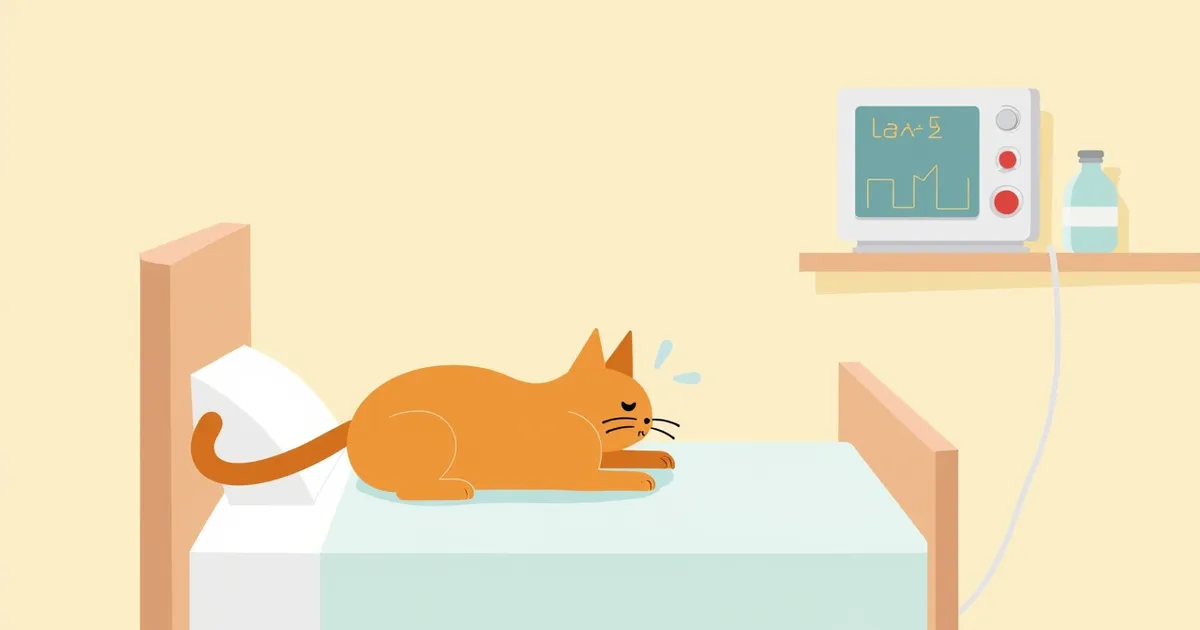
My Cat Is Constantly Lethargic and Having Seizures — Causes and Treatment Timing for Neoplasm-Induced Hypoglycemia
Hypoglycemia caused by feline neoplasms is a rare condition in which a tumor excessively secretes insulin. Because it can lead to sudden shock-like symptoms, early detection is crucial.
What Is Feline Neoplasm-Induced Hypoglycemia?

What Is the Primary Cause?

Key Symptoms and Signs

Symptoms Requiring Immediate Veterinary Visit
If your cat suddenly collapses, has a seizure, or loses consciousness, you should take them to the vet immediately. This could be a sign of acute hypoglycemia, which can be life-threatening. Hypoglycemia is diagnosed when blood glucose levels fall below 70 mg/dL, and clinical symptoms typically appear when levels drop below 54 mg/dL. Intravenous glucose administration is necessary, and in some cases, glucagon may also be required.
How Is It Diagnosed?

What Are the Treatment Options?
Home Care Points

Preventing Recurrence and Precautions
Regular follow-up exams are necessary even after the tumor has been removed. Because hypoglycemia can recur or metastasis may occur, you should have blood tests and imaging studies performed at the intervals recommended by your veterinarian. Additionally, if symptoms of hypoglycemia reappear, seek veterinary care immediately. It is helpful for pet owners to keep detailed records of any changes in symptoms.
Reviewed by a veterinarian

Dr. Tony — Punnawat Phongkittirak
VeterinarianA veterinarian who majored in veterinary medicine at Khon Kaen University, Thailand, and completed the IVSA program at North Carolina State University in the United States. Drawing on clinical experience at animal hospitals, he works in the pet healthcare field and is dedicated to building a digital care environment that connects pet parents with veterinarians.
Reviewed 2026-06-01
Frequently Asked Questions
Can hypoglycemia caused by tumors in cats be treated?
What should I do if my pet shows signs of hypoglycemia?
Is this condition common in cats?
Is prevention possible?
What problems can occur if hypoglycemia recurs?
Symptoms and Management by Severity of Hypoglycemia
| Item | Mild | Moderate | Severe |
|---|---|---|---|
| Blood glucose level | Below 54–70 mg/dL | About 36–54 mg/dL | Around <36 mg/dL |
| Main symptoms | Mild weakness/lethargy, may be asymptomatic | Weakness, lethargy, muscle tremors, seizure-like symptoms | Seizures, collapse, decreased consciousness |
| Management method | Frequent small feedings, glucose supplementation as directed by the veterinarian | Immediate veterinary visit, intravenous glucose administration | Emergency treatment, intravenous glucose and glucagon administration if needed |
In cats, hypoglycemia is usually considered to be blood glucose below 70 mg/dL, but clear severity-based threshold criteria have not been established, and some cats may have mild symptoms even below 36 mg/dL. If symptoms appear, an immediate veterinary visit is necessary.
Share
Related Guides

Top 5 Prescription Dog Foods for Diabetes Recommended by Veterinarians — Blood Sugar-Stabilizing Food Comparison

7 Key Products for Managing Feline Hypercalcemia Recommended by Veterinarians and Selection Criteria

7 Key Points for Canine Thyroid T4 Testing by Veterinarians — From Timing to Result Interpretation

Dog Dry vs Wet vs Raw Food Selection: Symptoms, Causes, Diagnosis, Treatment, and Management Points Summary

Complete Guide to Canine Dental Preventive Care: Symptoms, Causes, Diagnosis, Treatment, and Management Points

Comprehensive Guide to Breed-Specific Exercise Recommendations for Dogs: Symptoms, Causes, Diagnosis, Treatment, and Management

Comprehensive Guide to Managing Cats During Winter Cold Snaps: Hypothermia Prevention, Symptoms, Causes, Diagnosis, Treatment, and Care Points

Feline Spaying and Neutering: Pros and Cons, Symptoms and Causes, Diagnosis, Treatment, and Management Tips

Complete Guide to Feline Rabies Vaccination: Symptoms, Causes, Diagnosis, Treatment, and Management

Complete Guide to Cat Age Conversion: Symptoms, Causes, Diagnosis, Treatment, and Management
References
[1] Nelson, R.W., et al. (2021). Small Animal Internal Medicine, 6th Edition. Elsevier.
[2] Feline Emergency and Critical Care Medicine, 2nd Edition (2020). Elsevier Saunders.
[3] Plumb's Veterinary Drug Handbook, 9th Edition (2022). Wiley-Blackwell.