
Like
Share
멍실장
강아지 비대성 심근병증 개 증상과 원인, 진단·치료와 관리 포인트 총정리

If Your Dog Suddenly Loses Energy — Causes and Treatment of Hypertrophic Cardiomyopathy

HeartDiseasesMeongsiljang Veterinary Advisory Board

Canine hypertrophic cardiomyopathy is a genetic condition in which the heart muscle abnormally thickens, impairing cardiac function. Early detection and management are key to improving survival rates.

Canine Hypertrophic Cardiomyopathy Is a Genetic Condition in Which the Heart Muscle Abnormally Thickens

An anatomical illustration showing hypertrophy of the heart muscle
Hypertrophic cardiomyopathy in dogs is a heart muscle disease characterized by abnormal thickening of the left ventricular wall. This thickening can impair the heart’s ability to relax and fill with blood. While hypertrophic cardiomyopathy is the most common form of cardiomyopathy in cats, it is considered rare in dogs. - Sarcomere (myofibril) disease: Hypertrophic cardiomyopathy is associated with mutations in the contractile proteins (sarcomeres) of the heart muscle, and familial (hereditary) forms have been reported. - Exclusion of load factors: A key feature is the thickening of the ventricular wall in the absence of other causes such as aortic stenosis, systemic hypertension, or hyperthyroidism. - Early detection: Because early symptoms may be mild or absent, regular cardiac examinations are helpful. - Importance of management: Lifelong, continuous care is required, and it is important to monitor the condition through regular check-ups.

Genetic Factors Are the Primary Cause, Linked to Specific Gene Mutations

Canine hypertrophic cardiomyopathy is a condition linked to genetic mutations in sarcomere genes (the proteins responsible for heart muscle contraction), and familial (hereditary) forms have been reported. - Sarcomere mutations: In human hypertrophic cardiomyopathy, mutations in the myosin heavy chain (MYH7) gene were first identified, and over 1,400 mutations have since been documented across more than 14 sarcomeric protein genes. - Familial occurrence: A familial form exists, in which the same condition appears in multiple members of the same family. - Rare occurrence: Hypertrophic cardiomyopathy is common in cats but considered rare in dogs. - Exclusion of load factors: It is characterized by thickening of the ventricular walls in the absence of other causes, such as systemic hypertension or hyperthyroidism.
Scientific visualization of the striatin gene mutation

Do Not Miss Key Symptoms and Signs

The early signs of canine hypertrophic cardiomyopathy can be mild or even absent. However, as heart function declines, the following symptoms may appear:
Exercise intolerance and lethargy: Your dog may tire more easily than usual, struggle with physical activity, move less, and need more rest.
Rapid or labored breathing: You may notice shortness of breath (tachypnea) or difficulty breathing, which can occur as congestive heart failure progresses and fluid accumulates in the lungs or chest cavity.
Fainting: Sudden collapse or fainting is a relatively common sign, often linked to ventricular arrhythmias.
Sudden death: In some cases, sudden death has been reported.
If you notice any of these symptoms, seek veterinary care immediately.
Dogs showing signs of fainting

Emergency Signs Requiring Immediate Veterinary Visit

If your dog suddenly collapses, appears to be struggling severely with breathing, or develops bluish discoloration in the gums, tongue, or mouth (cyanosis), seek emergency veterinary care immediately. These signs may indicate that congestive heart failure has progressed to the point of fluid accumulation in the lungs or pleural effusion, which can be life-threatening.

Diagnosis Is Accurately Confirmed via Echocardiogram and Electrocardiogram
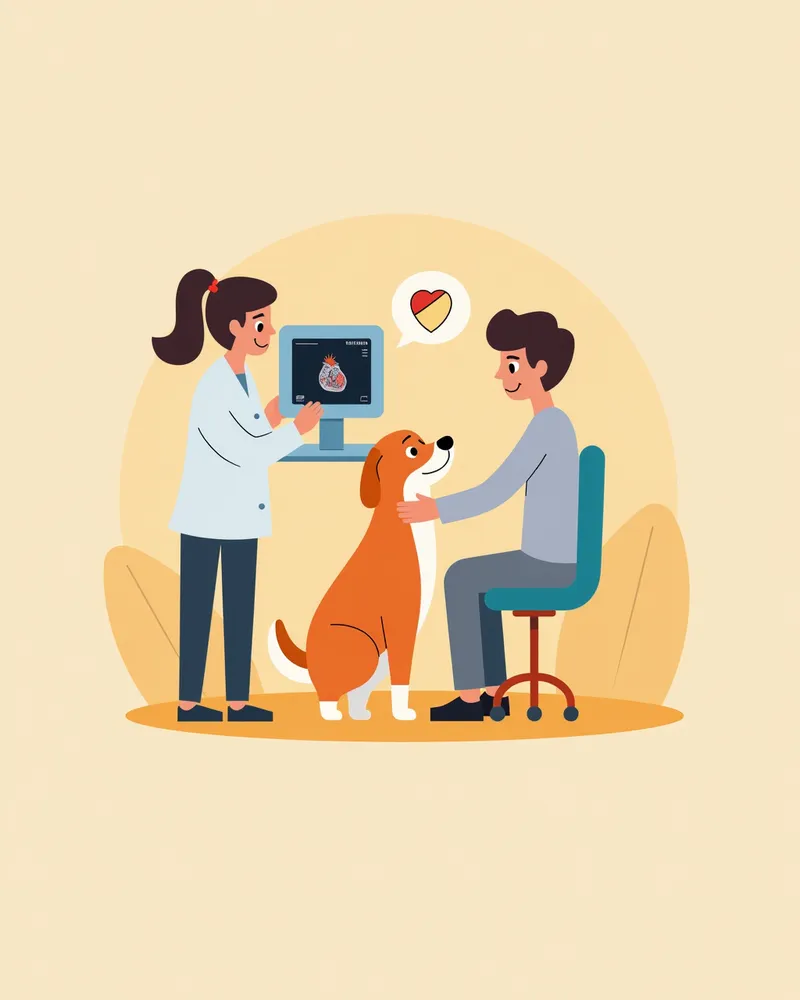
Hypertrophic cardiomyopathy in dogs is most accurately diagnosed using an echocardiogram (cardiac ultrasound). Echocardiography is the most sensitive non-invasive test for diagnosing hypertrophic cardiomyopathy. - Echocardiogram: This allows real-time observation of the left ventricular wall thickness and motion, enabling assessment of hypertrophy and its severity. However, results can vary depending on the operator’s expertise. - Electrocardiogram (ECG): This helps identify arrhythmias and confirm abnormalities in heart rhythm. - Thoracic Radiographs: These are used to detect signs of heart failure, such as pulmonary edema or pleural effusion. - Blood Tests: Serum chemistry and cardiac biomarkers provide supplementary evaluation of heart condition. - Regular Check-ups: Even in the absence of symptoms, regular cardiac screenings enable early detection.
A dog undergoing an echocardiogram

Treatment Proceeds with Medication and Lifestyle Management Tailored to Symptoms

Treatment for canine hypertrophic cardiomyopathy combines medication and lifestyle management tailored to the dog’s symptoms. - Beta-blockers: Beta-blockers such as atenolol help slow the heart rate, reduce oxygen consumption by the heart muscle, and allow more time for the heart to relax and fill with blood. - Calcium channel blockers: Calcium channel blockers may be used to dilate blood vessels and assist with myocardial relaxation. - Diuretics: Diuretics are effective in reducing congestion, such as pulmonary edema or pleural effusion, and alleviating the burden on the heart. - Ongoing management: Treatment must continue for the dog’s lifetime, requiring regular veterinary check-ups. - Treatment goals: The primary objectives are to alleviate symptoms, maintain quality of life, and extend survival time.
A puppy taking medicine

The Key to Home Management Is Reducing Cardiac Burden

Canine hypertrophic cardiomyopathy is a condition that requires lifelong management. - Exercise moderation: Excessive exercise can strain the heart, so low-impact activities like short, gentle walks are recommended. - Dietary management: Use a heart-support diet recommended by your veterinarian and avoid making arbitrary changes to your dog’s diet. - Stress reduction: Since your dog may be sensitive to environmental changes or noise, maintain a calm and stable environment. - Regular check-ups: Routine cardiac evaluations are essential for monitoring any changes in your dog’s condition. - Medication adherence: Administer prescribed medications exactly as directed, following the correct dosage and schedule. - Family involvement: Active participation from all family members in daily care is key to effectively managing this condition.
A dog resting in a calm and secure environment

Genetic Testing Recommended for Breeds Such as Boxers and Doberman Pinschers

Canine hypertrophic cardiomyopathy is a condition in which familial (hereditary) forms have been reported. Since the same disease can affect multiple members of a family, consider a cardiac examination and consultation before adoption or at the first check-up if your dog’s parents or siblings have a history of cardiomyopathy.

Reviewed by a veterinarian

Dr. Tony — Punnawat Phongkittirak

Dr. Tony — Punnawat Phongkittirak

Veterinarian

A veterinarian who majored in veterinary medicine at Khon Kaen University, Thailand, and completed the IVSA program at North Carolina State University in the United States. Drawing on clinical experience at animal hospitals, he works in the pet healthcare field and is dedicated to building a digital care environment that connects pet parents with veterinarians.

Frequently Asked Questions

Can canine hypertrophic cardiomyopathy be treated?
While a complete cure may not be possible, symptoms can be managed through medication and lifestyle adjustments, which can improve quality of life and extend lifespan. Regular check-ups for ongoing monitoring are essential.
Where can I get a genetic test done?
Hypertrophic cardiomyopathy can have a familial component, so it’s helpful to check the heart health history of your pet’s parents and siblings and discuss it with your veterinarian. Please consult your vet or a specialized institution to find out whether breed-specific genetic testing is available.
Why is dietary management important?
A veterinarian-recommended heart-support diet can help reduce cardiac workload and congestion. Please consult your veterinarian to determine the appropriate diet rather than making changes on your own.
My dog fainted. Could it be due to heart disease?
Fainting can be an important sign of heart problems, and it is often associated with arrhythmias. You should take your pet to the vet immediately for a cardiac examination.
Is dilated cardiomyopathy contagious to other dogs?
No. It is a condition linked to genetic factors, so it is neither infectious nor contagious. It is safe to raise your dog alongside other dogs.

Share

Related Guides

References

[1] Smith CE, Freeman LM, Rush JE, et al. Omega-3 fatty acids in Boxer dogs with arrhythmogenic right ventricular cardiomyopathy. J Vet Intern Med, 2007, 21:265-271.

[2] Basso C, Fox PR, Meurs KM, et al. Arrhythmogenic Right Ventricular Cardiomyopathy Causing Sudden Cardiac Death in Boxer Dogs: A New Entity. J Vet Cardiol, 2018, 20:113-122.

[3] Freid KJ, Freeman LM, Rush JE, et al. Retrospective study of dilated cardiomyopathy in dogs. J Vet Intern Med, 2020, 35(1):58-67. Epub ahead of print.

This information is based on veterinary literature and does not replace diagnosis or treatment. Please consult a veterinarian for specific health concerns.

Metapet Co., Ltd. | CEO: Park Sung-yong | Business Reg. No. 417-88-02562 | Seoul, South Korea | Customer Center

Canine Hypertrophic Cardiomyopathy: Causes & Treatment | Meongsiljang