Like
Share
멍실장
고양이 간 낭종 증상과 원인, 진단·치료와 관리 포인트 총정리

Feline Liver Cysts: Symptoms, Causes, Diagnosis, Treatment, and Management Essentials

Liver HealthDiseasesMeongsiljang Veterinary Advisory Board

Feline liver cysts are fluid-filled sacs that develop within the liver. While most are asymptomatic, larger cysts can impair liver function. Early detection and proper management are essential.

What Are Feline Liver Cysts?
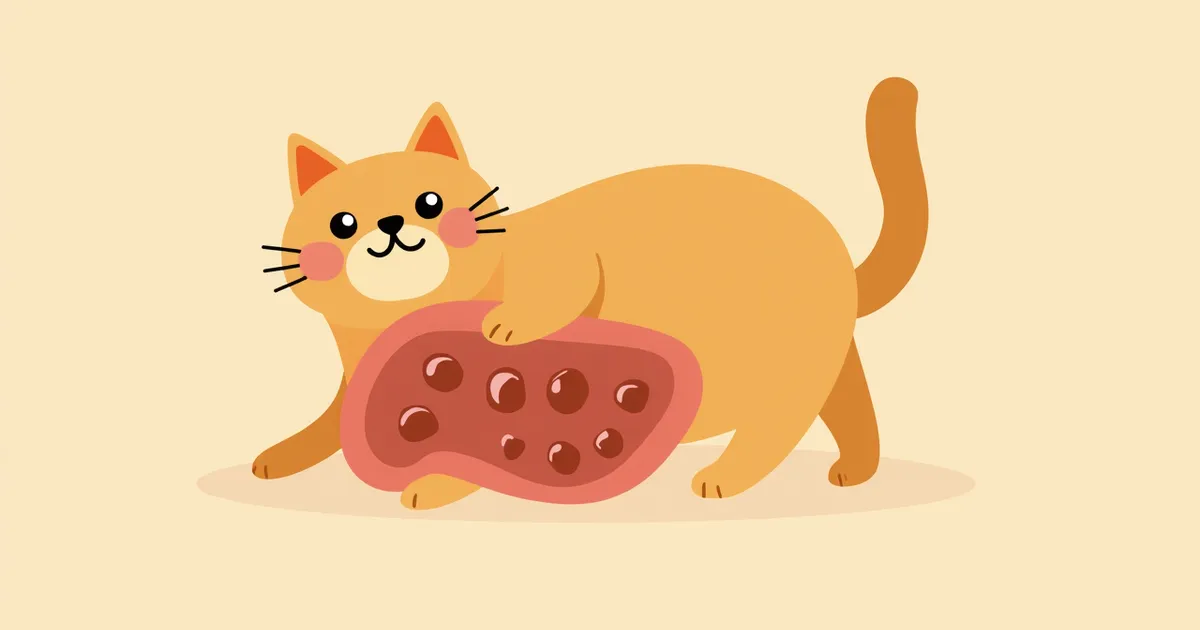
An anatomical illustration of a cat with a liver cyst
Feline hepatic cysts are fluid-filled cavities within the liver, most of which are non-neoplastic and can be either congenital or acquired. They may arise from structural abnormalities in which the ductal plate, a precursor to the intrahepatic bile ducts, forms abnormally during embryonic development. Most cases are asymptomatic, but as cysts enlarge, they can compress surrounding liver tissue and impair function. The likelihood of clinical signs increases when cysts grow significantly or exert clear pressure on adjacent tissues, at which point regular follow-up monitoring is essential. Early detection and ongoing surveillance are key to management, with careful attention to the growth rate and location of the lesions.

What Are the Main Causes of Liver Cysts?
The exact cause of most feline hepatic cysts remains unknown. In some cases, genetic predisposition plays a role; for example, cysts may accompany polycystic disease associated with PKD1 gene mutations reported in Persian cats. Many cysts are believed to arise from structural abnormalities during embryonic bile duct (biliary plate) development. Cysts accompanied by infection or inflammation may also be considered in clinical evaluations. Cysts typically appear as single or multiple lesions, and their impact varies depending on size and location. Genetic testing or histopathological examination may be necessary to determine the precise cause.
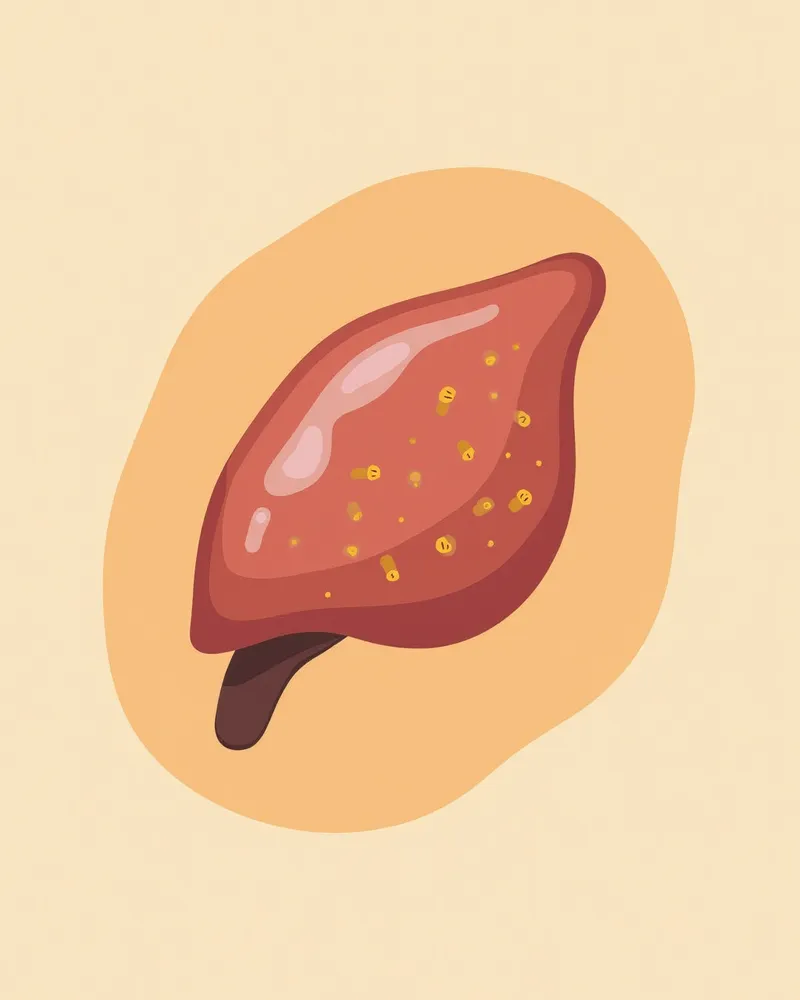
Microscopic image of a cystic structure observed in feline liver tissue

What Are the Main Symptoms and Signs?

Most feline liver cysts are asymptomatic. However, if a cyst grows large, the following signs may appear. The presence of symptoms indicates that the liver or surrounding tissues are already under strain.
Decreased appetite: When the liver is under stress, your cat may lose interest in food.
Weight loss: Prolonged reduced appetite can lead to gradual weight loss.
Abdominal distension: The abdomen may swell as the cyst enlarges or if ascites (fluid accumulation) develops.
Gastrointestinal discomfort: Digestive symptoms, such as vomiting, may also occur.
Increased fatigue: Your cat may become more lethargic and show reduced activity levels.
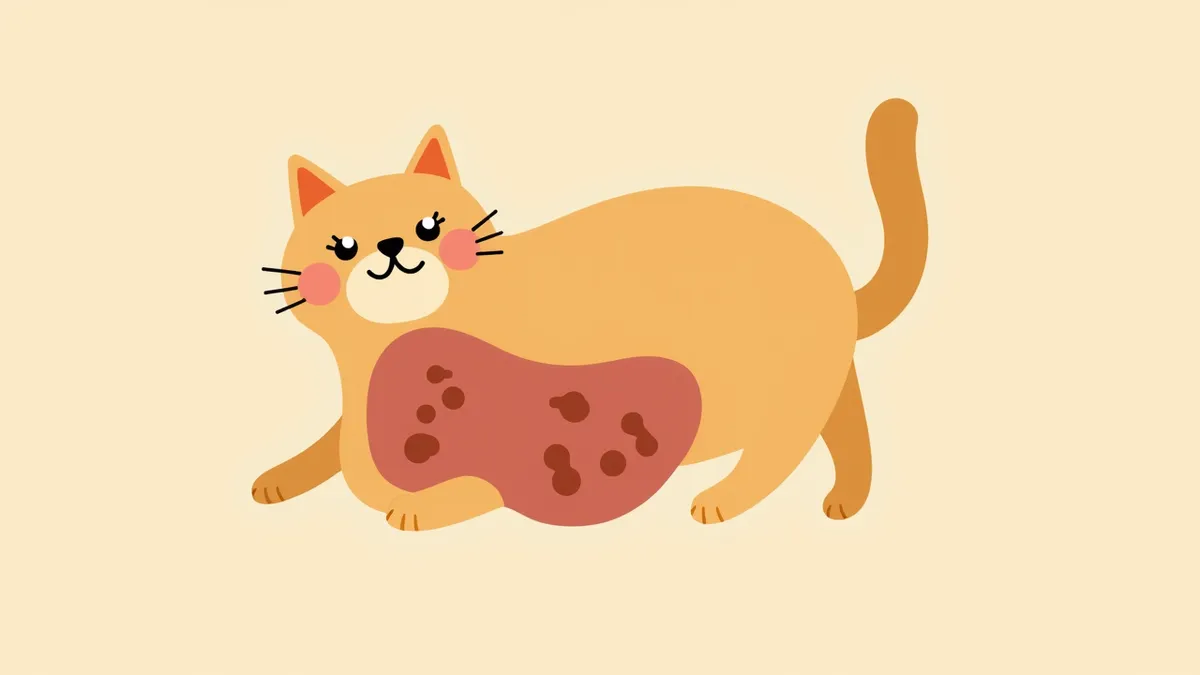
A cat with a slightly distended abdomen

When to Seek Immediate Veterinary Care

If your cat suddenly loses its appetite, vomits repeatedly, has a severely distended abdomen with fluid accumulation, or is breathing rapidly, seek veterinary care immediately. These symptoms may indicate that a cyst has grown large enough to compress surrounding organs or place a serious burden on liver function.

What Are the Accurate Diagnostic Methods?

Feline liver cysts are most accurately diagnosed via ultrasound, which is non-invasive and allows for real-time assessment of the cyst’s size, location, and shape. While CT and MRI scans may also be used, ultrasound is the most common and cost-effective option. Blood tests are performed to evaluate liver function and determine whether the cyst is affecting it. It is important to confirm that the lesion has well-defined borders and is filled with fluid. Regular follow-up examinations to monitor for changes are key to management.
Appearance of a cyst on a cat’s liver ultrasound image

Treatment Options and Step-by-Step Management

Small cysts can often be managed with observation alone. However, if the cyst exerts significant pressure on surrounding tissues or causes pain or other symptoms, the following treatment options may be considered:
Observation-based management: For small cysts, regular follow-up with ultrasound monitoring is the primary approach.
Symptom management: If pain or discomfort is present, symptomatic treatment may be provided based on the veterinarian’s assessment.
Cyst drainage: Ultrasound-guided aspiration can be performed to drain the fluid from the cyst.
Surgical removal: Larger cysts or tumor-like lesions such as cystadenomas may require surgical intervention, such as lobectomy.
Draining fluid from a cat’s liver cyst under ultrasound guidance

Home Management Essentials

Liver cysts are often difficult to completely eliminate, so ongoing management is essential. Please be sure to pay close attention to the following:
Regular check-ups: Monitor the size and any changes in the cyst through routine ultrasound examinations.
Nutritional care: Choose a balanced diet that minimizes stress on the liver, and consult your veterinarian before making any dietary changes.
Stress reduction: Be mindful of environmental changes and excessive noise.
Medication caution: Always consult your veterinarian before using any medications that may place additional strain on the liver.
Weight management: Avoid excessive obesity and maintain a healthy, appropriate body weight.
A cat enjoying a healthy diet

Certain Breeds Require Special Attention

Certain breeds, such as Persians and cats with Persian ancestry, are at higher risk of developing liver and kidney cysts due to a mutation in the PKD1 gene. Because this condition can be inherited in an autosomal dominant pattern, regular veterinary check-ups are essential for cats of these breeds.

Reviewed by a veterinarian

Dr. Tony — Punnawat Phongkittirak

Dr. Tony — Punnawat Phongkittirak

Veterinarian

A veterinarian who majored in veterinary medicine at Khon Kaen University, Thailand, and completed the IVSA program at North Carolina State University in the United States. Drawing on clinical experience at animal hospitals, he works in the pet healthcare field and is dedicated to building a digital care environment that connects pet parents with veterinarians.

Frequently Asked Questions

Are feline liver cysts cancerous?
Most of these are non-cancerous cysts. However, since tumor-like lesions such as adenomas can also occur, regular check-ups are important.
Can liver cysts not be treated?
Small cysts can be managed with observation alone. If the cyst grows larger, it can be treated with ultrasound-guided drainage or surgery.
Can a cat with a liver cyst still live a full life?
Yes, most cats are asymptomatic or have mild symptoms, so they can live a normal lifespan.
Are liver cysts hereditary?
In some breeds, such as Persians, a mutation in the PKD1 gene is inherited in an autosomal dominant pattern, predisposing them to the development of cysts in the liver and kidneys. The influence of genetic predisposition can vary significantly depending on the breed.
What problems can arise when a liver cyst grows larger?
Symptoms may include impaired liver function, abdominal distension or ascites, pain due to capsular stretching, loss of appetite, and weight loss.

Share

Related Guides

References

[1] Fowler, L.B., et al. (2020). Ecological level analysis of primary lung tumors in dogs and cats and environmental radon activity. J Vet Intern Med, 34(6):2660–2670.

[2] Mellanby, R.J., et al. (2002). Anal sac adenocarcinoma in a Siamese cat. J Feline Med Surg, 4(4):205–207.

[3] Heaton, C.M., et al. (2020). Evaluation of toceranib for treatment of apocrine gland anal sac adenocarcinoma in dogs. J Vet Intern Med, 34(2):873–881.

This information is based on veterinary literature and does not replace diagnosis or treatment. Please consult a veterinarian for specific health concerns.

Metapet Co., Ltd. | CEO: Park Sung-yong | Business Reg. No. 417-88-02562 | Seoul, South Korea | Customer Center

Feline Liver Cysts: Symptoms, Causes, Diagnosis & Treatment | Meongsiljang