Like
Share
멍실장
고양이 지알디아감염 증상과 감염 경로, 치료·예방법 총정리

Feline Giardiasis: Symptoms, Transmission Routes, and Treatment & Prevention Guide

Infection/ParasitesDiseasesMeongsiljang Veterinary Advisory Board

Feline giardiasis is a gastrointestinal parasitic disease caused by protozoa that parasitize the small intestine. The main symptoms include diarrhea and weight loss, and early diagnosis along with environmental disinfection are key to preventing recurrence.

What is Feline Giardiasis?

Cats and the Litter Box — A Basic Guide to Giardia Infection
Feline giardiasis is a gastrointestinal parasitic disease caused by the single-celled protozoan Giardia duodenalis, which parasitizes the small intestine and leads to chronic diarrhea and weight loss. Early detection is key. If your cat has loose or mucus-containing stools that persist for more than two to three days, don’t dismiss it as simple indigestion—visit your veterinarian for a fecal examination. Kittens and immunocompromised cats are especially at risk of dehydration and malnutrition, so prompt action is essential.

Transmission Routes — How Does It Spread?

Giardia cysts can survive in the environment for at least three weeks, and even longer under favorable conditions. Infection begins when a cat ingests these cysts from the feces of an infected cat.
Ingestion of contaminated water or food: Standing water, puddles, untreated water, and contaminated food or soil are common sources of infection.
Fecal-oral route: The parasite spreads through direct or indirect contact with the feces of an infected cat.
Multi-cat households: The infection can easily spread when multiple cats share the same litter box.
Introduction from outside: Cysts can be brought indoors on the shoes or clothing of pet owners.

Checklist of Main Symptoms

Although many cats infected with Giardia show no symptoms, the most common sign when symptoms do appear is small intestinal diarrhea.
Loose stools/diarrhea: Watery or mucus-containing stools may recur and can be intermittent.
Steatorrhea (fatty stools): Poor fat absorption in the small intestine can lead to foul-smelling, greasy stools.
Weight loss: Gradual weight loss may occur due to malabsorption, though this is not very common.
Vomiting: This can occur in some cats but is relatively rare.
Lethargy and decreased appetite: Reduced activity levels and appetite are also uncommon accompanying signs.
A lethargic-looking cat — symptoms of Giardia infection

When to Seek Immediate Veterinary Care

If any of the following apply, seek veterinary care immediately: • Blood in the stool (red or black) • Refusal to eat for more than 24 hours • Severe dehydration (loss of skin elasticity, sunken eyes) • Extreme lethargy or decreased level of consciousness • Diarrhea lasting more than one day in a kitten

Diagnostic Methods — How Is It Confirmed?

Diagnosing Giardia typically begins with a fecal exam. Veterinarians usually combine the following methods to confirm the diagnosis:
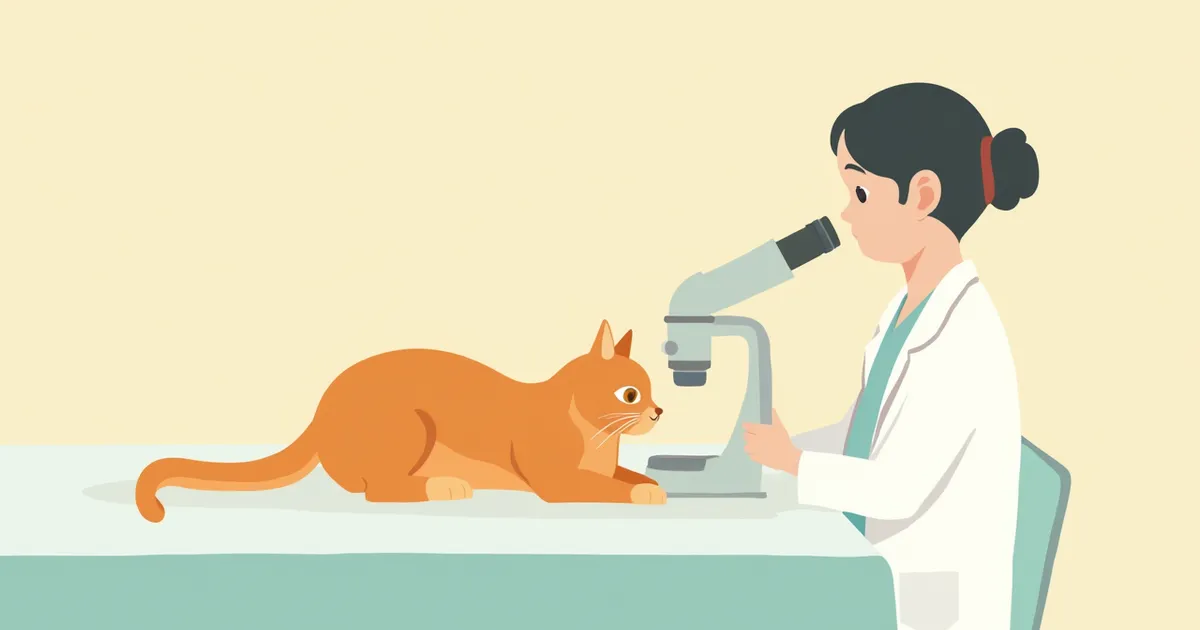
Direct fecal smear: Fresh stool is examined under a microscope to directly identify trophozoites or cysts.
Fecal flotation: A special solution is used to float cysts for detection, with centrifugal flotation being more sensitive than standard flotation techniques.
ELISA antigen test: This method detects Giardia antigens in the stool.
Because Giardia cysts are shed intermittently, a single negative result may not be definitive. Therefore, veterinarians often recommend testing over three consecutive days or using genetic testing (PCR) for greater accuracy.

Treatment Methods — Which Medications Are Used?
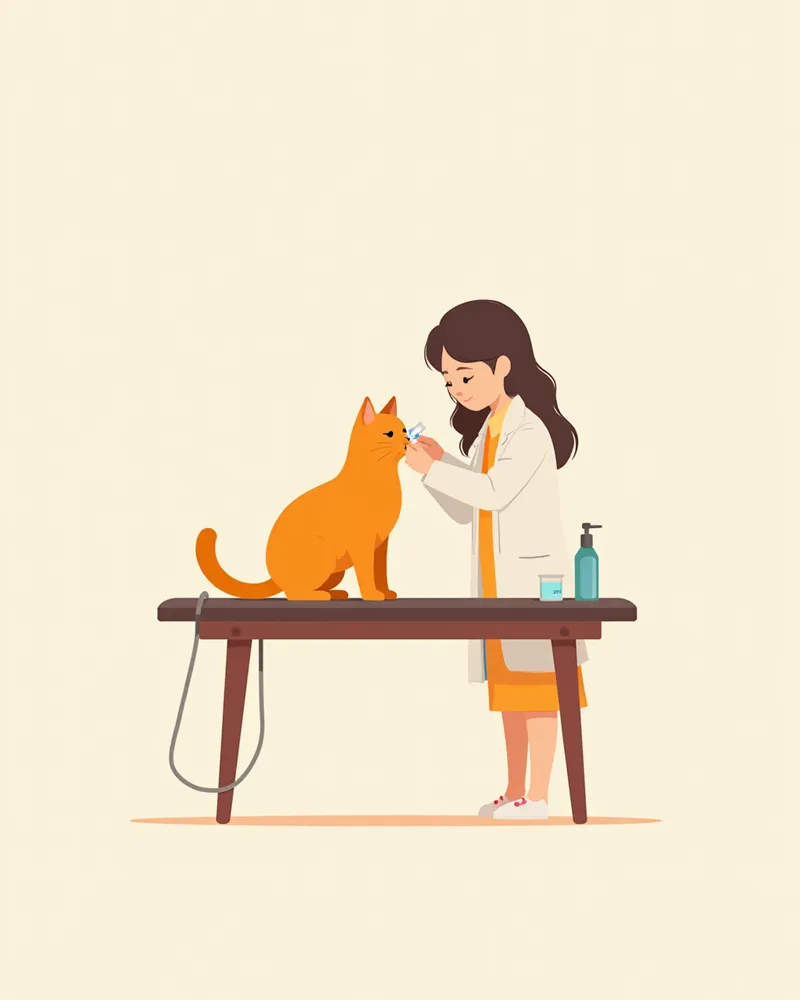
Giardia treatment primarily relies on prescription antiprotozoal medications from your veterinarian. The most common drugs are metronidazole and fenbendazole; typically, one of these two is used, as they are known to have similar efficacy. The treatment duration is approximately five days for fenbendazole and about five to eight days for metronidazole. Even if symptoms disappear, stopping medication prematurely increases the risk of recurrence, so it is essential to complete the full prescribed course. In some cases, it may be difficult to completely eliminate the infection, so the initial treatment goal is often to stop the diarrhea. If dehydration is severe, fluid therapy may be administered alongside the medication.
A veterinarian administering medication to a cat.

Environmental Management You Can Do at Home
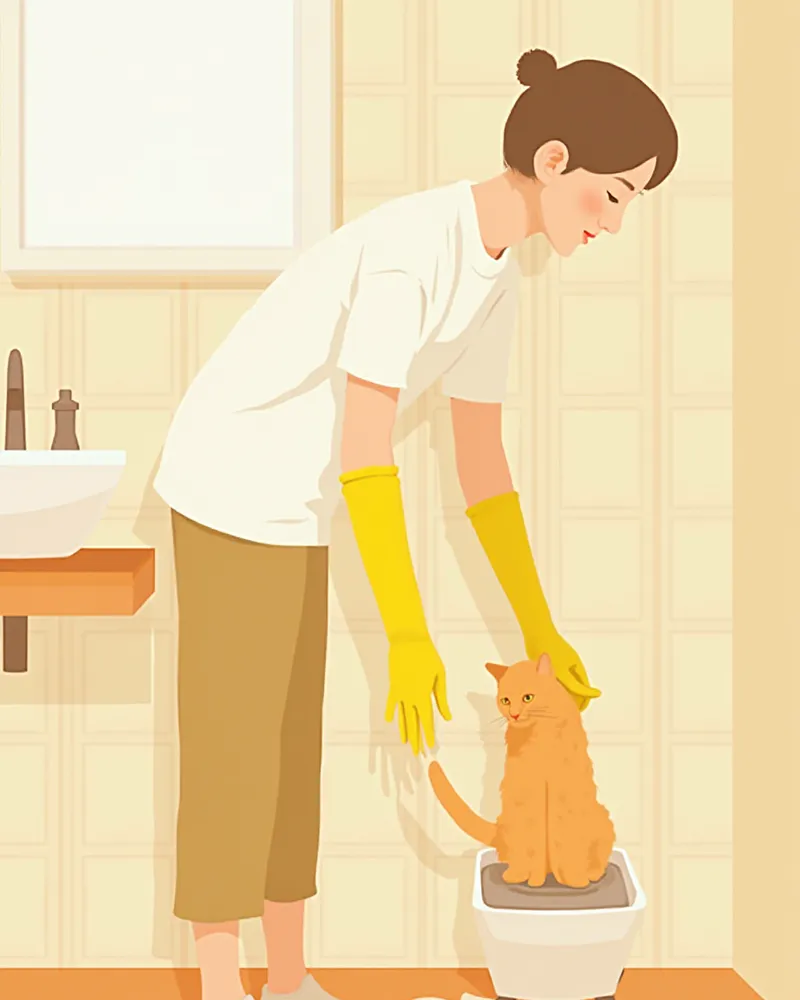
To prevent reinfection, environmental disinfection must be carried out alongside medication.
Litter box disinfection: Remove feces immediately every day, and disinfect the box once or twice a week with boiling water (100°C) or a dedicated disinfectant.
Food and water bowls: Wash them daily and rinse with boiling water.
Bedding and toys: Launder washable items at high temperatures.
Hand washing: Always wash your hands with soap after handling feces. Although Giardia is a zoonotic parasite, cats rarely carry strains that infect humans, so transmission from cats to people is uncommon and has not yet been definitively proven. Nevertheless, maintaining hand hygiene is essential.
Disinfecting Your Cat’s Litter Box — Preventing Giardia Reinfection

Follow-Up Testing Is Essential After Treatment

Even after symptoms subside, cysts may continue to be shed in the feces. We recommend follow-up fecal testing 2–4 weeks after completing treatment. Kittens, immunocompromised cats, and multi-cat households are at particularly high risk of recurrence.

Reviewed by a veterinarian

Dr. Tony — Punnawat Phongkittirak

Dr. Tony — Punnawat Phongkittirak

Veterinarian

A veterinarian who majored in veterinary medicine at Khon Kaen University, Thailand, and completed the IVSA program at North Carolina State University in the United States. Drawing on clinical experience at animal hospitals, he works in the pet healthcare field and is dedicated to building a digital care environment that connects pet parents with veterinarians.

Frequently Asked Questions

Can Giardia be transmitted to humans?
Giardia is a zoonotic parasite, meaning certain genotypes (assemblages A and B) can infect humans. However, cats rarely carry the types that are transmissible to people, so direct transmission from cats to humans is uncommon and has not yet been definitively proven. Nevertheless, it’s a good idea to wash your hands after handling feces, and extra caution is advised in households with young children or individuals with weakened immune systems.
Can indoor-only cats get it too?
Yes, it’s possible. Cysts can hitch a ride on the shoes or clothing of owners who go outside, bringing them into the home, and infection can also occur through ingestion of contaminated water. So even indoor cats aren’t entirely safe.
When should my pet have a follow-up checkup after treatment?
We recommend a follow-up stool test 2 to 4 weeks after treatment is complete. Even if symptoms have disappeared, cysts may continue to be shed, so confirmation is necessary.
Should infected cats be isolated in multi-cat households?
We recommend isolating your cat during treatment. Reducing the use of shared litter boxes and promptly cleaning up feces are the most effective ways to prevent the spread of the infection to other cats.
What should I do if the condition keeps recurring despite treatment?
If symptoms persist after two or more treatments, your veterinarian may need to try a different combination of medications or perform differential diagnosis to rule out other protozoal infections, such as Trichomonas. Be sure to consult with your vet.

Share

Related Guides

References

[1] Little SE. The Cat: Clinical Medicine and Management, 2nd Edition. Elsevier Saunders, 2012.

[2] Lappin MR. Protozoan and Miscellaneous Infections. In: Greene CE, ed. Infectious Diseases of the Dog and Cat, 4th Edition. Elsevier Saunders, 2012.

[3] Gookin JL, Levy MG, Law JM, et al. Experimental infection of cats with Tritrichomonas foetus. Am J Vet Res. 2001;62(11):1690–1697.

[4] Palmer CS, Traub RJ, Robertson ID, et al. Determining the zoonotic significance of Giardia and Cryptosporidium in Australian dogs and cats. Vet Parasitol. 2008;154(1-2):142–147.

This information is based on veterinary literature and does not replace diagnosis or treatment. Please consult a veterinarian for specific health concerns.

Metapet Co., Ltd. | CEO: Park Sung-yong | Business Reg. No. 417-88-02562 | Seoul, South Korea | Customer Center

Feline Giardiasis: Symptoms, Transmission & Prevention Guide | Meongsiljang