Like
Share
멍실장
고양이 진균성 호흡기 감염(아스페르길루스) 증상과 원인, 진단·치료와 관리 포인트 총정리

Feline Fungal Respiratory Infections (Aspergillus): Symptoms, Causes, Diagnosis, Treatment, and Management Essentials

RespiratoryDiseasesMeongsiljang Veterinary Advisory Board

Fungal respiratory infections in cats, such as those caused by Aspergillus, occur when airborne spores invade the lungs or nasal passages, leading to inflammation. Early detection and appropriate treatment are crucial.

What Are Feline Fungal Respiratory Infections (Aspergillus)?

Image of Aspergillus spores in a cat's nasal cavity
Feline fungal respiratory infections caused by Aspergillus occur when airborne Aspergillus spores invade the nasal cavity and sinuses. Although relatively rare in cats, this condition is increasingly being diagnosed and is recognized as an emerging disease. It is classified into two forms: the nasal form, which is confined to the nose and sinuses, and orbital form, which extends to the area around the eyes; the orbital form is more invasive. Since Aspergillus is a fungus ubiquitous in the natural environment, it can affect even systemically healthy cats, with localized immune suppression presumed to play a role. Early symptoms are often mild, such as sneezing and nasal discharge, making the condition easy to overlook. Because the disease can progress aggressively, prompt diagnosis and intensive treatment are crucial. Owners should be aware that treatment is prolonged and recurrence is possible.

Primary Causes and Risk Factors of Infection
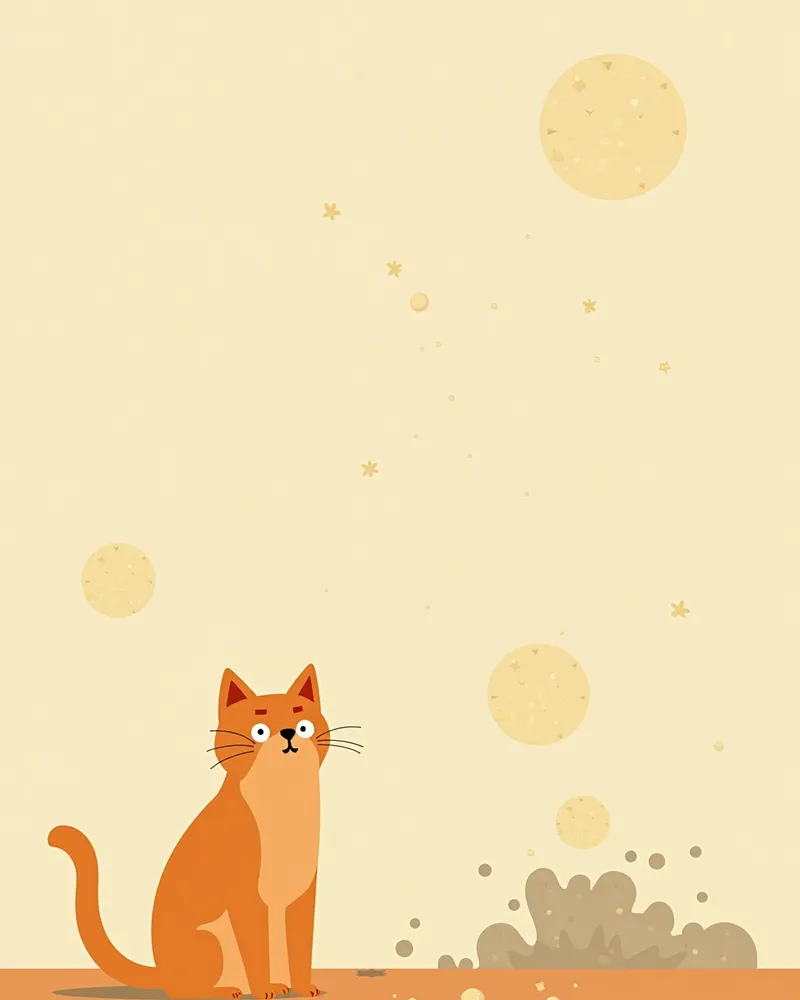
The primary cause of fungal respiratory infections in cats is the inhalation of airborne Aspergillus spores, which invade the nasal cavity and sinuses. Aspergillus is a fungus commonly found in natural environments such as soil and decaying organic matter, making it difficult to completely avoid everyday exposure. Although this condition can occur in systemically healthy cats, it is believed that localized immune suppression plays a role in its development. Purebred brachycephalic (short-nosed) cats, particularly Persians and Himalayans, may be at higher risk for orbital aspergillosis, which can extend to the area around the eyes. However, there is no clear evidence that specific coat colors or breeds are more susceptible. Additionally, environments near soil or decaying organic matter, as well as situations where cleaning generates significant dust, can increase spore exposure. Therefore, recognizing and managing these risk factors is important for early prevention.
A scene showing Aspergillus spores spreading in a humid environment

Key Symptoms and Sign Checklist

Symptoms of feline fungal respiratory infections develop gradually over weeks to years, making them easy for pet owners to overlook. To ensure early detection, please watch for the following signs:
Persistent sneezing: Frequent, repetitive sneezing.
Signs of rhinitis: Nasal discharge may progress from serous to mucopurulent, and in severe cases, become bloody (epistaxis).
Unilateral or bilateral nasal signs: Discharge from one or both nostrils is common.
Facial asymmetry: In orbital forms that extend to the eye area, the face may appear asymmetrical.
Decreased appetite and weight loss: Reduced food intake or refusal to eat can lead to gradual weight loss.
Ocular signs: In orbital forms, abnormalities such as inflammation, redness, or protrusion around the eyes may occur.
A cat with a runny nose and watery eyes

Emergency Signs Requiring Immediate Veterinary Visit

If your cat is having trouble breathing or has blood in its nasal discharge (nosebleeds), you should consult a veterinarian immediately. Nosebleeds can be a sign that a fungal infection is aggressively destroying tissues inside the nasal cavity, such as the turbinates, and if treatment is delayed, the condition can worsen rapidly.

Diagnostic Tests for Accurate Diagnosis
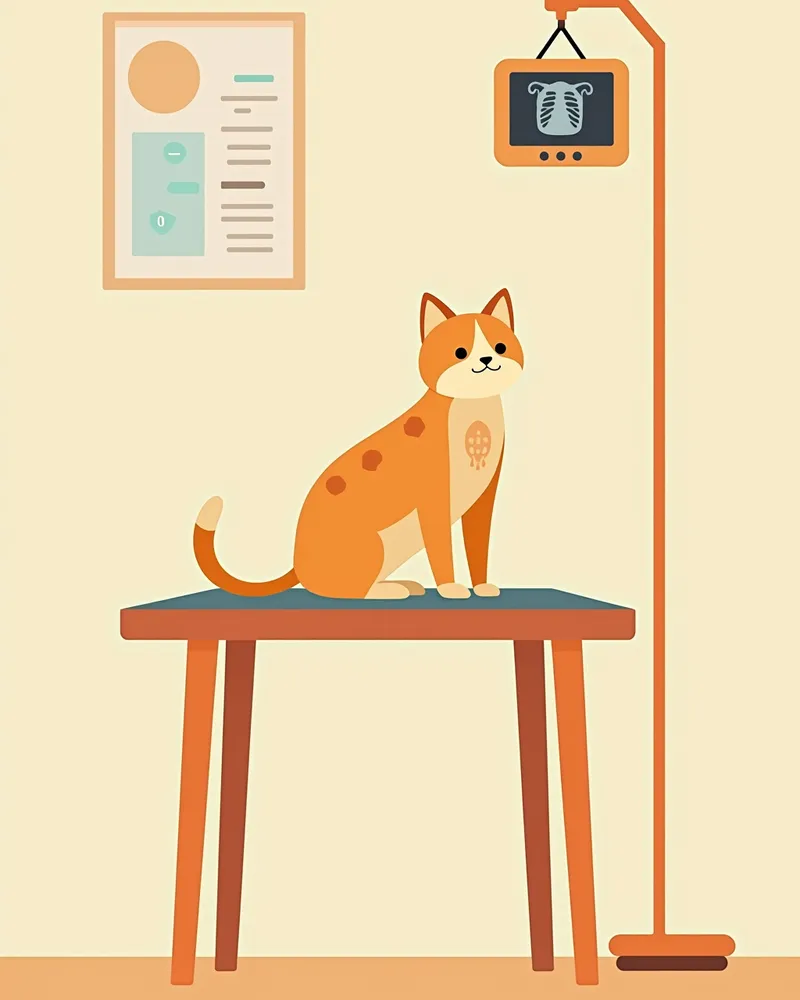
- CT (Computed Tomography): This imaging test helps evaluate the extent of lesions in the nasal cavity and sinuses, check for bone destruction, and determine whether both sides are affected. - Nasal Endoscopy: This procedure allows direct visualization inside the nose to identify characteristic whitish fungal plaques and collect samples. - Cytology: Samples taken from fungal plaques or masses via endoscopy are examined under a microscope to confirm the presence of fungal hyphae. This method improves diagnostic accuracy. - Fungal Culture: This test involves culturing collected samples to identify fungi such as Aspergillus. - Physical, Oral, and Ophthalmic Examinations: Palpation of the face along with oral and eye exams help assess the extent of involvement. Multiple tests are performed together to ensure an accurate diagnosis.
A cat undergoing a chest X-ray.

Treatment Methods and Step-by-Step Management

In treating feline fungal respiratory infections, surgically removing and cleaning fungal plaques (lesions) is considered a crucial step. Antifungal medications are used in conjunction with this procedure, with itraconazole being the recommended choice for cats; the dosage is determined by the veterinarian based on the cat’s body weight. In some cases, medications such as clotrimazole may be applied topically inside the nasal cavity. The prognosis is relatively favorable for the nasal form if it responds well to treatment, whereas the orbital form, which involves invasion around the eyes, can carry a poorer prognosis. Because treatment can last from three to ten months or longer, it is essential to continue medication consistently without stopping it arbitrarily. During treatment, regular examinations should be conducted to monitor the response, and combining the removal of fungal masses with long-term antifungal therapy may prove effective.
A veterinarian prescribing antifungal medication

Home Care and Prevention Points

- Control indoor humidity: Use an air purifier and ventilate regularly to reduce moisture, creating an environment where mold struggles to grow. - Be mindful during cleaning: Store compost, soil, and grains in airtight containers, and wear a mask when performing dusty cleaning tasks. - Diet management: Feed a balanced diet to support overall health. - Reduce stress: Maintain a stable daily environment for your cat to minimize stress. - Care during treatment: Strictly adhere to the medication schedule and do not stop treatment without consulting your veterinarian. - Regular check-ups: Since Aspergillosis can recur, continue with regular veterinary check-ups even after treatment is complete to monitor for any signs of relapse.
A cat resting comfortably in a clean indoor environment

Preventing Recurrence and Breed-Specific Precautions

Purebred brachycephalic (short-nosed) cats, particularly Persians and Himalayans, may be more susceptible to orbital aspergillosis, which can extend to the area around the eyes. The orbital form is the most invasive and common type, and it can carry a poor prognosis, so these breeds require closer monitoring for nasal and ocular symptoms. Additionally, aspergillosis can recur, so regular check-ups are essential even after treatment is completed to consistently monitor for any signs of recurrence.

Reviewed by a veterinarian

Dr. Tony — Punnawat Phongkittirak

Dr. Tony — Punnawat Phongkittirak

Veterinarian

A veterinarian who majored in veterinary medicine at Khon Kaen University, Thailand, and completed the IVSA program at North Carolina State University in the United States. Drawing on clinical experience at animal hospitals, he works in the pet healthcare field and is dedicated to building a digital care environment that connects pet parents with veterinarians.

Frequently Asked Questions

Can fungal respiratory infections in cats be transmitted to humans?
There is no clear evidence that Aspergillus infections in cats are directly transmitted to humans. However, since Aspergillus is a fungus found everywhere in the environment, people with severely weakened immune systems (such as cancer patients or post-transplant patients) should be cautious when exposed to environmental spores.
How long does the treatment period last?
Antifungal medications typically require a treatment course of three to ten months or longer. During treatment, regular check-ups are essential to monitor your pet’s response to therapy, and it is crucial not to discontinue the medication without veterinary guidance.
Is Aspergillus infection curable?
The nasal form, which is confined to the nose and sinuses, generally has a relatively favorable prognosis when it responds to treatment; with consistent therapy and environmental management, symptoms often improve. However, the orbital form, which extends to the area around the eyes, may have a poorer prognosis, and delayed treatment can lead to severe tissue damage and lasting sequelae.
What can be done at home to prevent it?
It’s important to remove moisture, store compost and grains in airtight containers, clean the home regularly, and restrict your cat’s access to environments where mold thrives. Using an air purifier can also help.
What are the possible side effects of the medication?
Itraconazole can cause elevated liver enzymes (hepatotoxicity) or gastrointestinal symptoms such as loss of appetite and vomiting, so liver function is typically checked every month during treatment. If any unusual symptoms appear while taking the medication, consult your veterinarian immediately.

Share

Related Guides

References

[1] Barrs, V. et al. (2007). Feline sino-orbital aspergillosis: an emerging clinical syndrome. Australian Veterinary Journal, 85(3), N23.

[2] Camps, S.M.T. et al. (2012). Discovery of a hapE mutation that causes azole resistance in Aspergillus fumigatus through whole genome sequencing and sexual crossing. PLoS ONE, 7(11), e50034.

[3] Trivedi, S.R. et al. (2011). Clinical features and epidemiology of cryptococcosis in cats and dogs in California: 93 cases (1988–2010). Journal of the American Veterinary Medical Association, 239(3), 357–369.

This information is based on veterinary literature and does not replace diagnosis or treatment. Please consult a veterinarian for specific health concerns.

Metapet Co., Ltd. | CEO: Park Sung-yong | Business Reg. No. 417-88-02562 | Seoul, South Korea | Customer Center

Feline Fungal Respiratory Infection (Aspergillus): Causes & Care | Meongsiljang