Like
Share
멍실장
고양이 치아 예방 관리 증상과 원인, 진단·치료와 관리 포인트 총정리

Complete Guide to Cat Dental Preventive Care: Symptoms, Causes, Diagnosis, Treatment, and Management Points

Lifestyle & Age CareDiseasesMeongsiljang Veterinary Advisory Board

Preventive dental care is essential for maintaining your cat’s oral health and preventing serious diseases. Regular check-ups can effectively prevent periodontal disease, gum bleeding, and tooth loss.

Preventive Dental Care is Key to Maintaining Oral Health in Cats

A cat chewing on a dental care treat
Preventive dental care is essential for protecting your cat’s teeth and gums from disease and tooth loss. Without regular care, plaque builds up on the teeth and hardens into tartar, allowing bacteria to multiply and leading to periodontal disease. This can cause pain, loss of appetite, and weight loss. Consistent home care can prevent or even reverse gingivitis (gum inflammation). Since the risk of periodontal disease increases with age, early intervention is crucial. - Dental Health: Daily brushing with a cat-specific toothbrush is the most effective method. - Preventive Care: Dental treats and water additives can also help support oral hygiene. - Consistency: Gradually introduce dental care routines in a calm, comfortable environment to help your cat adjust. All of these efforts contribute to long-term oral health.

The Main Causes of Dental Issues are Tartar and Plaque Accumulation

Dental issues in cats typically begin when food debris and bacteria adhere to the teeth, forming plaque. Over time, this plaque hardens into tartar, allowing bacteria to proliferate and causing the gums to become inflamed and bleed. If left unchecked, this can lead to periodontitis, resulting in loose or even lost teeth. - Tartar Formation: Plaque on the tooth surface hardens and accumulates along the gumline, creating a breeding ground for bacteria. - Gum Inflammation: Red, swollen gums are the first visible sign of periodontal disease, while bleeding during brushing or probing is the earliest clinical indicator. - Early Intervention: Without timely care, tooth loss can occur, making early attention essential. - Prevention Strategy: Regular cleaning and consistent care routines are crucial, as they positively impact your cat’s overall health.
Plaque and tartar buildup on a cat’s teeth

Do Not Miss Key Symptoms and Signs

Because dental issues in cats often progress silently, close observation is essential. Be alert if your cat shows signs of pain while eating, or if it stops chewing properly and instead gulps its food. Additionally, consult a veterinarian immediately if you notice severe bad breath, red gums, or bleeding. - Bad breath: This is a common sign of tartar buildup or inflammation. - Food refusal: Cats often stop eating due to pain. - Restricted mouth movement: Difficulty opening the mouth or a decrease in chewing behavior are warning signs. - Gum changes: Redness or bleeding indicates early-stage periodontitis. - Early detection: Regular check-ups are crucial for identifying problems before symptoms appear.
A cat with swollen gums and excessive drooling

Symptoms Requiring Immediate Veterinary Visit

If your cat refuses to open its mouth, stops eating, or bleeds from the mouth, seek veterinary care immediately. These are signs of severe periodontal disease or dental damage. A veterinarian needs to perform a dental cleaning and examination under general anesthesia, and the longer you wait, the more difficult treatment becomes.

Tests are Necessary for Accurate Diagnosis
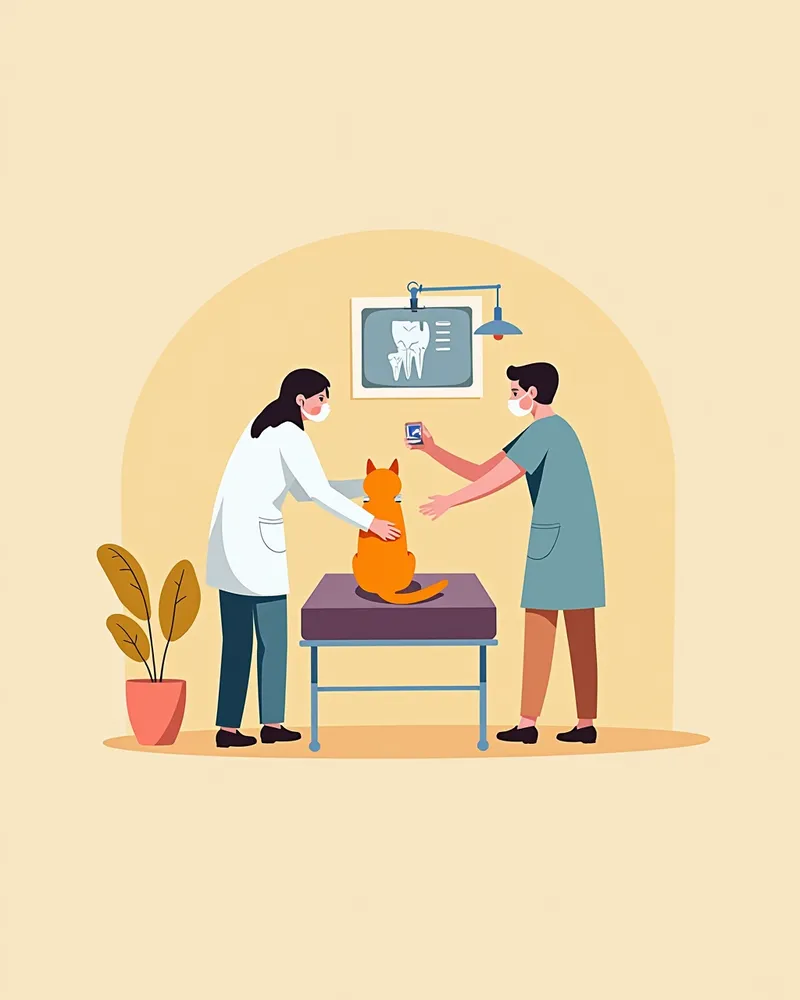
To accurately diagnose dental issues in cats, dental X-rays under general anesthesia are essential. This allows us to check for damage in the roots, which isn't visible during a routine examination. We also perform blood and urine tests to identify any underlying conditions. - X-ray Examination: Provides a detailed view of the tooth roots and surrounding bone structure. - General Anesthesia: A necessary step to ensure safe and thorough examination and treatment. - Underlying Condition Check: Conditions like heart disease or diabetes may be linked to dental problems. - Comprehensive Assessment: Multiple tests help us develop an effective treatment plan. - Early Diagnosis: Detecting issues early significantly improves treatment outcomes.
Taking dental X-rays of a cat under anesthesia

Treatment is Conducted in Stages

Treatment begins with a thorough dental cleaning and removal of plaque and tartar under general anesthesia. Depending on the extent of the damage, affected teeth may be extracted or preserved. In severe cases of periodontal disease, strategic extractions or gum treatments may be considered for areas with significant inflammation and ulceration. Pain management is a crucial part of the treatment, using pain relievers to alleviate discomfort and support recovery. The treatment plan is customized based on the cat’s age and overall health. - Initial Cleaning: Plaque and tartar are removed to reduce inflammation. - Tooth Preservation: The extent of damage is assessed to determine if the tooth can be saved. - Surgical/Extraction Treatment: In cases of severe periodontal disease, strategic extractions or gum treatments may be necessary for affected areas. - Medication Management: Pain relievers are used to ease discomfort and aid recovery. - Personalized Care: The treatment approach varies depending on the cat’s age and health status.
A cat recovering after dental surgery

At-Home Care: Daily Habits are Key

Consistent at-home care is the cornerstone of preventive dental health for cats. Daily brushing with a toothbrush is the most effective method, though dental treats and water additives can also provide helpful support. Dental care should always be performed in a calm, comfortable environment, gradually building positive habits over time. - Brushing: Start with just 1–2 minutes daily, slowly increasing duration as your cat becomes accustomed to the routine. - Dental Treats: Treats designed to clean teeth can aid in establishing a consistent care habit. - Water Additives: Sprays or solutions added to drinking water offer a convenient way to support oral hygiene. - Environment: Perform care in a quiet, stable setting to minimize stress. - Consistency: Maintaining an unwavering daily routine is essential for long-term dental health.
A cat having its teeth brushed with a finger toothbrush.

Breed-Specific Precautions and Prevention of Recurrence

Tooth resorption (TR) is a common condition affecting 25% to 75% of cats. The reported prevalence varies depending on the study population and diagnostic methods, but it typically involves multiple permanent teeth, and the risk increases with age. Periodontal disease also becomes more frequent and severe as cats get older, making regular veterinary check-ups essential. Excessive vitamin D intake has been suggested as a potential cause of tooth resorption. Furthermore, because recurrence is likely if proper care is not maintained after treatment, consistent daily habits are vital.

Reviewed by a veterinarian

Dr. Tony — Punnawat Phongkittirak

Dr. Tony — Punnawat Phongkittirak

Veterinarian

A veterinarian who majored in veterinary medicine at Khon Kaen University, Thailand, and completed the IVSA program at North Carolina State University in the United States. Drawing on clinical experience at animal hospitals, he works in the pet healthcare field and is dedicated to building a digital care environment that connects pet parents with veterinarians.

Frequently Asked Questions

How often should you care for your cat’s teeth?
Daily tooth brushing or dental treats are recommended. Along with daily home care, regular professional scaling under general anesthesia is advised, and VOHC (Veterinary Oral Health Council)-approved products can help manage plaque and tartar.
What should I do if I don’t have a toothbrush?
You can use finger brushes, dental care sprays, treats, and similar products. However, brushing is the most effective method, and it’s best to choose products with VOHC certification.
My cat hates having its teeth brushed. What should I do?
Start slowly, and offer rewards and positive reinforcement. Most pets will adapt as you gradually build the habit. Using products certified by V.O.H.C. can also be helpful.
Is dental disease a natural part of aging?
While the risk of periodontal disease and tooth resorption increases with age, it isn't determined by age alone. Gum disease can develop even in young pets, and tooth resorption affects 25% to 75% of cats, making early care essential.
What problems can arise if dental issues are left untreated?
It can lead to severe pain, loss of appetite, and weight loss. Since oral health is closely linked to overall health, dental and gum lesions may be a sign of or related to systemic diseases, so it’s important not to ignore them.

Share

Related Guides

References

[1] Bellows J. Feline Dentistry – Oral Assessment, Treatment, and Preventative Care. 1st ed. Ames: Wiley-Blackwell; 2010.

[2] Clinical Medicine of the Dog and Cat, 4th Ed. Blackwell Publishing, 2020.

[3] The Cat, Clinical Medicine and Management, 2nd Edition. Elsevier, 2018.

This information is based on veterinary literature and does not replace diagnosis or treatment. Please consult a veterinarian for specific health concerns.

Metapet Co., Ltd. | CEO: Park Sung-yong | Business Reg. No. 417-88-02562 | Seoul, South Korea | Customer Center

Cat Dental Care: Symptoms, Prevention, and Treatment Guide | Meongsiljang