
Like
Share
멍실장
스핑크스 HCM 검진 일정 완벽 가이드

Complete Guide to Sphynx HCM Screening Schedule

HeartBreed HealthMeongsiljang Veterinary Advisory Board

Sphynx cats are genetically predisposed to hypertrophic cardiomyopathy (HCM). We’ve outlined the recommended lifelong cardiac ultrasound screening schedule starting at one year of age, emergency warning signs, and key home care tips.

Sphynx Breed Characteristics and Heart Health

A Sphynx cat sitting on the examination table at a veterinary clinic
The Sphynx is a hairless, hairless-breed cat. Hypertrophic cardiomyopathy (HCM) is a common form of feline cardiomyopathy characterized by thickening of the left ventricular muscle. A familial (hereditary) form exists, and it is reported to be particularly prevalent in certain breeds such as Maine Coons and Ragdolls. Sphynxes are also considered a breed that requires consistent monitoring of heart health, making regular cardiac screenings important. Echocardiography is the gold standard and most sensitive non-invasive diagnostic test. While heart murmurs can be detected via auscultation, this method alone has limitations; directly measuring the thickness of the left ventricular wall via echocardiography provides a more accurate assessment. The specific timing for the initial exam and the frequency of follow-up screenings vary depending on the individual cat’s condition, so it is best to consult with your veterinarian to determine the appropriate schedule.

Top 3 Heart-Related Conditions to Watch for in Sphynx Cats

Here are three common heart-related issues in Sphynx cats:
Hypertrophic Cardiomyopathy (HCM): The most common hereditary heart disease, where the left ventricular wall thickens and interferes with blood circulation.
Asymptomatic Heart Murmurs: Often discovered incidentally during auscultation; even without symptoms, ongoing monitoring is necessary.
Arterial Thromboembolism: As HCM progresses, blood clots formed in the heart can block the arteries in the hind legs, causing sudden paralysis.

What is HCM? Key Symptoms Owners Should Know

Hypertrophic cardiomyopathy is a condition in which the heart muscle abnormally thickens, impairing its pumping function. In the early stages, symptoms are minimal, making it difficult for pet owners to notice.
Difficulty breathing: Breathing faster than usual or panting with an open mouth.
Decreased activity: A previously playful pet suddenly becomes less active.
Reduced appetite: Eating less food than usual.
Hind limb paralysis: A medical emergency caused by a blood clot blocking the arteries in the hind legs, resulting in sudden inability to use the legs.
A Sphynx cat resting quietly

Emergency Signs Requiring Immediate Veterinary Care

If you notice any of the following signs, seek emergency veterinary care within 24 hours: open-mouth panting (gasping for air), sudden weakness and coldness in the hind legs, cyanosis (gums turning purple or gray), or syncope (sudden collapse with loss of consciousness). Arterial thromboembolism can be fatal if not treated within hours of onset. Familiarizing yourself with your pet’s normal respiratory rate and gum color will help you detect changes quickly.

Recommended Sphynx HCM Screening Schedule

Feline hypertrophic cardiomyopathy (HCM) has a hereditary form, so it’s important for predisposed breeds to undergo regular cardiac screening. Echocardiography is the cornerstone of this screening, serving as the most sensitive non-invasive test for diagnosing HCM and differentiating it from other cardiac or systemic diseases. Auscultation and blood tests for cardiac biomarkers like NT-proBNP are used as adjuncts; however, biomarkers should be viewed as supportive tools used in conjunction with medical history, physical exams, radiographs, and echocardiography, rather than standalone diagnostic methods. Since HCM can develop as cats age, don’t assume a single normal result in kittenhood guarantees lifelong health—consistent, periodic screening is key. Please consult your veterinarian to determine the appropriate screening schedule based on your cat’s individual condition, and use the table below as a general reference.

Recommended HCM Screening Frequency by Age

ItemEchocardiographyAuscultationNT-proBNP blood test
6–12 months of ageBaseline exam onceEvery regular checkupOptional
1–5 years of ageOnce a yearTwice a yearOnce a year
5 years of age and older1–2 times/yearTwice a year1–2 times/year
When a heart murmur/abnormal finding is detectedEvery 3–6 monthsMonthly follow-upEvery 3–6 months

The screening interval varies depending on the individual's age, symptoms, and previous findings; this table is for general reference. Determine the actual schedule in consultation with your attending veterinarian.

What Each Screening Item Checks
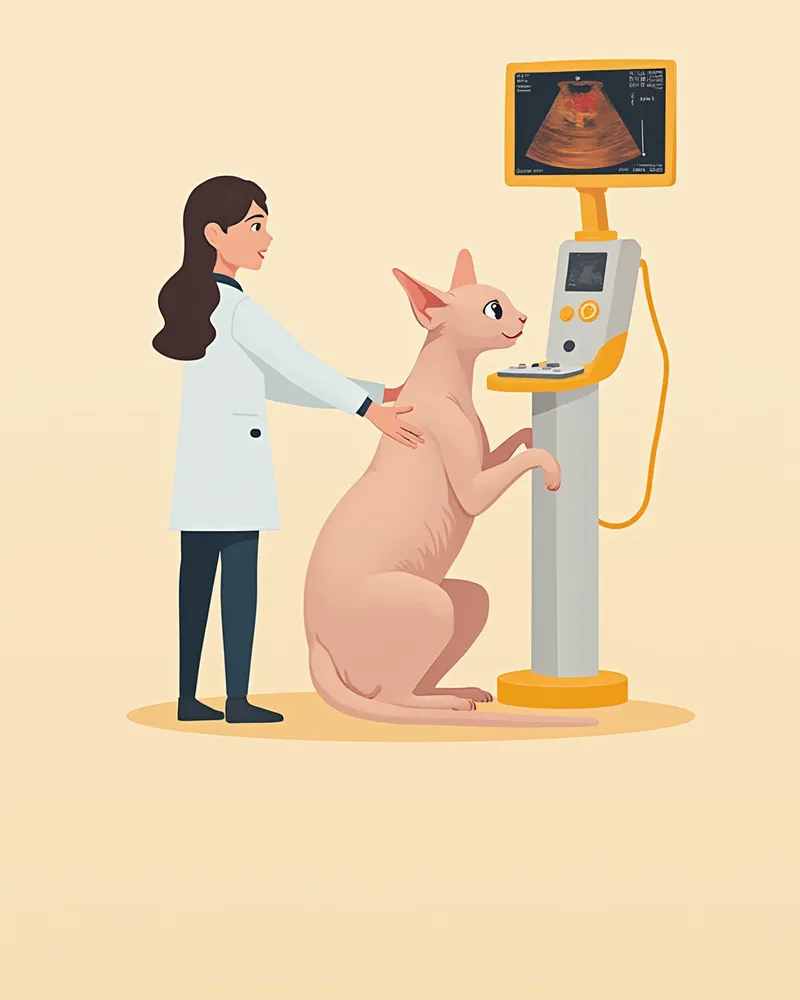
Echocardiogram: This is the gold standard and most sensitive non-invasive test for diagnosing HCM. It directly measures left ventricular wall thickness to assess hypertrophy and helps differentiate other heart conditions. However, because results depend on the operator’s skill, experience is essential.
Doppler Study: This measures blood flow velocity and direction to check for valve abnormalities and blood flow obstructions.
NT-proBNP Blood Test: This is a biomarker that reflects cardiac stress. It is used as an adjunct screening tool alongside other tests rather than for standalone diagnosis.
Electrocardiogram (ECG): This is added to check for accompanying arrhythmias, such as atrial fibrillation.
Thoracic Radiographs (X-rays): These are used to identify signs of congestive heart failure, such as cardiac enlargement, pulmonary edema, and pleural effusion.
Scene of a Sphynx cat undergoing an echocardiogram

Tips for Owners Before Screening

Echocardiograms are typically performed without anesthesia, so there’s minimal stress from sedation. While fasting isn’t required beforehand, it’s best to arrive at the clinic about 30 minutes early to allow your pet time to settle and adjust. Costs vary depending on the clinic and region, but having the exam done at a facility with a board-certified veterinary cardiologist ensures higher diagnostic accuracy. Be sure to request and keep a copy of the results, including left ventricular wall thickness measurements and NT-proBNP levels, as these will be helpful for comparison during future check-ups.

Daily Care Points for Sphynx Owners

Monitor breathing rate: Regularly count the number of breaths per minute while your cat is sleeping or resting comfortably. If the rate is noticeably faster than usual, consult your veterinarian. In cats with congestive heart failure, difficulty breathing often appears before coughing, so it’s important to watch for changes in breathing.
Weight management: Maintain an ideal body weight to reduce strain on the heart.
Diet management: If your cat has been diagnosed with HCM, do not change their diet without first consulting your veterinarian.
Reduce stress: Stressful events such as anesthesia, trauma, or environmental changes can be associated with temporary myocardial hypertrophy or worsening of the condition, so minimize sudden changes.
Medication log: If your cat is on medication, keep a record of administration times and any observed reactions.

Reviewed by a veterinarian

Dr. Tony — Punnawat Phongkittirak

Dr. Tony — Punnawat Phongkittirak

Veterinarian

A veterinarian who majored in veterinary medicine at Khon Kaen University, Thailand, and completed the IVSA program at North Carolina State University in the United States. Drawing on clinical experience at animal hospitals, he works in the pet healthcare field and is dedicated to building a digital care environment that connects pet parents with veterinarians.

Frequently Asked Questions About Sphynx HCM Screening

Should Sphynx cats undergo HCM screening from kittenhood?
The Sphynx is considered a breed that requires ongoing monitoring of heart health. Even if an echocardiogram is normal at a young age, hypertrophic cardiomyopathy (HCM) can develop as the cat ages, so it’s important not to rely on a single normal result but to continue regular check-ups. Please consult your veterinarian to determine the appropriate timing and frequency for initial screenings.
Can genetic testing detect HCM in advance?
While genetic mutations linked to familial hypertrophic cardiomyopathy (HCM) are known in breeds such as Maine Coons and Ragdolls, no single genetic test has been established for Sphynx cats that can replace clinical diagnosis. Therefore, echocardiography—the most sensitive non-invasive test—is the more accurate diagnostic method. Please do not delay your cat’s screening.
Does a heart murmur always mean HCM?
Heart murmurs can be caused by a variety of factors beyond hypertrophic cardiomyopathy (HCM), including anemia, hyperthyroidism, and physiological changes. An echocardiogram is necessary to accurately identify the underlying cause.
What is the average life expectancy after a diagnosis of HCM?
With early detection and consistent medication, many cats can live for more than five years after diagnosis. However, the prognosis varies significantly depending on the stage at which the disease is detected and whether complications such as thromboembolism are present.
Which clinic should I go to for an HCM screening?
For the most accurate results, have the echocardiogram performed at a veterinary clinic equipped with cardiac ultrasound technology and staffed by veterinarians specializing in cardiology, or at a referral hospital. Consistently having the exams done by the same veterinarian at the same clinic makes it easier to track changes over time.

Share

Related Guides

References

[1] Luis Fuentes V, Abbott J, Chetboul V, et al., ACVIM consensus statement guidelines for the classification, diagnosis, and management of cardiomyopathies in cats, Journal of Veterinary Internal Medicine, 2020

[2] Côté E, MacDonald KA, Meurs KM, Sleeper MM, Feline Cardiology, Wiley-Blackwell, 2011

[3] Little SE, The Cat: Clinical Medicine and Management, 2nd Edition, Elsevier Saunders, 2020

This information is based on veterinary literature and does not replace diagnosis or treatment. Please consult a veterinarian for specific health concerns.

Metapet Co., Ltd. | CEO: Park Sung-yong | Business Reg. No. 417-88-02562 | Seoul, South Korea | Customer Center

Sphynx HCM Screening Schedule: Cardiac Ultrasound by Age | Meongsiljang