
Like
Share
멍실장
도베르만 확장성 심근병증 주의점과 연령별 평생 건강관리 가이드

Key Points on Dilated Cardiomyopathy in Dobermans and an Age-Specific Lifelong Health Management Guide

HeartBreed HealthMeongsiljang Veterinary Advisory Board

Dobertmans have the highest incidence of dilated cardiomyopathy among large-breed dogs. We’ve compiled a veterinary-based guide covering symptom checklists, age-specific screening schedules, and home care tips.

Dobermans and Dilated Cardiomyopathy — Essential Information for Pet Owners

A veterinarian listening to a Doberman’s heart with a stethoscope
Doberman Pinschers are a large breed particularly prone to dilated cardiomyopathy (DCM). Veterinary cardiology textbooks list Dobermans, Great Danes, and Irish Wolfhounds as breeds with a high incidence of this condition. In DCM, the heart muscle stretches, causing the heart chambers to enlarge and significantly weakening their contractile force. In Dobermans, this disease often occurs due to genetic predisposition. What’s truly important is that the asymptomatic stage (latent phase) can last a long time. During this period, there may be no visible symptoms, but abnormalities in the heart muscle or electrical activity (such as arrhythmias) can gradually progress. By the time symptoms become apparent, heart function may already be significantly impaired. Therefore, it’s essential to start regular cardiac screenings around the age of five.

Why Is Dilated Cardiomyopathy Common in Dobermans? — Causes and Genetic Background

Genetic predisposition is considered the primary cause of dilated cardiomyopathy in Doberman Pinschers. According to veterinary cardiology textbooks, mutations in the titin gene have been reported to be associated with familial (hereditary) dilated cardiomyopathy and sudden cardiac death in Dobermans.
Genetic tendency: If either parent has dilated cardiomyopathy, the risk of the offspring developing the condition is higher.
Sex differences: Textbook reports indicate that the disease tends to occur more frequently in males than in females.
Onset and diagnosis timing: The asymptomatic (latent) form is most commonly diagnosed between the ages of 5 and 7 years, though it can also appear at a younger age.

Symptom Checklist for Dilated Cardiomyopathy in Dobermans
By the time symptoms become apparent, the condition has often progressed significantly. If you notice any of the following signs, seek veterinary care promptly.
Exercise intolerance: Rapid fatigue or shortness of breath after walks.
Frequent coughing: Coughing episodes that occur often, especially when lying down or at night.
Abdominal distension: A visibly swollen abdomen due to fluid accumulation (ascites).
Syncope or sudden collapse: Sudden fainting or collapsing, particularly during exercise or excitement.
Decreased appetite and weight loss: Noticeable reductions in activity level and food intake.
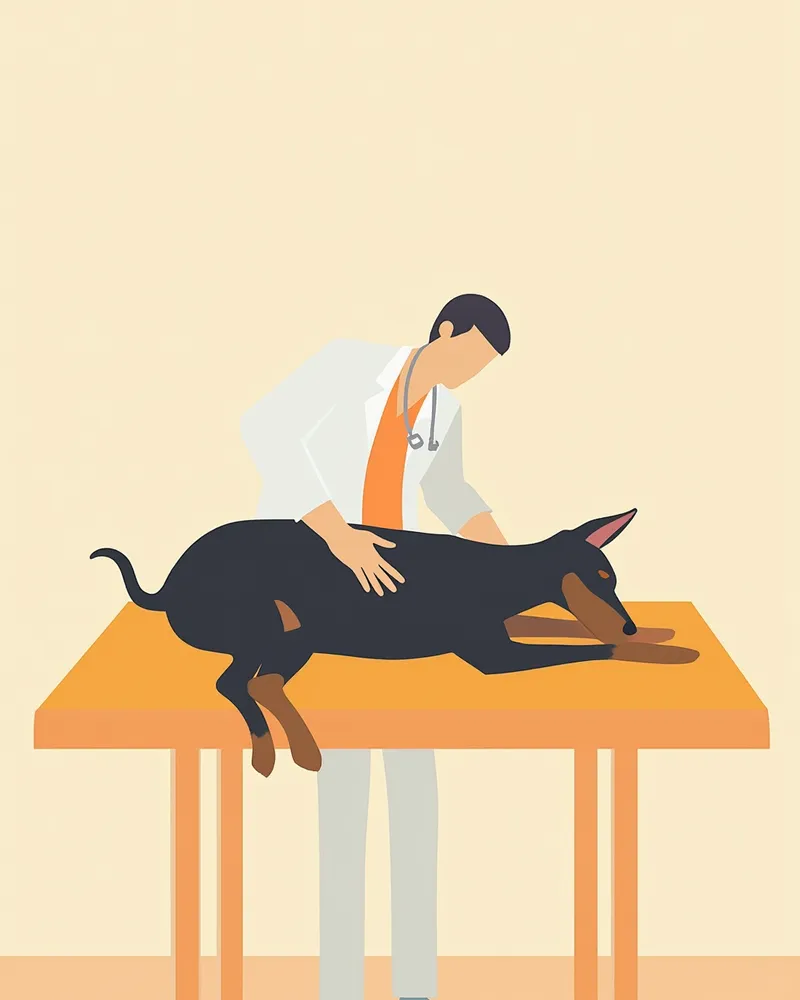
A Doberman lying on the examination table at a veterinary clinic, undergoing a check-up

Danger Signs Requiring Immediate Emergency Care

If any of the following symptoms appear, take your pet to a 24-hour emergency veterinary clinic immediately. Dilated cardiomyopathy can lead to acute heart failure or sudden death. - Breathing very rapidly and with difficulty, or panting with an open mouth - Gums or tongue turning blue or pale white - Sudden collapse or loss of consciousness - Severe weakness resulting in an inability to move

Diagnostic Methods for Dilated Cardiomyopathy — Which Tests Are Needed?

Dilated cardiomyopathy can be diagnosed through the following tests. Since abnormalities can be detected even in the asymptomatic stage, regular check-ups are especially important.
Echocardiogram (Cardiac Ultrasound): This is the gold standard diagnostic test, directly assessing the size of the heart chambers and their contractile function.
Holter Monitoring: This records a 24-hour electrocardiogram to check for arrhythmias. In Doberman Pinschers, echocardiographic findings may be normal or inconclusive during the latent stage, so it is strongly recommended to perform both an echocardiogram and a 24-hour Holter monitor.
Thoracic Radiographs (X-rays): These are used to evaluate changes in heart size and to check for fluid accumulation in the lungs (pulmonary edema).
Additional Blood Tests: These can be used as a supplementary tool to assess overall systemic health and help differentiate from other cardiac conditions.

Age-Specific Heart Health Management for Dobermans — A Guide by Age

Heart health management for Doberman Pinschers should be tailored to their age.
2–4 years: Establish a baseline for heart function through routine health screenings. Even if no abnormalities are detected, keeping records allows for meaningful comparisons later on.
5–7 years: We recommend cardiac ultrasounds and Holter monitoring one to two times per year. This is the period when asymptomatic dilated cardiomyopathy is most frequently diagnosed.
8 years and older: Increase the frequency of check-ups and closely monitor for signs of arrhythmias and heart failure.
Appearance of Doberman Pinschers at different life stages: puppy, adult, and senior

Treatment and Home Care Points

While dilated cardiomyopathy is currently difficult to cure, medication can help preserve heart function and improve your pet’s quality of life. Your veterinarian will determine the appropriate medications and dosages based on your pet’s specific condition.
Exercise Management: Excessive exercise can strain the heart. It’s important to consult with your veterinarian to establish an appropriate level of activity.
Low-Sodium Diet: To reduce the burden on the heart, choose a prescription diet or low-sodium pet food.
Minimize Stress: Significant environmental changes or loud noises can place unnecessary stress on the heart.

Health Issues Beyond Dilated Cardiomyopathy That Dobermans Should Watch For
Dobermans are prone to several health issues beyond heart disease that require careful attention.
Ventricular arrhythmia: This condition frequently occurs alongside dilated cardiomyopathy and is associated with an increased risk of sudden death. Regular monitoring through Holter monitoring is essential.
Von Willebrand disease: This is a common hereditary blood clotting disorder in Dobermans. It is crucial to screen for this condition before any surgical procedures.
Cervical spondylomyelopathy (Wobbler syndrome): This condition involves instability in the cervical spine, which can lead to neurological symptoms.
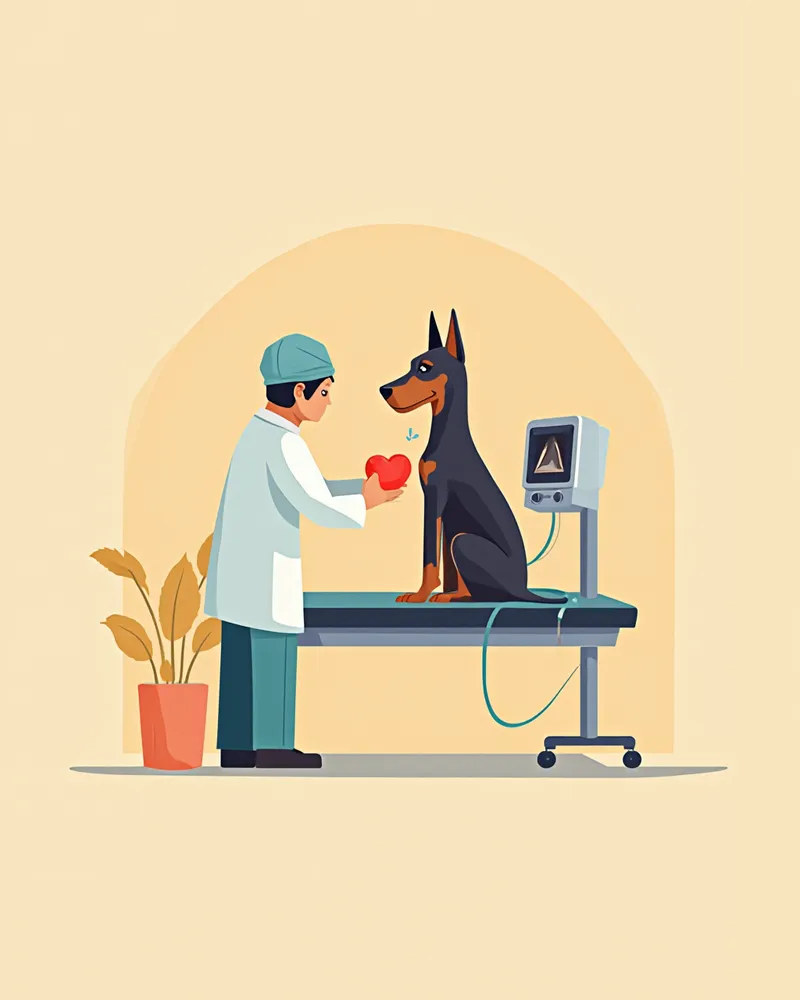
A Doberman undergoing an echocardiogram (heart ultrasound) examination

Essential Information for Doberman Owners

Dilated cardiomyopathy is easier to manage and leads to a longer, better quality of life when caught early. Even if your dog shows no symptoms, it’s a good idea to have a specialized cardiac exam once or twice a year starting at age five. If you’re adopting a new Doberman, be sure to ask the breeder for the heart health records of the puppy’s parents.

Reviewed by a veterinarian

Dr. Tony — Punnawat Phongkittirak

Dr. Tony — Punnawat Phongkittirak

Veterinarian

A veterinarian who majored in veterinary medicine at Khon Kaen University, Thailand, and completed the IVSA program at North Carolina State University in the United States. Drawing on clinical experience at animal hospitals, he works in the pet healthcare field and is dedicated to building a digital care environment that connects pet parents with veterinarians.

Frequently Asked Questions

Is dilated cardiomyopathy in Doberman Pinschers curable?
At present, a complete cure is difficult, so the goal of treatment is to preserve heart function and slow disease progression through medication. The earlier it’s detected, the longer your pet can be managed effectively.
Is a heart checkup really necessary even if there are no symptoms?
Yes, it’s absolutely necessary. Dilated cardiomyopathy often has a long asymptomatic phase, so by the time symptoms appear, the disease is usually quite advanced. Even if your dog shows no signs after age five, regular check-ups can help catch the condition early.
Is dilated cardiomyopathy hereditary?
Genetic predisposition plays a role. If your dog’s parents had dilated cardiomyopathy, your dog is at higher risk. When acquiring a puppy, always ask the breeder for the parents’ cardiac health records.
Is it safe to exercise my pet after a diagnosis of dilated cardiomyopathy?
Excessive exercise can put strain on the heart. It’s important to consult with your veterinarian to determine the appropriate amount of exercise for your pet’s condition.
Where can I get a heart checkup for my Doberman?
This test can be performed at veterinary clinics equipped with cardiac ultrasound machines or at large animal hospitals with internists. Try searching for "cardiology-specialized veterinary clinics" in your area.

Share

Related Guides

References

[1] Silverstein DC, Hopper K (eds.). Small Animal Critical Care Medicine, 3rd Ed. Elsevier Saunders.

[2] Schaer M (ed.). Clinical Medicine of the Dog and Cat, 4th Ed. CRC Press.

[3] Textbook of Cardiovascular Medicine in Dogs and Cats. Wiley-Blackwell.

[4] Meurs KM et al. A missense variant in the titin gene in Doberman pinscher dogs with familial dilated cardiomyopathy and sudden cardiac death. Hum Genet. 2019;138(5):515–524.

[5] Freid KJ, Freeman LM, Rush JE, et al. Retrospective study of dilated cardiomyopathy in dogs. J Vet Intern Med. 2021;35(1):58–67.

This information is based on veterinary literature and does not replace diagnosis or treatment. Please consult a veterinarian for specific health concerns.

Metapet Co., Ltd. | CEO: Park Sung-yong | Business Reg. No. 417-88-02562 | Seoul, South Korea | Customer Center

Doberman Dilated Cardiomyopathy (DCM): Lifelong Care Guide | Meongsiljang