Like
Share
멍실장
치와와 그루밍·몰라라 관리 완벽 가이드

The Ultimate Guide to Chihuahua Grooming and Fontanelle Care

Skin & CoatBreed HealthMeongsiljang Veterinary Advisory Board

We’ve compiled the essential grooming tips every Chihuahua owner should know, covering routines for both short- and long-haired varieties, proper care for the fontanelle on the head, and strategies to prevent skin issues.

What Makes Chihuahua Grooming Different?

A small Chihuahua safely placed on the palm of a person's hand
Chihuahuas are a toy breed known for their tiny stature. It’s common for puppies to have an open fontanelle (molera) on the top of their skull, which typically closes as they grow, though the extent of closure varies from dog to dog. The most important aspects of grooming are avoiding excessive pressure on the top of the head and ensuring thorough, warm drying after baths. Avoid pressing firmly on the head, keep bath time short, and dry your dog completely afterward. Both smooth-coat and long-coat varieties require regular brushing, and this breed also benefits from consistent dental care to manage teeth and tartar buildup in their small mouths.

Chihuahua Skin and Coat Characteristics at a Glance

Chihuahuas come in two coat types: smooth and long. Smooth coats are short and sleek, while long coats have longer hair on the ears, legs, and tail, making them prone to tangles. Since skin conditions and sensitivities vary from dog to dog, gently brush your Chihuahua regularly to check for dryness, flaking, or redness. If your dog has fragile, easily broken hair—such as in cases of color dilution alopecia—opt for mild, moisturizing products rather than harsh or drying ones. Also, because of their small size, be mindful of maintaining a comfortable temperature during bathing and drying.

Daily and Weekly Grooming Routines

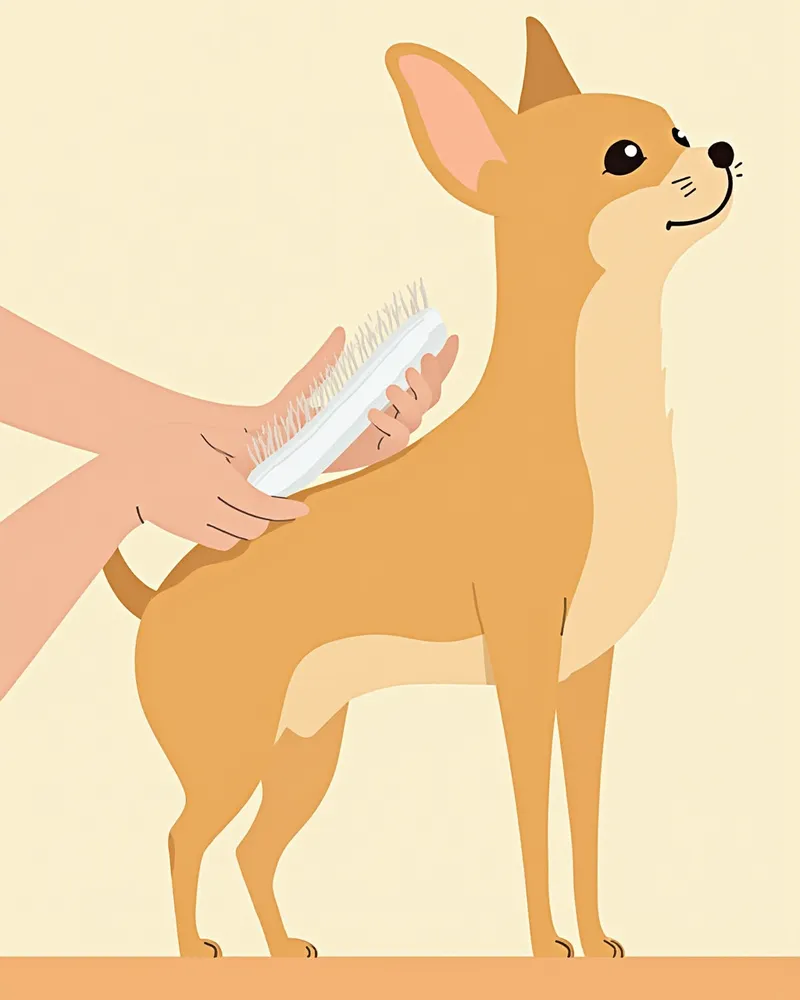
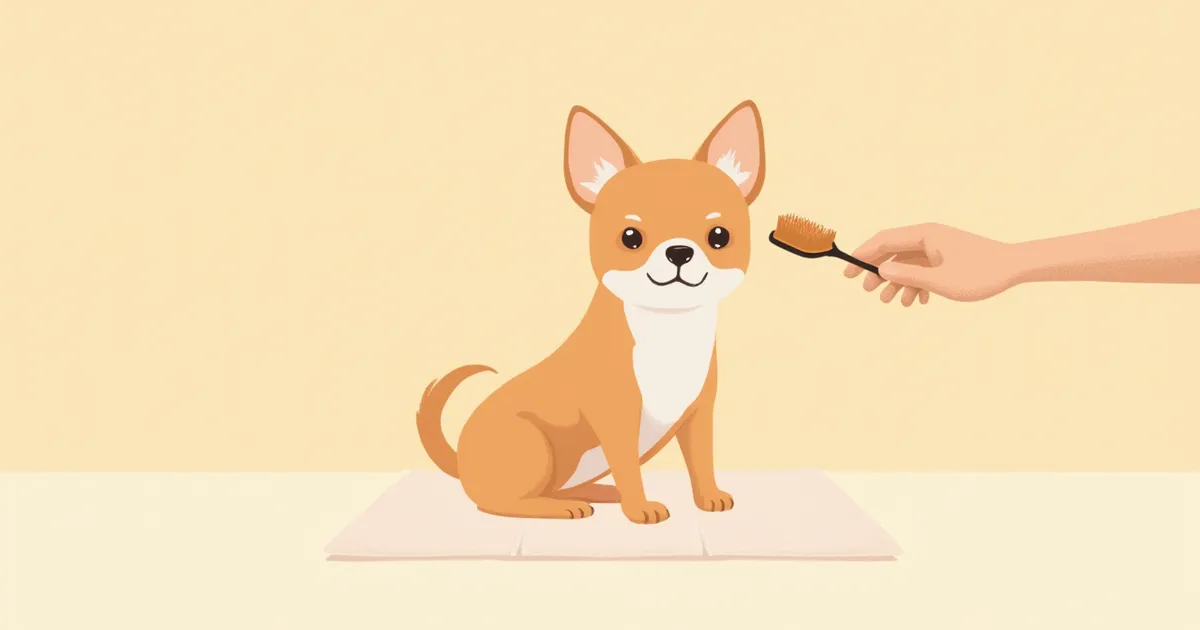
The key to Chihuahua grooming is keeping sessions short but frequent. - Brushing: For short-haired Chihuahuas, brush once or twice a week; for long-haired ones, gently brush daily in the direction of hair growth using a soft pin brush. - Eye cleaning: Wipe around the eyes daily with lukewarm water or a specialized eye cleanser to remove discharge. - Ear cleaning: Clean the outer ear once a week with a dedicated ear cleanser. Avoid inserting cotton swabs deep into the ear canal. - Nail trimming: Trim nails every 2–3 weeks. For black nails, trim small amounts at a time to avoid stimulating the quick. - Anal glands: Check every 1–2 months. If the glands do not express on their own, seek assistance from a veterinarian.
A side view of a small Chihuahua being gently brushed with a soft pin brush.

Never Press on the Top of the Head for Dogs with a Fontanelle

Some Chihuahuas retain a soft spot on the top of their head (the fontanelle) even after reaching adulthood. Because this area is not fully covered by solid skull bone, it is more vulnerable to trauma. Therefore, during grooming, avoid pressing down on the top of the head with your palm, and do not place dryer nozzles or combs directly against the fontanelle. Also, refrain from pressing firmly on the forehead or petting the top of the head vigorously; instead, gently focus on the sides of the head and under the chin. If you notice any abnormal behaviors, such as stumbling, after touching the fontanelle, please consult a veterinarian.

Key Points for Fontanelle (Molera) Care

"Open fontanel" refers to an unfused skull at the top of the head (the fontanelle). This is common in puppies and typically closes naturally as they grow. However, the degree of closure varies among individuals, and some dogs may retain a soft spot on the top of their head, making them more vulnerable to traumatic injury. - When touching: Focus on the sides of the head and under the chin; only lightly brush over the top of the head. - Grooming tools: Use your fingertips to gently detangle hair on the head area. - Play: Minimize activities that pose a risk of head impact, such as jumping or falling. - Warning signs: If you notice swelling on the top of the head, seizures, or difficulty standing, seek immediate veterinary care, as these symptoms may be associated with conditions like hydrocephalus, which requires differential diagnosis in Chihuahuas.

Safe Bathing and Drying Steps

When bathing a Chihuahua, the key is to keep it quick and warm. 1. Preheat both the room and the bathroom. 2. Use lukewarm water and wet the head last, keeping it brief. 3. Lather dog-specific, low-irritant shampoo in your hands before applying. 4. Gently glide the foam over the crown area with your fingertips. 5. Rinse thoroughly, then wrap the dog in a highly absorbent towel and pat gently. 6. Dry with low-speed, warm air, keeping the dryer at a sufficient distance from the head. Bathing frequency should be adjusted according to skin condition. For healthy dogs, avoid bathing too often; however, for dogs with skin diseases, bathing more frequently—once or twice a week—with medicated shampoo as directed by a veterinarian can help alleviate lesions and itching.
A Chihuahua wrapped in a soft towel after a bath, warmly protected and cared for.

How to Prevent Chihuahua Skin Issues

Chihuahuas can have sensitive skin, so it’s helpful to keep an eye out for the following skin issues: - Dryness and flaking: Use a moisturizing spray and maintain indoor humidity to prevent the air from becoming too dry. - Allergic itching: When introducing new food or treats, monitor your dog’s reaction for 1–2 weeks. - Mites and fungal infections: If you notice circular hair loss, dandruff, or flaking, visit a veterinarian for testing rather than trying to diagnose it yourself. - Chin acne: Wash food and water bowls daily, and use ceramic or stainless steel bowls instead of plastic. The best preventive measure is to regularly check your dog’s skin color, redness, and any scabs while brushing.

Stop Grooming and Visit the Vet If You See These Signs

Stop grooming immediately and visit a veterinary clinic if you notice any of the following signs: - The top of the head or skull area appears more swollen than usual - Screaming or severe avoidance behavior when the head is touched - Sudden stumbling, seizures, or circling to one side - Discharge, pus, or a strong odor from the skin - Nail bleeding that does not stop after more than five minutes Neurological symptoms, in particular, may be associated with fontanelle trauma or hydrocephalus, so prompt veterinary evaluation is essential.

Reviewed by a veterinarian

Dr. Tony — Punnawat Phongkittirak

Dr. Tony — Punnawat Phongkittirak

Veterinarian

A veterinarian who majored in veterinary medicine at Khon Kaen University, Thailand, and completed the IVSA program at North Carolina State University in the United States. Drawing on clinical experience at animal hospitals, he works in the pet healthcare field and is dedicated to building a digital care environment that connects pet parents with veterinarians.

Frequently Asked Questions

How often should you bathe a Chihuahua?
Bath frequency should be tailored to your pet’s skin condition. For healthy dogs, avoid over-bathing and instead maintain cleanliness by wiping their paws or spot-cleaning after walks. Conversely, if your dog has a skin condition, bathing more frequently—once or twice a week—with a medicated shampoo as directed by your veterinarian can help alleviate lesions and itching.
Is it normal for a Chihuahua to have a molera?
It’s common for puppies to be born with an open fontanel, which typically closes as they grow. In some cases, the soft spot may remain, making the skull more vulnerable to injury; therefore, avoid pressing on the head and minimize risks of jumping or falling. If neurological symptoms such as unsteadiness or seizures occur, it could be related to conditions like hydrocephalus, which is seen in Chihuahuas, and veterinary examination is necessary.
How should I untangle the matted fur on my long-haired Chihuahua?
Hold the area beneath the tangles with your hand, and gently work through the knots starting from the tips using a slicker brush or pin brush. Pulling too hard can irritate the skin. For severely matted fur, it’s safer to have a professional groomer clip out the affected areas rather than using scissors yourself.
My Chihuahua’s nails are black, so I’m afraid to trim them. What should I do?
Trim the nails gradually, cutting only the very tips. Stop as soon as you see the black dot (the quick, where the blood vessels begin) in the cross-section. If you're unsure, it's safest to have a veterinarian or professional groomer trim them every two to three weeks.
How should I start with dental care?
For the best results, brush your dog’s teeth daily with a toothbrush and toothpaste designed specifically for dogs. To start, gently massage your dog’s gums by wrapping a piece of gauze around your finger. Since tartar buildup and periodontal disease can progress over time, please have your dog’s mouth checked regularly at a veterinary clinic.

Share

Related Guides

References

[1] Ettinger SJ, Feldman EC, Cote E. Textbook of Veterinary Internal Medicine, 8th Ed — Chapter on Toy Breed Disorders

[2] Schaer M, Gaschen F. Clinical Medicine of the Dog and Cat, 4th Ed — Chapter 14: Disorders of the Nervous System

[3] Miller WH, Griffin CE, Campbell KL. Muller and Kirk's Small Animal Dermatology, 7th Ed — Breed-related Skin Disorders

This information is based on veterinary literature and does not replace diagnosis or treatment. Please consult a veterinarian for specific health concerns.

Metapet Co., Ltd. | CEO: Park Sung-yong | Business Reg. No. 417-88-02562 | Seoul, South Korea | Customer Center

Chihuahua Grooming & Fontanelle Care: A Complete Guide | Meongsiljang