Like
Share
멍실장
고양이 비뇨 케어 모래 추천 TOP 5 — 소변 색 확인 가능

5 Cat Urinary Care Litters Recommended by Veterinarians — Low Dust & Urine Color Check

UrinaryTop PicksMeongsiljang Veterinary Advisory Board

Cat urinary care litter changes color upon contact with urine, allowing you to detect early signs of hematuria, bladder stones, or cystitis at home. We’ve reviewed five top options based on absorption performance, color-change reliability, dust levels, and particle size, so you can find the best daily-use litter for your cat.

What Is Cat Urinary Care Litter?

A cat sitting next to a litter box with urine care sand
Cat urinary care litter is a functional litter designed to change color upon contact with urine, allowing you to detect early signs of urinary issues such as hematuria or abnormal pH levels at home. The key benefit is early detection. Cats are known for hiding pain, so by the time owners notice symptoms, conditions like bladder stones or cystitis may have already progressed. With color-changing litter, you can spot any abnormalities in just five seconds while cleaning the litter box daily. However, cat urine is naturally highly concentrated, and false positives are common for indicators like white blood cells, making it difficult to definitively determine bacterial infection status based solely on color changes. Therefore, color changes should be viewed strictly as a reference screening tool, not a diagnosis. If you observe any abnormal coloration, even once, it is recommended to bring a fresh urine sample to your veterinarian for a proper urinalysis.

Why Urinary Care Litter Is More Important for Cats

Cats are animals that excrete highly concentrated urine. Normal feline urine is so dense that its specific gravity exceeds 1.035, making lower urinary tract diseases such as urolithiasis, cystitis, and feline idiopathic cystitis (FIC) common. In fact, among lower urinary tract diseases, FIC accounts for 55–65% and urolithiasis for 15–21%, representing a significant proportion. Male cats, in particular, have narrow urethras, making urethral obstruction more likely; this condition is the most common cause of acute kidney injury in cats and can become life-threatening within a short period. The color-changing function of the urinary litter helps owners visually detect hematuria, pH changes, and bilirubin exposure, serving as a tool to identify emergency situations several days earlier. It is especially recommended for male cats or those with risk factors for FIC, such as obesity, multi-cat households, or purebred and long-haired breeds.

These Signs Require Immediate Veterinary Care Regardless of Litter Color

Even if your pet’s urine appears normal in color, the following symptoms require immediate emergency care: ① No urination for more than 24 hours; ② Frequent trips to the litter box accompanied by vocalizing or straining; ③ Persistent licking of the genital or urethral area; ④ Vomiting combined with lethargy; ⑤ A hard, distended abdomen. In male pets, urethral obstruction has a very short window for effective treatment. Regardless of urine color, any unusual behavior warrants an immediate visit to the veterinarian.

Comparison Table of Top 5 Urinary Care Litters

ItemFresh Step Crystal Health MonitorCat's Best Urinal IndicatorEver Clean Health CheckDr. Elsey's Solution CarePurina Pro Plan LiveClear Urinary
TypeCrystal (silica)Bentonite clumpingBentonite clumpingTofu clumpingCrystal (silica)
Color-change parametersHematuria, pH, bilirubinHematuria, pHHematuria, pH, leukocytespH onlyHematuria, pH
DustVery lowModerateLowAlmost noneVery low
Replacement cycle3–4 weeks1 week10 days1 week3–4 weeks
Average price per kgAbout $10About $10About $10About $10About $10
Recommended catsAge 7+, history of urolithsHistory of cystitisMulti-cat householdsCats that prefer tofu litterObese, senior cats

Color changes are a screening tool, not a substitute for diagnosis. If an abnormal color appears even once, a veterinary visit within 24 hours is recommended.

No. 1 — Fresh Step Crystal Health Monitor

- Color-change indicators: Simultaneously detects hematuria, pH, and bilirubin. - Dust: As a crystal-type litter, it produces almost no dust, making it safe for cats with asthma. - Key features: The litter turns red in the presence of blood in the urine, yellow when the urine is acidic, and green when bilirubin is detected. Bilirubin is not normally present in healthy cat urine; its detection suggests jaundice (elevated serum bilirubin, indicating liver or biliary tract issues), helping to broadly identify liver abnormalities, especially in senior cats. Veterinary textbooks note that bilirubin appears in feline urine before serum bilirubin levels rise, making it a valuable early warning sign. - Drawbacks: The cost per kilogram is high, and because it does not clump, the entire litter box must be replaced. If your cat dislikes the texture of crystal litter, try starting with a tofu-based litter instead.
Close-up of crystal litter with a color-change indicator

No. 2 — Cats Best Urinal Indicator

- Color-change indicators: Detects blood in urine and pH. - Type: A bentonite clumping litter that feels most similar to the litter you’re already using. - Key benefits: Strong clumping allows for spot-cleaning, reducing overall costs. Ideal for cats with a history of cystitis who require frequent monitoring. - Drawbacks: Produces more dust than the top-rated product, and infrequent scooping can reduce the accuracy of the color indicators. It is recommended to remove only the clumped portions and top up with fresh litter weekly, with a complete litter change once a month.

No. 3 — Everclean Health Check / No. 4 — Dr. L.C. Solution / No. 5 — Purina LiveClear Urinary
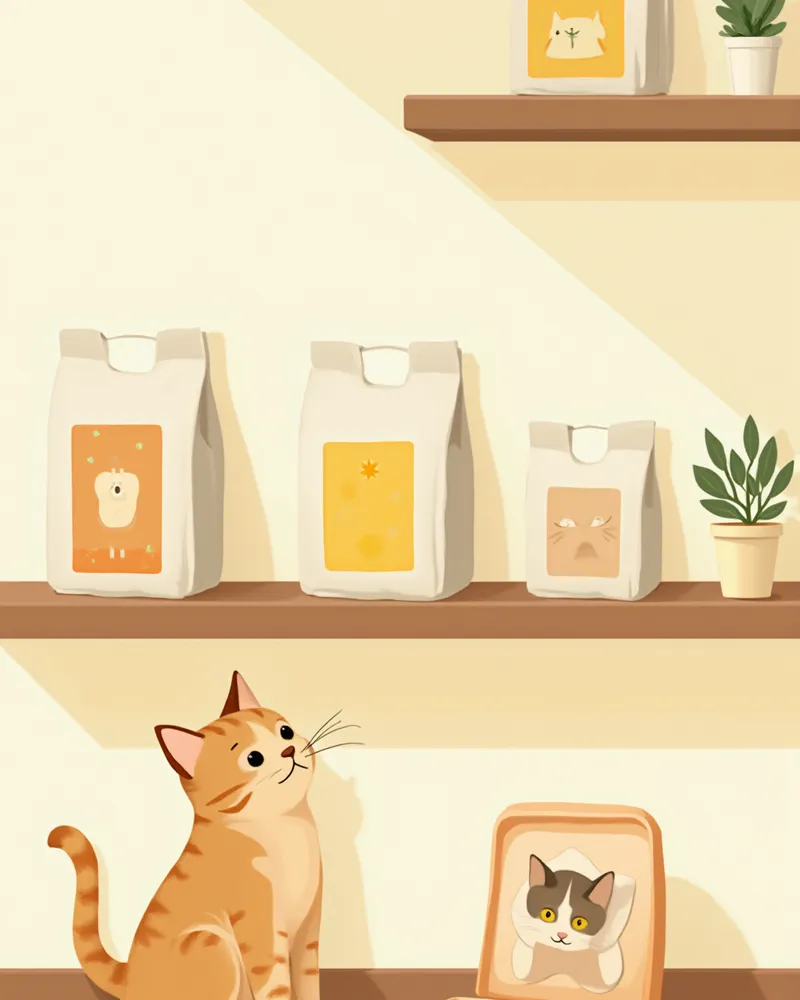
The third-ranked Everclean Health Check is excellent for multi-cat households because it detects white blood cell reactions, helping you identify which cat may be unwell. The fourth-ranked Dr. L.C. Solution is dust-free due to its tofu-based composition, making it a gentle choice for senior cats that visit the litter box multiple times a day. However, its color indicator measures pH only, so it cannot detect hematuria. The fifth-ranked Purina Pro Plan works synergistically when used alongside crystal and urinary prescription diets, and is recommended for overweight and senior cats. Its main drawback is the highest price point.
A display of various urinary care litter products.

Situations Where Color Change Cannot Be Trusted

Even if the urine color appears normal, you shouldn’t let your guard down in the following situations: ① Immediately after changing your pet’s diet or supplements (foods like beets, blueberries, or B12 can alter urine color); ② In multi-cat households where you can’t tell which cat urinated; ③ If the litter hasn’t been changed in over two weeks; ④ If the urine solidified before coming into contact with the litter. Also, keep in mind that color-changing litter doesn’t detect proteinuria or urinary stones. Regular urine tests every six months to a year are essential.

Tips for Use After Purchase — 5-Second Check Routine

When cleaning the litter box daily, take just five seconds to check the clump color, then the litter surface color, and finally your cat’s behavior. Red or dark brown indicates hematuria; dark yellow or orange suggests acidic pH or concentrated urine; green may point to bilirubin or jaundice. Taking a photo and noting the date can be very helpful during veterinary visits. Breed-specific considerations: Veterinary textbooks identify purebred and long-haired cats as risk factors for feline idiopathic cystitis (FIC). Therefore, breeds such as Persians, Himalayans, Maine Coons, Ragdolls, and Scottish Folds—being purebred or long-haired—may be more susceptible to urinary tract diseases. It’s advisable to be more attentive to any color changes and to maintain regular fresh urine testing schedules.
The guardian checks the color of the litter and takes a photo.

Reviewed by a veterinarian

Dr. Tony — Punnawat Phongkittirak

Dr. Tony — Punnawat Phongkittirak

Veterinarian

A veterinarian who majored in veterinary medicine at Khon Kaen University, Thailand, and completed the IVSA program at North Carolina State University in the United States. Drawing on clinical experience at animal hospitals, he works in the pet healthcare field and is dedicated to building a digital care environment that connects pet parents with veterinarians.

Frequently Asked Questions

If I only use urinary care litter, do I still need to bring my pet in for regular check-ups?
Not exactly. Color-changing litter is only a screening tool and cannot detect proteinuria, urine specific gravity, or bladder stones. For cats under seven years old, annual urine and blood tests are recommended, while those aged seven and older should have these tests every six months.
How do I switch from regular litter to urinary care litter?
Changing the litter all at once can cause your cat to avoid using the litter box. Instead, gradually mix the new litter with the old over 7–10 days, increasing the proportion from 25% to 50%, then 75%, and finally 100%. Providing two litter boxes—one with the old litter and one with the new—can also help by giving your cat a choice.
I have multiple cats at home. How can I tell whose urine it is?
If you notice an unusual color in the urine, increase the number of litter boxes to the number of cats plus one, and try separating each cat into a different room for 24 hours. If that doesn’t work, a vet can help identify the culprit using a fluorescent urine marker or by hospitalizing the cats separately for observation.
Does the tofu sand not have a color-changing feature?
While there are products like Dr. LC Solution that rely on a single pH indicator, it is still rare to find options that also address hematuria. If you prefer tofu-based litter but also want color monitoring, you can mix the top-rated tofu and crystal litters in a 30:70 ratio.
My cat is refusing to use the new litter.
Odor, particle size, and texture can be the culprits. Switch to an unscented litter, and if the particles are too coarse and put pressure on your cat's paws, opt for finer ones. If your cat continues to avoid the litter box for over a week, there's a risk of stress-induced cystitis, so revert to their original litter and try a different brand.

Share

Related Guides

References

[1] Chew DJ, DiBartola SP, Schenck PA. Canine and Feline Nephrology and Urology, 2nd Ed. Elsevier, 2011

[2] Reppas G, Foster SF. Practical urinalysis in the cat: 1: Sample collection and urinalysis composition. Journal of Feline Medicine and Surgery, 2016

[3] Sparkes AH et al. ISFM Consensus Guidelines on the Diagnosis and Management of Feline Idiopathic Cystitis. Journal of Feline Medicine and Surgery, 2016

[4] Callens AJ, Bartges JW. Urinalysis. Veterinary Clinics of North America: Small Animal Practice, 2015

This information is based on veterinary literature and does not replace diagnosis or treatment. Please consult a veterinarian for specific health concerns.

Metapet Co., Ltd. | CEO: Park Sung-yong | Business Reg. No. 417-88-02562 | Seoul, South Korea | Customer Center

5 Vet-Recommended Cat Urinary Litters: Low Dust & Color Check | Meongsiljang