Like
Share
멍실장
고양이 빗질 도구 추천 TOP 5 — 헤어볼·털빠짐 감소

Top 5 Cat Grooming Tools — Reduce Hairballs and Shedding

Skin & CoatTop PicksMeongsiljang Veterinary Advisory Board

We compare five brushes that help reduce hairballs and shedding in both long- and short-haired cats, backed by veterinary textbook evidence. We’ve also outlined how to choose the right brush based on your cat’s coat length and skin type.

Why You Should Choose the Right Cat Comb

A long-haired cat calmly enjoying a brushing session with a slicker brush.
A cat comb is a grooming tool designed to remove dead hair and tangled undercoat, helping to reduce hairballs and shedding. The most important thing is to choose the right type of comb based on your cat's coat length and skin sensitivity. Using the wrong comb can irritate the skin and leave undercoat behind, which may actually lead to more frequent hairball vomiting. Today, we’ll compare five types of combs recommended by both veterinary internal medicine textbooks and grooming professionals, categorized by coat length.

The Relationship Between Hairballs, Shedding, and Brushing

Cats spend about 8% of their waking hours grooming themselves, using the backward-facing spines on their tongues to comb out dead hair and tangles, which they inevitably swallow in the process. When this swallowed hair accumulates in the stomach, it can form a hairball, medically known as a trichobezoar. While hairballs are particularly common in long-haired breeds, they usually do not cause significant health issues, and cats often remain in good condition despite occasional vomiting. According to veterinary textbooks, cats have a unique gastric motility pattern when fasting, which prevents swallowed hair from easily passing into the duodenum, causing it to remain in the stomach and making cats more prone to hairballs than other animals. Therefore, owners can help manage hairballs by brushing their cats to remove loose hair before it is swallowed, and regular brushing and clipping are especially recommended for long-haired breeds.

Overview of Brush Types and Their Characteristics

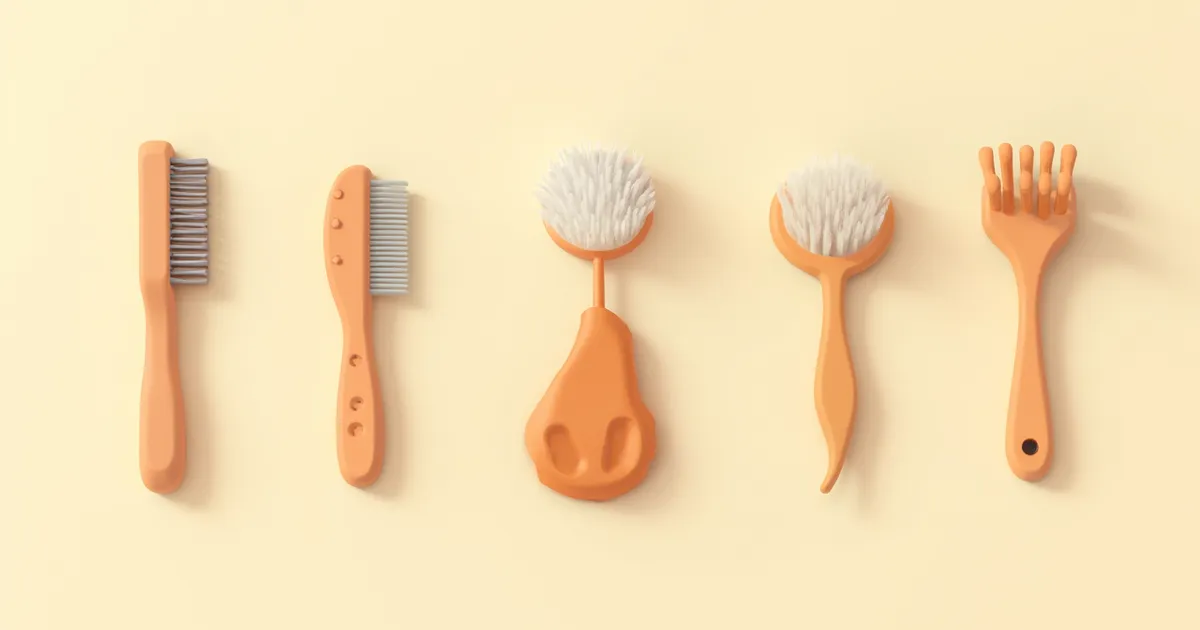
There are five main types of cat brushes, each designed for a specific purpose. - Slicker brush: Features fine wire pins; the most effective tool for removing undercoat. - Fine-tooth metal comb: Ideal for detangling, removing debris, and finishing touches. - Rubber brush: Suitable for short-haired breeds and sensitive skin; provides a massaging effect. - Grooming glove: Designed for cats that are afraid of traditional brushes. - Undercoat rake: Removes large amounts of undercoat during seasonal shedding. For the best results, choose one or two tools to combine based on your cat’s coat length, skin sensitivity, and tolerance for grooming.

At-a-Glance Comparison of 5 Cat Brushes

ItemSlickerFine combRubberGloveUndercoat rake
Recommended coat lengthLong·Medium coatAll lengthsShort coatShort·Medium coatLong coat, seasonal shedding
Undercoat removal★★★★★★★★★★★★★★★★★
Skin irritationModerateLowVery lowVery lowModerate–High
When grooming is refusedUnsuitableModerateSuitableVery suitableUnsuitable
Frequency of use2–3×/week2–3×/weekDaily OKDaily OK1–2×/week
Price range$10 to $20$10 to $10$10 to $10$10 to $10$10 to $30

Based on average domestic online prices in May 2026. 5 stars is the strongest.

No. 1. Slicker Brush — The Ultimate Tool for Undercoat Removal
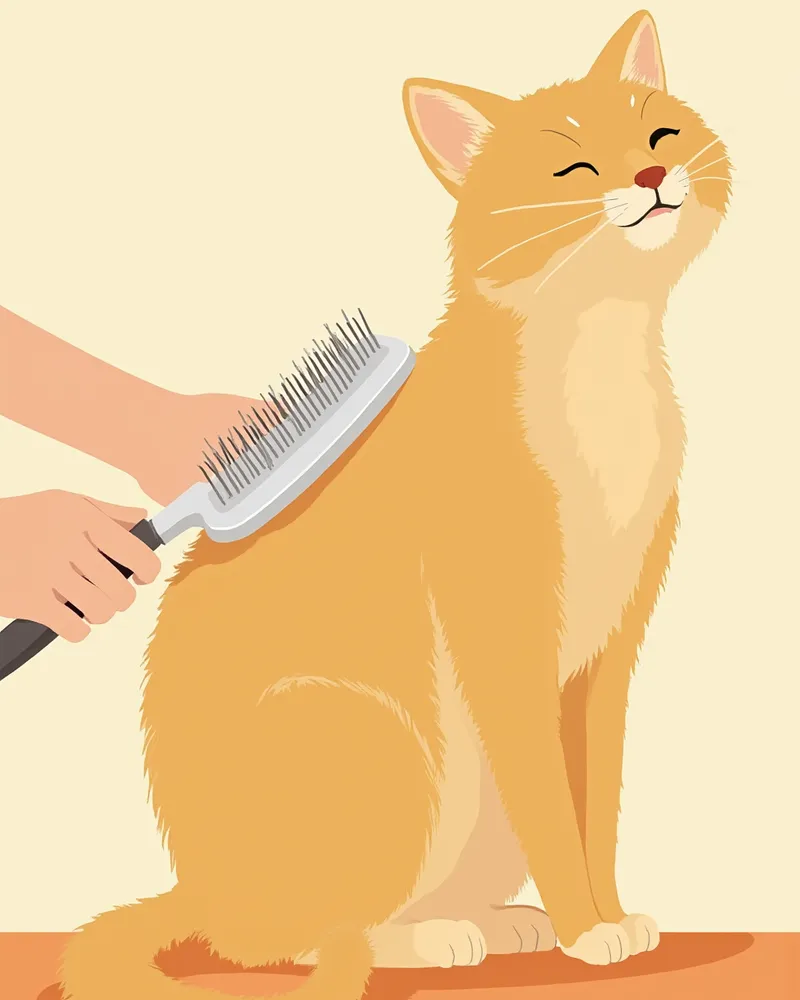
A slicker brush is a grooming tool with fine, densely packed wire pins that effectively removes undercoat and loose, dead hair. - Recommended for: Long-haired breeds such as Maine Coons, Persians, and Ragdolls - Usage frequency: 2–3 times per week, 5–10 minutes per session - Advantage: Most effective at reducing hairballs among the five types - Disadvantage: The sharp pin tips can cause brush burn (skin irritation) if pressed too hard Choose a "soft pin" model with rounded pin tips, relax your wrist, and gently brush in the direction of hair growth.
A close-up of a Maine Coon cat being gently brushed with a slicker brush.

No. 2. Fair Comb (Metal Comb) — For Detangling and Removing Debris

The Fair Comb is a metal comb featuring two sections with pins of different thicknesses on a single head. It’s ideal for finishing after an initial brush-out with a slicker brush. - Recommended for: All coat lengths—especially narrow areas like the face and paws - Pros: Effectively removes small tangles, burrs, dust, and flea debris - Cons: Limited ability to remove undercoat when used alone For sensitive areas such as around the eyes, behind the ears, and the armpits, gently comb in the direction of hair growth using the finer pins. If you encounter tangles, carefully loosen them with your fingers before finishing with the comb.

No. 3. Rubber Brush — Top Choice for Short-Haired Breeds and Sensitive Skin
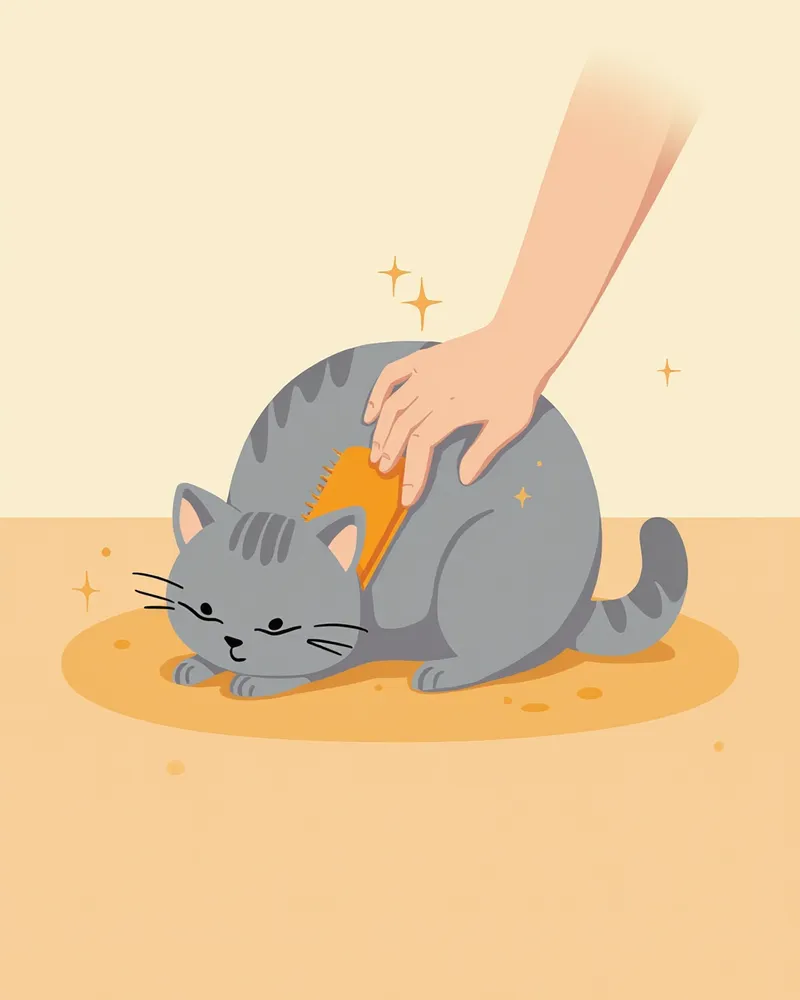
Rubber brushes feature silicone or rubber bristles that make grooming feel like a soothing massage. - Recommended for: Short-haired breeds such as the Korean Shorthair, Russian Blue, and Abyssinian - Pros: Causes minimal skin irritation, and static electricity helps shed fur cling to the brush - Cons: Cannot reach the undercoat of long-haired breeds This brush is our top recommendation for pets with sensitive skin due to allergic dermatitis or atopy. It’s also great for daily care, as it helps lather spread evenly during baths.
A short-haired Korean Shorthair cat enjoying a relaxing massage with a rubber brush.

No. 4. Grooming Gloves — For Cats Afraid of Brushes

Grooming gloves are worn on the back of the hand and used by gently stroking your pet. Because the sensation closely mimics a caregiver’s touch, they are especially effective for cats that resist traditional brushes. - Recommended for: Cats with brush-related trauma, kittens - Advantages: Pets perceive brushing as gentle petting, resulting in minimal resistance - Disadvantages: Lowest undercoat removal capability among the five brush types Use the glove as a first step to desensitize pets that reject other brushes, then gradually transition to rubber or slicker brushes through a stepwise adaptation process.

No. 5. Undercoat Rake — For Heavy Seasonal Shedding
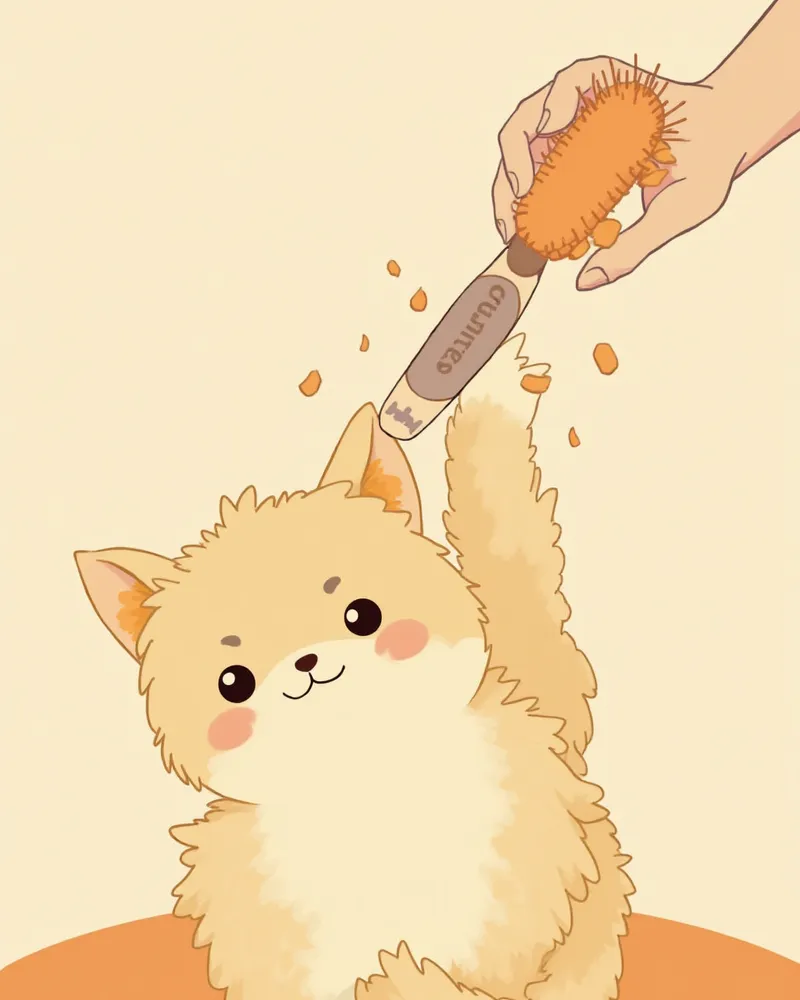
The undercoat rake is a specialized comb featuring rows of short, blade-like pins designed to gently lift and remove loose undercoat hair, especially during seasonal shedding periods. - Recommended for: Long-haired breeds during spring and fall shedding seasons - Advantages: Efficiently removes a noticeable amount of undercoat in one pass - Disadvantages: Can be too harsh for daily use; avoid using on areas with skin inflammation or wounds Use only 1–2 times per week, and limit use to the 4–6 week shedding season. For regular grooming, a slicker brush and fine-toothed comb combination is sufficient.
Removing the undercoat of a Persian cat during the seasonal transition using an undercoat rake.

What You Must Never Do When Brushing

Improper brushing can actually cause skin irritation. - Avoid brushing the same spot more than five times (to prevent brush burn) - Never cut mats or tangles with scissors — you could accidentally cut the skin - If you notice redness, scabs, or discharge on the skin, stop brushing and consult your veterinarian - For kittens, start with a soft grooming glove or rubber brush If your pet vigorously flicks its tail or flattens its ears during brushing, stop immediately and give them a break.

Reviewed by a veterinarian

Dr. Tony — Punnawat Phongkittirak

Dr. Tony — Punnawat Phongkittirak

Veterinarian

A veterinarian who majored in veterinary medicine at Khon Kaen University, Thailand, and completed the IVSA program at North Carolina State University in the United States. Drawing on clinical experience at animal hospitals, he works in the pet healthcare field and is dedicated to building a digital care environment that connects pet parents with veterinarians.

Frequently Asked Questions

How often should you brush your cat?
For short-haired breeds, brushing once or twice a week is sufficient, while long-haired breeds should be brushed three to four times a week. Increase the frequency during seasonal transitions, and keep each session to no more than five to ten minutes. Short, frequent sessions are far more effective than long, infrequent ones.
My pet really hates being brushed. How can I help them get used to it?
Start by gently stroking your pet with a grooming glove for 1–2 weeks to help them adjust, then gradually transition to a rubber brush, followed by a slicker brush. Pairing brushing sessions with their favorite treats will speed up the adaptation process.
My cat is throwing up hairballs frequently. Will regular brushing alone solve the problem?
If your pet vomits more than once a week or shows a decreased appetite, you’ll need to go beyond regular brushing and consider a high-fiber diet, hairball care supplements, and a veterinary consultation. For simply reducing the frequency of hairballs, regular brushing alone can definitely help.
Do I need to buy several types of brushes?
No, that’s not the case. For short-haired breeds, a rubber brush and a pair of combs are sufficient. For long-haired breeds, the typical combination includes a slicker brush, a pair of combs, and an undercoat rake for seasonal shedding periods.
There’s so much fur caught in the comb. Is this normal?
During seasonal transitions (spring and autumn), it’s normal for your pet to shed two to three times more than usual. However, if you notice hair loss patches larger than a coin in any one area or redness on the skin, it’s a good idea to have them checked for fungal or parasitic infections.

Share

Related Guides

References

[1] Schaer M, Gaschen F, Clinical Medicine of the Dog and Cat, 4th Ed — Box 9.4 The problem of feline hairballs, 2017

[2] Little SE, The Cat: Clinical Medicine and Management, 2nd Ed — Gastrointestinal disorders chapter, 2020

[3] Barrs VR, Beatty JA, Tisdall PL, et al., Intestinal obstruction by trichobezoars in five cats, J Feline Med Surg, 1999;1:199

[4] Delaney SJ, Fascetti AJ, Applied Veterinary Clinical Nutrition, 2nd Ed — Dietary fiber and feline hairball management, 2024

This information is based on veterinary literature and does not replace diagnosis or treatment. Please consult a veterinarian for specific health concerns.

Metapet Co., Ltd. | CEO: Park Sung-yong | Business Reg. No. 417-88-02562 | Seoul, South Korea | Customer Center

Top 5 Cat Brushes to Reduce Hairballs and Shedding | Meongsiljang