
Like
Share
멍실장
고양이 기생충 인수공통 감염 위험 관리 추천 BEST와 고르는 기준 총정리

Recommended Top Picks and Selection Criteria for Managing Zoonotic Parasite Infection Risks in Cats

Infection/ParasitesTop PicksMeongsiljang Veterinary Advisory Board

Some parasites that affect cats can also be transmitted to humans. To help you keep your pet safe, we’ve compiled a list of recommended products and key factors to consider when choosing them.

Top 3 Picks for Managing Zoonotic Parasite Infection Risks in Cats

A veterinarian applying a parasite preventive medication to a cat’s back.
Zoonotic parasitic infections in cats refer to diseases that can also be transmitted to humans. Children and immunocompromised individuals are particularly at risk of developing severe symptoms after infection. Prevention should begin with daily care.
Criteria for selecting preventatives: Consider the spectrum of efficacy, safety, ease of use, and whether regular application is required.
Types of parasites: These include internal parasites, external parasites, and some species that can infect humans.
Key to management: It is important to develop a prevention plan based on whether your cat goes outdoors, its living environment, and its contact with other animals.

Selection Criteria: Choose Safe and Effective Products

To reduce the risk of zoonotic parasite infections in cats, choosing the right product is key. Always check its efficacy spectrum and safety profile.
Broad-spectrum coverage: Opt for products that protect against internal parasites, external parasites, and certain blood-borne parasites.
Topical application: Spot-on treatments are convenient since they don’t require bathing or oral administration.
Proven ingredients: Products formulated with ingredients validated by veterinary research are safer.
Flexible dosing schedules: Products available in monthly or three-month intervals make routine management easier.
Monitor for reactions: Watch for potential side effects like itching or hair loss, especially during initial use.
Small spots on a cat's back from a parasite preventive treatment

Top Pick 1: Protect Cat Compact (Topical) – Broad-Spectrum Parasite Coverage

Protect Cat Compact helps prevent intestinal worms, external parasites, mosquitoes, and ticks. You can tailor its use to your cat’s living environment and level of exposure.
Intestinal worm prevention: Effectively eliminates roundworms, hookworms (including *Ancylostoma* species), and larval stages of parasites.
External parasite control: Inhibits the reproduction of ticks, mosquitoes, and fleas.
Skin-absorbing formula: Maintains effectiveness even without bathing.
Usage frequency: Apply once a month directly onto your cat’s skin.
Precautions: Mild itching may occur with first-time use. Monitor for skin irritation, as repeated applications may cause sensitivity in some cats.
A black cat sitting on a white rug, with preventive medication applied to its back

Top Pick 2: Cat Plus Liquid (Oral) – Convenient Oral Administration
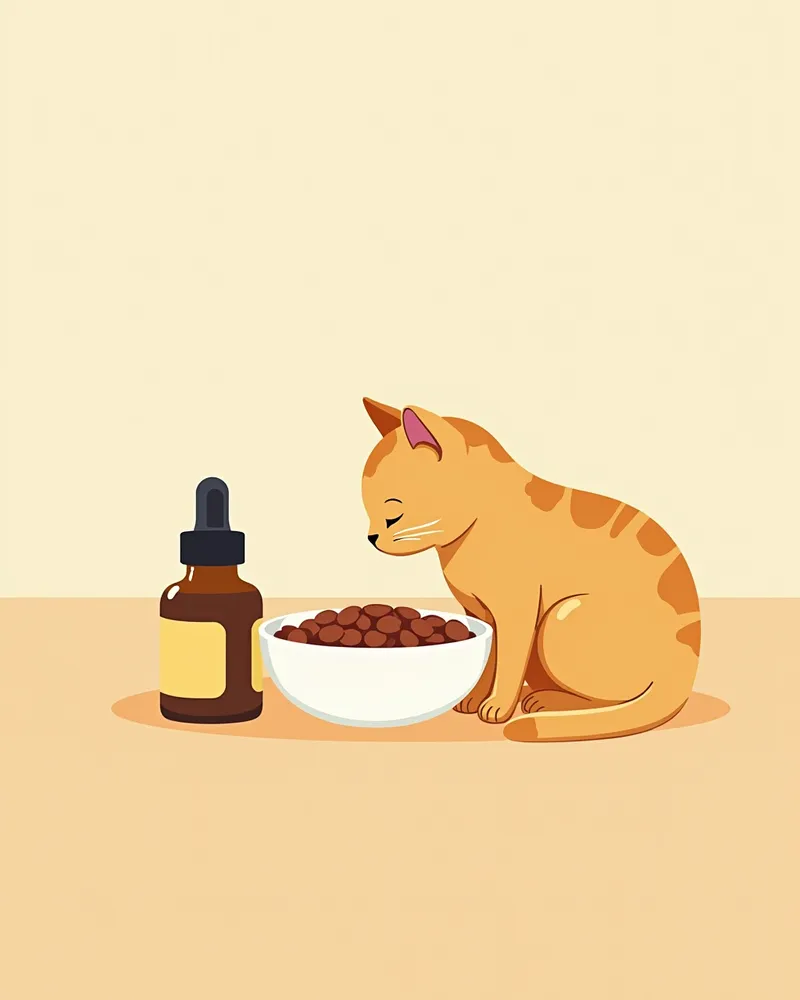
Cat Plus Liquid helps prevent parasites in cats through oral administration. It’s easy to mix with food, making it much more convenient to give.
Intestinal Parasite Prevention: Effectively eliminates roundworms, hookworms (including duodenal worms), and larval stages of parasites.
External Parasite Prevention: Helps control the reproduction of fleas and ticks.
Oral Administration: Simply mix with food so your cat can consume it naturally.
Dosing Schedule: Administer every 30 days.
Precautions: Some cats may experience vomiting or decreased appetite. Monitor closely when using for the first time.
A bottle of liquid parasite preventive medication placed alongside cat food

Top Pick 3: Cat Secure Capsules (Oral) – Long-Lasting Efficacy

Cat Secure Capsules are designed for administration every three months, making them relatively convenient for routine care. However, the duration of efficacy may vary depending on the product label and usage conditions.
Intestinal parasite prevention: Protects against roundworms, hookworms, and larval stages of parasites.
External parasite prevention: Inhibits the proliferation of fleas and ticks.
Long-lasting protection: Depending on the active ingredients, the effects can last up to three months, though individual responses may vary.
Administration schedule: Administer directly to your cat once every three months.
Precautions: For cats that have difficulty swallowing capsules, mixing the contents with food is recommended. Monitor your cat for potential vomiting or decreased appetite upon initial use.
Capsular parasite preventatives placed alongside cat food

Comparison Table of Top Picks 1–3

ItemFormDuration of EffectMain Parasites
Protect Cat CompactTopical1 monthInternal worms, external parasites, mosquitoes, ticks
Cat Plus LiquidOral1 monthInternal worms, external parasites, fleas, ticks
Cat Secure CapsuleOral3 monthsInternal worms, external parasites, fleas, ticks

It is safe to use all products only after consulting a veterinarian.

Precautions: Essential Observation of Reactions Upon First Use

When using a parasite preventive for the first time, it’s important to closely monitor your cat’s reaction. Side effects such as vomiting, diarrhea, itching, or hair loss may occur. If any of these symptoms appear, stop using the product immediately and consult your veterinarian.

Usage Tips: Practical Tips for Effective Management

Parasite prevention isn’t just about administering medication; it requires consistent daily care.
Regular cleaning: Clean your cat’s bed, play area, and litter box regularly.
Limit outdoor exposure: Even indoor cats can bring parasites inside from the outdoors.
Manage contact with other animals: Interactions with other cats increase the risk of parasite transmission.
Proper food storage: Keep pet food in airtight containers to prevent parasite larvae from breeding.
Regular veterinary consultations: Work with your veterinarian to determine the appropriate prevention schedule and product selection.
A cat lying on a cleaned cat bed

Reviewed by a veterinarian

Dr. Tony — Punnawat Phongkittirak

Dr. Tony — Punnawat Phongkittirak

Veterinarian

A veterinarian who majored in veterinary medicine at Khon Kaen University, Thailand, and completed the IVSA program at North Carolina State University in the United States. Drawing on clinical experience at animal hospitals, he works in the pet healthcare field and is dedicated to building a digital care environment that connects pet parents with veterinarians.

Frequently Asked Questions

When should I start using parasite preventatives?
Many products are suitable for pets aged 8 weeks and older. However, since age and weight restrictions vary by product, it is safest to have your veterinarian review the product before use.
My cat is an indoor cat. Does it still need preventive treatments?
Even indoor cats can bring parasites inside from the outdoors. Because there is a risk of parasite transmission, it is recommended to use preventive medication for all cats, regardless of whether they live indoors or outdoors.
What should I do if I missed giving the preventive medication?
If you miss a dose, give the next one as soon as possible. Be careful not to double up on doses, and consult your veterinarian if any side effects occur.
Can it be used on young cats as well?
Choose a product that’s appropriate for your pet’s weight and age. While some products are approved for use in pets 8 weeks of age and older, it’s essential to consult your veterinarian to confirm the product’s suitability for your pet.
My cat vomited after taking the preventive medication. Is this normal?
Occasional vomiting can be a common reaction. If the vomiting becomes persistent or severe, consult your veterinarian immediately.

Share

Related Guides

References

[1] The Cat, Clinical Medicine and Management, 2nd Edition, 2020

[2] Small Animal Critical Care Medicine, 3rd Ed, 2018

[3] Clinical Medicine of the Dog and Cat, 4th Ed, 2021

This information is based on veterinary literature and does not replace diagnosis or treatment. Please consult a veterinarian for specific health concerns.

Metapet Co., Ltd. | CEO: Park Sung-yong | Business Reg. No. 417-88-02562 | Seoul, South Korea | Customer Center

Top 3 Strategies for Managing Zoonotic Parasite Risks in Cats | Meongsiljang