Like
Share
멍실장
고양이 스프레이 마킹 관리 추천 BEST와 고르는 기준 총정리

7 Best Items to Stop Cat Spray Marking on Walls

Brain & CognitionTop PicksMeongsiljang Veterinary Advisory Board

We’ve compiled a veterinary-backed overview of the causes and management strategies for cat spray marking, including guidance on how to choose the right pheromone products, enzymatic cleaners, and environmental enrichment solutions for each situation.

What Is Cat Spray Marking?
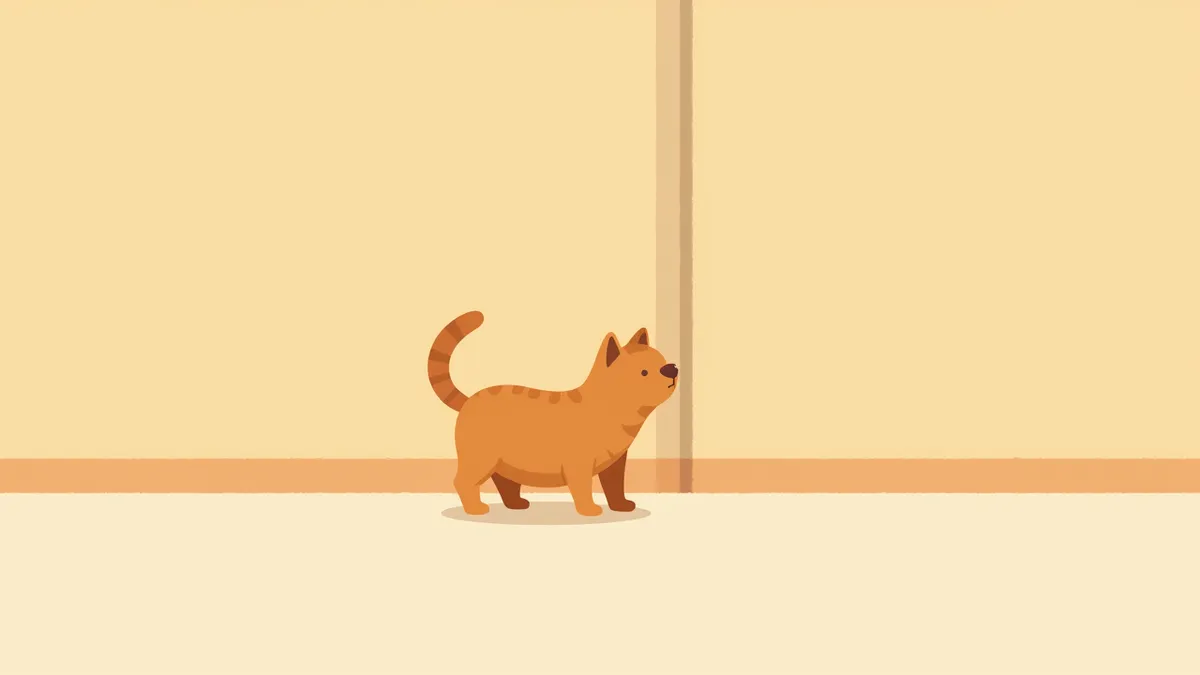
A cat sniffing a vertical surface
Cat spray marking is a form of communication in which a cat stands, raises its tail, and sprays a small amount of urine on a vertical surface. It can occur for various purposes, such as marking territory, sending sexual signals, or expressing anxiety. What truly matters is that spray marking is not a bad habit, but a natural signal sent by cats when they feel threatened or stressed. Without addressing the underlying cause, it is difficult to prevent recurrence using cleaners alone.

3 Main Causes of Spray Marking

According to veterinary behavior textbooks, the causes of spray marking can be broadly divided into three categories.
Territorial Threat: This occurs when a cat feels its territory is under threat, such as from adopting a new cat, seeing outdoor cats through windows, or moving to a new home.
Sexual Signaling: This is most common in intact males, but females may also spray during their heat cycles.
Stress and Anxiety: This arises in high-arousal environments, such as changes in family composition, disruptions to daily routines, or conflicts in multi-cat households.
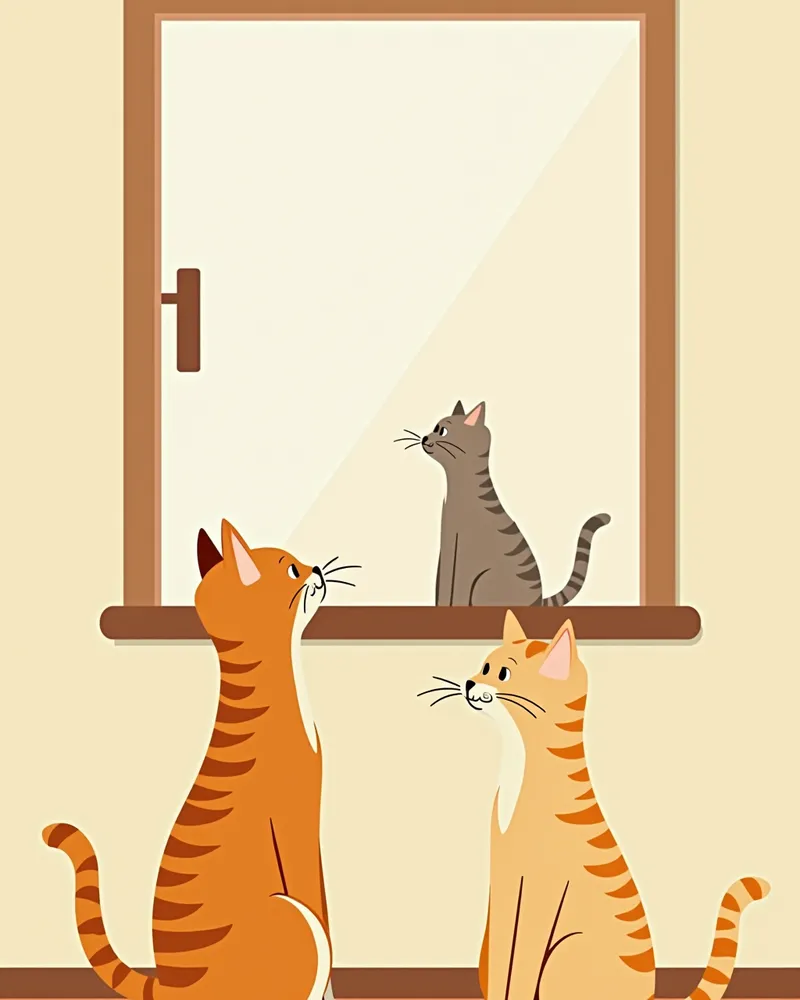
A cat wary of outdoor cats visible through the window

Spray Marking vs. Normal Urination — Differentiation Checklist

These two behaviors require different management approaches. Use the guidelines below to tell them apart.
Posture: Standing with tail raised while urinating → Spray marking / Squatting → Normal urination
Location: Vertical surfaces such as walls, furniture, doors, or curtains → Spray marking / Horizontal surfaces (floors, inside the litter box) → Normal urination
Urine Volume: A few drops to a small amount → Spray marking / A relatively larger amount → Normal urination
Location Pattern: Multiple vertical surfaces near entrances or windows → High likelihood of spray marking

When to See a Vet First

If your cat has suddenly started spray marking, it’s important to rule out medical causes like cystitis or urinary stones before assuming it’s a behavioral issue. If you also notice accidents on horizontal surfaces like the floor, bed, or sofa, there’s a higher chance of an underlying medical problem, so it’s best to have your cat checked by a vet first.

5 Best Spray Marking Management Solutions

Choosing the right solution for the underlying cause is key to effectiveness.
1. Neutering or spaying: This is the most effective approach for spraying driven by sexual signals. In particular, spraying by intact males triggered by detecting females in heat decreases significantly after neutering.
2. Synthetic pheromone products: Products containing feline facial pheromone (F3), such as diffusers and sprays, can help alleviate stress-related and territorial marking. They are also useful for reducing stress in multi-cat households.
3. Enzymatic cleaners: To eliminate urine odor and reduce re-marking, use enzymatic cleaners that do not contain ammonia. Avoid ammonia-based cleaners.
4. Environmental enrichment: Reduce resource competition and stress by adding cat trees and hiding spots, providing one litter box per cat plus one extra, and separating spaces to mitigate conflict in multi-cat homes.
5. Calming supplements and prescription medications: For persistent or severe cases, consult a veterinarian about medications such as fluoxetine or clomipramine, used in conjunction with a behavior modification program.
A cat resting in an enriching environment

Comparison of Spray Marking Management Solutions

ItemSuitable situationTime to onset of effectCost level
Neutering/spaying surgerySexual sprayingWithin a few weeks after surgeryModerate to high
Pheromone diffuserStress and territorial anxietyAfter 2–4 weeksModerate
Pheromone sprayFocused management of specific marking areasWithin a few daysLow
Enzyme cleanerComplete odor removal from marking areasImmediateLow
Calming supplements/prescription medicationRepeated or severe marking1–4 weeksModerate to high

Effects may vary depending on the individual cat and environment. In severe cases, veterinary consultation is recommended.

How to Choose a Solution Based on the Situation

The right solution depends on the situation.
Intact cats: Consider spaying or neutering first. If marking persists afterward, check for environmental triggers.
Multi-cat households: Provide ample resources (litter boxes, food bowls, hiding spots) and use a pheromone diffuser in conflict zones.
Marking after environmental changes: Spray pheromone spray in marked areas and remove any territorial stressors.
Recurrent or severe marking: Consult your veterinarian about prescription anti-anxiety medication.

Environmental Management Checklist to Implement Now

Start by checking the following items.
Litter boxes: Provide at least one more litter box than the number of cats, and clean them daily.
Resource distribution: Place food bowls, water bowls, resting spots, and cat trees in multiple areas.
Blocking views of outdoor cats: Apply window film or similar material near windows and cat doors to block the view of outside cats.
Cleaning marking areas: Completely remove odors using an enzymatic cleaner, then apply a pheromone spray.
Playtime: Reduce stress by engaging in at least two 10- to 15-minute hunting-style play sessions each day.
A space thoughtfully organized to be cat-friendly

Precautions for Using Pheromone Products and Cleaners

Pheromone products may have limited effectiveness when used alone if there is an underlying medical cause or severe multi-cat conflict. They may also be less effective in unneutered cats. Always use an enzymatic cleaner to remove urine odors. Ammonia-based cleaners, vinegar, and bleach do not completely eliminate the odor and can trigger re-marking.

Reviewed by a veterinarian

Dr. Tony — Punnawat Phongkittirak

Dr. Tony — Punnawat Phongkittirak

Veterinarian

A veterinarian who majored in veterinary medicine at Khon Kaen University, Thailand, and completed the IVSA program at North Carolina State University in the United States. Drawing on clinical experience at animal hospitals, he works in the pet healthcare field and is dedicated to building a digital care environment that connects pet parents with veterinarians.

Frequently Asked Questions

Even after neutering, my cat still sprays. Why is that?
Marking behavior driven by territorial anxiety or stress can persist even after neutering. This is especially common if the habit was well-established before the procedure, or if there are conflicts with other cats or changes in the environment. Try combining environmental enrichment with pheromone products to help manage this behavior.
How long does it take for a pheromone diffuser to start working?
Generally, you’ll need to use it consistently for at least 2–4 weeks to see results. Don’t give up if you don’t notice changes right away—please continue using it alongside environmental improvements for at least four weeks.
Do female cats spray to mark their territory?
Yes, although less common than in males, female cats can also spray. This behavior may occur during heat cycles, in multi-cat households with conflict, or under severe stress. If spraying persists after spaying, consider evaluating environmental factors.
Can I use bleach or vinegar on the marked area?
Bleach and vinegar don’t break down urine odor at the molecular level. In fact, their strong chemical smells can irritate cats. Always use an enzymatic cleaner, let the area dry completely, and then apply a pheromone spray.
When is a veterinarian-prescribed medication necessary?
If your cat continues to mark or shows extreme anxiety despite environmental improvements and the use of pheromone products for at least 4 to 8 weeks, consulting your veterinarian about adding anti-anxiety medication may be helpful. Medication is most effective when used alongside a behavior modification program.

Share

Related Guides

References

[1] Halls V., A Professional's Guide to Feline Behaviour: Understanding, Improving and Resolving Problems, CABI, 2022

[2] Landsberg G., Hunthausen W., Ackerman L., Veterinary Guide to Preventing Behavior Problems in Dogs and Cats, CABI, 2022

[3] Rodan I., Little S. E., The Cat: Clinical Medicine and Management, 2nd Edition, Elsevier, 2023

[4] Ramos D. et al., A multimodal approach to alleviate stress-related urine spraying in cats, Journal of Feline Medicine and Surgery, 2020

This information is based on veterinary literature and does not replace diagnosis or treatment. Please consult a veterinarian for specific health concerns.

Metapet Co., Ltd. | CEO: Park Sung-yong | Business Reg. No. 417-88-02562 | Seoul, South Korea | Customer Center

7 Best Items to Stop Cat Spray Marking on Walls | Meongsiljang