Like
Share
멍실장
고양이 촌충(테이프웜) 관리 추천 BEST와 고르는 기준 총정리

Top Recommended Cat Tapeworm Management Products and Selection Criteria

Infection/ParasitesTop PicksMeongsiljang Veterinary Advisory Board

Feline tapeworms are primarily transmitted through fleas, making regular deworming and proper environmental management essential. Learn about effective prevention strategies.

How to Start Managing Tapeworms in Cats

A cat grooming itself, with visible fly larvae and tapeworms in its fur.
Tapeworms in cats are parasitic worms primarily transmitted through fleas. Cats, especially those with a habit of grooming their fur, are at higher risk because they can easily ingest fleas that have attached to their fur. The most effective prevention methods include regular deworming medication, consistent flea control, and maintaining a clean environment.
Flea Infection Pathway: If a cat licks or ingests a flea infected with tapeworms, the tapeworms can enter the cat's body.
Main Symptoms: You may notice rice-shaped white segments (proglottids) in the stool or around the anus, or the cat may repeatedly drag its hindquarters on the floor (scooting) due to itching.
Key Treatment: It is essential to administer the deworming medication prescribed by a veterinarian at the correct dosage based on the cat's weight.

Key Facts: Managing Tapeworms in Cats
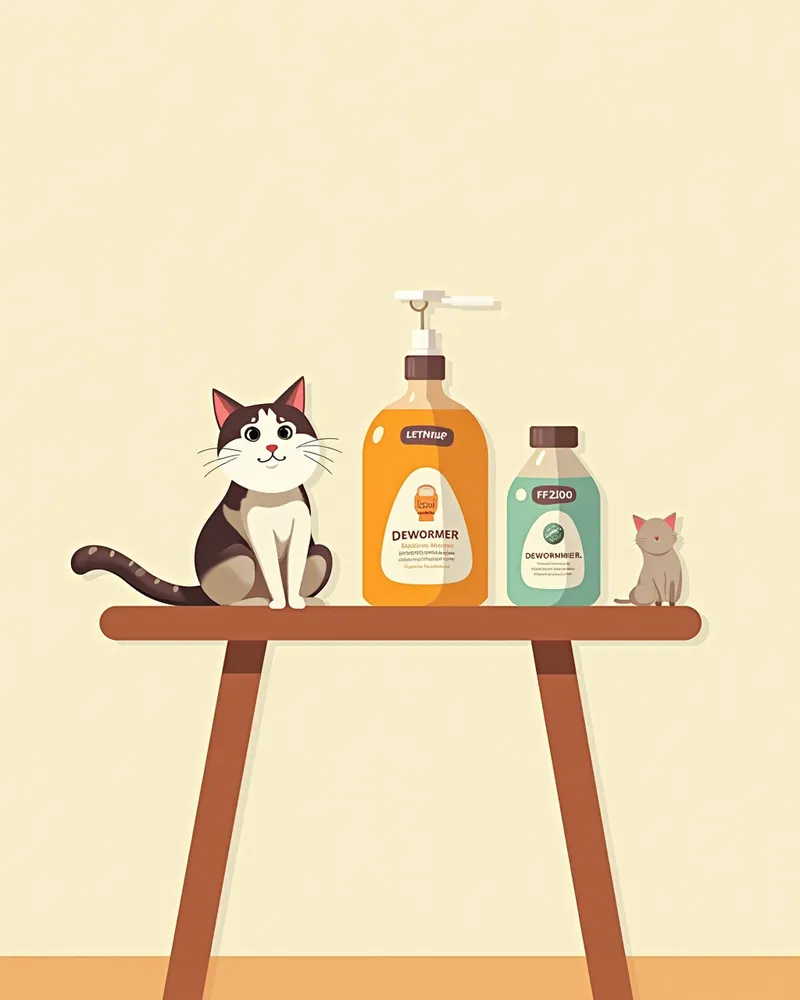
When choosing a product to manage tapeworms in cats, be sure to check the following criteria:
Active Ingredients: Products containing praziquantel are the most effective.
Ease of Administration: Choose a form—such as liquid, tablet, or chewable stick—that suits your cat.
Safety: Veterinarian-recommended products tend to have fewer side effects and can be dosed according to your cat’s weight.
Infection Prevention: Combination products that also prevent flea infestations are a good choice.
Cost-Effectiveness: Select a product that offers good value for money, making it affordable for long-term use.
Three types of tapeworm dewormers are placed on the table, with each product's characteristics clearly labeled.

Key Facts 1: Symptoms and Urgency of Tapeworm Infection
Tapeworm infections in cats are usually mild. Adult tapeworms have low pathogenicity, so many cases pass without significant symptoms or remain entirely asymptomatic. The most common sign is the presence of rice-grain-shaped white segments (proglottids) around the anus or in the feces. Infected cats may drag their hindquarters along the floor due to anal itching, and in severe cases, they may exhibit decreased appetite, weight loss, a dull coat, or diarrhea. These segments are typically expelled through the feces. While this is generally not an immediate emergency, it is best to visit a veterinary clinic promptly for diagnosis if you notice any of these signs.
An informational image about the symptoms and urgency of tapeworm infection

Key Facts 2: Diagnosis and Treatment Options

Veterinarians diagnose tapeworm infections through fecal examination (fecal flotation) and visual inspection. The most common types in cats are Dipylidium caninum, which uses fleas as intermediate hosts, and Taenia species, which are transmitted through rodents. Treatment involves prescription deworming medications (such as those containing praziquantel), with the route of administration and dosage determined based on the cat's weight and condition. Since there are differences in efficacy between over-the-counter dewormers and prescription medications, it is essential to use them only under the guidance and prescription of a veterinarian.
Guide image on diagnosis and treatment options

Key Facts 3: The Importance of Management, Prevention, and Veterinary Consultation

To prevent reinfection with tapeworms, interrupting the life cycle by targeting intermediate hosts is key. Ensure rigorous flea prevention and maintain a clean indoor environment, including frequent cleaning of your cat’s litter box. For cats that go outdoors, minimize their contact with rodents. Since the risk of reinfection remains even after deworming treatment, regular fecal examinations and ongoing consultation with your veterinarian are essential. Multi-cat households, as well as homes with kittens or senior cats, require particularly attentive care. Your veterinarian should determine the timing for diagnosis, prescription, and any repeat treatments; avoid administering dewormers repeatedly on your own.
An informative image highlighting the importance of proper care, prevention, and consulting with a veterinarian.

What Cat Owners Should Know About Cat Tapeworms

ItemKey Points
SymptomsRice-grain-like tapeworm segments around the anus, weight loss, scooting
CauseIngesting fleas or preying on infected rodents
DiagnosisConfirmed by veterinary fecal examination and visual observation
TreatmentAdministration of veterinarian-prescribed dewormers (such as the praziquantel class)
ManagementThorough flea prevention + maintaining regular fecal examinations

This table does not recommend specific products or clinics; it is a reference to consult when talking with your veterinarian. Treatment and testing decisions must always be made together with your veterinarian through an examination.

Warning: Do Not Overdose and Be Aware of Side Effects

Deworming medications must be administered at the precise dosage appropriate for your cat’s body weight, strictly following a veterinarian’s prescription and guidance. Dewormers containing praziquantel or epsiprantel are effective against tapeworms. Do not arbitrarily increase the dose or administer the medication repeatedly; always consult your veterinarian before giving any deworming treatment.

Tips for Managing Tapeworms in Cats

To prevent tapeworms in cats, adopt the following habits:
Flea prevention: Since tapeworms are transmitted through fleas, consistently use flea prevention products to block this intermediate host. It is important to manage your cat’s environment to prevent them from accidentally ingesting fleas while grooming.
Regular deworming: Your veterinarian will determine the deworming schedule based on your cat’s weight and lifestyle (such as whether they hunt). Preventive deworming at regular intervals is recommended, so please consult your vet to establish the appropriate schedule.
Monitor feces: After administering deworming medication, check your cat’s stool for expelled tapeworm segments. However, since expulsion may be delayed or segments may be difficult to see, consult your veterinarian if you are concerned.
Environmental cleaning: Regularly clean areas where your cat spends the most time, as well as their litter box. Keep bedding and toys clean as well.
Separate multi-cat households: If you have multiple cats, deworm and manage fleas for each cat individually to prevent the spread of infection.
A cat sitting on a clean floor, with a trash can and cleaning tools nearby.

Reviewed by a veterinarian

Dr. Tony — Punnawat Phongkittirak

Dr. Tony — Punnawat Phongkittirak

Veterinarian

A veterinarian who majored in veterinary medicine at Khon Kaen University, Thailand, and completed the IVSA program at North Carolina State University in the United States. Drawing on clinical experience at animal hospitals, he works in the pet healthcare field and is dedicated to building a digital care environment that connects pet parents with veterinarians.

Frequently Asked Questions

How do cats get infected with tapeworms?
Infection occurs when a cat ingests a flea carrying tapeworm larvae. Cats that are prone to swallowing fleas while grooming themselves are at higher risk, and those that hunt and eat rodents can also become infected.
How often should deworming medication be administered?
The deworming schedule for cats varies depending on their weight and lifestyle, so it’s best to follow the preventive medication plan set by your veterinarian. Cats that enjoy hunting are at higher risk of reinfection and require more consistent care, so consult your vet to determine the right schedule for your pet.
Don’t see tapeworms in your pet’s stool after giving dewormer?
It may take longer to pass or be difficult to see. Monitor your pet’s stool over time, and consult your veterinarian if symptoms persist or if you’re concerned.
Are ivermectin-containing products safe?
Ivermectin is not a primary ingredient for treating tapeworms. Instead, dewormers containing praziquantel or epsiprantel are effective against tapeworms. Always use any dewormer at the correct dosage based on your pet’s weight and under the guidance of a veterinarian. Be sure to consult with your vet before administering any medication.
Can tapeworms be treated at home?
While cleaning the environment and eliminating fleas can help reduce the risk of reinfection, tapeworms inside a cat’s body can only be removed with deworming medication. Follow your veterinarian’s prescription rather than attempting self-treatment.

Share

Related Guides

References

[1] The Veterinary Workbook of Small Animal Clinical Cases, Case 14, 2023

[2] Plumb's Veterinary Drug Handbook, 10th Ed, 2022

[3] Handbook of Veterinary Pharmacology, IV. ANTICETODAL DRUGS, 2021

This information is based on veterinary literature and does not replace diagnosis or treatment. Please consult a veterinarian for specific health concerns.

Metapet Co., Ltd. | CEO: Park Sung-yong | Business Reg. No. 417-88-02562 | Seoul, South Korea | Customer Center

Cat Tapeworm Management: Best Products & Criteria | Meongsiljang