Like
Share
멍실장
고양이 실내 환경 벼룩 제거 관리 추천 BEST와 고르는 기준 총정리

Top Recommended Indoor Flea Removal Management for Cats and Selection Criteria

Infection/ParasitesTop PicksMeongsiljang Veterinary Advisory Board

Removing fleas from your cat’s indoor environment is key to protecting both your cat’s health and your household’s comfort. Here’s a rundown of effective management methods and how to choose the right products.

Indoor Flea Removal for Cats Is More Than Just Cleaning

A scene of a cat grooming itself and discovering fleas
Removing fleas from your cat’s indoor environment is more than just cleaning—it’s an essential step to protect your cat’s health and maintain a comfortable home. Fleas don’t just cause itching; they can lead to anemia, trigger allergic reactions, and even spread infectious diseases. Even indoor cats can bring fleas inside, so it’s important to manage the entire space where your cat spends time. The key is to choose products that target all stages of the flea life cycle (eggs, larvae, pupae, and adults). For long-lasting results, combine regular environmental management with consistent grooming of your cat’s fur.

Selection Criteria: Key Factors in Flea Removal Products

- Effectiveness: Choose a product that targets every stage of the flea life cycle, from eggs and larvae to pupae and adults. It’s especially important to select one that contains ingredients effective against flea eggs. - Safety: Opt for fragrance-free, non-toxic formulas that won’t irritate your cat’s skin. These are safe enough for cats with sensitive skin. - Longevity: Look for products that maintain their effectiveness for an extended period with just one to two applications or replacements per week. Ideally, a single use should provide protection for two to three weeks or more. - Eco-friendliness: Products made with biodegradable ingredients help minimize environmental impact. - Ease of use: Select the format—spray, pad, or trap—that best fits your home’s layout and your cat’s habits.
A variety of flea control products are laid out on the table.

BEST 1: Flea-Specific Spray (Periodic Spraying Type)

This product is a spray designed to quickly reduce indoor flea populations. Sprays and aerosols act more like a “shock treatment” that rapidly knocks down fleas upon immediate exposure, so they must always be used alongside long-term environmental management to prevent new infestations. It is important to avoid direct contact with your cat’s fur and to target areas where fleas frequently enter and exit. For safety, ensure good ventilation during use and avoid spraying surfaces your cat might directly lick. Be especially cautious with pyrethroid ingredients such as permethrin and deltamethrin, which can be toxic to cats; never use products containing these in your cat’s environment and always check the ingredient list. Spraying areas where your cat spends time, such as beds, sofas, and carpets, can be helpful, but it is safest to allow the treated areas to dry completely and ventilate thoroughly before letting your cat back in.
A scene showing someone spraying flea spray onto fleas that have fallen on the carpet.

BEST 2: Flea-Specific Pulp Pad (Adsorption Type)
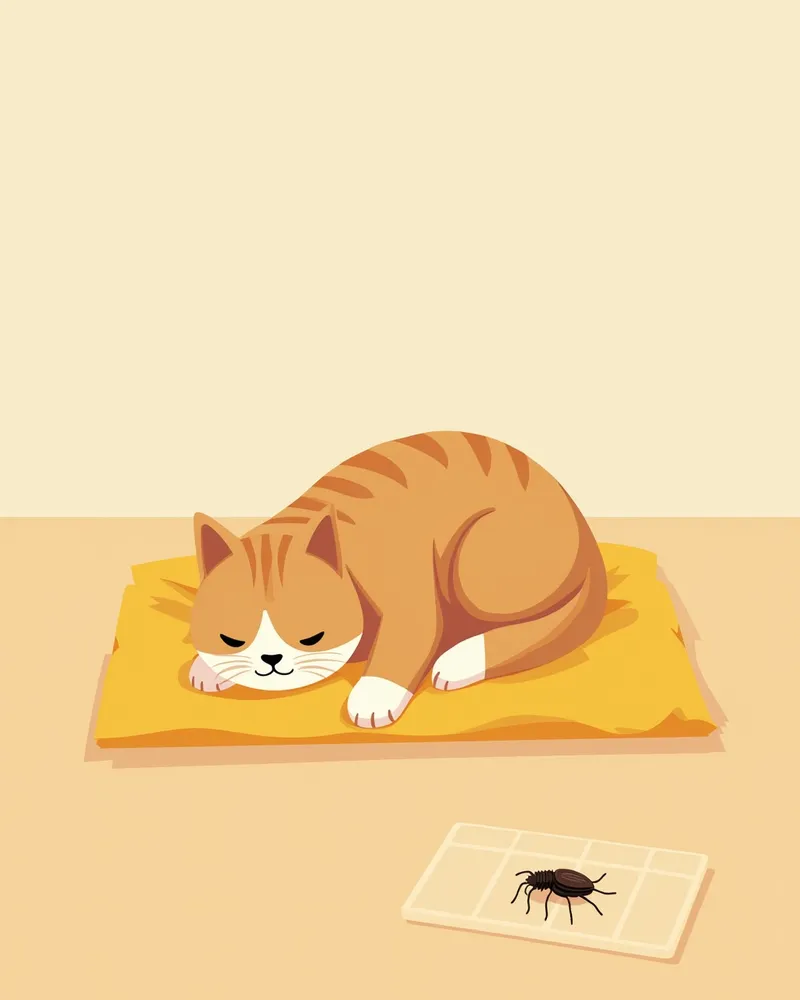
This product features a special pulp pad that attracts fleas, effectively capturing both larvae and adult fleas in the indoor air. It doesn’t need to be used directly by your cat and can be safely used for extended periods. It’s especially suitable for cats with sensitive skin, as it emits no chemicals, ensuring it won’t compromise indoor air quality. The pads are easy to maintain, requiring replacement only once or twice a week, and can be placed near beds, sofas, or floors to block flea movement paths. They blend seamlessly into your cat’s living space, complementing your home decor.
Flea trap pads placed near the cat bed

BEST 3: Flea-Specific Electric Trap (Automatic Detection Type)

This smart trap uses light and heat to attract fleas, then instantly eliminates them with an electric shock. It continuously captures active fleas indoors, helping to reduce their population in your home. Since cats could be injured if they come into contact with the device, it’s important to install it securely in a fixed location. The trap produces minimal waste, reducing environmental impact, and operates automatically once plugged in, making it easy to maintain. For best results, place it near doors, windows, or areas where your cat frequently passes through. However, because the trap alone cannot eliminate flea eggs, larvae, or pupae in the environment, it’s best used alongside regular vacuuming and washing of bedding. While designed for long-term use, keep it out of reach, especially if you have a curious cat.
Electric flea traps installed near the cat's door

Comparison Table of BEST 1–3 Products

ItemDuration of EffectHow to UseRecommended Location
Spray1 weekSpray 1–2 times per weekBeds, sofas, carpets, and other places where the cat frequently stays
Pulp Pad30 daysReplace at each replacement intervalBeds, sofas, carpets
Electric TrapContinuousAutomatic operationNear doors, near windows, cat access areas

All products are safe even without direct use by the cat, but the installation location should be adjusted considering the risk of access.

Caution: Always Check Your Cat’s Reaction Before Using Products

All flea control products can irritate a cat’s skin. When using a product for the first time, test it on a small area and discontinue use immediately if you notice any reactions such as itching, rash, or coughing. Cats with allergic tendencies require particular caution. Most importantly, never use pyrethroid-based insecticides like permethrin or deltamethrin, as they are toxic to cats. Be careful not to apply dog-specific products to cats or in their living spaces, and always check the ingredients and label before use to ensure safety.

Usage Tips: Success in Flea Removal Starts with Consistency

Flea control is not a one-time fix but requires consistent, ongoing management. In fact, most treatment failures stem from short-term approaches, lack of consistency, or failing to treat all pets living in the same household. Even after applying treatment products, continue to monitor your environment and closely observe your cat for at least 6 to 8 weeks. Since immature stages—eggs, larvae, and pupae—make up the majority of the flea population, vacuum areas where your cat spends time, such as beds, sofas, and carpets, as often as possible, ideally daily. Frequently wash or replace bedding, including blankets and cushions. Additionally, comb your cat’s coat at least once a week, or more often if possible, to help reduce flea infestation and population. It is also essential to ensure that all other pets in the household receive consistent flea management.
A person using a vacuum cleaner while being watched by a cat

Reviewed by a veterinarian

Dr. Tony — Punnawat Phongkittirak

Dr. Tony — Punnawat Phongkittirak

Veterinarian

A veterinarian who majored in veterinary medicine at Khon Kaen University, Thailand, and completed the IVSA program at North Carolina State University in the United States. Drawing on clinical experience at animal hospitals, he works in the pet healthcare field and is dedicated to building a digital care environment that connects pet parents with veterinarians.

Frequently Asked Questions

What should I do if my cat has been bitten by fleas?
First, brush your cat’s fur to remove fleas, then consult your veterinarian to use appropriate topical or oral medications. It is important to treat promptly and consistently with effective flea control products. At the same time, manage the indoor environment and treat any other pets living in the household.
Is it harmful to cats if the spray is used frequently?
When used at the recommended frequency, it is relatively safe. However, avoid applying it to areas where your cat can directly lick or groom it, and ensure good ventilation after use. Be especially cautious with pyrethroid-based ingredients, as they are toxic to cats—always double-check the active ingredients. Minimum age requirements vary by product (for example, some topical insecticides are approved for cats 4 or 8 weeks and older, while others require cats to be at least 6 months old), so always consult the product label and your veterinarian before using any product on a young kitten.
Is it safe for my cat to be around an electric trap?
Since cats risk injury if they come into contact with the trap, it’s safest to install it in an area they can’t access. Curious cats are especially prone to touching the trap and getting hurt, so secure it firmly out of their reach.
Is it safe for cats to ingest flea treatment products?
Never let your cat eat these products. Some can be highly toxic to cats. Keep them out of your cat’s reach, and wash your hands immediately after use.
How long does it take to eliminate fleas indoors?
Successful eradication typically takes 6 to 8 weeks or longer, requiring consistent environmental and medical management to eliminate fleas at all life stages. The treatment duration may vary depending on the extent of environmental contamination and the animal’s response.

Share

Related Guides

References

[1] BSAVA Manual of Canine and Feline Dermatology, 4th Ed, 2003

[2] Thiemann T, Fielden LJ, Kelrick MI. Water uptake in the cat flea Ctenocephalides felis. Journal of Insect Physiology, 2003

[3] Shaw SE, Kenny MJ, Tasker S et al. Pathogen carriage by the cat flea Ctenocephalides felis in the United Kingdom. Veterinary Microbiology, 2004

This information is based on veterinary literature and does not replace diagnosis or treatment. Please consult a veterinarian for specific health concerns.

Metapet Co., Ltd. | CEO: Park Sung-yong | Business Reg. No. 417-88-02562 | Seoul, South Korea | Customer Center

Best Indoor Flea Removal for Cats and How to Choose | Meongsiljang