Like
Share
멍실장
고양이 자동차 공포·멀미 관리 추천 BEST와 고르는 기준 총정리

7 Best Care Items for Cats Anxious in Cars — Selection Criteria for Motion Sickness and Travel Anxiety

Brain & CognitionTop PicksMeongsiljang Veterinary Advisory Board

A comprehensive guide to managing fear and motion sickness in cats that cry or vomit when getting into the car. We’ll walk you through carrier selection, prescription anti-nausea medications, and travel training methods—all backed by veterinary science.

What Is Feline Car Anxiety and Motion Sickness?
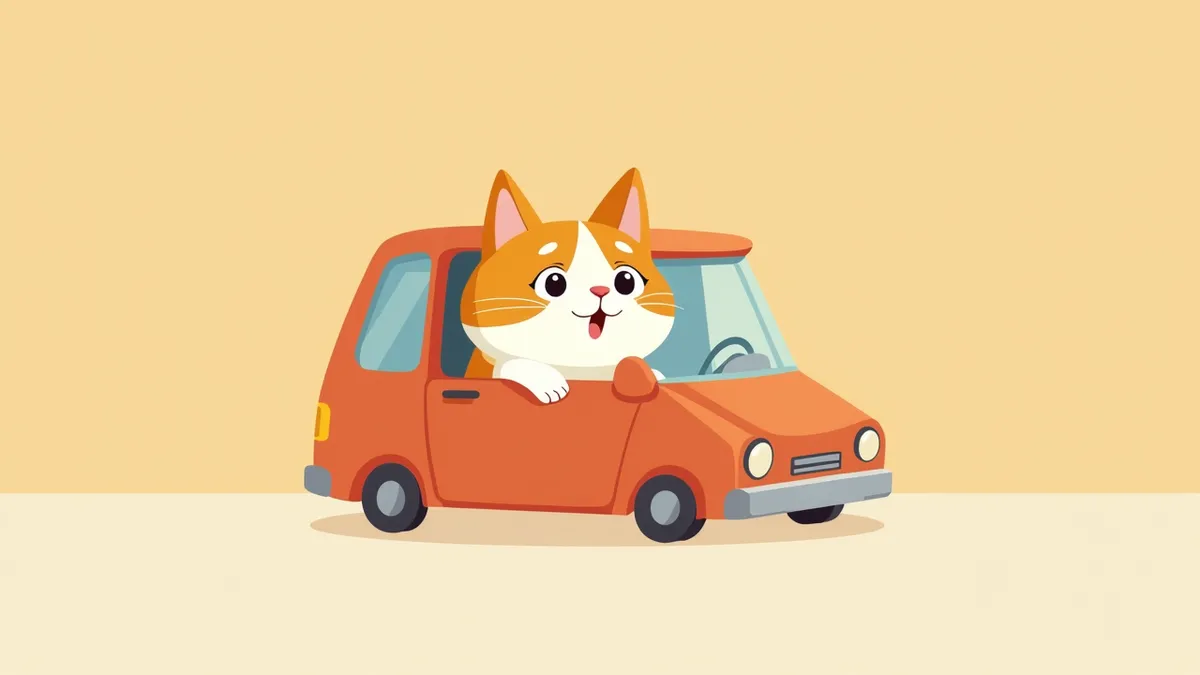
A cat gazing anxiously out of its carrier during a car ride.
Feline car anxiety and motion sickness occur when vestibular stimulation during travel combines with fear of unfamiliar environments, leading to vomiting, drooling, and trembling. What’s truly important is that fear (a psychological response) and motion sickness (a physical response) often occur together. Distinguishing between these causes is essential to providing the right support. If your cat cries or vomits every time they ride in the car, these episodes will likely recur without proper management.

Fear and Motion Sickness Have Different Causes

Fear stems from psychological factors. Since cats learn through experience, if their first car ride is associated with unpleasant memories similar to a vet visit, they may perceive the car itself as a threat. Unfamiliar noises, smells, vibrations, and your own anxious behavior can also intensify this fear. Motion sickness, on the other hand, has physical causes. According to veterinary textbooks, the movement of the vehicle and the visual and auditory stimuli from passing scenery can trigger nausea during travel. In other words, the swaying and frequent turns stimulate their sense of balance, leading to motion sickness. Cats with little prior car experience and who are not accustomed to travel may experience both motion sickness and fear more intensely, so it is important to distinguish between the causes and provide appropriate support.

Fear and Motion Sickness Symptom Checklist

Vomiting or Nausea: These are classic signs of motion sickness triggered by the vehicle’s movement, often appearing shortly after the journey begins.
Excessive Drooling: An early indicator of motion sickness, where the area around the mouth becomes damp or the pet frequently licks its lips.
Persistent Whining: This reflects fear. Continuous high-pitched whining indicates a very high level of stress.
Trembling or Crouching: Pressing tightly into a corner of the carrier and lowering the body is a sign of extreme anxiety.
Accidental Elimination: Severe stress can lead to tension-related urination or defecation.
Panting (Open-Mouth Breathing): Panting in cats is a serious sign of stress and requires immediate attention.
A cat showing signs of anxiety inside a carrier, with dilated pupils and a tense body.

Go to the Vet Immediately If You See These Symptoms

If your pet’s panting lasts more than 10 minutes, if repeated vomiting leads to signs of dehydration (such as dry, sticky gums), or if they remain lethargic and refuse to eat even an hour after travel, take them to a veterinarian immediately. These symptoms may indicate an underlying health issue rather than simple motion sickness.

Best Pre-Travel Preparation — Fasting and Carrier Training

According to veterinary textbooks, keeping your pet fasting for at least a few hours before car travel can help reduce vomiting caused by motion sickness. Fasting can also increase your pet’s interest in treats at the veterinary clinic, creating a more positive experience. It’s fine to provide water up until just before travel. Carrier acclimation training is also essential. If you only bring out the carrier on the day of travel, your cat is likely to perceive it as a threat. Instead, leave the carrier open in your home on a daily basis, placing treats and toys inside to encourage your cat to enter and exit freely, gradually and consistently helping them view it as a safe space.
A cat that voluntarily enters an open carrier in the living room

Best Carrier Comparison by Type — Based on Fear and Motion Sickness

ItemSoft type (fabric)Hard type (plastic)Backpack type
Vibration absorptionPartially absorbedTransmitted directlyModerate
Blocking visual stimuliEasy to cover with a blanketDifficultCan be fully enclosed
Top-cover openingPossible in most casesAvailable in some productsNot possible
Convenience for clinic examsVery goodModerateLow
Ease of cleaningModerateVery easyModerate
Recommended forBoth fear and motion sicknessCats with strong escape riskShort-distance outings
Recommendation rank1st choice2nd choiceDepends on situation

Considering both fear and motion sickness, a soft carrier with a detachable top cover is the most advantageous.

Best Relief Prescriptions — Anti-Nausea Medications and Sedation Options

According to veterinary textbooks, maropitant citrate is an antiemetic approved for both dogs and cats, and it can be used to prevent motion sickness in cats. It should be administered under veterinary prescription at least two hours before travel. Applying or spraying a synthetic cat facial pheromone (F3) product inside the carrier at least 15 minutes before travel can help reduce anxiety. For cats showing severe fear or anxiety, veterinarians may prescribe anti-anxiety medications such as gabapentin, with sedation being a common side effect. Medication choices must always be determined in consultation with a veterinarian, based on the cat’s weight and health status.
A pet owner consulting with a veterinarian about getting a prescription for cat motion sickness medication at an animal hospital

Best Driving Tips to Reduce Fear and Motion Sickness During Travel

Sudden acceleration, hard braking, and sharp turns can worsen motion sickness. Whenever possible, drive smoothly and maintain a steady speed. Place the carrier on the floor of the back seat rather than in the trunk, where vibrations are stronger. Covering the carrier with a towel or blanket can reduce visual stimulation and help your cat feel more secure. Leave one side open to ensure proper ventilation. Your cat may pick up on your anxiety, so speaking to them occasionally in a calm, quiet voice can be reassuring.

Never Use Human Medications

Never give your cat human motion sickness medications or sedatives without veterinary guidance. Cats metabolize drugs differently than humans, which can lead to serious side effects such as toxicity and respiratory depression. Always use only veterinary-prescribed medications intended for animals.

Reviewed by a veterinarian

Dr. Tony — Punnawat Phongkittirak

Dr. Tony — Punnawat Phongkittirak

Veterinarian

A veterinarian who majored in veterinary medicine at Khon Kaen University, Thailand, and completed the IVSA program at North Carolina State University in the United States. Drawing on clinical experience at animal hospitals, he works in the pet healthcare field and is dedicated to building a digital care environment that connects pet parents with veterinarians.

Frequently Asked Questions

How can you tell the difference between a cat’s fear and motion sickness?
Motion sickness typically presents with physical symptoms such as vomiting, drooling, and lethargy. In contrast, fear is characterized by psychological responses like persistent whining, trembling, and aggression. Since these two conditions often occur together, consulting with a veterinarian to identify the underlying cause is the most accurate approach.
How long does it take to train a pet to get used to a carrier?
There’s no set timeframe for this process. By consistently providing small, positive experiences—such as treats and toys—most cats will eventually come to see their carrier as a safe space. Forcing them inside can actually have the opposite effect.
Do pheromone sprays actually work?
Veterinary textbooks report that synthetic cat facial pheromones (F3 fraction) can help alleviate anxiety. While their effectiveness may be limited when used alone, combining them with carrier training enhances the results. According to textbook guidelines, spray the inside of the carrier at least 15 minutes before travel.
How long does it take for a cat to recover after moving?
Every cat is different. If you place them in a quiet, familiar space and avoid forcing interaction or handling, they will usually settle down gradually over time. Provide water and food as usual, but don’t worry if they don’t eat on the day of the visit.
Can young kittens take motion sickness medication?
Certain ingredients, such as maropitant, may not be suitable for all pets depending on their age and weight. Always inform your veterinarian of your pet’s age and weight to receive a proper prescription. Never adjust the dosage on your own.

Share

Related Guides

References

[1] Herron ME, Horwitz DF. Veterinary Guide to Preventing Behavior Problems in Dogs and Cats. Wiley, 2024.

[2] Little SE. The Cat: Clinical Medicine and Management, 2nd Edition. Elsevier, 2022.

[3] Bowen J, Heath S. A Professional's Guide to Feline Behaviour: Understanding, Improving and Resolving Problems. CABI, 2023.

[4] Rodan I, Heath S. Feline Behavioral Health and Welfare: Prevention and Treatment. Elsevier, 2015.

This information is based on veterinary literature and does not replace diagnosis or treatment. Please consult a veterinarian for specific health concerns.

Metapet Co., Ltd. | CEO: Park Sung-yong | Business Reg. No. 417-88-02562 | Seoul, South Korea | Customer Center

7 Best Care Items for Cats Anxious in Cars: Motion Sickness | Meongsiljang