
How to Safely Manage Multiple Medications in Senior Cats: Interactions and Administration Principles
I’ve outlined how to safely administer medications to senior cats with multiple chronic conditions, along with key points for monitoring drug interactions and side effects.
What Is Multidrug Management for Senior Cats?
Why Is Medication Management Especially Important for Senior Cats?
Common Medication Combinations in Senior Cats and Precautions
Precautions for Commonly Used Medications
| Item | Main drugs | Cautions in senior cats |
|---|---|---|
| Arthritis pain relief | NSAIDs (non-steroidal anti-inflammatory drugs) | Risk of worsening kidney function; regular blood tests are essential |
| Chronic kidney disease | Renal support supplements, blood pressure medication | Watch for dehydration; use cautiously with NSAIDs |
| Hyperthyroidism | Methimazole | Regular blood tests during treatment are needed to monitor side effects |
| Heart disease | Diuretics, blood pressure medication | Risk of electrolyte imbalance such as dehydration & hypokalemia; cats are more sensitive |
| Immune-mediated disease | Prednisolone | Long-term use raises risk of secondary infection & tumors; regular monitoring needed |
Refer to a veterinary pharmacology textbook. Actual prescriptions must follow the veterinarian's judgment.
Side Effect Signs You Must Not Miss
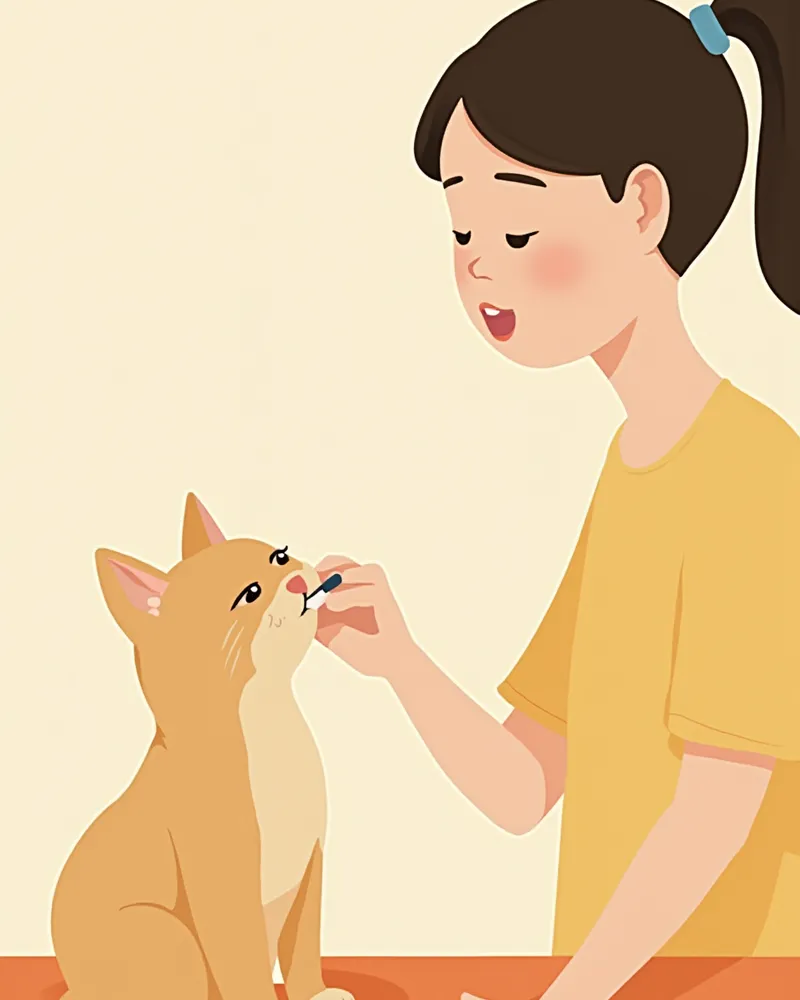
Symptoms Requiring Immediate Veterinary Care
If an elderly cat on medication shows any of the following symptoms, stop the medication immediately and seek emergency veterinary care: persistent vomiting, extreme lethargy to the point of being unable to stand, rapid breathing, or pale gums. In particular, if an elderly cat with chronic kidney disease produces significantly less urine or experiences a sudden, sharp decrease in urine output, there may be a risk of acute kidney failure, so contact your veterinarian without delay.
How to Create a Safe Multidrug Administration Schedule

Lifestyle Management to Reduce Kidney and Liver Burden
Tips to Prevent Common Mistakes
It’s surprisingly common for pet owners to accidentally give their cat medication twice. This often happens when the cat appears to vomit right after taking the medicine, leading owners to administer another dose. However, in most cases, absorption has already begun, resulting in a double dose. In such situations, it’s safest to call your veterinarian for guidance. Additionally, be cautious about giving extra medication without confirming whether another family member has already administered it.
Reviewed by a veterinarian

Dr. Tony — Punnawat Phongkittirak
VeterinarianA veterinarian who majored in veterinary medicine at Khon Kaen University, Thailand, and completed the IVSA program at North Carolina State University in the United States. Drawing on clinical experience at animal hospitals, he works in the pet healthcare field and is dedicated to building a digital care environment that connects pet parents with veterinarians.
Reviewed 2026-04-27
Frequently Asked Questions
My pet threw up after taking the medication. Should I give another dose?
Is it safe to give supplements and prescription medications together?
Giving medication is so difficult—can I hide it in a treat?
How often should pets have regular check-ups?
I missed a dose of medication while traveling. What should I do?
Share
Related Guides

Primary vs. Secondary Veterinary Hospitals: A Comparison

5 Easy-to-Raise Cat Breeds for First-Time Owners — Grooming Difficulty Comparison

Top 7 Short-Legged Dog Breeds
When is the best time to spay after giving birth?

When to Start Weaning Puppies and Kittens

Meaning of Dog Gaze and Icon-tact

Meaning and Behavioral Signals of the Play Bow

What Is My Cat Feeling Right Now? — Reading Emotional Signals Through Ear Position
What Does a Cat’s Purr Mean? — Meanings and Types by Situation
How to Objectively Assess Your Pet’s Condition Using Quality of Life (QoL) Scales for Dogs and Cats
References
[1] Little SE, The Cat: Clinical Medicine and Management, 2nd Edition, Chapter 11 Chronic Disease Management, Elsevier
[2] Drobatz KJ, Hopper K, Rozanski E, Silverstein DC, Feline Emergency and Critical Care Medicine, 2nd Edition, Wiley-Blackwell
[3] Gowan RA, Lingard A, Johnston L, Retrospective case-control study of long-term meloxicam on renal function in aged cats with degenerative joint disease, J Feline Med Surg, 2011
[4] King JN, Budsberg SC et al., Clinical safety of robenacoxib in feline osteoarthritis, J Vet Intern Med, 2011