Like
Share
멍실장
노묘 인지 자극 활동 완벽 가이드

7 Cognitive Stimulation Activities for Senior Cats to Preserve Cognitive Function — A Complete Guide to Preventing Dementia

Brain & CognitionQ&AMeongsiljang Veterinary Advisory Board

Cognitive enrichment activities are a key part of slowing age-related cognitive decline in senior cats. Engaging their sense of smell, playing hunting-style games, and introducing environmental changes are all effective strategies.

What Are Cognitive Stimulation Activities for Senior Cats?
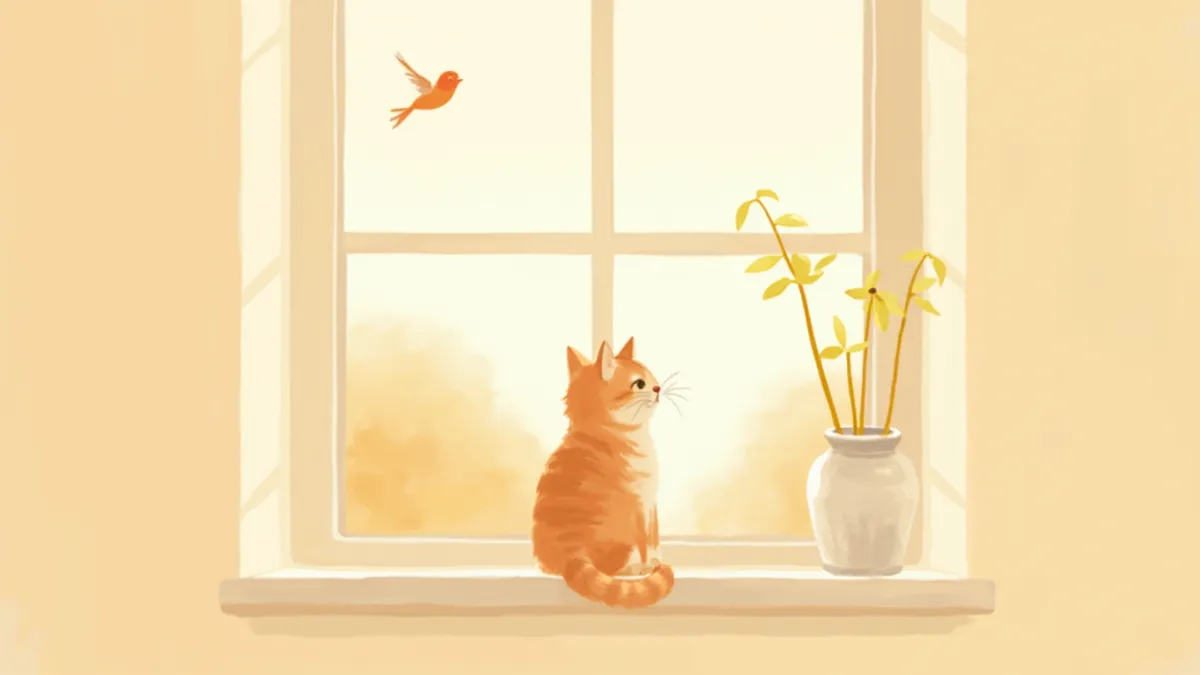
An elderly cat resting in the sunlight by the window
Cognitive enrichment activities for senior cats are daily care strategies designed to appropriately stimulate the aging feline brain and slow the decline of cognitive function. Consistency and regularity are key. According to veterinary textbooks, cognitive dysfunction syndrome (CDS) primarily affects older cats and can begin as early as age 10. Although research on feline cognitive aging is still limited, simple stimuli such as scent-based play, puzzle feeders, and environmental changes are known to potentially help slow the rate of brain aging.

Why Do Senior Cats Need Cognitive Stimulation?

As cats age, their brains can undergo age-related changes. In fact, studies have identified Alzheimer’s-like changes in the brains of cats aged 16 to 21 years, specifically the accumulation of amyloid-beta and tau proteins, which are not present in cats under four years old. Alongside these changes, cats may experience declines in memory and spatial orientation. According to veterinary textbooks, environments rich in varied stimulation may help keep the brains of senior cats active and potentially slow the rate of cognitive decline, compared to monotonous settings. However, it is important to note that research on cognitive aging in cats remains very limited. Nevertheless, stimulating the brain and encouraging joint movement through regular play and enriched feeding activities is a widely recommended approach among experts for managing senior cats. Therefore, providing tailored stimulation is far more important than simply letting them rest comfortably.

Checklist of 7 Cognitive Stimulation Activities for Senior Cats

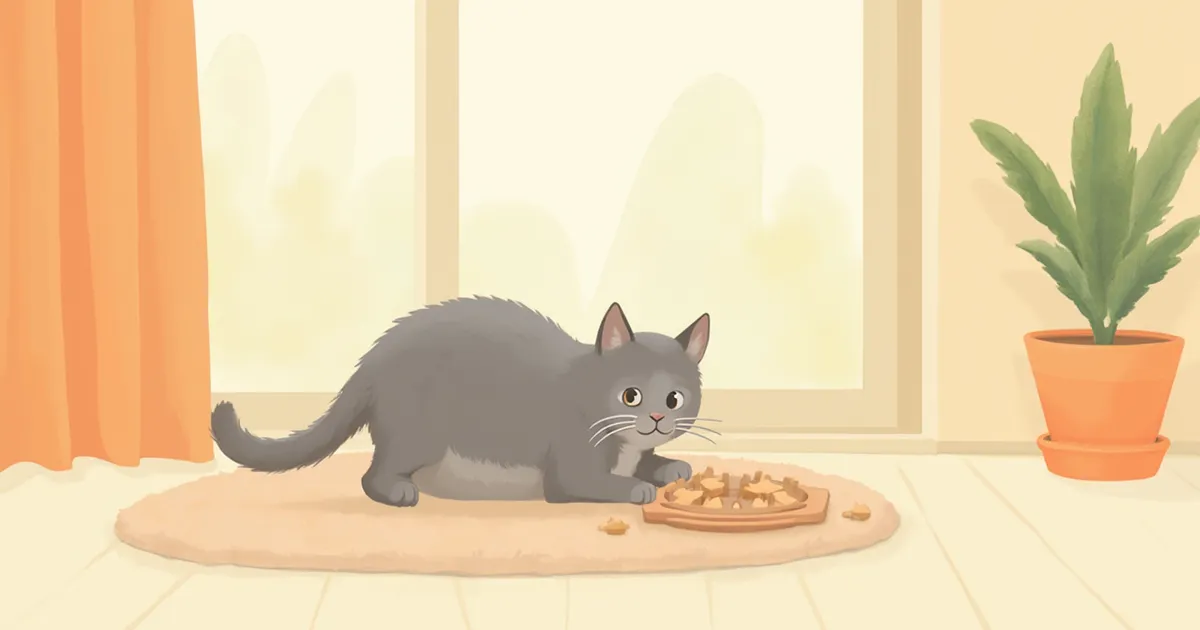
Rotating through just two to three of the following seven activities each day is sufficient. - Scent games: Hide treats and let your pet find them by smell. - Puzzle feeders: Encourage your pet to work for their kibble by extracting it from the feeder. - Window perches: Set up a spot by the window where they can watch birds and the wind. - Hunting play: Use a wand toy for 5 to 10 minutes a day. - Novel scent exploration: Introduce new smells like cardboard boxes, paper bags, or catnip. - Light clicker training: Practice basic cues like responding to their name or sitting. - Bonding with you: Gentle petting and soft conversation.
An elderly cat searching for treats using a puzzle feeder

Comparison of Difficulty and Effectiveness by Activity

ItemEasyModerateChallenging
Representative ActivitiesScent games, watching out the windowPuzzle feeder, wand toyClicker, obstacle course
Recommended Daily Time5–10 min10–15 min5–10 min
Cognitive Stimulation IntensityLowModerateHigh
Joint StrainNoneLowModerate
Arthritic Senior CatRecommendedAdjustableCaution

If there is arthritis or heart disease, adjust the difficulty after consulting your veterinarian

How to Properly Use Scent Games and Puzzle Feeders
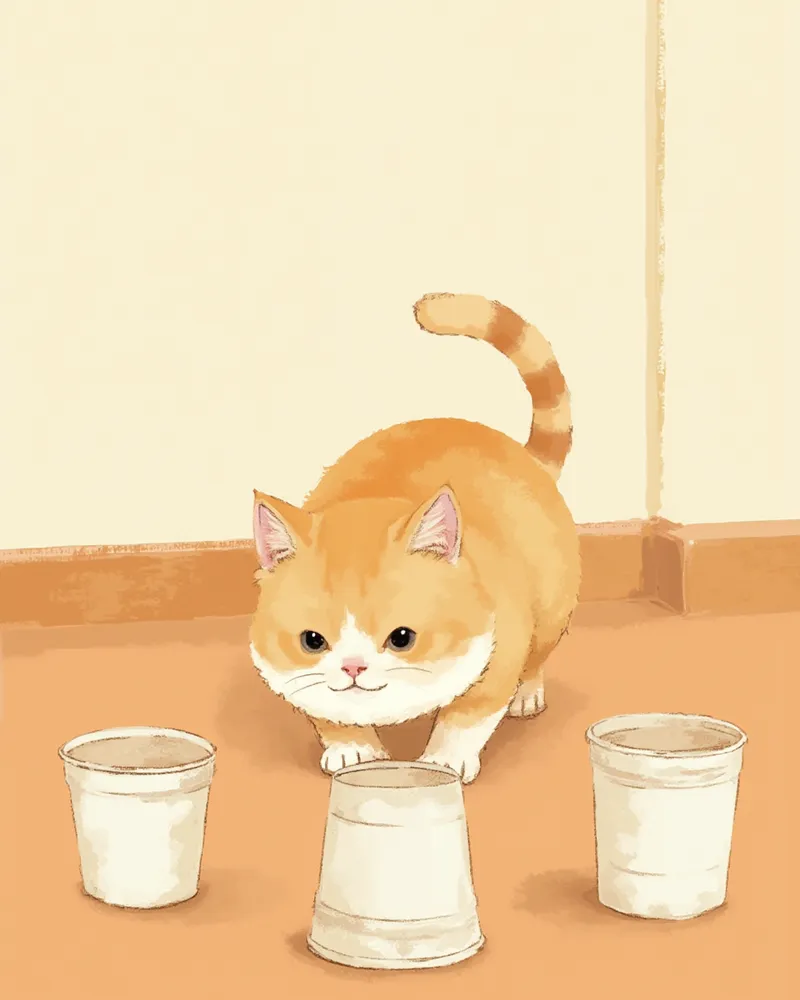
Olfactory stimulation is one of the most effective ways to provide cognitive enrichment for senior cats. By engaging in scent-based exploration, cats naturally trigger their hunting instincts and activate their brains. Start by hiding a treat in only one of three paper cups and encouraging your cat to find it. Once they’re comfortable, gradually increase the number of cups. When introducing puzzle feeders, begin with beginner-level options to prevent frustration and abandonment. Offer part of their daily kibble through the puzzle feeder, adjusting the portion so they can still eat enough, and provide the rest as usual. This approach helps them adapt smoothly without stress.
An elderly cat playing a scent game with a paper cup

When to Stop Activities and Visit the Vet

If you notice any of the following signs during or after cognitive stimulation activities, stop immediately and consult your veterinarian: - Crying throughout the night or wandering aimlessly around the house - Becoming disoriented in familiar places and standing still facing a wall - Failing to recognize you or suddenly displaying aggressive behavior - Forgetting the usual location of the litter box - Showing no response to stimuli and appearing dazed These signs may indicate that cognitive dysfunction syndrome (CDS) has already progressed. Although research on treating feline CDS is still limited, your veterinarian can develop a management plan that includes antioxidant-enriched diets and environmental enrichment, and may also evaluate the need for medication.

Environmental Management to Accompany Stimulation Activities
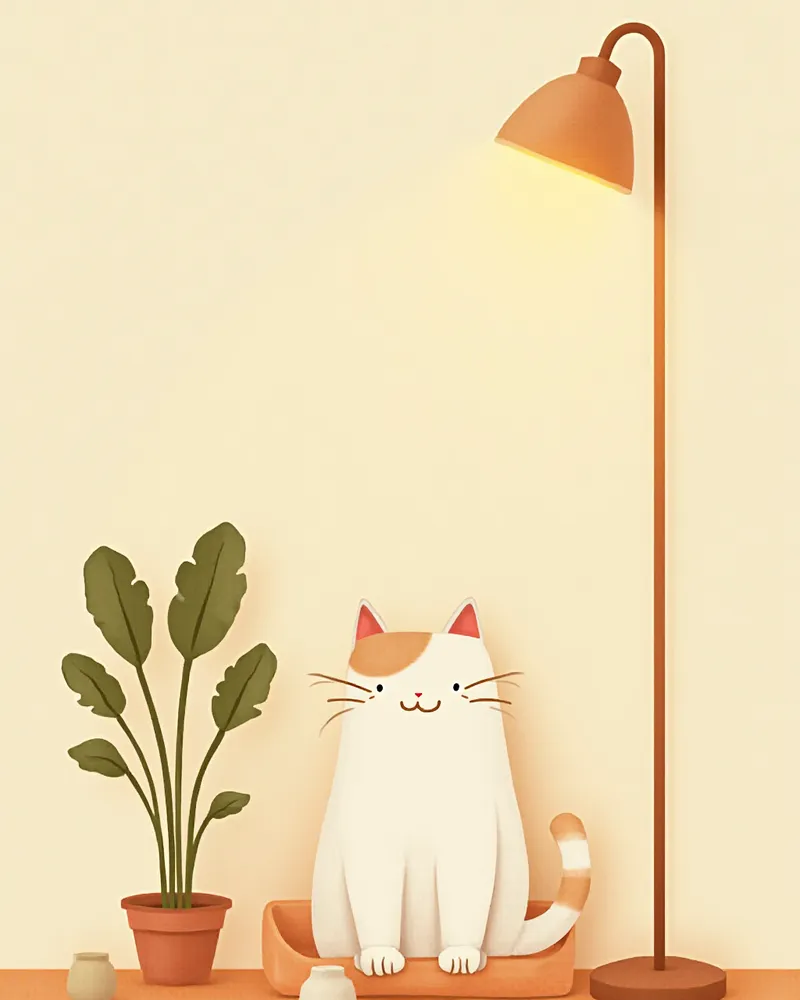
Simply increasing stimulation while neglecting the environment can actually cause stress. Let’s follow the Three Principles of a Senior-Cat-Friendly Environment together. - Security: Avoid sudden changes in furniture placement or moving. - Accessibility: Provide low-entry litter boxes, ramps or steps, and non-slip mats. - Lighting: Use low-intensity night lighting to help with orientation. Senior care food fortified with antioxidants may be helpful. According to veterinary textbooks, research on the treatment of Feline Cognitive Dysfunction Syndrome (CDS) is still limited, but combining an antioxidant-enriched diet with environmental enrichment is suggested as one approach. Whether specific components or supplements such as DHA, EPA, or vitamin E are necessary should be determined in consultation with your veterinarian.
A senior-cat-friendly space with non-slip mats and low-entry litter boxes

Tips for Consistently Continuing Cognitive Stimulation

The most common reason for failure is trying to do too much at once. During the first two weeks, just five minutes of a single activity per day is plenty. If your cat shows signs of stress—such as tail twitching or ears pinned back—stop immediately. Keeping an activity log can help you track progress. Simply note activities on a calendar, like “Monday: scent play / Tuesday: puzzle feeder,” and have your veterinarian check for changes in cognitive function during regular check-ups every three months.

Reviewed by a veterinarian

Dr. Tony — Punnawat Phongkittirak

Dr. Tony — Punnawat Phongkittirak

Veterinarian

A veterinarian who majored in veterinary medicine at Khon Kaen University, Thailand, and completed the IVSA program at North Carolina State University in the United States. Drawing on clinical experience at animal hospitals, he works in the pet healthcare field and is dedicated to building a digital care environment that connects pet parents with veterinarians.

Frequently Asked Questions

At what age should I start cognitive stimulation activities for my pet?
According to veterinary textbooks, cognitive dysfunction syndrome can begin as early as age 10. Even if your cat shows no symptoms, it’s a good idea to gradually incorporate scent-based play and puzzle feeders into the daily routine of any cat aged 10 or older as a preventive measure.
Can senior cats with arthritis still play?
Yes, it’s possible. However, avoid activities that require jumping or quick directional changes, and focus instead on scent-based games and low-height hunting play. It’s safest to first establish a pain management plan with your veterinarian.
My senior cat has lost interest in playing. What should I do?
A loss of interest can be a sign of cognitive decline. Start with a health checkup to rule out pain or thyroid issues. If everything is clear, begin by stimulating their sense of smell with catnip, silver vine, or fresh treats.
Is stimulating activity alone enough to prevent dementia?
While stimulating activities are an important part of care, they are not enough on their own. Combining them with an antioxidant-enriched diet (senior dog food), a stable environment, and regular check-ups will yield much better results. If your pet is already showing symptoms, it is important to consult with a veterinarian to develop an appropriate management plan.
Is it okay to only engage senior cats in stimulating activities in a multi-cat household?
Absolutely. In fact, it’s more effective to spend one-on-one time with your senior cat in a quiet, separate space away from younger cats. If other cats interfere and cause stress, the benefits of the interaction can be significantly reduced.

Share

Related Guides

References

[1] Gunn-Moore D, Moffat K, Christie LA, Head E. Cognitive dysfunction and the neurobiology of ageing in cats. Journal of Small Animal Practice, 2007

[2] Landsberg GM, Denenberg S, Araujo JA. Cognitive dysfunction in cats: a syndrome we used to dismiss as 'old age'. Journal of Feline Medicine and Surgery, 2010

[3] Sordo L, Gunn-Moore DA. Cognitive Dysfunction in Cats: Update on Neuropathological and Behavioural Changes. Veterinary Sciences, 2021

This information is based on veterinary literature and does not replace diagnosis or treatment. Please consult a veterinarian for specific health concerns.

Metapet Co., Ltd. | CEO: Park Sung-yong | Business Reg. No. 417-88-02562 | Seoul, South Korea | Customer Center

7 Cognitive Stimulation Activities for Senior Cats | Meongsiljang