Like
Share
멍실장
성묘(1-7세) 일상 관리 완벽 가이드

The Ultimate Guide to Daily Care for Adult Cats (Ages 1–7)

ImmunityQ&AMeongsiljang Veterinary Advisory Board

We’ve outlined evidence-based veterinary guidelines for nutrition, weight, dental care, and stress management in adult cats (ages 1–7). Proper care during this stage plays a pivotal role in shaping your cat’s health as it ages.

Why Is Care During the Adult Cat Stage (Ages 1–7) Important?

A healthy adult cat sitting by the window, basking in the sunlight.
The adult cat life stage refers to cats aged one to seven years, whose physical functions have fully matured. Care during this period determines their health in old age. Even if they appear healthy, weight gain, dental disease, and chronic kidney disease can begin to develop silently. The key lies in four areas: weight management, dental care, hydration, and stress reduction. Daily routines that may seem identical are, in fact, shaping their health a decade from now.

Physical Changes in Adult Cats

By the time your cat reaches one year of age, growth slows down and metabolism gradually decreases. This is especially true for neutered cats, whose energy requirements tend to drop, making them prone to weight gain if fed the same amount as before. While muscle mass remains stable, activity levels noticeably decline compared to kittenhood. Even if there are no obvious external changes, subtle shifts in body weight can begin, so it’s important to regularly monitor body condition scores and adjust food portions accordingly. Catching small changes early is key to managing your cat's health during this stage.

Differences Between Kitten and Adult Cat Care

ItemKitten (~1 year)Adult cat (1-7 years)Senior cat (7 years~)
Feeding frequency3-4 times a dayTwice a day2-3 times a day (small portions)
Food typeKitten foodAdult cat foodSenior food
Health checkup intervalEvery 6 monthsOnce a yearOnce every 6 months
Key management pointsGrowth and vaccinationWeight, teeth, hydrationKidney, joints, heart

Refer to the AAFP (American Association of Feline Practitioners) life stage guidelines

Four Daily Care Essentials
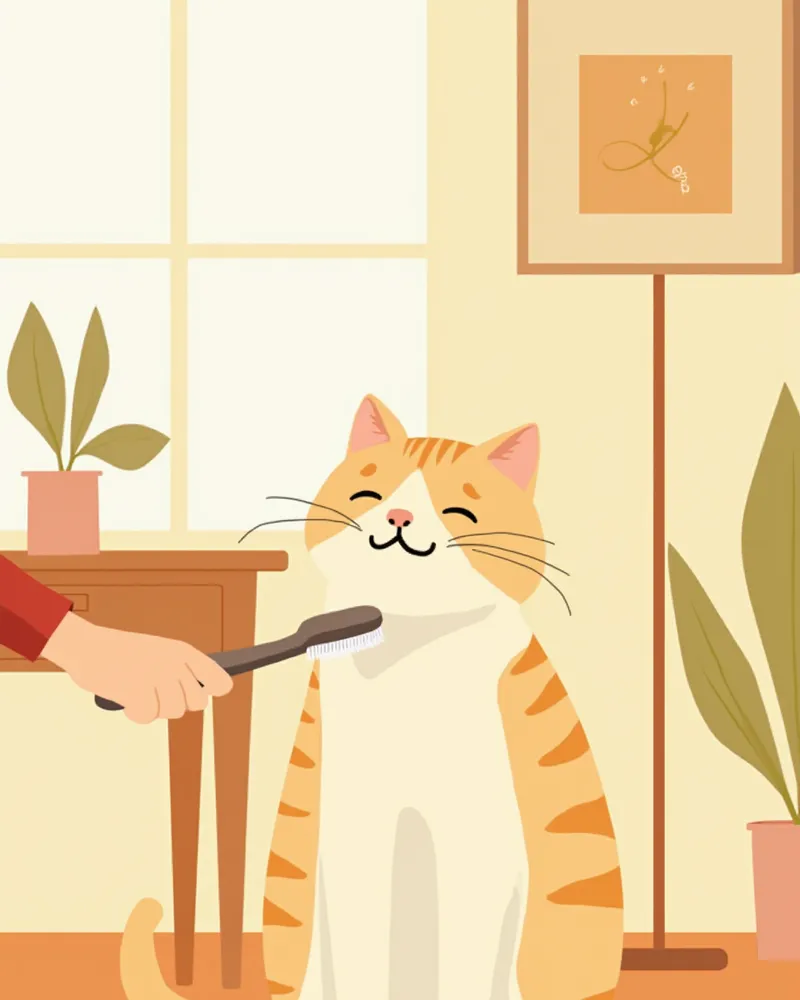
- Weight Management: Weigh your pet once a month and maintain a body condition where the ribs can be felt with light pressure. Regularly monitoring the body condition score is recommended. - Dental Care: Consistent daily brushing at home can prevent or even reverse dental issues such as gingivitis, so incorporating oral care into your daily routine is highly advised. - Hydration: Ensuring adequate water intake to maintain proper hydration helps reduce the risk of lower urinary tract diseases and kidney problems. Place the water bowl away from the food bowl. - Stress Management: Provide hiding spots, vertical spaces for climbing, scratching posts, and a consistent feeding schedule as foundational elements of care.
A caregiver gently brushing an adult cat

Signs That Require Immediate Veterinary Attention

Even adult cats can show dangerous emergency signs if left untreated. If your cat hasn’t eaten for more than 24 hours, it could develop fatty liver disease, so you should take it to the vet right away. If your cat keeps going to the litter box to urinate but only passes a small amount, it might have a urethral obstruction. In male cats, this condition can be life-threatening if not treated within 24 hours. Additionally, if your cat is breathing rapidly, panting with its mouth open, or has pale gums, you should seek immediate veterinary care.

Choosing the Right Food and Feeding Amounts

For adult cats, it’s best to feed them an adult or maintenance formula rather than a kitten-specific diet. Kitten food is formulated with higher calories to support growth, so if fully grown cats continue eating it, they’re more likely to become overweight. Since cats are obligate carnivores with high protein needs, a diet rich in quality animal-based proteins and low in carbohydrates aligns well with their natural physiology. The daily amount your cat needs varies depending on their weight, activity level, and whether they’ve been spayed or neutered, so it’s safest to follow the feeding guidelines on the product label and consult your veterinarian. For better weight management, it’s better to divide the daily portion into two measured meals rather than leaving food out for free-feeding.
A single serving of dry food for adult cats, placed alongside a measuring cup.

Practical Ways to Increase Water Intake

Cats are naturally inclined to drink less water. Due to their desert-dwelling ancestors, they have a low thirst drive, making them prone to inadequate hydration. Chronic dehydration increases the risk of lower urinary tract diseases, such as idiopathic cystitis, and kidney problems. Ensuring your cat drinks enough water to stay well-hydrated helps prevent these conditions. Additionally, as cats age, their kidneys’ ability to concentrate urine declines, making daily hydration management even more critical. - Place water bowls in multiple locations: Distribute them across 2–3 areas in your home. - Choose the right bowl size: Use wide, shallow bowls that prevent whisker fatigue. - Use a water fountain: Many cats prefer flowing water. - Incorporate wet food: If your cat eats only dry food, supplement with wet food 2–3 times a week to boost hydration.

Indoor Environment and Stress Management

Adult cats are sensitive to environmental changes. Accumulated stress can manifest as feline idiopathic cystitis, excessive grooming, or loss of appetite. A basic setup should include a cat tree that allows them to observe their surroundings from above, a cozy hideaway for private retreats, and scratching posts for territory marking. In multi-cat households, the general rule is to provide one litter box per cat plus one extra, and it’s also best to separate food and water bowls so each cat has their own. Maintaining a consistent daily routine is equally important.

Annual Health Checkups Are Essential

Adult cats have an instinct to hide pain, so they may appear perfectly healthy to their owners even while a disease is progressing. At a minimum, they should undergo annual blood tests, urinalysis, and dental exams. Especially after age five, adding an echocardiogram and blood pressure measurement can help detect chronic kidney disease, hyperthyroidism, and hypertrophic cardiomyopathy at an early stage. Even if the cost feels burdensome, early detection ultimately reduces treatment expenses significantly.

Reviewed by a veterinarian

Dr. Tony — Punnawat Phongkittirak

Dr. Tony — Punnawat Phongkittirak

Veterinarian

A veterinarian who majored in veterinary medicine at Khon Kaen University, Thailand, and completed the IVSA program at North Carolina State University in the United States. Drawing on clinical experience at animal hospitals, he works in the pet healthcare field and is dedicated to building a digital care environment that connects pet parents with veterinarians.

Frequently Asked Questions

Do adult cats also need annual vaccinations?
Core vaccines (combination vaccines) are administered at intervals of one or three years. The specific vaccines needed vary depending on whether your cat is strictly indoor or goes outdoors, so it’s best to consult with your veterinarian to create a tailored vaccination schedule. Rabies vaccination is legally recommended annually.
What should I do if my adult cat suddenly gains or loses weight?
If your pet’s weight changes noticeably over a short period, it’s best to visit the clinic. Sudden weight loss can occur alongside muscle wasting, so it’s important to check the body condition score as well, and it may signal conditions such as hyperthyroidism, diabetes, or kidney disease. Conversely, weight gain isn’t always just obesity—it could indicate issues like ascites—so blood tests and other diagnostics are needed to identify the underlying cause.
Should indoor cats also go for walks or exercise?
Indoor play is generally more suitable for cats than outdoor walks. Engaging your cat in two 10- to 15-minute play sessions daily using a wand toy or laser pointer can help stimulate their hunting instincts, prevent obesity, and reduce stress. Going outside can be highly stressful for most cats.
Why do neutered adult cats tend to gain weight more easily?
After neutering, hormonal changes tend to reduce your pet’s energy requirements. However, appetite often remains the same or even increases, so feeding the same amount as before can easily lead to obesity. Therefore, it’s best to slightly reduce the portion size or switch to a diet formulated specifically for neutered cats right after the procedure, and then adjust the amount based on regular body condition scoring.
How should I care for my adult cat’s teeth?
The most effective method is daily tooth brushing at home. By gradually acclimating your cat to feline-specific toothpaste and a finger brush, you can prevent or even reverse dental issues such as gingivitis. Therefore, it is recommended to make oral care a part of your daily routine. Have your cat’s teeth examined during regular health check-ups, and consult your veterinarian about professional dental scaling if needed.

Share

Related Guides

References

[1] Little SE, The Cat: Clinical Medicine and Management, Chapter 12 Adult Cat Wellness, 2012

[2] AAFP Feline Life Stage Guidelines, Journal of Feline Medicine and Surgery, 2021

[3] Ettinger SJ, Textbook of Veterinary Internal Medicine, 8th Ed, Feline Preventive Care, 2017

This information is based on veterinary literature and does not replace diagnosis or treatment. Please consult a veterinarian for specific health concerns.

Metapet Co., Ltd. | CEO: Park Sung-yong | Business Reg. No. 417-88-02562 | Seoul, South Korea | Customer Center

Daily Care for Adult Cats (Ages 1–7): Complete Guide | Meongsiljang