Like
Share
멍실장
청소년기(6-12개월) 고양이 관리 완벽 가이드

Do 6-Month-Old Cats Go Through Puberty? — How to Manage Adolescent Behavioral Changes

ImmunityQ&AMeongsiljang Veterinary Advisory Board

We’ve put together everything you need to know about neutering, vaccinations, diet transitions, and behavioral changes in adolescent cats aged 6 to 12 months. This is a crucial period that lays the foundation for lifelong health.

What Is the Adolescent Stage in Cats?

A 9-month-old adolescent Tabby cat jumping to catch a feather toy
The adolescent stage in cats, spanning from 6 to 12 months of age, is a crucial life phase marked by the onset of puberty and sexual maturity. The key focus during this period is timing neutering and transitioning to appropriate food. Hormonal changes begin to trigger behavioral signs such as spraying, vocalization, and aggression, while active neurological and hormonal shifts in the brain and body lead to significant changes in both behavior and physical development. According to veterinary literature, adolescence can last until around 2 years of age, but the 6- to 12-month window is the most critical for laying the foundation for lifelong health.

The Body Is Fully Grown, So Why Is Management Still Needed?

Even if a cat looks like an adult, adolescent cats are still undergoing significant internal development. Their skeletal structure, muscle mass, and organ systems continue to mature. As sex hormones begin to be produced in earnest, they may experience rapid weight gain and start exhibiting territorial marking and mating behaviors. In particular, female cats can enter puberty as early as around six months of age, putting them at risk for unintended pregnancies. Failing to properly manage this critical period can significantly increase the risk of obesity, behavioral issues, and various health problems.

Key Changes in Adolescent Cats by Age Group

Item6-8 months9-10 months11-12 months
Sexual maturityFirst estrus possibleSexual activity activeSexual maturity complete
WeightRapid gain begins80% of adult cat weight95% of adult cat weight
Recommended neuteringOptimal timingPossiblePossible
FoodContinue kitten foodPrepare for transitionTransition to adult cat food
VaccinationPrepare for year-1 boosterAdditional combination vaccineAdd rabies vaccine

There is individual variation, so consult your veterinarian to adjust the schedule

When Is the Best Time to Neuter?
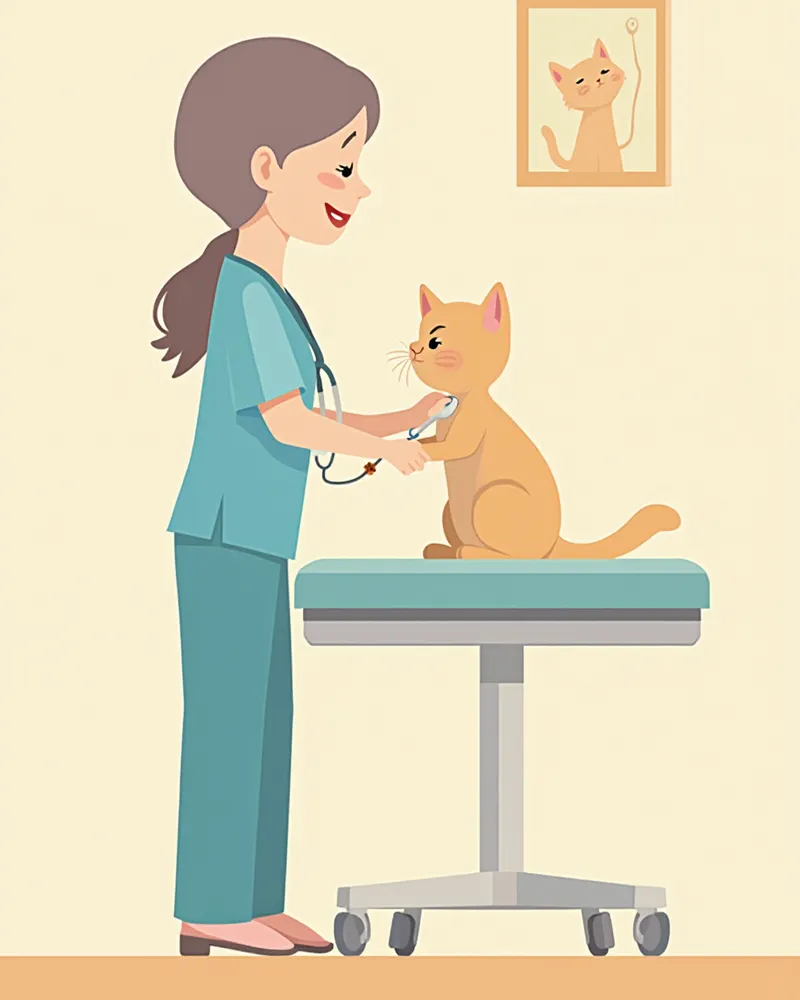
The ideal timing for neutering varies slightly depending on the individual cat and the veterinary clinic, so it’s best to discuss and decide with your veterinarian. Cats typically enter puberty (sexual maturity) between 6 and 12 months of age, so it’s advisable to schedule the procedure around this period. Medically, neutering involves the removal of the reproductive glands (ovaries in females, testes in males), which eliminates breeding behaviors and significantly reduces problem behaviors such as territorial marking (spraying), roaming, and fighting. It also offers benefits for body condition management, including weight and body condition score. Therefore, if you have no specific breeding plans, we recommend performing the procedure at an appropriate time around sexual maturity.
Early timing: Recovery tends to be relatively quick, and performing the procedure before sexual maturity can help prevent breeding-related problem behaviors from developing.
Standard timing (6–8 months): This is the most common choice, performed after the body has developed to some extent.
Later timing (8+ months): Since the cat has already experienced heat cycles or breeding behaviors, it may take longer to correct established behaviors.
A veterinarian examining a young cat at an animal hospital.

What to Check Before Neutering

Before neutering, a basic blood test is essential to check liver and kidney function. For breeds prone to latent heart conditions, such as Maine Coons, Ragdolls, and Persians, an echocardiogram is also recommended. Fasting for 8–12 hours before surgery is mandatory. During adolescence, surgery should be postponed if the pet is experiencing fever, diarrhea, or vomiting. The pet’s condition before anesthesia is the most critical factor for surgical safety.

How to Transition Food

Adolescence is the time to transition from kitten food to adult cat food. While the switch typically occurs at 10–12 months of age, large breeds (such as Maine Coons and Ragdolls) can safely remain on kitten food until 15–18 months. To prevent diarrhea or vomiting, avoid abrupt changes and instead gradually mix in the new food over 7–10 days.
Days 1–3: 25% new food + 75% current food
Days 4–6: 50% new food + 50% current food
Days 7–9: 75% new food + 25% current food
Day 10: 100% new food
After neutering, consider switching to a “sterilized cat” formula, which is lower in calories to match their reduced activity level.
An adolescent cat sniffing two bowls of food, one with kitten food and the other with adult cat food.

Adolescent Vaccination Schedule

Adolescence marks the completion of the first year of vaccinations. The core vaccine series (FVRCP, protecting against herpesvirus, calicivirus, and panleukopenia) typically begins at 8 weeks of age (or as early as 6 weeks) and continues with boosters every 3–4 weeks until 16–20 weeks of age. After this initial kitten series is complete, the first adult booster is administered one year after the final kitten vaccination. However, the AAFP and AAHA guidelines sometimes recommend administering this first booster at 6 months of age to account for the potential interference of maternal antibodies, so please consult your veterinarian for the best schedule for your pet. The rabies vaccine is given as an initial dose between 12 and 16 weeks of age, followed by a booster one year later. If your cat goes outdoors or lives in a multi-cat household, discuss adding the feline leukemia virus (FeLV) vaccine with your veterinarian. Additionally, monthly prevention for both internal and external parasites should continue consistently.

Health Signs Often Overlooked During Adolescence

Adolescent cats often appear fully grown, which can lead owners to overlook subtle health changes. Signs such as suddenly urinating outside the litter box, increased appetite without weight gain, or excessive water consumption may indicate urinary or endocrine disorders. In female cats, intense vocalization and rubbing against the floor at intervals of three to four weeks signify estrus. If any of these changes persist for more than 24 to 48 hours, a veterinary visit is necessary.

How to Handle Behavioral Changes

During adolescence, hormonal changes can lead to behaviors such as spraying, increased aggression, and heightened nighttime activity.
Spraying: This behavior usually improves significantly after neutering. If it persists post-surgery, identify and address potential stressors.
Excessive vocalization: This is often a sign of estrus in females and can typically be resolved through spaying.
Aggressive play: This often stems from pent-up energy. Aim for at least two 15-minute sessions of interactive hunting-style play daily.
Nighttime activity: Help your cat burn off energy before bed with focused play sessions.
Many behavioral issues can be effectively managed through environmental enrichment—such as cat trees, hideaways, and toys—along with spaying or neutering.

Reviewed by a veterinarian

Dr. Tony — Punnawat Phongkittirak

Dr. Tony — Punnawat Phongkittirak

Veterinarian

A veterinarian who majored in veterinary medicine at Khon Kaen University, Thailand, and completed the IVSA program at North Carolina State University in the United States. Drawing on clinical experience at animal hospitals, he works in the pet healthcare field and is dedicated to building a digital care environment that connects pet parents with veterinarians.

Frequently Asked Questions

How many times a day should I feed my adolescent cat?
It’s best to feed your pet at set times, two to three times a day. Free-feeding can increase the risk of obesity, so we recommend measured portions. Follow the weight-based feeding guidelines on the food packaging, but reduce the amount by 10–20% after neutering.
Can I raise my pet without neutering or spaying them?
It’s possible, but the medical and behavioral risks are significant. Unspayed females are at higher risk for mammary tumors and pyometra, while unneutered males are more likely to spray, roam, and get into fights. If you don’t have specific breeding plans, we recommend spaying or neutering.
Do adolescent cats need dental care too?
Yes, this is the ideal time to start establishing a tooth-brushing routine. By around six months of age, your kitten’s permanent teeth will have fully come in, so you can begin brushing two to three times a week using a dedicated toothbrush and cat-specific toothpaste. Starting this routine once your cat reaches adulthood often leads to greater resistance.
Is it okay to introduce a kitten to a multi-cat household during adolescence?
This is the ideal time for introducing a new pet, as their social skills are still flexible and they are less likely to engage in dominance disputes. However, it's important to proceed gradually over 2-3 weeks, following these steps: isolation, scent exchange, indirect meetings, and finally direct interaction.
My pet’s weight is increasing very rapidly. Is this normal?
Between 6 and 9 months, pets are in a rapid growth phase, so a quick weight gain is normal. However, if the weight continues to increase after spaying or neutering, overeating is likely the cause. The ideal body condition is one where you can lightly feel the ribs and see a visible waistline. Obesity increases the risk of various health problems, such as diabetes and joint diseases.

Share

Related Guides

References

[1] Little SE, The Cat: Clinical Medicine and Management, 2nd Edition, Elsevier, 2020

[2] Peterson ME, Kutzler MA, Small Animal Pediatrics: The First 12 Months of Life, Elsevier Saunders, 2011

[3] Allaway D et al., Metabolic profiling reveals effects of age, sexual development and neutering in plasma of young male cats, PLoS One, 2016;11(12):e0168144

[4] Root Kustritz MV, Effects of surgical sterilization on canine and feline health and on society, Reprod Domest Anim, 2012;47:214-222

This information is based on veterinary literature and does not replace diagnosis or treatment. Please consult a veterinarian for specific health concerns.

Metapet Co., Ltd. | CEO: Park Sung-yong | Business Reg. No. 417-88-02562 | Seoul, South Korea | Customer Center

Do 6-Month-Old Cats Hit Puberty? Managing Teen Behavior | Meongsiljang