
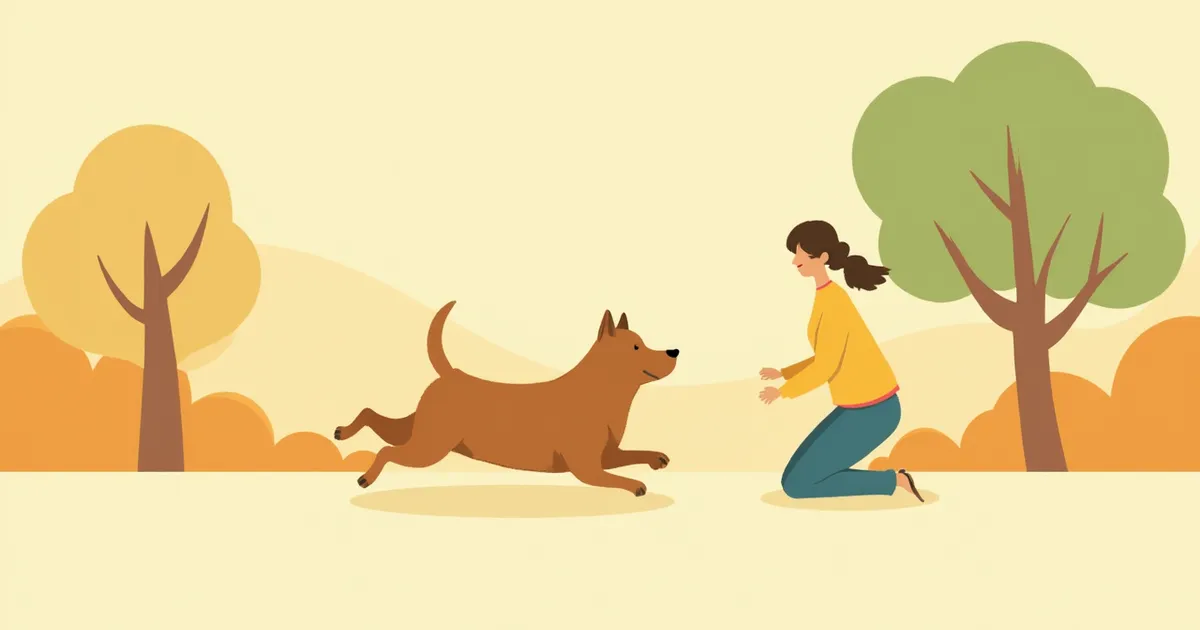
Recall Training Basics — Teaching Your Puppy to Come Running When Called
Recall training teaches your puppy to come running immediately when you call their name or give a cue. Because it’s directly tied to safety, it’s important to practice this skill step by step from an early age.
What Is Recall Training? Why It’s the Most Essential Skill
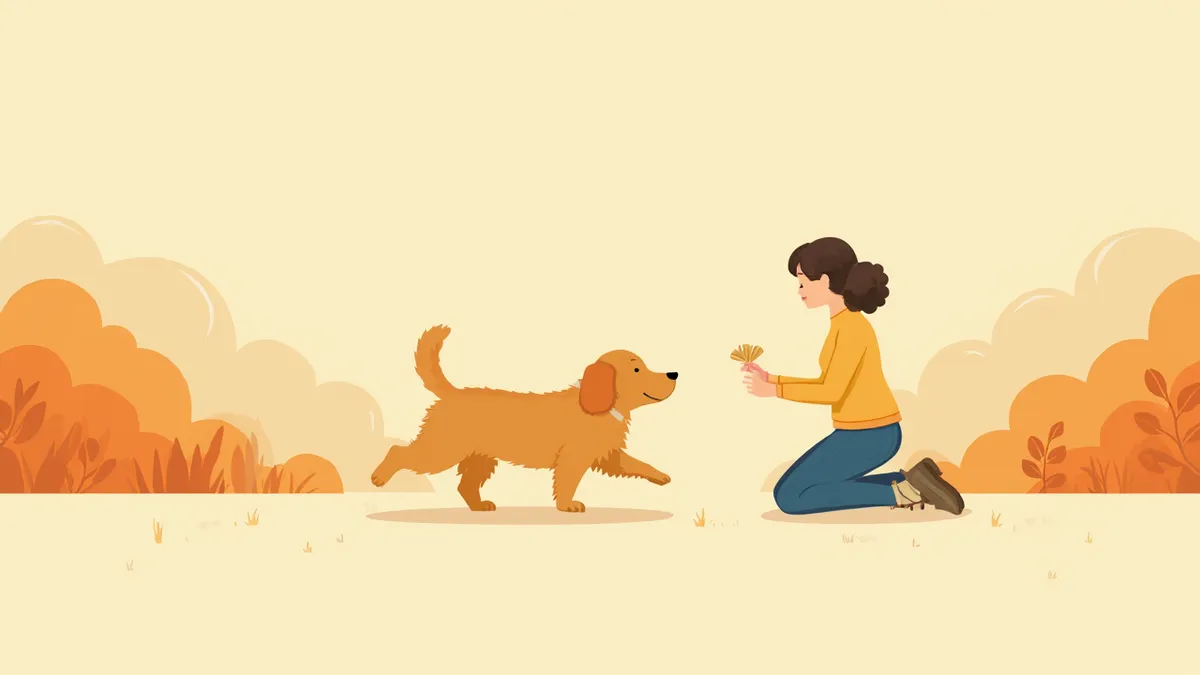
Two Things to Decide First — Cue Word and Reward
Step-by-Step Difficulty Levels for Recall Training
| Item | Stage 1 indoors | Stage 2 yard/in front of the house | Stage 3 park (long lead) | Stage 4 park (off-leash) |
|---|---|---|---|---|
| Environment | No distractions | Mild stimuli | Other dogs/people present | Unpredictable stimuli |
| Distance | 1–3m | 3–5m | 5–10m | 10m or more |
| Success rate target | 100% | 90% | 80% | 70% or more |
| Recommended duration | 1–2 weeks | 2–3 weeks | 3–4 weeks | Ongoing |
Move to the next stage only after the success rate exceeds the target in the previous stage
Actual Training Steps — Follow This Guide
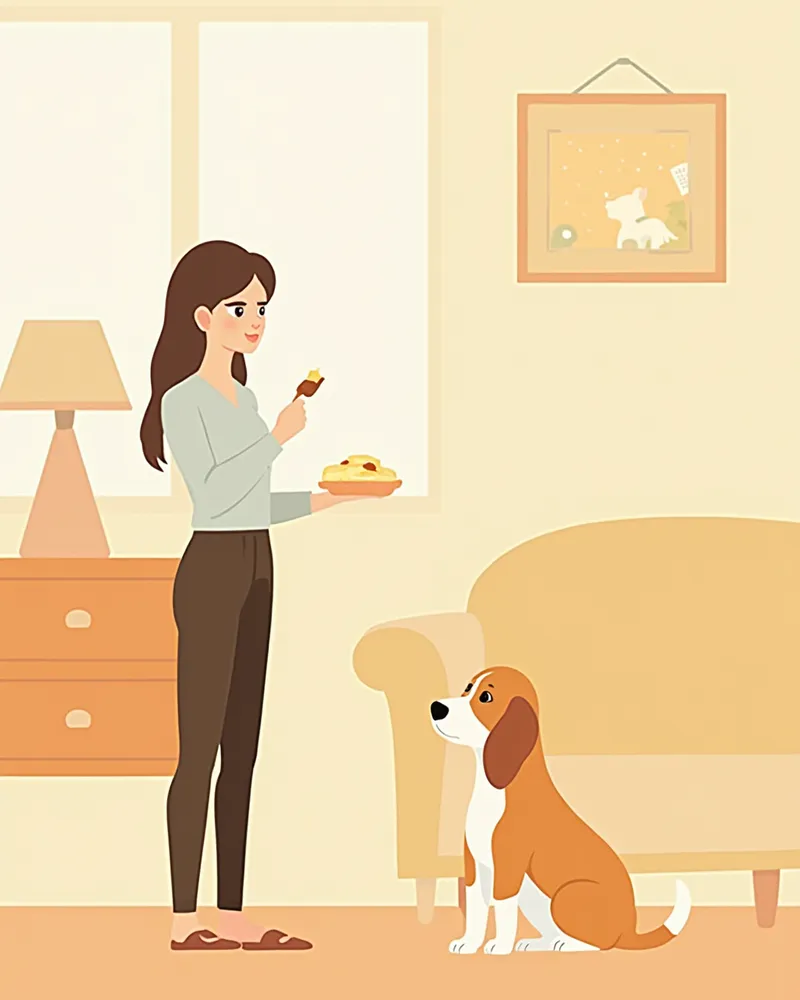
Three Things You Must Never Do
① Never scold your dog when it comes to you — If you call your dog and then scold it with, “Why did you chew on things again?”, it will learn that coming to you means getting in trouble. Always praise and reward your dog when it responds to your call. ② Avoid repeating the recall command — Saying “Come, come, come!” three times can weaken the effectiveness of the command. Call once, and if your dog doesn’t come, approach it and practice again. ③ Don’t use the recall command in negative situations — Avoid using the recall command right before unpleasant experiences like baths, giving medication, or ending a walk. Instead, go to your dog directly or use a different word.
The ‘Jackpot’ Technique for Effective Reinforcement
When Recall Fails — Cause Checklist
Prepare a Separate ‘Emergency Recall Command’ for Emergencies
In addition to your regular training cues, establish a separate emergency recall command that must never fail, not even once in your pet’s lifetime. For example, use a specific whistle tone or an unusual word like “Lightning!” Use this command exclusively during training, always paired with the highest-value reward. Never use it in daily life; reserve it strictly for genuine emergencies, such as when the leash breaks or your pet attempts to bolt into traffic. To preserve its effectiveness, limit actual field use to just a few times a year.
Reviewed by a veterinarian

Dr. Tony — Punnawat Phongkittirak
VeterinarianA veterinarian who majored in veterinary medicine at Khon Kaen University, Thailand, and completed the IVSA program at North Carolina State University in the United States. Drawing on clinical experience at animal hospitals, he works in the pet healthcare field and is dedicated to building a digital care environment that connects pet parents with veterinarians.
Reviewed 2026-04-26
Frequently Asked Questions
At what age can I start recall training with my puppy?
If multiple people call your dog, who should it respond to? Should each family member use a different command word?
When can I start off-leash training?
When can I start reducing treats to teach my pet to come without them?
Can even stubborn breeds (such as Shiba Inus and Huskies) be trained to respond to recall commands?
Share
Related Guides

7 Behavioral Enrichment Strategies for Mental Stimulation Recommended by Veterinarians

Top 5 Calming Supplements for Dogs and Cats in 2026

L-Theanine Effects and Calming Support

What is Feline Acromegaly? — The Real Reason Insulin Isn’t Working and Diagnosis

My Dog Growls and Guards Its Toys — Is Resource Guarding Normal?
What is thunderstorm phobia in dogs? — Why are they afraid and how to calm them down

Frequently Asked Questions About Canine Compulsive Disorders — Key Information for Pet Owners
How to Correct Puppy Biting — When Will the Biting Habit Disappear?
Why Does a Dog’s Hunting Instinct Become Excessive? — How to Correct Chasing and Biting Behaviors
Our Dog Trembles at Thunder and Fireworks — Is It Noise Phobia?
References
[1] Rooney NJ, Cowan S. Training methods and owner-dog interactions: Links with dog behaviour and learning ability. Applied Animal Behaviour Science. 2011;132:169-177.
[2] Introduction to Animal Behavior and Veterinary Behavioral Medicine, Chapter 5 — Learning and Training
[3] Overall KL. Manual of Clinical Behavioral Medicine for Dogs and Cats. Elsevier, 2013.