
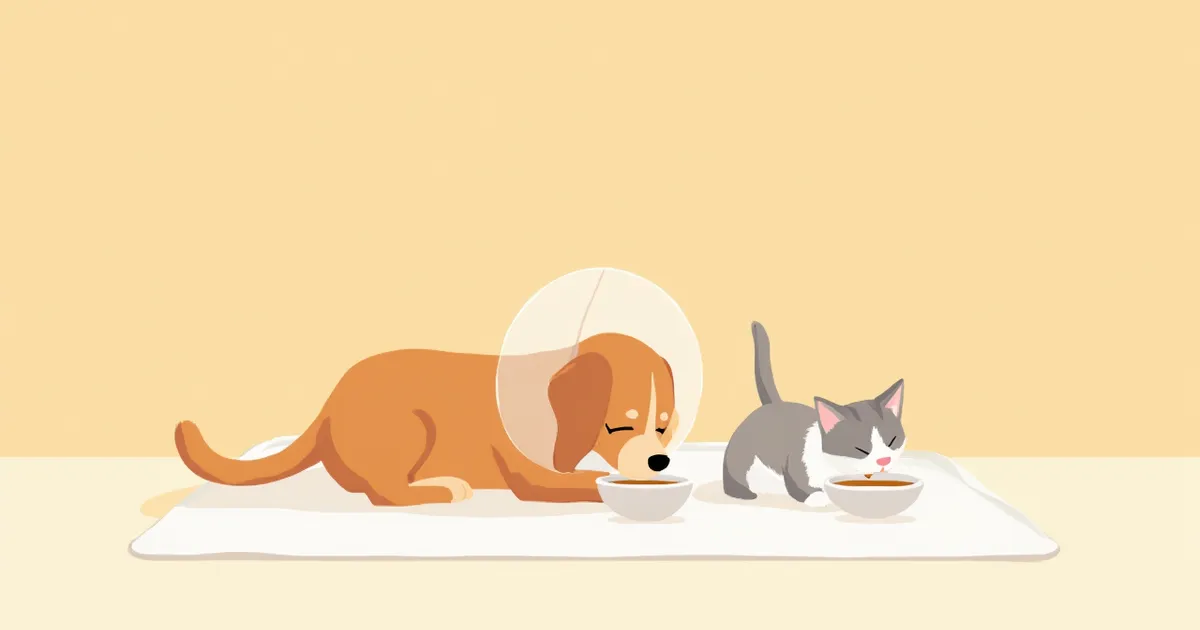
Guide to First Meal and Dietary Progression After Surgery
The first meal after surgery should be started in small amounts 6 to 12 hours after the anesthesia has worn off. Here’s a guide on how to progress your pet’s diet through each stage of recovery, along with important precautions to keep in mind.
When Should the First Meal After Surgery Begin?

Why Shouldn't Food Be Given Immediately?
Timing for the First Meal by Surgery Type
| Item | First water | First meal | Return to normal diet |
|---|---|---|---|
| Neutering (simple) | A small amount after waking from anesthesia and consciousness/swallowing reflex return | A small amount of soft food after confirming tolerance to water | When voluntary intake is stable, follow the veterinarian's instructions |
| Dental/scaling | A small amount after confirming swallowing reflex recovery | A small amount starting with soft wet food | Gradually according to veterinary instructions |
| Orthopedic (patella, etc.) | A small amount after confirming anesthetic recovery and posture maintenance | A small amount after confirming tolerance to water | Gradually according to veterinary instructions |
| Abdominal surgery (stomach/intestine) | Attending veterinarian's instructions | Follow veterinary instructions after confirming GI motility recovery | Slowly according to veterinary instructions |
The specific starting time varies greatly depending on the type of surgery, individual condition, and degree of anesthetic recovery. Use 'recovery of consciousness/swallowing reflex' and 'whether the animal eats and drinks on its own' as criteria rather than a fixed time, and always proceed by prioritizing the attending veterinarian's discharge instructions.
What Food Should Be Given for the First Meal?
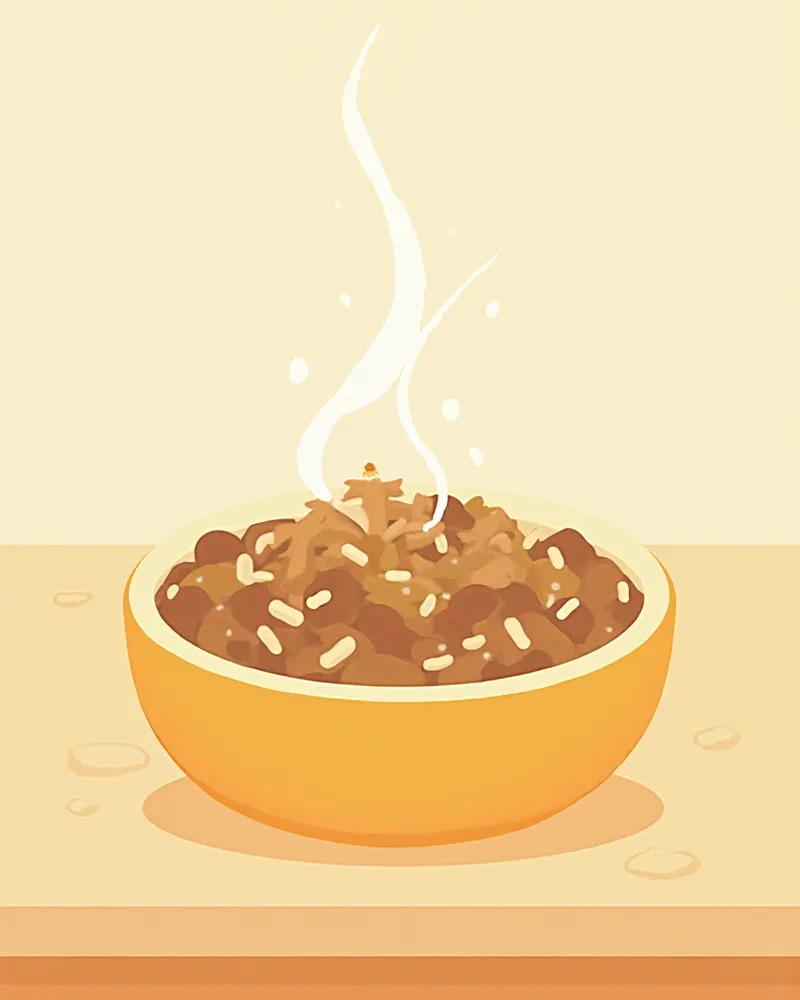
Stop Feeding and Contact the Vet in These Situations
If any of the following symptoms appear after the first meal, stop feeding immediately and contact your veterinarian: - Inability to swallow food, resulting in immediate regurgitation - Two or more episodes of vomiting shortly after eating - Labored breathing or coughing (possible aspiration) - Distended abdomen with signs of pain - Refusal to eat for more than 24 hours Aspiration pneumonia can be fatal if not addressed promptly in its early stages.
Feeding Method: Small, Frequent Portions Are the Rule

My Pet Won't Eat: How to Encourage Appetite?
Cats Require Special Attention
Cats require more proactive nutritional support than dogs if their appetite remains low after surgery. In particular, even a few days of anorexia can significantly increase the risk of hepatic lipidosis (fatty liver disease) in cats, so it is important to consult your veterinarian immediately to discuss assisted feeding methods if you determine that voluntary food intake is insufficient. This is especially critical after oral or jaw surgeries, where chewing and swallowing are difficult and the risk of anorexia is high; in such cases, early consideration of long-term assisted feeding options, such as an esophageal feeding tube (E-tube), may be necessary starting from the time of surgery. When using a feeding tube, closely monitor for complications such as infection at the insertion site. If your cat continues to refuse all food, contact your veterinarian without delay to receive fluid therapy or a prescription for appetite stimulants.
Reviewed by a veterinarian

Dr. Tony — Punnawat Phongkittirak
VeterinarianA veterinarian who majored in veterinary medicine at Khon Kaen University, Thailand, and completed the IVSA program at North Carolina State University in the United States. Drawing on clinical experience at animal hospitals, he works in the pet healthcare field and is dedicated to building a digital care environment that connects pet parents with veterinarians.
Reviewed 2026-04-26
Frequently Asked Questions
Is it okay to give my pet water on the evening of the surgery?
Can I continue feeding my pet the same food they’ve been eating?
Is it okay if my pet doesn’t eat anything until the day after surgery?
When can I start giving treats or dental chews?
Can I give the medication with food?
Share
Related Guides

Top 7 Short-Legged Dog Breeds

Primary vs. Secondary Veterinary Hospitals: A Comparison

5 Easy-to-Raise Cat Breeds for First-Time Owners — Grooming Difficulty Comparison
What is feline diabetes? — From polydipsia and polyuria signs to insulin management

Frequently Asked Questions About Feline Diabetes Insipidus — Key Points Pet Owners Must Know

Cat Diabetes and Hind Limb Weakness? Early Signs and Management of Neuropathy and Cataracts

What is Feline Acromegaly? — The Real Reason Insulin Isn’t Working and Diagnosis

My Dog Growls and Guards Its Toys — Is Resource Guarding Normal?
What is thunderstorm phobia in dogs? — Why are they afraid and how to calm them down

Frequently Asked Questions About Canine Compulsive Disorders — Key Information for Pet Owners
References
[1] Fossum TW. Preoperative and intraoperative care of the surgical patient. In: Small Animal Surgery. 5th ed. Elsevier; 2019
[2] Chan DL. Nutritional Management of Hospitalized Small Animals. Wiley-Blackwell; 2015
[3] Grimm KA, et al. Veterinary Anesthesia and Analgesia: The Fifth Edition of Lumb and Jones. Wiley-Blackwell; 2015