
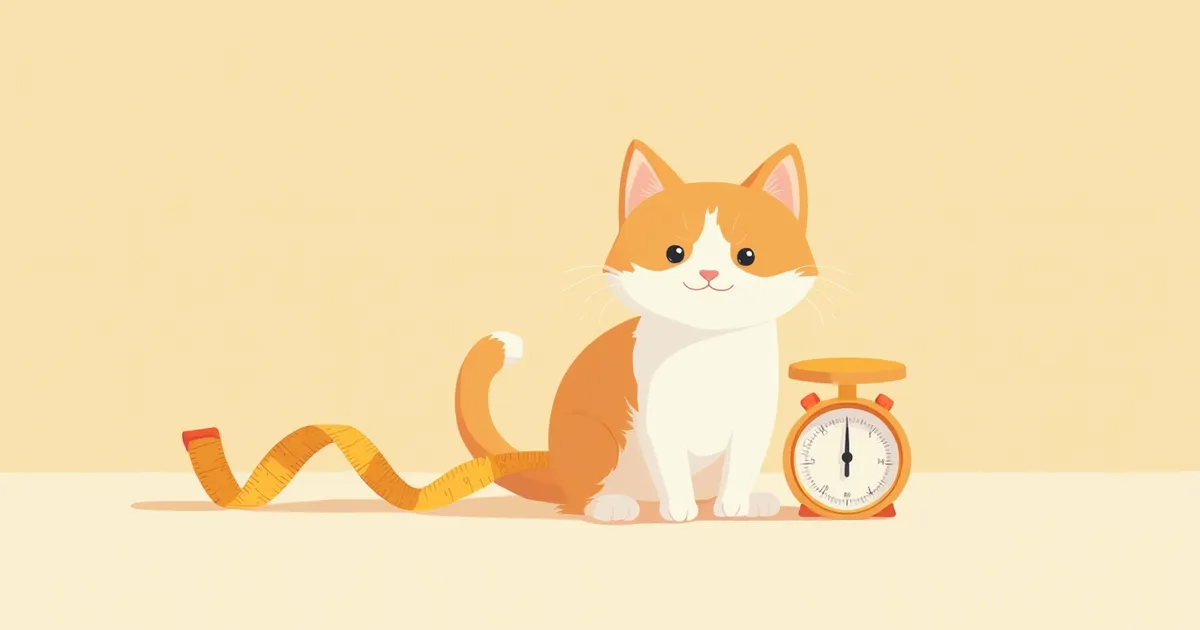
Kitten Growth Chart by Month: Average Weight and Height
We’ve put together an easy-to-read guide showing the average monthly weight and height for kittens from 1 to 12 months of age, along with key care tips for each stage of growth.
What Is a Kitten Growth Chart by Month?

Why Is Monthly Monitoring Important?
Average Weight and Body Length Chart for Kittens by Month
| Item | Average Weight | Average Body Length |
|---|---|---|
| 1 month | 400–500g | approx. 15–18cm (reference) |
| 2 months | 900g–1.1kg | approx. 20–23cm (reference) |
| 3 months | 1.3–1.7kg | approx. 24–27cm (reference) |
| 4 months | 1.8–2.3kg | approx. 27–30cm (reference) |
| 6 months | 2.5–3.2kg | approx. 32–36cm (reference) |
| 9 months | 3.2–4.0kg | approx. 36–40cm (reference) |
| 12 months | 3.5–4.5kg | approx. 38–42cm (reference) |
These are rough averages based on Korean Shorthairs and mixed-breed cats. Up to about 6 months of age, you can track weight against a trend of roughly 0.45kg (1 pound) gained per month. However, there is significant variation by breed and individual, and the body length figures in particular are for reference rather than a standard benchmark. The direction (trend) of the growth curve matters far more than any single absolute figure, so for an accurate assessment, consult your veterinarian based on your pet's breed information.
Characteristics of Each Growth Stage

Growth Abnormality Signs Requiring Immediate Veterinary Attention
If your kitten’s weight drops within 24 hours or stalls for several days, that’s a warning sign. You should also check for congenital diseases or parasitic infections if the kitten is noticeably lighter than its littermates or has stopped growing. If the kitten eats well but doesn’t gain weight and has a pot-bellied appearance, intestinal parasites such as roundworms or coccidia may be the cause. If you notice any of these signs, don’t hesitate to visit a veterinary clinic for an examination that includes a fecal test.
Nutritional Management Points for the Growth Phase

Differences in Growth Rate by Breed
Tips for Measuring Weight
For the most accurate readings, weigh your kitten at the same time on the same day each week, before meals. If your kitten is too restless to stay still, you can hold them while stepping on the scale and then subtract your own weight. Consistently record the measurements in a notebook or app to chart their growth curve. The overall trend is far more informative than any single number.
Reviewed by a veterinarian

Dr. Tony — Punnawat Phongkittirak
VeterinarianA veterinarian who majored in veterinary medicine at Khon Kaen University, Thailand, and completed the IVSA program at North Carolina State University in the United States. Drawing on clinical experience at animal hospitals, he works in the pet healthcare field and is dedicated to building a digital care environment that connects pet parents with veterinarians.
Reviewed 2026-04-26
Frequently Asked Questions
Is it okay if my kitten weighs less than average?
How long should I feed my kitten kitten food?
They’re sibling kittens, but there’s a big difference in their weights.
At what weight in kilograms should a pet be spayed or neutered?
Is it okay to give milk to pets during their growth period?
Share
Related Guides

Chitosan Effects and Obesity/Fat Absorption

Top 5 Weight-Management Dog Food Recommendations for 2026
7 Best Cat Weight-Loss Diets Recommended by Veterinarians and How to Choose

Signs of Separation Anxiety in Dogs and How to Correct It

Reasons for Litter Box Avoidance in Cats and Correction Methods
Feline Diabetes: Symptoms and Management
List of Foods Pets Should Never Eat

Causes and Treatment of Hot Spots (Acute Moist Dermatitis) in Dogs

Kennel Cough Symptoms and Treatment in Dogs
How to Brush Your Cat’s Teeth and Get Them Used to It
References
[1] Little, S.E., The Cat: Clinical Medicine and Management, Chapter 20 Pediatrics, 2012
[2] Case, L.P. et al., Canine and Feline Nutrition, Chapter 27 Feeding Growing Kittens, 3rd ed., 2011
[3] Hand, M.S. et al., Small Animal Clinical Nutrition, Chapter 16 Feeding Kittens, 5th ed., 2010