Like
Share
멍실장
퍼피 월령별 키·체중 발달표 완전 가이드

Complete Guide to Puppy Monthly Height and Weight Development Charts

WeightQ&AMeongsiljang Veterinary Advisory Board

We’ve neatly organized the monthly changes in weight and height from 2 months to adulthood, along with growth curves for small, medium, and large breeds. We also provide guidance on weight management and dietary standards.

What Is a Puppy Monthly Growth Chart?

Illustrations of puppy growth stages from 2 months to adulthood
The puppy growth chart by month of age outlines how a puppy’s weight and height typically change each month from two months of age until adulthood. What truly matters is that growth rate and the timing of full maturity vary depending on the breed size (small, medium, or large). Small breeds generally finish growing by 8–10 months, medium breeds by 12 months, and large breeds by 18–24 months. Rather than focusing solely on average monthly figures, it is more important to assess your dog’s body condition (such as how easily you can feel the ribs).

Why It’s Essential to Monitor Weight During the Growth Phase

Growing puppies require about twice as much energy per gram of body weight as adult dogs. Because of this, nutritional imbalances or excess weight can directly affect bone and joint development. In large-breed dogs, growth that is too rapid or excessive calcium intake can negatively impact growth plate and skeletal maturation, increasing the risk of orthopedic conditions. Conversely, if a puppy is underweight to the point where ribs and the spine are visibly prominent, or if it has lost weight over two or more weeks, this may indicate malnutrition or an underlying health issue, so it’s essential to identify the cause. That’s why it’s crucial to weigh your puppy weekly at the same time of day and track the results against age-appropriate weight curves.

Average Weight Development Chart by Size and Month of Age

ItemSmall breed (adult 5kg)Medium breed (adult 15kg)Large breed (adult 30kg)
2 months0.8–1.2kg2.0–3.0kg4.5–6.0kg
3 months1.3–1.8kg3.5–5.0kg7.0–9.5kg
4 months1.8–2.5kg5.0–7.0kg10–13kg
6 months2.8–3.8kg8.0–11kg17–21kg
9 months4.0–4.8kg12–14kg24–27kg
12 months4.5–5.2kg14–16kg27–30kg
18 monthsMaintains 5.0kgMaintains 15kg29–32kg

There may be ±15% variation depending on breed and individual. Use this to track trends rather than as absolute values.

When Does Height (Withers Height) Growth Stop?

Height (withers height) is measured from the ground to the top of the shoulder blades. - Small breeds: Most reach 90% of their adult height by 6–9 months and finish growing by 10 months. - Medium breeds: Height is typically complete by 8–12 months, after which growth focuses on building muscle mass. - Large breeds: Height is nearly complete by 10–14 months, but weight continues to increase until 18–24 months. It is normal for weight to keep rising after height growth stops. However, if you can no longer easily feel the ribs, it is a sign of overweight.
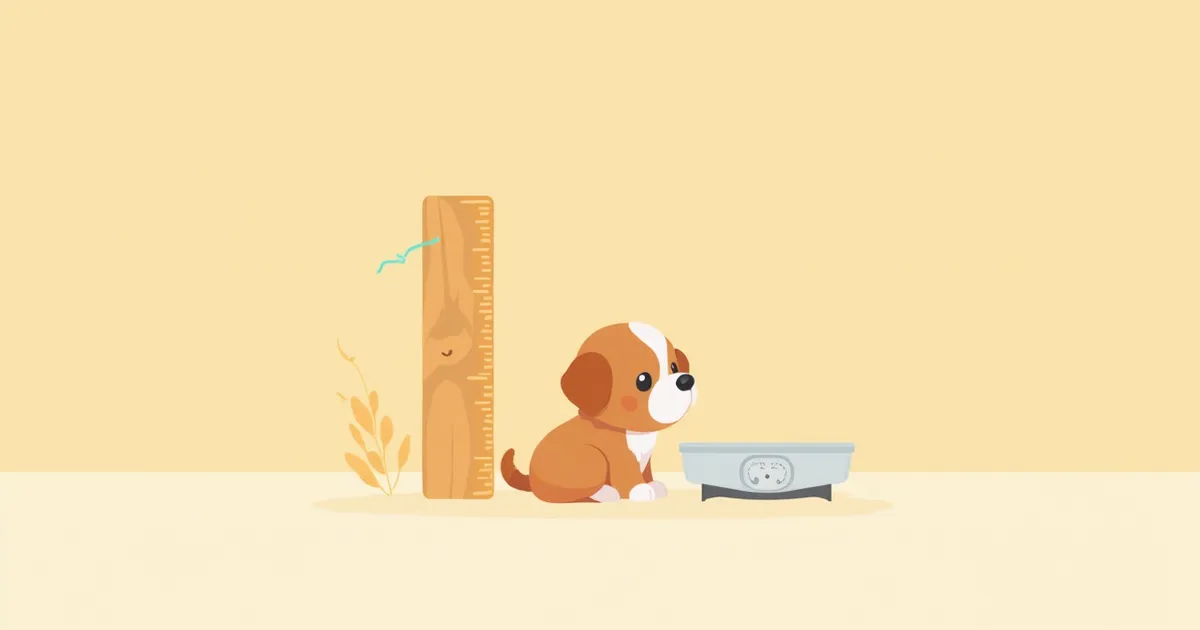
Illustration comparing the monthly height of small, medium, and large breed puppies.

Weight Changes That Require Immediate Veterinary Attention

If you notice any of the following signs in a growing puppy, consult your veterinarian as soon as possible: no weight gain or even weight loss for two consecutive weeks, severe underweight condition where ribs and spine are clearly visible without touching (BCS 1–2/9), good appetite but no weight gain (which may indicate digestive/absorption issues or parasites), or obesity with a disappeared waistline and a sagging belly. Puppies should steadily gain weight as they grow, so if a 2- to 3-month-old puppy loses weight shortly after starting solid food, it could be a sign of an emergency condition such as infectious enteritis, requiring close attention.

Appropriate Feeding Frequency and Calories by Month of Age
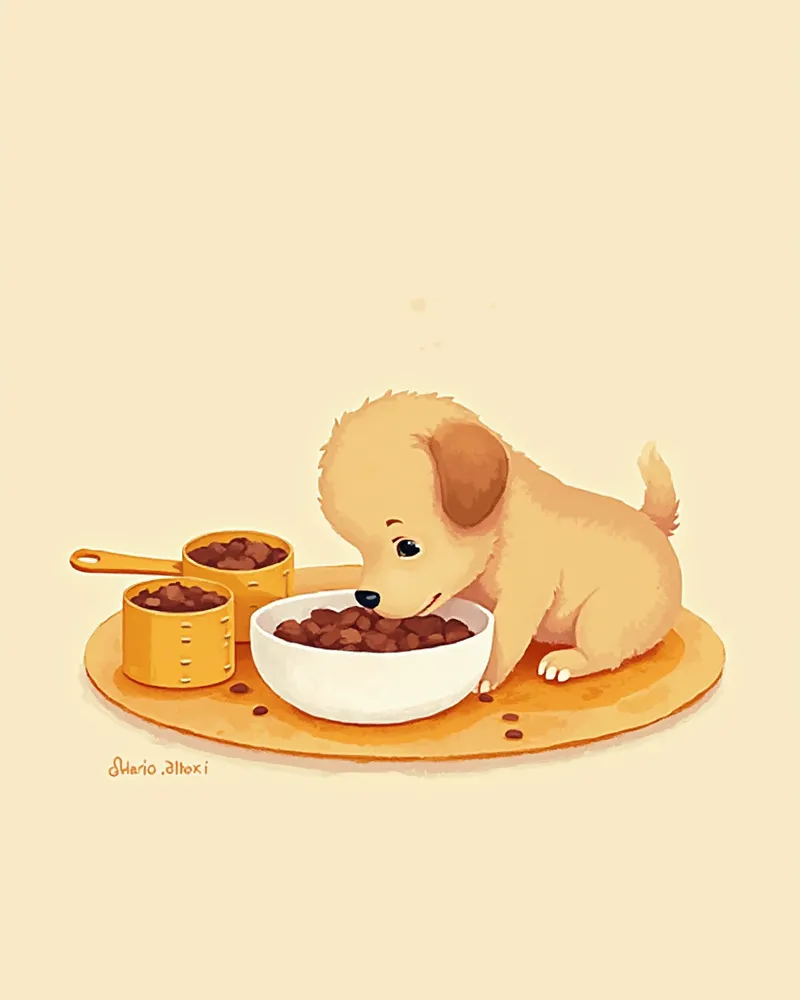
The number of daily meals should be adjusted according to your puppy’s age. - 2–3 months: Feed four times a day with puppy-specific food (containing at least 22.5% protein). - 4–5 months: Feed three times a day. - 6 months and older: Transition to two meals a day. The timing for switching to adult dog food depends on size: 10 months for small breeds, 12 months for medium breeds, and 18–24 months for large breeds. For large breeds, switching to adult food too early can lead to excessive calcium intake, which may negatively affect bone development. Therefore, we strongly recommend using large-breed-specific puppy food.
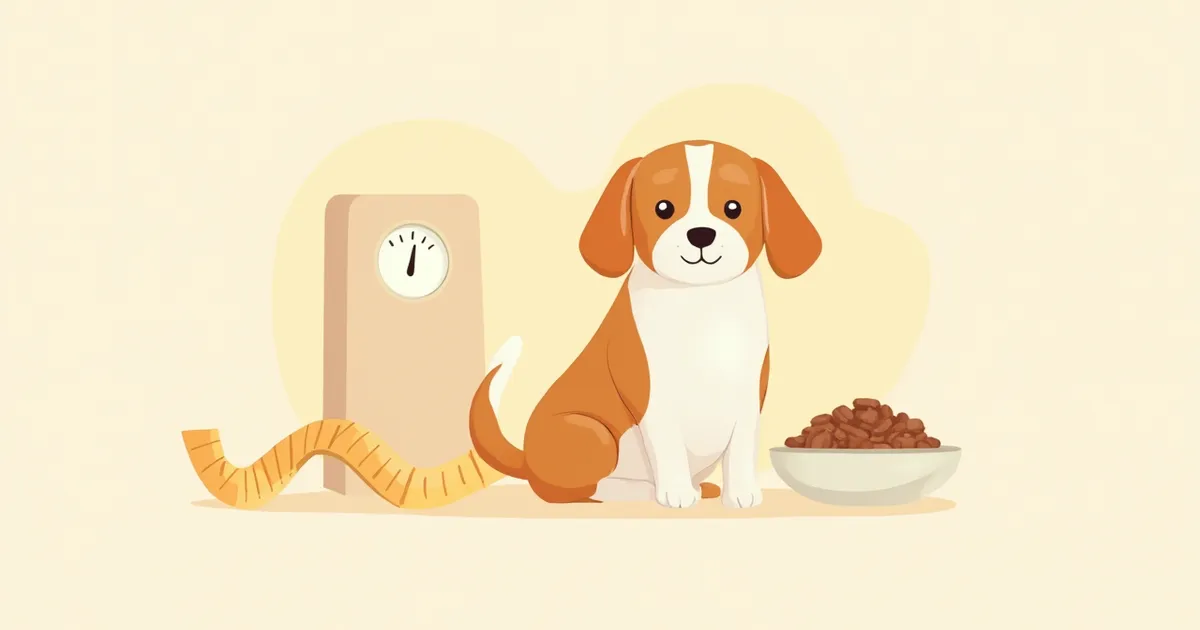
Illustration of a puppy eating kibble next to a measuring cup

How to Check Growth Status Using Body Condition (BCS)

Body condition is a more accurate indicator than the number on the scale. Check your pet’s condition using the Body Condition Score (BCS), based on the Purina 9-point system from veterinary textbooks. - Ideal body condition (BCS 4–5/9): Ribs are easily felt but not visible, the waist is clearly defined when viewed from above, and the abdomen tucks up when viewed from the side. - Underweight (BCS 1–3/9): Ribs, spine, and hip bones are visible without touching, and there is little to no subcutaneous fat. - Overweight (BCS 6/9 and above): At 6/9, a slight layer of fat covers the ribs, which are still palpable, while the waistline becomes less distinct. At 7/9 and above, the fat layer thickens, making ribs difficult to feel and the waist disappear. Each point above 5/9 represents approximately a 10% increase in overweight status. Recording body condition weekly by placing your hands in the same position allows you to detect abnormalities faster than relying on scale readings alone.

Points Large-Breed Dog Owners Should Be Especially Cautious About

Rapid growth can actually become a health issue for large-breed dogs. Veterinary nutrition textbooks emphasize providing large and giant breed dogs with nutrients in moderation, avoiding excess. An oversupply of calcium can negatively affect the development of growth plates and joints, and growing up overweight increases the risk of hip dysplasia. For breeds such as Labrador Retrievers, Golden Retrievers, German Shepherds, and Great Danes, it is more beneficial for joint health to slow down their growth by feeding 10–15% less than the amount recommended on the food packaging.

Reviewed by a veterinarian

Dr. Tony — Punnawat Phongkittirak

Dr. Tony — Punnawat Phongkittirak

Veterinarian

A veterinarian who majored in veterinary medicine at Khon Kaen University, Thailand, and completed the IVSA program at North Carolina State University in the United States. Drawing on clinical experience at animal hospitals, he works in the pet healthcare field and is dedicated to building a digital care environment that connects pet parents with veterinarians.

Frequently Asked Questions

How often should you weigh a puppy?
For puppies aged 2 to 6 months, we recommend weighing them once a week at the same time of day, ideally in the morning before feeding. After 6 months, you can reduce the frequency to every two weeks. To minimize measurement errors, always use the same scale under consistent conditions.
Is it a problem if my pet weighs less than the average on the growth chart?
Because of individual and breed differences, a weight within ±15% of the average is generally considered normal. What truly matters is whether the weight trend is consistently increasing and whether the body condition score (BCS) falls within the ideal range. If weight plateaus for more than two weeks or if the ribs and spine become visibly prominent, we recommend consulting a veterinarian.
Shouldn't large breed dogs also be switched to adult dog food quickly?
Yes, it’s safest to keep large-breed dogs on a large-breed-specific puppy food until they’re 18–24 months old. Standard adult dog foods have calcium levels that don’t match the growth needs of large breeds, which can lead to skeletal and joint development issues. Veterinary textbooks also emphasize that large and giant breeds should avoid excessive calcium and be grown at a slower, more controlled pace.
Does neutering make pets gain weight more easily?
After neutering, your pet’s activity level and energy requirements tend to decrease, which can lead to easy weight gain even when feeding the same amount. Since the exact degree of reduction varies by individual, rather than relying on a specific number, we recommend slightly reducing the daily food intake (by about 10%) starting right after the procedure. Monitor your pet’s Body Condition Score (BCS) every two weeks and adjust portions as needed to maintain an ideal body condition (a score of 4–5 out of 9).
How much treat can I give my growing puppy?
As a general rule, treats should make up no more than 10% of your dog’s total daily caloric intake. During the growth phase, a balanced puppy food labeled for growth and reproduction (or all life stages) should be the main diet; too many treats can reduce the intake of essential nutrients like protein and calcium.

Share

Related Guides

References

[1] The Dog Care Handbook, Things I Wish My Vet Had Told Me

[2] Applied Veterinary Clinical Nutrition, 2nd Ed

[3] Nutrient Requirements of Dogs and Cats, National Research Council

[4] The Veterinary Workbook of Small Animal Clinical Cases

This information is based on veterinary literature and does not replace diagnosis or treatment. Please consult a veterinarian for specific health concerns.

Metapet Co., Ltd. | CEO: Park Sung-yong | Business Reg. No. 417-88-02562 | Seoul, South Korea | Customer Center

Puppy Growth Chart: Monthly Height & Weight Guide | Meongsiljang