
Like
Share
멍실장
펫 웨어러블 기술이란? 종류부터 고르는 법까지

Pet Wearable Technology: From Types to Selection Guide

ImmunityQ&AMeongsiljang Veterinary Advisory Board

Pet wearables are small devices that measure your pet’s heart rate, activity level, and sleep in real time to detect early signs of abnormalities. We’ve compiled information on the types of wearables, selection criteria, and how to use them for immune system management.

What Exactly Are Pet Wearables?

A beagle wearing a smart collar
Pet wearables are small devices that dogs and cats wear on their bodies to record real-time data on activity levels, sleep, and location. Collar-style activity monitors are known to serve as helpful tools for interpreting physical activity and sleep quality. What truly matters isn’t the raw numbers displayed by the device, but rather your pet’s individual baseline. A noticeable drop in activity compared to their usual level, or disrupted sleep patterns lasting several days in a row, should be seen as a signal to consider consulting your veterinarian. In short, wearables aren’t “health scorecards,” but rather “auxiliary detectors for abnormal signs” that help you quickly notice deviations from your pet’s normal routine.

Four Types of Pet Wearables

Pet wearables can be broadly categorized into four types based on their functions.
GPS trackers: These collar-mounted devices allow you to check your pet’s location and movement path in real time.
Activity and sleep trackers: These record steps taken and rest periods to monitor physical activity levels and sleep quality. Collar-style activity monitors are known to serve as supportive tools for managing joint and musculoskeletal health.
Heart rate and respiration monitors: These sensor-equipped harnesses record indicators such as heart rate and respiratory rate, providing reference data for senior dogs and cardiac care.
Temperature and urination sensors: Attached to environments like litter boxes or water dispensers, these sensors help monitor changes in daily life indicators, such as urination patterns.
The right choice depends on your pet’s age and medical history.

At-a-Glance Comparison by Type

ItemGPS trackerActivity/sleep trackerHeart rate/respiration monitorBody temperature/urination sensor
Main measured itemsLocation and movementSteps and sleepHeart rate and respiration rateBody temperature and urination frequency
Suitable forDogs that go out oftenActivity and weight managementSenior dogs and heart careSenior cats and urinary care
Wearing formCollarCollar/harnessHarnessEnvironment-mounted
Battery (recommended)3–7 days7–14 days2–5 daysEnvironment type is always on
Health monitoring useIndirectIndirectIndirectIndirect

How Do They Connect to Immune System Management?

Pet wearables don’t directly display immune system metrics. Instead, they help you indirectly monitor your pet’s overall health by tracking changes in daily indicators like sleep and activity levels. A sudden drop in activity can be an early sign of pain or declining well-being, making it a valuable clue for noticing deviations from your pet’s normal routine. In fact, studies have shown that collar-based activity monitors can serve as supportive tools in pain assessment by analyzing physical activity and sleep quality. Since pets have a strong instinct to hide discomfort, it’s difficult for owners to rely solely on visual observation around the clock. Wearables help bridge this gap by catching those subtle early changes. However, always consult a veterinarian for a proper diagnosis and accurate assessment of your pet’s health.
A cat resting while wearing a health-monitoring sensor

Key Points to Know Before Use

Wearable devices cannot replace veterinary examinations. Even if a device indicates “normal,” many conditions are only detectable through blood, urine, and imaging tests. Conversely, an “abnormal” alert may simply result from device malfunction or improper placement. Use wearables as a supplementary tool to help determine when a veterinary visit is needed, and be sure to schedule regular check-ups one to two times per year.

Checkpoints for Choosing a Wearable
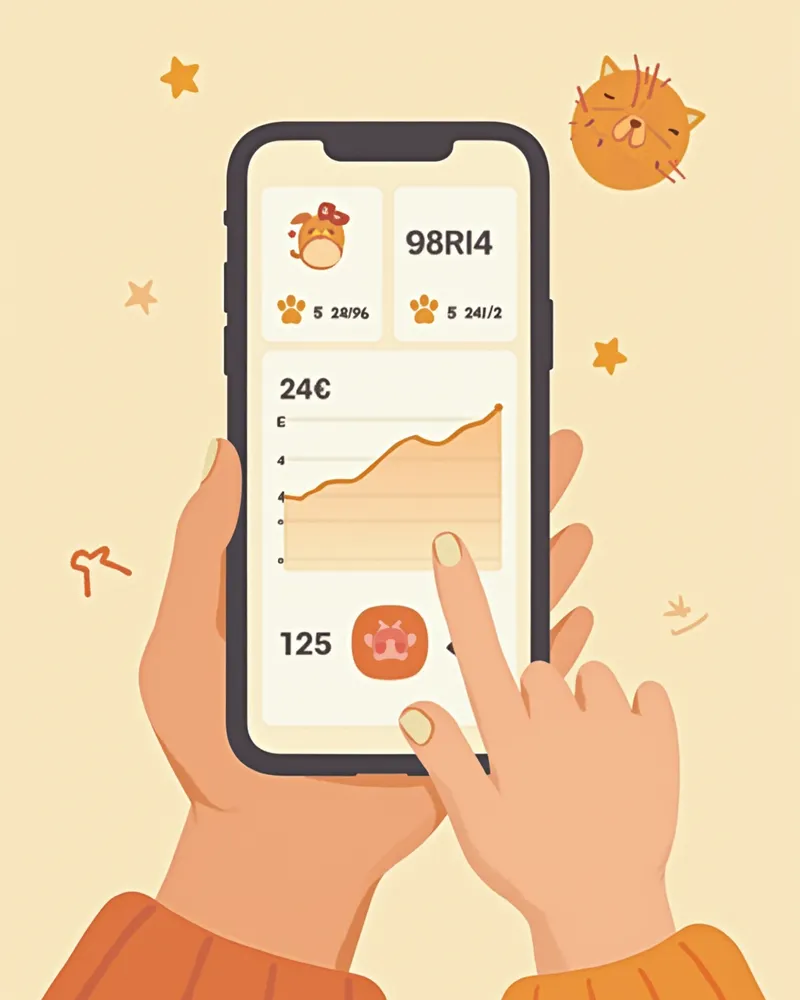
When choosing a wearable device for your pet, there are four key factors to consider.
Weight: A heavy device can be uncomfortable for your pet to wear, so opt for one that is lightweight relative to their size and doesn’t restrict movement. Smaller pets are more sensitive to weight, so pay extra attention to this factor.
Waterproof Rating: Look for a device with an IPX7 rating or higher, which means it’s water-resistant enough for everyday use. You can feel confident using it during walks or after baths.
Battery Life: The shorter the charging cycle, the more likely you are to miss out on important data. We recommend choosing a device with a longer battery life between charges.
Data Interpretation: Devices that simply display numbers are less helpful than those that notify you of changes compared to your pet’s usual patterns. These alerts make it easier to spot potential health issues early.
A smartphone screen showing a pet owner reviewing their pet’s health data

Three Steps to Smart Device Use

To get the most out of a wearable device, you need to collect at least two weeks of data. In the first few days, your pet’s activity levels may be irregular as they adjust to the device. Step 1: Establish a Baseline – Let the device record your pet’s normal activity and sleep patterns for two weeks. Step 2: Weekly Review – Check the data once a week to quickly spot any unusual changes. Step 3: Share with Your Vet – Show the device data to your veterinarian during visits to significantly reduce diagnosis time. The key isn’t just collecting data—it’s interpreting it.

Reviewed by a veterinarian

Dr. Tony — Punnawat Phongkittirak

Dr. Tony — Punnawat Phongkittirak

Veterinarian

A veterinarian who majored in veterinary medicine at Khon Kaen University, Thailand, and completed the IVSA program at North Carolina State University in the United States. Drawing on clinical experience at animal hospitals, he works in the pet healthcare field and is dedicated to building a digital care environment that connects pet parents with veterinarians.

Frequently Asked Questions

Can cats wear collar-style wearables too?
Yes, it’s possible. Most cats can wear collars safely and comfortably. However, because there’s a risk of the collar getting caught on tree branches or furniture, you should choose a collar with a safety breakaway buckle that automatically releases when a certain amount of force is applied. The collar should be lightweight relative to your cat’s body size and not interfere with their movement.
Can it be used for young puppies and kittens as well?
A safety-release collar can be worn by young dogs, but since they are lightweight and their bones and muscles are still developing, it’s best to choose a lightweight device and regularly check how it fits. We recommend waiting until their growth has stabilized before using it extensively, and consulting with your veterinarian about the right time to start will give you peace of mind.
Is the data stored only on the owner's mobile phone?
Most data is automatically saved to the cloud. Devices that allow you to share data with family members and veterinarians are convenient. Even if you lose your phone, your data remains intact, and it can be accessed directly at the clinic through your account.
Is it dangerous if the heart rate suddenly spikes?
A one-off glitch is likely due to movement or sensor contact issues. However, if the same anomaly recurs or is accompanied by actual symptoms such as lethargy or decreased appetite, please consult your veterinarian right away.
Can I directly check my pet’s immune system levels with a pet wearable?
There are no devices yet that can directly measure immune function as a numerical value. Instead, we estimate early signs of changes in your pet’s condition by looking at indirect indicators such as sleep patterns, activity levels, and heart rate. To accurately assess immune status, a blood test is necessary.

Share

Related Guides

References

[1] Ettinger, S.J. et al., Textbook of Veterinary Internal Medicine, 9th Edition, 2024

[2] Guy, M.K., Page, R.L., Jensen, W.A. et al., The Golden Retriever lifetime study: Establishing an observational cohort study with translational relevance for human health, Philosophical Transactions of the Royal Society of London. Series B, 2015

[3] Hofman, J.M., Creevy, K.E. and Promislow, D.E.L., Reproductive capability is associated with lifespan and cause of death, PLOS ONE, 2013

This information is based on veterinary literature and does not replace diagnosis or treatment. Please consult a veterinarian for specific health concerns.

Metapet Co., Ltd. | CEO: Park Sung-yong | Business Reg. No. 417-88-02562 | Seoul, South Korea | Customer Center

Pet Wearables Guide: Types, How to Choose & Health Uses | Meongsiljang