
Like
Share
멍실장
신장 수치(BUN·크레아티닌·SDMA) 이해하기

Understanding Kidney Values (BUN, Creatinine, SDMA)

KidneyQ&AMeongsiljang Veterinary Advisory Board

We’ve summarized the meaning and normal ranges of BUN, creatinine, and SDMA levels as measured in blood tests, along with what to check when these values are elevated.

How to Read Kidney Values in Blood Test Results

A veterinarian reviewing a pet’s blood test results.
Kidney values are indicators that show how well the kidneys are filtering waste products, as determined through blood tests. The three main markers we look at are BUN (blood urea nitrogen), creatinine, and SDMA (symmetric dimethylarginine). What’s truly important is that you shouldn’t rely on just one of these numbers to make a judgment. To get an accurate picture of your pet’s condition, it’s essential to consider all three values together and monitor how they change over time. If you’ve received a health check-up report, understanding what each value means can make your consultation with the veterinarian much smoother.

What Do BUN, Creatinine, and SDMA Tell You?

BUN (Blood Urea Nitrogen): This is a waste product generated when proteins break down. The kidneys filter it out, so levels rise if kidney function declines. However, BUN can also increase due to non-renal factors such as dehydration, a high-protein diet, or gastrointestinal bleeding, so it shouldn’t be used as the sole indicator of kidney health. Creatinine: This substance is produced during muscle metabolism. It reflects kidney function more reliably than BUN, but it has a limitation: levels only rise after kidney function has already been significantly impaired. In animals with low muscle mass, creatinine levels may appear lower than they actually are. SDMA: Produced from intracellular protein metabolism and primarily excreted by the kidneys, SDMA levels tend to rise earlier than creatinine. This makes it a highly valuable marker for detecting early declines in kidney function.

BUN, Creatinine, and SDMA at a Glance

ItemBUN (blood urea nitrogen)CreatinineSDMA
What is measuredProtein metabolism wasteMuscle metabolism byproductCellular protein metabolism byproduct
Early detection abilityLowLow (rises after substantial loss of function)High (rises earlier than creatinine)
Dietary influenceLarge (rises with high-protein diet)SmallAlmost none
Dehydration influenceLargePresentPresent (may rise with reduced renal blood flow)
Muscle mass influenceSmallLarge (measures low in lean animals)Small

Always interpret values together with your veterinarian

Kidney Disease Stage Criteria (IRIS Classification)
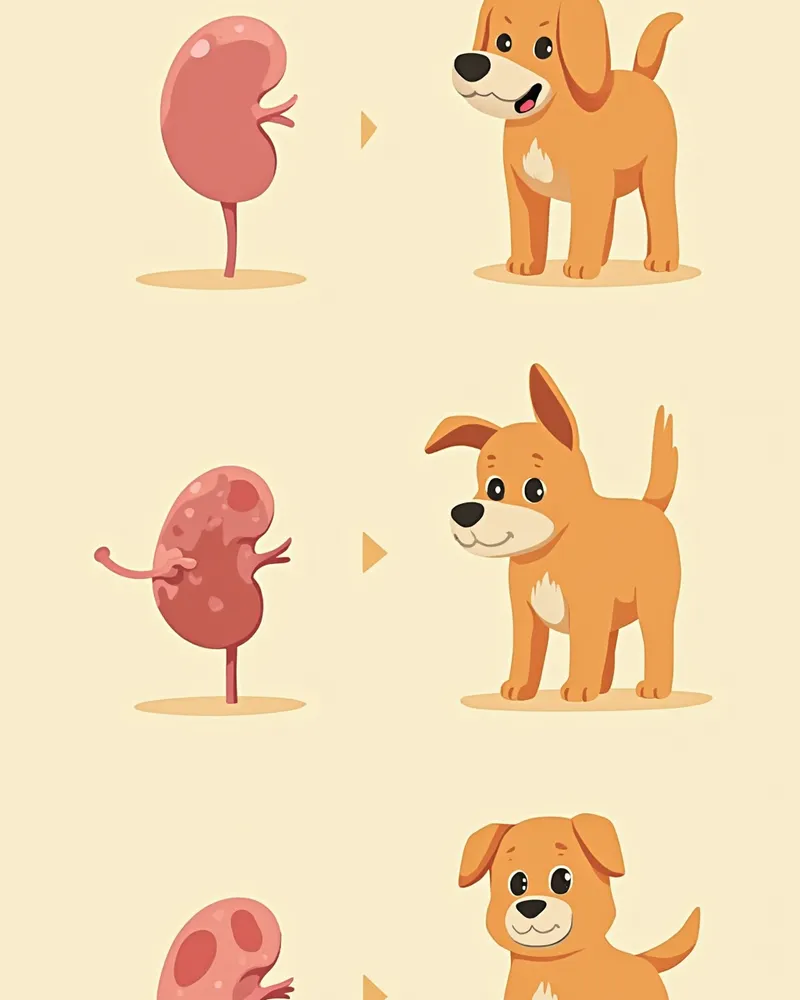
The International Renal Interest Society (IRIS) classifies chronic kidney disease into four stages based on creatinine and SDMA levels.
Stage 1: Both creatinine and SDMA levels are within the normal range. Because symptoms are minimal, this stage is typically detected during routine check-ups when accompanied by signs of kidney dysfunction such as decreased urine specific gravity, proteinuria, or hypertension.
Stage 2: There is a slight increase in creatinine and a mild rise in SDMA, which may be accompanied by increased water intake and urine output.
Stage 3: Creatinine levels show a marked increase, and clinical symptoms such as decreased appetite, weight loss, and polyuria-polydipsia become prominent.
Stage 4: Creatinine levels rise significantly, and severe uremic symptoms develop, necessitating aggressive treatment.
A medical illustration showing the four stages of kidney disease

Seek Veterinary Care Promptly If These Symptoms Occur

If your pet’s kidney values are elevated and accompanied by any of the following symptoms, prompt veterinary care is essential. Seek immediate attention if they are drinking significantly more water than usual, experiencing a sudden increase in urine output or, conversely, producing very little urine, suffering from repeated vomiting or a noticeably foul odor from their mouth, or showing a rapid decline in energy levels. These signs may indicate an emergency. In particular, minimal or absent urine output can suggest acute kidney failure, requiring immediate hospitalization.

Why Regular Checkups and Value Monitoring Are Important

The kidneys are organs that cannot regenerate once damaged, making early detection and consistent monitoring essential. This is especially true for senior dogs and cats aged seven to eight years and older, as their risk of kidney disease increases significantly; therefore, regular blood tests are recommended even in the absence of symptoms. If a kidney disease diagnosis has already been made, more frequent monitoring may be necessary depending on the condition, so please follow the testing schedule advised by your veterinarian. For accurate assessment, evaluate BUN, creatinine, and SDMA together, and combine these with urinalysis, including urine specific gravity and proteinuria checks. Since trends over time are more significant than absolute values from a single test, be sure to keep detailed records of all test results.
An elderly pet undergoing a routine health checkup

Dietary and Fluid Management for Kidney Values

If kidney values are abnormal, dietary management is the most important aspect of care. According to veterinary internal medicine textbooks, prescription diets appropriate to the stage can help slow disease progression in the early and middle stages of kidney disease. In the late stages (stages 3–4), the diet is adjusted to focus on alleviating uremic symptoms and maintaining quality of life.
Hydration: Kidney disease causes significant fluid loss through urine. Supplement with wet food and always provide plenty of fresh water.
Phosphorus (P) Restriction: As kidney function declines, phosphorus excretion becomes difficult. Prescription diets low in phosphorus are helpful.
Protein Management: Excessive protein can burden the kidneys. Your veterinarian will adjust the protein level according to the disease stage.
Pets on a kidney-support diet

Breed- and Age-Specific Precautions for Kidney Disease

Cats are more prone to chronic kidney disease than dogs, and it is especially common in senior cats. Known causes include idiopathic chronic tubulointerstitial nephritis, polycystic kidney disease, and kidney tumors (primarily lymphoma), some of which are linked to genetic or structural factors. It’s a good idea to consult your veterinarian to determine whether your cat’s breed or family history poses a risk for kidney disease. For cats aged seven to eight years or older, or those with risk factors, we recommend regular kidney function tests to monitor their health, even if no symptoms are present.

Reviewed by a veterinarian

Dr. Tony — Punnawat Phongkittirak

Dr. Tony — Punnawat Phongkittirak

Veterinarian

A veterinarian who majored in veterinary medicine at Khon Kaen University, Thailand, and completed the IVSA program at North Carolina State University in the United States. Drawing on clinical experience at animal hospitals, he works in the pet healthcare field and is dedicated to building a digital care environment that connects pet parents with veterinarians.

Frequently Asked Questions

My pet’s kidney values are slightly above the normal range—does that mean they have kidney disease?
A slightly elevated value doesn’t necessarily mean kidney disease. Levels can temporarily rise due to dehydration, recent dietary changes, or whether your pet fasted before the test. It’s important to recheck in 2–4 weeks to monitor the trend.
Is it okay if only BUN is high and creatinine is normal?
BUN levels can rise due to non-renal factors such as a high-protein diet, dehydration, or gastrointestinal bleeding. If creatinine and SDMA levels are within the normal range, kidney disease is unlikely, but it's best to consult your veterinarian to determine the underlying cause.
Is the SDMA test really necessary?
SDMA can detect kidney damage earlier than creatinine. In fact, studies have shown that SDMA levels often rise above the reference range before creatinine levels increase. We especially recommend checking SDMA for senior pets aged seven years or older, or for those at risk of kidney disease. However, since not all laboratories include SDMA in their standard biochemistry panels, please consult your veterinarian in advance to confirm whether this test is available.
If kidney values are elevated, can treatment bring them back to normal?
Acute kidney failure can often be reversed if the underlying cause is identified and removed quickly. However, kidney tissue damaged by chronic kidney disease cannot be restored to its original state. Therefore, the key to management is early detection followed by efforts to slow disease progression as much as possible.
Is there a way to check my pet’s kidney health at home?
While we can’t determine exact values without a blood test, changes in water intake, urine output, weight loss, decreased appetite, and bad breath are signs you can monitor at home. If you notice any of these changes, please have your pet checked at a veterinary clinic as soon as possible.

Share

Related Guides

References

[1] Langston CE, Eatroff AE. Chronic Kidney Disease. In: Small Animal Critical Care Medicine, 3rd Ed. Elsevier, 2023.

[2] Little SE. The Cat: Clinical Medicine and Management, 2nd Edition. Elsevier, 2012.

[3] International Renal Interest Society (IRIS). IRIS Staging of CKD. 2023.

[4] Hall JA et al. Symmetric dimethylarginine (SDMA) as a biomarker for early detection of chronic kidney disease in cats and dogs. Veterinary Clinical Pathology, 2014.

This information is based on veterinary literature and does not replace diagnosis or treatment. Please consult a veterinarian for specific health concerns.

Metapet Co., Ltd. | CEO: Park Sung-yong | Business Reg. No. 417-88-02562 | Seoul, South Korea | Customer Center

Dog & Cat Kidney Values: BUN, Creatinine, SDMA Normal Ranges & Meaning | Meongsiljang