
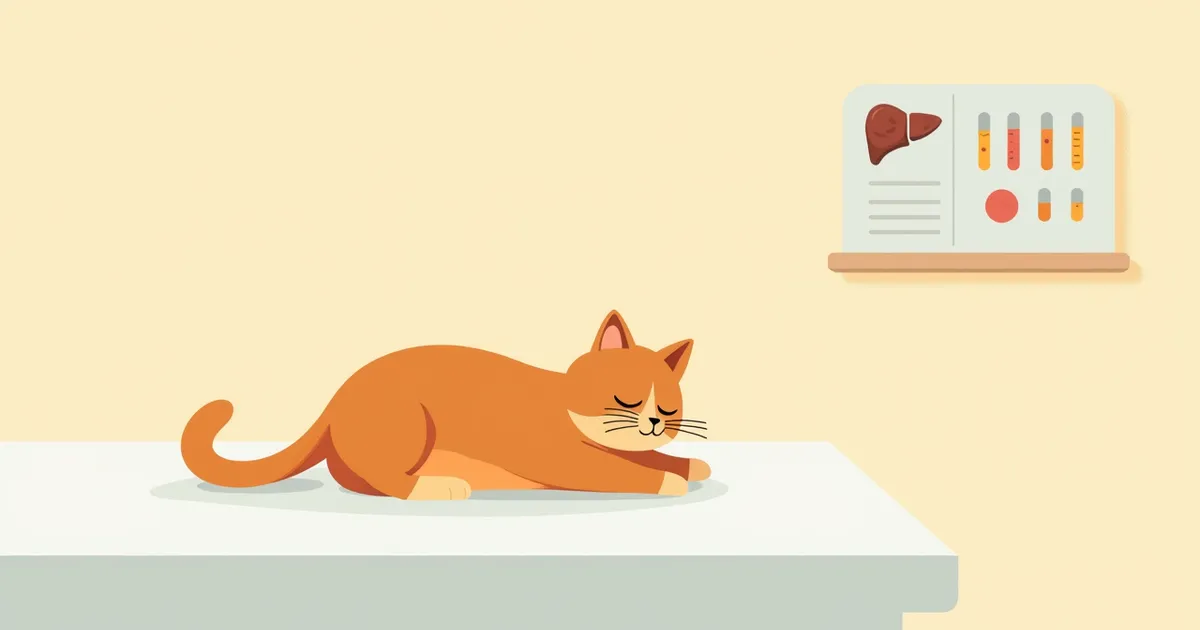
Why Do Cats Develop Coagulation Abnormalities with Liver Disease? — Bleeding Risks and Management Strategies
Feline liver disease can be accompanied by coagulation abnormalities. We’ve compiled the key questions and management strategies that pet owners should know.
Feline Liver Disease and Coagulation Abnormalities Are Important Signals for Pet Owners
Why Does Liver Disease Cause Coagulation Abnormalities?
What Are the Main Symptoms of Feline Liver Disease and Coagulation Abnormalities?
Emergency: If Bleeding Is Severe or Consciousness Is Impaired, Visit the Clinic Immediately
If your cat suddenly collapses, experiences severe bleeding (such as nosebleeds, bloody stool, or blood in the urine), or vomits blood, these are life-threatening emergencies. In such cases, immediate transport to a veterinary clinic is essential. Since clotting disorders can progress rapidly, pet owners should not overlook these signs and must act swiftly.
Stage-by-Stage Symptoms and Management for Liver Disease and Coagulation Abnormalities
| Item | Main symptoms | Emergency status | Main management |
|---|---|---|---|
| Mild | Decreased appetite, drowsiness | No | Continued observation |
| Moderate | Vomiting, diarrhea, increased bruising | Warning | Perform blood test |
| Severe | Reduced consciousness, worsening bleeding, jaundice | Go to hospital immediately | Clotting factor supplementation, fluid therapy |
If symptoms worsen or bleeding persists, an immediate hospital visit is necessary.
What Tests Are Needed for Diagnosis?
What Are the Treatment Options?
What Tips Are Available for Home Management?
Reviewed by a veterinarian

Dr. Tony — Punnawat Phongkittirak
VeterinarianA veterinarian who majored in veterinary medicine at Khon Kaen University, Thailand, and completed the IVSA program at North Carolina State University in the United States. Drawing on clinical experience at animal hospitals, he works in the pet healthcare field and is dedicated to building a digital care environment that connects pet parents with veterinarians.
Reviewed 2026-06-05
Frequently Asked Questions
My cat bruises easily—could this be a sign of a liver problem?
When should vitamin K be administered?
Why does liver disease cause coagulation abnormalities?
Should cats with clotting disorders still receive vaccinations?
Can liver disease and clotting disorders be treated?
Share
Related Guides

7 Key Symptoms and Management Essentials for Canine Cholecystitis Recommended by Veterinarians
Top 5 Milk Thistle (Silymarin) Liver Supplements for Dogs — A Comparison Guide Based on Silybin Content and Absorption Rates
Top Prescription Diets for Dogs with Liver Disease and Selection Criteria
The Ultimate Guide to Blood Glucose Monitoring and At-Home Care for Dogs and Cats

What is Oxygen Saturation (SpO2)? — Normal Ranges and Danger Thresholds
Meaning of Heart Murmur Grades 1–6
How to Read Your Dog’s CBC Blood Test Results — How to Check Anemia, Inflammation, and Infection Levels
Guide to First Meal and Dietary Progression After Surgery
Use of Emergency Medications (Epinephrine and Atropine)
The Complete Guide to IV Line Management
References
[1] Plumb's Veterinary Drug Handbook, 9th Edition. Wiley-Blackwell, 2022.
[2] Feldman, B. F., & Nelson, R. W. (2013). Textbook of Veterinary Internal Medicine: Diseases of the Dog and Cat. Elsevier Saunders.