
Like
Share
멍실장
반려동물 신장 이식, 정말 가능할까? 현실과 한계

Pet Kidney Transplants: Are They Really Possible? Reality and Limitations

KidneyQ&AMeongsiljang Veterinary Advisory Board

Kidney transplants for pets are performed in some countries abroad, but practical limitations make them difficult to carry out in Korea. Here’s an overview of when they might be possible, along with information on costs, success rates, and ethical considerations.

What Is a Pet Kidney Transplant?

A veterinarian who treats senior cats
Pet kidney transplantation is a highly complex surgical procedure that replaces a pet’s failed kidneys, due to end-stage chronic kidney disease, with healthy kidneys from another animal. The key takeaway is that lifelong immunosuppressive therapy after surgery is far more challenging than the operation itself. While some U.S. university veterinary hospitals perform this procedure primarily in cats, success rates in dogs are low, and it is essentially not offered in Korea. This reality is far removed from the simplistic expectation that “receiving a new kidney will restore health.”

When Is a Kidney Transplant Considered?

According to textbooks on veterinary emergency and critical care, kidney transplantation is primarily considered as a treatment option for cats with chronic kidney failure (end-stage chronic kidney disease) or acute kidney injury. However, because candidate selection is extremely rigorous, the following criteria are comprehensively evaluated:
Age: Older age is associated with poorer postoperative survival (increasing age is a risk factor).
Cardiac and hepatic function: The patient must be able to tolerate anesthesia and lifelong immunosuppressive therapy.
Infection status: Negative for FeLV and FIV, with no history of recurrent urinary tract infections (cat-specific criteria).
Neoplasia and underlying conditions: No cancer in other organs and no uncontrolled hyperthyroidism.
Temperament: The cat should not have a difficult or aggressive disposition.
Owner commitment: The owner must be able to manage the lifelong costs and time required for medications and follow-up examinations.
If these conditions are not met, the surgery itself is not medically recommended. Additionally, cases where the underlying cause is a condition that can also affect the transplanted kidney, such as pyelonephritis or amyloidosis, are not considered good candidates.

Cat vs. Dog Kidney Transplant Comparison

ItemCatDog
FeasibilityPerformed at several centers overseas (began at UC Davis in 1987)Mostly experimental; rarely performed
Cumulative Experience & PrognosisApproximately 600–700 cases reported; an established option but not a 'cure'At the stage where new immunosuppressants are being studied to improve prognosis
RejectionManaged with immunosuppression, but lifelong risk remainsRejection is more difficult to manage
Tolerating ImmunosuppressantsRequires lifelong administration of microemulsified cyclosporine, etc.High risk of side effects and infection
Availability DomesticallyVirtually impossibleVirtually impossible

Source: Based on veterinary textbooks such as Veterinary Emergency and Critical Care Medicine and The Cat

How Does the Surgical Procedure Work?
Kidney transplants typically proceed as follows:
Step 1 — Donor Selection and Matching: Healthy young adult cats are screened for blood type and cross-matching compatibility, with confirmation of negative retrovirus and Toxoplasma status and normal renal ultrasound findings.
Step 2 — Donor Surgery: One kidney is surgically removed from the healthy donor animal.
Step 3 — Recipient Surgery: The donor kidney is transplanted into the patient (the native kidneys are usually left in place).
Step 4 — Initiation of Immunosuppression: Microemulsion cyclosporine or similar agents are administered for life.
Step 5 — Lifelong Monitoring: Regular blood and urine tests are performed, and drug concentrations are adjusted as needed.
While the surgery itself is highly complex, the true treatment continues for the rest of the patient’s life after discharge. In particular, delayed graft function due to ischemic injury or ureteral obstruction can occur for up to three weeks post-surgery, making early monitoring, including ultrasound, critically important.
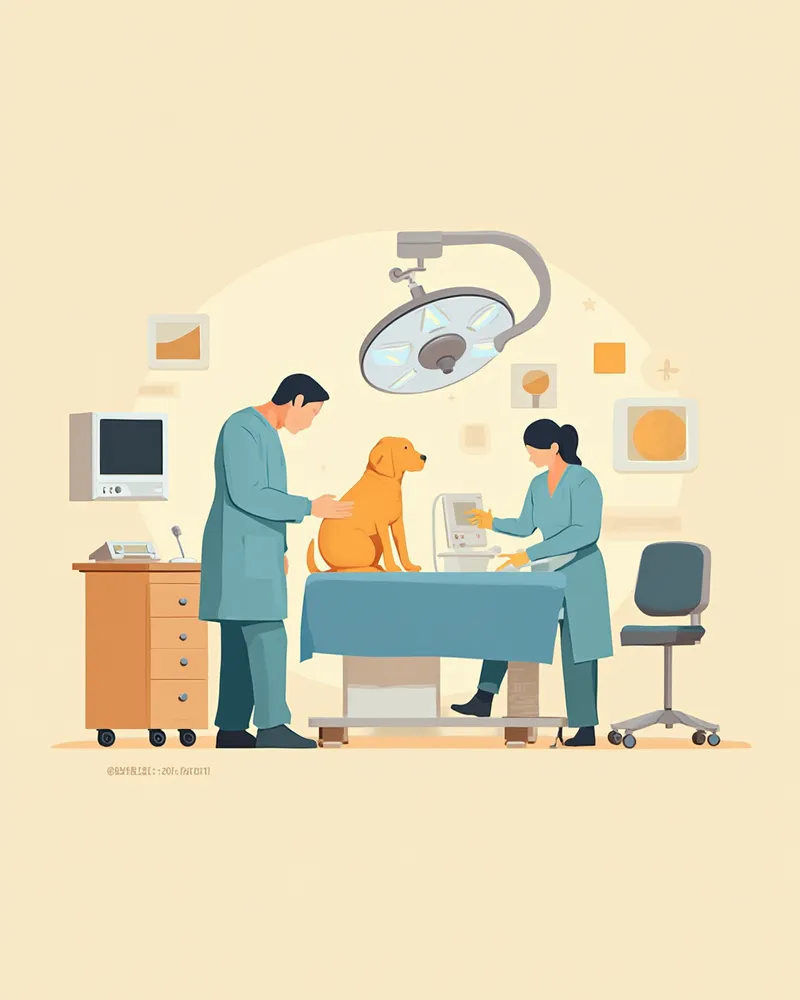
Inside the animal operating room

Practical Constraints — The Donor Animal Issue

The biggest practical and ethical hurdle is the donor animal. Some programs in the U.S. require the recipient’s owner to adopt the donor cat after the transplant and care for it for life. However, performing unnecessary surgery on a healthy cat raises animal welfare concerns. In Korea, the lack of a donor system, legal framework, and specialized personnel makes implementation virtually impossible.

Costs and the Current Situation in Korea

In the United States, the kidney transplant surgery alone can cost tens of thousands of dollars, with lifelong immunosuppressant medications and regular check-ups adding several thousand dollars per year. Current situation in Korea: - No formal kidney transplant programs exist even at veterinary teaching hospitals - Lack of infrastructure for donor animal management and ethical review - Very few veterinarians specialize in organ transplantation - Insufficient infrastructure for long-term immunosuppressant prescriptions Therefore, in Korea, pets with end-stage kidney disease typically receive conservative treatments such as dialysis, fluid therapy, dietary management, and phosphate binders to maintain their quality of life instead of undergoing kidney transplantation.
An elderly cat resting at home with its owner

Post-Operative Care — The Real Challenge Begins Here

According to veterinary textbooks, risk factors that can affect survival after discharge following a kidney transplant include advanced age, intraoperative hypotension, and prolonged anesthesia. In the long term, managing complications from chronic immunosuppressive therapy is the biggest challenge.
Rejection: Can occur at any time and may lead to a rapid decline in kidney function.
Increased susceptibility to infection: Immunosuppression means even minor infections, such as urinary tract or respiratory infections, can be life-threatening.
Drug side effects: Increased risk of diabetes and tumors (neoplasms).
Lifelong veterinary visits: Regular blood tests and drug level monitoring are required.
Because immunosuppressants must be administered consistently for life to prevent rejection, owners’ daily routines need to be completely restructured around their pet’s medication and check-up schedule.

Alternatives — What You Can Do Without a Kidney Transplant

You don’t need to give up just because a kidney transplant isn’t a realistic option. Chronic kidney disease is progressive, but the rate of progression varies widely among individuals. Our goal is to maintain the best possible quality of life for as long as possible through early diagnosis and consistent medical management. Managing hyperphosphatemia with a low-protein, low-phosphorus prescription diet and phosphate binders, while simultaneously addressing subcutaneous fluid therapy, anemia, and hypertension, can help sustain quality of life and a stable clinical course. Please remember that even in cats that receive a transplant, the goal is maintaining a good quality of life rather than achieving a "cure." Also, keep in mind that a kidney transplant is not a "last resort," but rather an option available to only a very small number of patients.

Reviewed by a veterinarian

Dr. Tony — Punnawat Phongkittirak

Dr. Tony — Punnawat Phongkittirak

Veterinarian

A veterinarian who majored in veterinary medicine at Khon Kaen University, Thailand, and completed the IVSA program at North Carolina State University in the United States. Drawing on clinical experience at animal hospitals, he works in the pet healthcare field and is dedicated to building a digital care environment that connects pet parents with veterinarians.

Frequently Asked Questions

Is kidney transplantation for pets available in Korea?
Currently, there are no official kidney transplant programs in Korea. Even university veterinary hospitals lack the necessary donor animal systems, ethical review processes, and specialized personnel, making it practically unfeasible. Overseas transfers are also nearly impossible due to quarantine regulations, costs, and risks.
Why are kidney transplants rarely performed in dogs?
Dogs experience much stronger immune rejection reactions than cats, and managing immunosuppression is also more challenging. As a result, current efforts are primarily in the experimental stage, with ongoing research exploring new immunosuppressants like leflunomide to improve outcomes.
How is the donor cat doing?
Donor cats are selected from healthy young adults after undergoing blood typing, cross-matching, and infectious disease testing. In some U.S. programs, recipient owners are required to adopt the donor cat post-transplant and care for it for life. Although a cat can live healthily with just one kidney, the very act of performing surgery on a healthy animal raises animal welfare concerns.
How long can my pet live after a transplant?
Kidney transplantation isn’t a cure; it’s a treatment aimed at maintaining a good quality of life for as long as possible. Survival time largely depends on how well side effects of immunosuppressive drugs, infections, and rejection are managed, and because individual variation is significant, it’s difficult to provide a one-size-fits-all estimate.
How about dialysis instead of a transplant?
In Korea, some large veterinary hospitals offer hemodialysis and peritoneal dialysis. These treatments are primarily used to stabilize acute kidney injury or manage patients awaiting transplantation. In cases of chronic kidney disease, dialysis may be considered when medical management fails to control uremic symptoms, but this would require lifelong dialysis. Therefore, medical management remains the practical cornerstone for end-stage chronic kidney disease.

Share

Related Guides

References

[1] Langston CE, Eatroff AE. Chronic Kidney Disease. Small Animal Critical Care Medicine, 3rd Ed

[2] The Cat, Clinical Medicine and Management, 2nd Edition — Renal Transplantation

[3] Aronson LR. Update on the Current Status of Kidney Transplantation for Chronic Kidney Disease in Animals. Vet Clin North Am Small Anim Pract

This information is based on veterinary literature and does not replace diagnosis or treatment. Please consult a veterinarian for specific health concerns.

Metapet Co., Ltd. | CEO: Park Sung-yong | Business Reg. No. 417-88-02562 | Seoul, South Korea | Customer Center

Pet Kidney Transplants: Are They Possible? Reality & Limits | Meongsiljang