
Like
Share
멍실장
가정에서 피부 이상 점검하는 방법

Should I Take My Pet to the Vet? — Key Checklist for Home Skin Checks

Skin & CoatQ&AMeongsiljang Veterinary Advisory Board

Here’s a veterinary-backed guide on how to check your pet’s skin at home and when it’s time to visit the vet.

What Are Home Skin Checks?

A pet owner checking their dog’s belly and armpits.
Home skin checks are a self-care practice where you regularly examine your pet’s skin and coat to catch any abnormalities early. The key is to perform these checks once a week, thoroughly covering the entire body. Skin conditions in dogs and cats can often be resolved with just topical ointments or medicated baths if detected early, but neglecting them can lead to secondary infections that require prolonged treatment. Be sure to carefully inspect areas that are easily overlooked due to fur, such as the armpits, groin, and inside the ears.

Why Are Home Checks Important?

According to veterinary dermatology textbooks, the diagnostic process and treatment course for skin conditions vary significantly depending on whether they are detected early. If itching persists, the resulting scratching and licking first cause redness and abrasions. Over time, these can progress to chronic changes such as hair loss, lichenification (thickening and roughening of the skin), and hyperpigmentation. When the skin’s protective barrier is compromised in this way, opportunistic overgrowth of normal skin flora like Staphylococcus bacteria or Malassezia yeast can easily lead to secondary infections. Therefore, if your pet has a history of skin conditions such as atopic dermatitis, it is helpful to keep that medical history in mind and monitor them more closely. Additionally, in households with multiple cats or dogs, consider the possibility of contagious spread; if you notice skin abnormalities in one pet, be sure to check the others as well.

Check Points by Body Area

Instead of trying to examine your pet’s entire body all at once, check each area systematically to ensure nothing is missed. The table below outlines common problem areas and the key signs to look for. For the best visibility, inspect the skin in a well-lit area right after bathing or brushing.

Checklist by Body Area

ItemCheck pointsCommon abnormalities
Face/around the mouthRedness, hair loss, dischargeAtopy, pyoderma
Inside the earsBrown discharge, odor, warmthOtitis externa, Malassezia
Armpits/groinRedness, scaling, pigmentationAllergy, yeast infection
Back/lower backDandruff, millet-like scabs, circular hair lossSeborrhea, flea allergy
Between the toesRed discoloration, licking marks, swellingInterdigital dermatitis, Demodex
Around the tail/anusScabs, odor, repeated lickingAnal sac problems, fleas

If the abnormal signs listed in the table appear in 2 or more areas at the same time, a vet visit is needed.

Abnormal Signs to Watch For
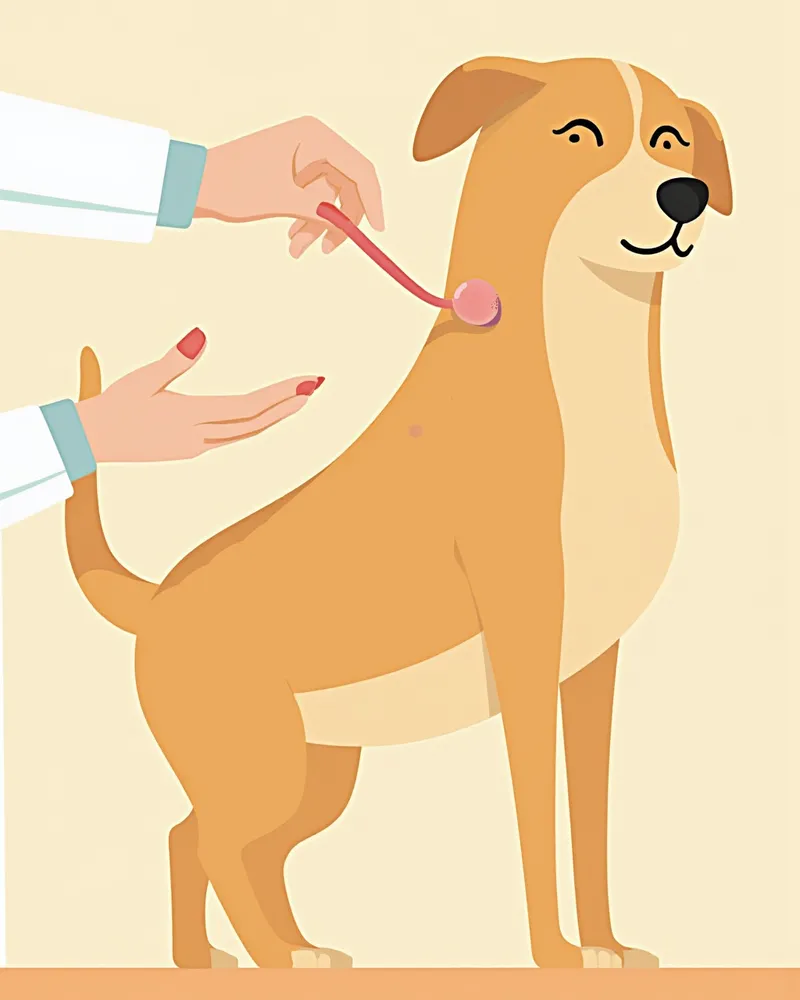
If you notice any of the following signs during a skin check, suspect an underlying condition. In particular, pimple-like bumps (papules and pustules) are an early sign of bacterial pyoderma.
Red patches: Circular or oval redness may indicate allergies or a fungal infection.
Circular hair loss: Coin-sized bald spots suggest dermatophytosis (ringworm).
Black crusts: Oily, black scabs may indicate a Malassezia yeast infection.
Dandruff and scaling: Excessive dandruff is an early sign of seborrheic dermatitis.
Hyperpigmentation: Darkening and thickening of the skin are results of chronic inflammation.
Checking for signs of skin abnormalities in dogs

When to Seek Immediate Veterinary Care

Stop home monitoring and seek veterinary care immediately if you notice any of the following: 1) acute redness and oozing over a large area (the size of a palm or larger); 2) scratching or licking that causes bleeding and persists for more than 12 hours; 3) foul-smelling purulent discharge; or 4) lethargy, loss of appetite, or fever accompanying skin symptoms. In particular, sudden facial swelling indicative of a urticarial reaction is a medical emergency, as it can progress to anaphylactic shock.

Weekly Home Check Routine

Just five to ten minutes each week on a set day is all you need. Follow a consistent head-to-tail, front-to-back sequence: ears, face, neck, shoulders, front legs and toes, chest and abdomen, back and lower back, hind legs and toes, then tail and anus. Part the fur against the grain with your fingers to expose the skin, and take note of any unusual odors. If you spot anything abnormal, take a photo and record the date; this documentation will be invaluable for your veterinarian during diagnosis.
Parting a cat's fur to examine the skin

Special Considerations for Cats

Cats groom themselves, so they tend to hide skin issues. If you notice the fur on their belly or inner thighs is unusually short from over-grooming, it could be a sign of hidden itching. Also, flea allergy dermatitis in cats often appears around the lower back and base of the tail, so pay close attention to these areas. Even if the coat looks fine on the surface, you might feel small bumps under the skin, which could indicate "miliary dermatitis."

Tips for Before and After Checks

Make check-ups a positive experience by pairing them with treats to minimize stress. Gently handling sensitive areas like the spaces between the toes and the ears from a young age will make future examinations much easier. Avoid applying human ointments, such as steroid or antibiotic creams, on your own, as this can complicate diagnosis. Instead, place an Elizabethan collar to prevent further irritation and schedule a veterinary appointment.

Reviewed by a veterinarian

Dr. Tony — Punnawat Phongkittirak

Dr. Tony — Punnawat Phongkittirak

Veterinarian

A veterinarian who majored in veterinary medicine at Khon Kaen University, Thailand, and completed the IVSA program at North Carolina State University in the United States. Drawing on clinical experience at animal hospitals, he works in the pet healthcare field and is dedicated to building a digital care environment that connects pet parents with veterinarians.

Frequently Asked Questions

How often should you perform at-home skin checks?
For healthy adult dogs and cats, once a week is the recommended baseline. If your pet has a history of atopy or allergies, or is currently undergoing treatment for a skin condition, it’s best to observe them for five minutes every day.
Wouldn't it be easier to see if we shaved the fur?
No, that's not necessary. Fur is part of the skin's protective barrier, shielding it from UV rays and physical injury. Shaving it off can actually make the skin more sensitive. Simply parting the fur with your fingers to check the skin is sufficient.
I found a tick while checking my pet. Should I remove it right away?
Pulling a tick off with bare hands or fingernails can leave its head embedded in the skin, leading to inflammation. Use a specialized tick remover to extract it vertically as close to the skin as possible, or have it removed at a veterinary clinic if you're unsure.
Is it normal for my pet’s skin to look red right after a bath?
Mild redness after a bath is often due to shampoo irritation or rubbing and should subside within 1–2 hours. If it persists into the next day or is accompanied by itching, it may indicate a shampoo allergy or dermatitis, in which case you should consider switching products.
How should I take photos of my pet’s skin so they’re helpful at the vet clinic?
Please take two photos: one directly above the lesion and another from 10 cm away, both in natural light. Placing a coin next to the lesion for size comparison will make it much easier to track changes over time.

Share

Related Guides

References

[1] Jackson HA, Marsella R (eds.), BSAVA Manual of Canine and Feline Dermatology, 4th Edition, 2021

[2] Miller WH, Griffin CE, Campbell KL, Muller and Kirk's Small Animal Dermatology, 7th Edition, Elsevier Mosby, 2013

[3] Hnilica KA, Patterson AP, Small Animal Dermatology: A Color Atlas and Therapeutic Guide, 4th Edition, 2017

This information is based on veterinary literature and does not replace diagnosis or treatment. Please consult a veterinarian for specific health concerns.

Metapet Co., Ltd. | CEO: Park Sung-yong | Business Reg. No. 417-88-02562 | Seoul, South Korea | Customer Center

Should You See the Vet? Home Skin Check Checklist for Pets | Meongsiljang