Like
Share
멍실장
강아지 치근단 농양 증상과 치료

Symptoms and Treatment of Canine Periapical Abscess

Oral HealthQ&AMeongsiljang Veterinary Advisory Board

Based on veterinary resources, I’ve compiled a comprehensive guide covering the causes, key symptoms, diagnostic methods, treatment options (including tooth extraction and root canal therapy), and post-operative care for canine periapical abscesses.

What is a Canine Periapical Abscess?

Side view of a dog's face with swelling under the eye
A periapical abscess is a condition in which bacteria infect the tip of a tooth root, leading to the formation of a pus-filled pocket. Because an abscess is a lesion where pus accumulates due to bacterial infection, it may eventually rupture, creating a sinus tract (a small channel) through the skin and allowing pus mixed with blood to drain. Therefore, if your dog suddenly develops swelling under the eye or a hole appears in the facial skin with pus draining from it, this condition should be suspected. It is known to commonly occur on large molars with multiple roots, as the roots of these teeth are located close to the area beneath the eye. If left untreated, the infection can spread to surrounding tissues and bone, so it is important to visit an animal hospital immediately upon discovery. Treatment involves addressing the infected tooth and draining the pus under general anesthesia, and the prognosis is generally better when the condition is detected early.

Causes of Periapical Abscess

Periodontal disease: If gum inflammation is left untreated for too long, bacteria can travel down to the tooth roots and develop into an abscess. This is the most common cause.
Tooth fracture: If a tooth cracks while chewing on bones, antlers, or hard toys, bacteria can enter through the exposed pulp (the tissue containing nerves and blood vessels).
Tooth wear: Prolonged chewing on tennis balls or cage bars can wear down the tooth surface, potentially exposing the pulp.
Trauma: Even tiny cracks in a tooth caused by impact or accidents can become pathways for bacterial invasion.
From a veterinary dental perspective, periodontal disease is very common in dogs, and the risk of developing it increases with age. Without consistent oral care, periodontal disease can progress and lead to periapical abscesses. Therefore, regular dental check-ups and establishing a daily brushing routine at home from an early age are essential.

Suspect a Periapical Abscess if You See These Symptoms
Swelling under the eye: Sudden swelling under one eye or on the cheek. This is the most characteristic symptom of a periapical abscess.
Skin fistula: A small hole forms in the skin under the eye, and pus mixed with blood may drain from it.
Decreased appetite: Pain while chewing can lead to food refusal or chewing on only one side.
Worsening bad breath: Infection can cause noticeably stronger halitosis than usual.
Reluctance to have the face touched: The pet may flinch or whine when the painful side of the face is touched.
Tooth discoloration: An infected tooth may turn pink, gray, or brown. This often indicates that the tooth pulp is already damaged.
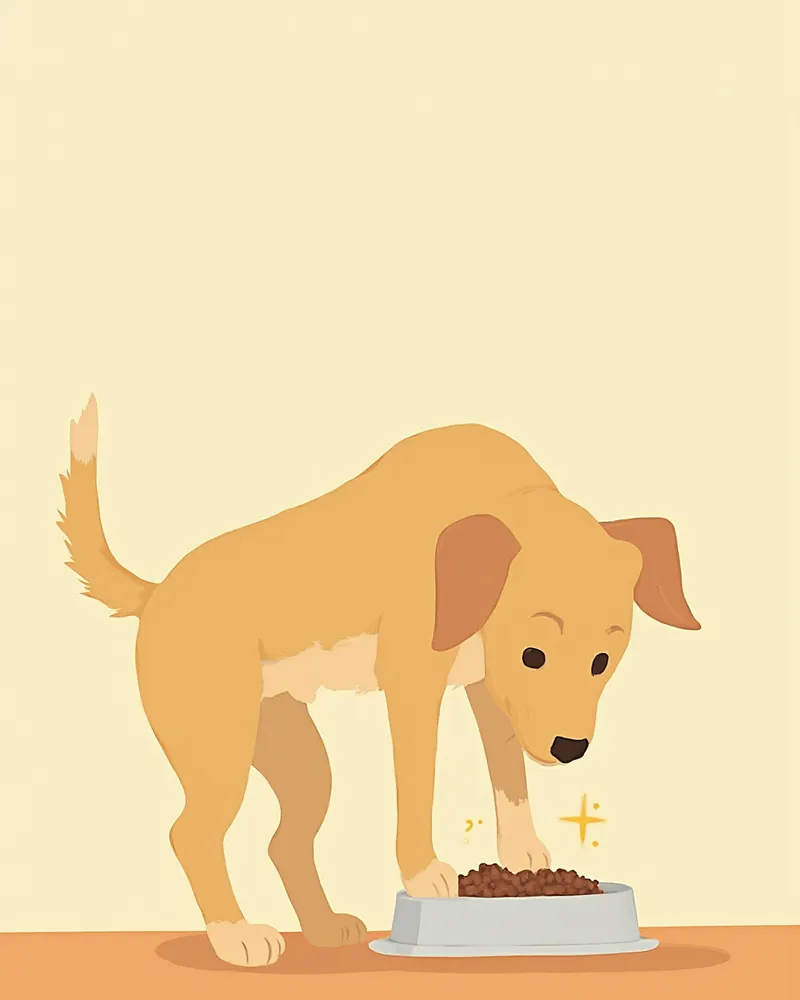
A puppy that refuses to eat and turns its head away from the food.

Go to the Veterinary Clinic Immediately in These Cases

If the area under your pet’s eyes swells rapidly, accompanied by fever, pus draining from the skin, or a complete refusal to eat for more than a day, this is an emergency. Infections can spread deeply into the tissues around the eye or even into the bone, leading to serious complications. Therefore, it is crucial to visit the vet on the same day you notice these symptoms.

Diagnosis of Periapical Abscess
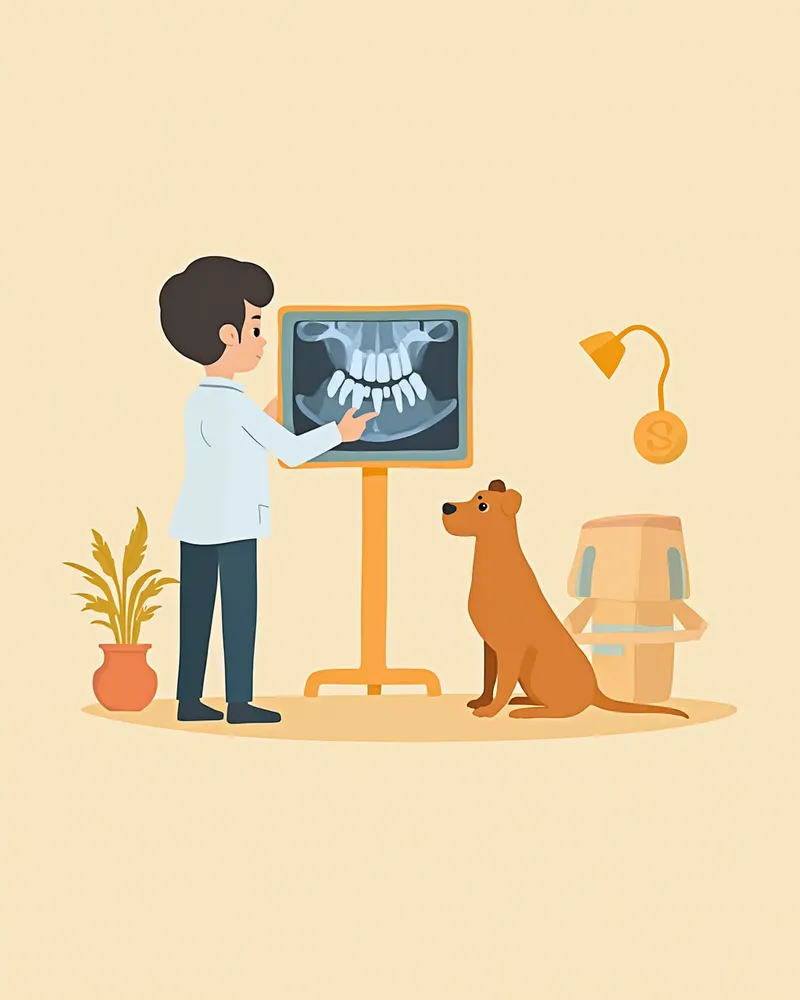
Diagnosing a periapical abscess based solely on visible symptoms is difficult. Therefore, we perform a thorough oral examination and dental radiographs under general anesthesia. A definitive diagnosis is made when the radiographs reveal bone resorption around the tip of the tooth root. Even teeth that appear healthy on the surface may have underlying root issues, making radiographic examination essential. According to veterinary dentistry textbooks, radiographic evaluation of the periapical area is also mandatory for discolored teeth, as discoloration can signal pulp damage.
A veterinarian reviewing a dog’s dental X-ray at the animal hospital

Treatment Options: Extraction and Root Canal Therapy

Treating a periapical abscess centers on addressing the infected tooth to drain the pus and eliminate the source of infection. There are two primary approaches.
Extraction: This is the most common and definitive treatment. The infected tooth is completely removed, including the roots, to eradicate the infection, and the gums are sutured. For large molars with multiple roots, the roots must be separated and extracted individually, making the procedure more complex.
Root Canal Therapy (Endodontic Treatment): This option is chosen when preserving the tooth is desired. It involves removing the infected pulp, disinfecting the canal, and filling it with a restorative material. This procedure requires specialized veterinary dental equipment and is not available at all clinics.
Both treatments require general anesthesia. Antibiotics alone are typically insufficient to resolve an abscess; therefore, drainage of the pus and removal of infected tissue are essential. Based on the specific case, veterinarians may perform bacterial culture and sensitivity testing to select the appropriate antibiotic, and will also prescribe anti-inflammatory and pain-relief medications as needed.
A puppy undergoing dental surgery under general anesthesia

Post-Operative Home Care

Soft food feeding: For 7 to 10 days after surgery, feed your pet soaked dry food or wet food. Avoid hard treats and toys during this period.
Prescription medication: Administer all prescribed antibiotics and pain relievers exactly as directed by your veterinarian. Do not stop the medication early, even if symptoms improve, as this may lead to a recurrence of infection.
Elizabethan collar: Keep the Elizabethan collar on at all times to prevent your pet from scratching or rubbing the surgical site with their paws.
Follow-up visit: Schedule a follow-up appointment within 10 to 14 days after surgery to ensure the incision is healing properly. If swelling returns or pus appears, return to the clinic immediately.

Prevention is Best

Daily brushing is the most effective preventive measure. Establish a brushing routine from an early age and have your pet undergo a dental examination at a veterinary clinic at least once a year. Avoid hard bones, antlers, and stones, as they are common causes of tooth fractures. If significant tartar has already accumulated, do not delay professional dental scaling.

Reviewed by a veterinarian

Dr. Tony — Punnawat Phongkittirak

Dr. Tony — Punnawat Phongkittirak

Veterinarian

A veterinarian who majored in veterinary medicine at Khon Kaen University, Thailand, and completed the IVSA program at North Carolina State University in the United States. Drawing on clinical experience at animal hospitals, he works in the pet healthcare field and is dedicated to building a digital care environment that connects pet parents with veterinarians.

Frequently Asked Questions

Can periapical abscesses be cured with antibiotics alone?
Antibiotics can temporarily reduce symptoms, but if the underlying cause of the infection—the tooth itself—is not treated, the condition will recur. It is essential to combine antibiotic therapy with either tooth extraction or root canal treatment.
Won't my pet have trouble eating after a tooth extraction?
Dogs often swallow their kibble without chewing it thoroughly, so they typically have no trouble eating after a tooth extraction. In fact, many dogs eat even better once the pain subsides.
Is it safe for senior dogs to undergo general anesthesia?
We confirm safety through pre-anesthesia blood tests and cardiac evaluations. Overall health status matters more than age alone, and your veterinarian will assess whether the benefits of treatment outweigh the risks.
Can periapical abscesses occur in other teeth as well?
Yes, if periodontal disease has progressed extensively, it can affect other teeth as well. Regular dental check-ups and daily tooth brushing are essential for prevention.
Could the swelling under my pet’s eye be something other than a periapical abscess?
Swelling under the eyes can also be caused by allergies, insect bites, tumors, or other factors. For an accurate diagnosis, it is essential to have your pet examined at a veterinary clinic.

Share

Related Guides

References

[1] Niemiec BA. A Color Handbook of Small Animal Dental, Oral and Maxillofacial Disease. Manson Publishing, 2010.

[2] Lobprise HB, Dodd JR. Wiggs's Veterinary Dentistry: Principles and Practice. 2nd ed. Wiley-Blackwell, 2019.

[3] Gorrel C. Veterinary Dentistry for the General Practitioner. 2nd ed. Saunders, 2013.

[4] Reiter AM, Gracis M. BSAVA Manual of Canine and Feline Dentistry and Oral Surgery. 4th ed. BSAVA, 2018.

[5] Ettinger SJ, Feldman EC. Textbook of Veterinary Internal Medicine. 8th ed. Elsevier, 2017. Chapter: Diseases of the Oral Cavity.

This information is based on veterinary literature and does not replace diagnosis or treatment. Please consult a veterinarian for specific health concerns.

Metapet Co., Ltd. | CEO: Park Sung-yong | Business Reg. No. 417-88-02562 | Seoul, South Korea | Customer Center

Canine Periapical Abscess: Symptoms & Treatment | Meongsiljang