Like
Share
멍실장
강아지 간 비대(간종대) 자주 묻는 질문 Q&A — 보호자가 꼭 알아야 할 핵심

What Is Hepatic Enlargement in Dogs? — From Causes to Diagnosis and Treatment

Liver HealthQ&AMeongsiljang Veterinary Advisory Board

Hepatic enlargement in dogs is a condition where the liver becomes abnormally enlarged, and early detection is key to effective treatment. We’ve compiled the essential symptoms and management strategies that pet owners should know.

What Is Hepatic Enlargement in Dogs?

A comparison between a normal and an enlarged liver in dogs
Hepatic enlargement in dogs, also known as hepatomegaly, refers to a condition where the liver is larger than normal. A normal-sized liver sits inside the rib cage (within the costal arch) and is not easily palpable, but when the liver enlarges, it may extend below the rib cage or cause a distended abdomen, often described as a “pot-belly” appearance. However, young puppies may naturally have a relatively larger liver. While hepatic enlargement itself may be asymptomatic, it can progress acutely or chronically depending on the underlying disease, making early detection through regular check-ups essential. The liver plays a vital role in maintaining life by processing toxins, synthesizing proteins, and producing bile to aid digestion, so if the underlying condition progresses, it can affect the entire body. - Hepatic enlargement: An abnormally enlarged liver that may be palpable below the rib cage or cause abdominal distension. - Possibility of being asymptomatic: Hepatic enlargement is often discovered incidentally during blood tests or imaging, even in the absence of symptoms. - Early detection: Regular check-ups are the best way to identify the condition early, even when no symptoms are present.

What Are the Main Causes of Hepatic Enlargement?
There are many causes of hepatic enlargement in dogs. Common examples include acute hepatitis, fatty change or vacuolar hepatopathy (accumulation of fat or vacuoles in hepatocytes), drug-induced hepatopathy (such as from steroids), tumors (infiltrative tumors like lymphoma or mast cell tumors, or primary hepatic tumors), and passive venous congestion. Hepatic enlargement can be diffuse (involving the entire liver uniformly) or nodular/focal. Among drug-induced liver injuries, vacuolar hepatopathy caused by prolonged steroid administration is well known, and in some breeds, this condition has been reported to progress to hepatocellular carcinoma. - Vacuolar hepatopathy/fatty change: A condition in which fat or vacuoles accumulate within hepatocytes, causing the liver to enlarge; it may be associated with steroid administration or metabolic disorders. - Drug (steroid)-induced hepatopathy: Prolonged steroid administration can cause progressive liver enlargement and significantly elevated ALP levels. In certain breeds, such as Scottish Terriers, this may progress to hepatocellular carcinoma, so medications should never be given without veterinary guidance. - Tumors/congestion: Infiltrative tumors such as lymphoma, as well as passive venous congestion, can also cause liver enlargement.
A puppy undergoing a cardiac hypertrophy examination with a veterinarian

What Are the Main Symptoms of Hepatic Enlargement?

Hepatic enlargement in dogs often shows few early symptoms and is frequently discovered incidentally through blood or imaging tests, but as the condition progresses, several warning signs emerge. Loss of appetite (becoming a picky eater), vomiting, and weight loss are common early indicators. As the liver enlarges, it can cause abdominal distension, giving the belly a swollen, “tadpole-like” appearance. The enlarged liver may also press against the chest cavity, leading to rapid, shallow breathing. Additionally, dogs may exhibit general decline in condition, such as lethargy, drowsiness, and reduced activity levels. In severe cases, the dog’s condition can deteriorate rapidly, including altered consciousness, requiring immediate veterinary care. - Abdominal distension: As the liver enlarges, the abdomen may swell, taking on a “tadpole belly” shape. - Loss of appetite and weight loss: Dogs may become picky eaters, eat less, and lose weight. - Breathing changes: The enlarged liver can press on the chest, causing rapid and shallow breathing. - Reduced activity: Dogs may appear lethargic, sleepy, and less active.
The eyes of a puppy showing signs of jaundice

Signs Requiring Immediate Veterinary Care

If your pet shows signs of jaundice, persistent vomiting, loss of appetite, abdominal pain, or decreased consciousness, immediate veterinary care is essential. As liver enlargement progresses, liver function can deteriorate rapidly, posing a life-threatening risk.

What Tests Are Needed for an Accurate Diagnosis?
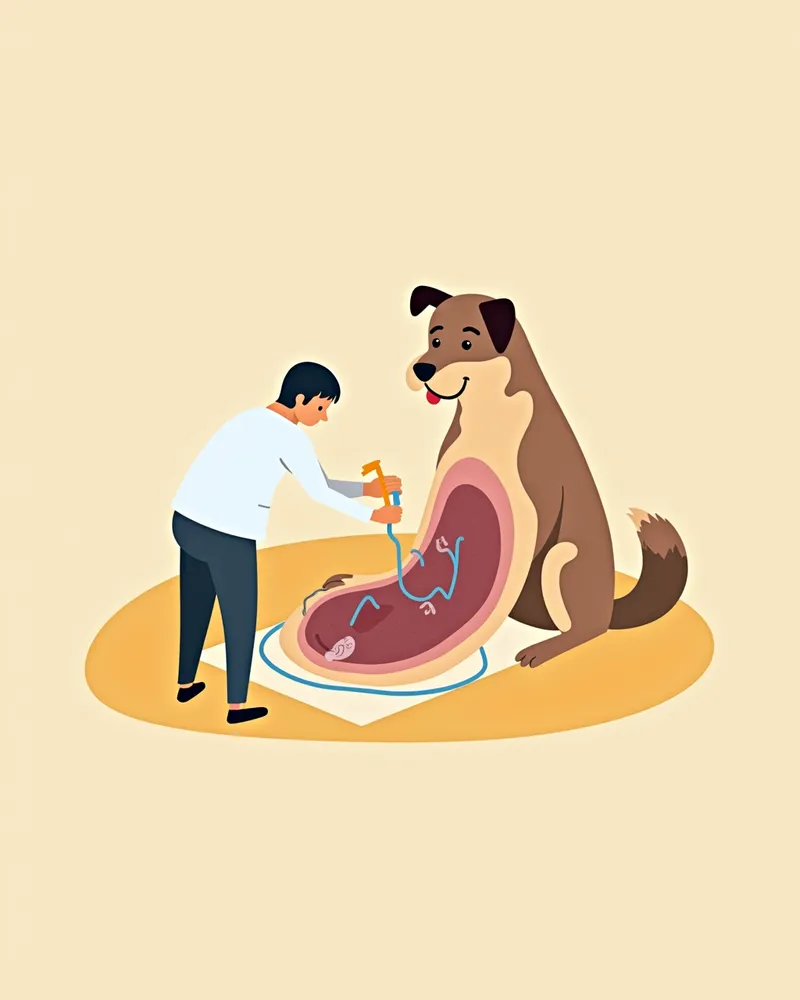
Accurately diagnosing liver enlargement requires a combination of tests. Blood tests and liver function tests measure liver enzyme levels to assess whether damage has occurred. Ultrasound imaging allows for precise observation of the liver’s size, shape, and structure. If necessary, a tissue biopsy is performed to clearly identify the underlying cause and determine whether the issue involves tumors or inflammation. Elevated AST, ALT, and ALP levels in blood tests suggest possible liver damage. - Blood tests: Measure liver enzyme levels to check for liver damage. - Ultrasound examination: Non-invasively assess the liver’s size and structure. - Tissue biopsy: Collect and analyze liver tissue for accurate diagnosis of the underlying cause. - Regular check-ups: Even without symptoms, having exams every six months helps maintain liver health.
A veterinarian performing an ultrasound examination on a dog's liver

What Are the Treatment Options?

Treatment depends on the underlying cause of the hepatomegaly. The key is to identify and treat the primary disease behind the enlarged liver rather than focusing on the enlargement itself. For example, if a medication such as a steroid is causing the liver to enlarge, the most important step is to consult your veterinarian about adjusting or discontinuing that drug. Once the cause—such as hepatitis, tumors, or congestion—is confirmed, appropriate treatment is initiated, and your veterinarian will develop a medication and supportive care plan based on liver enzyme levels and the pet’s overall condition. The duration of treatment varies depending on the cause and severity, requiring consistent ongoing management. - Treating the underlying cause: If a medication is the cause, it should be adjusted or discontinued, and the primary disease should be treated concurrently. - Medication: Administer prescribed medications at the exact dosage directed by your veterinarian, tailored to the specific cause. - Supportive care: Use liver-supportive supplements only under the guidance of your veterinarian. - Regular monitoring: Continuously monitor liver enzyme levels, such as ALP and ALT, through blood tests throughout the course of treatment.
Dogs on special diets for liver health

Key Points for Home Care

- Dietary Management: Choose specialized diets that support liver health and avoid foods high in fat and protein. - Medication Administration: Administer medications exactly as prescribed by your veterinarian, adhering strictly to the correct timing and dosage. - Regular Check-ups: Monitor liver function through blood tests every 3 to 6 months. - Stress Reduction: Minimize environmental changes and maintain a consistent daily routine. - Hydration Management: Encourage adequate water intake to help the liver eliminate toxins and prevent dehydration. - Activity Regulation: Avoid excessive exercise and balance appropriate walks with rest. - Record Keeping: Track food intake, medication adherence, and behavioral changes to share with your veterinarian.
A dog whose schedule is being managed for regular check-ups

Precautions to Keep in Mind

An enlarged liver can be sensitive to certain medications and foods. Do not give supplements such as vitamin E, selenium, or glutathione without your veterinarian’s guidance. Additionally, alcohol, caffeine, and high-fat foods are strictly prohibited.

Reviewed by a veterinarian

Dr. Tony — Punnawat Phongkittirak

Dr. Tony — Punnawat Phongkittirak

Veterinarian

A veterinarian who majored in veterinary medicine at Khon Kaen University, Thailand, and completed the IVSA program at North Carolina State University in the United States. Drawing on clinical experience at animal hospitals, he works in the pet healthcare field and is dedicated to building a digital care environment that connects pet parents with veterinarians.

Frequently Asked Questions

Can an enlarged liver in dogs be treated?
It depends on the underlying cause. If the primary disease is detected early and treated appropriately, the condition can improve and your pet’s quality of life can be maintained. Identifying and treating the root cause is more important than focusing on the enlarged liver itself.
Is liver enlargement hereditary?
Certain breeds have been reported to be at higher risk. For example, in Scottish Terriers, steroid-induced hepatic lipidosis can progress to hepatocellular carcinoma. If your dog belongs to a high-risk breed or has a family history of the condition, regular check-ups are essential.
Should I change my pet’s food if they develop hepatomegaly?
If your veterinarian recommends it, switching to a diet that is easier on the liver may be helpful. Dietary changes should be determined in consultation with your veterinarian based on the underlying cause and your pet’s condition.
Does liver enlargement occur suddenly?
Yes, the liver can enlarge rapidly due to acute hepatitis, drug toxicity, poisoning, or infections. In such cases, immediate veterinary care is necessary.
Can liver enlargement recur?
Yes, if the underlying cause isn’t addressed, the issue can recur. Regular check-ups and consistent management of any underlying conditions are key to preventing recurrence.

Comparison of Stage-Specific Symptoms and Management for Hepatic Enlargement

ItemMain SymptomsManagementPrognosis
MildSlightly decreased appetite, slight abdominal distensionDietary management, hepatoprotective agentsGood
ModeratePersistent vomiting, jaundice, weight lossBlood tests, ultrasound, start drug therapyFair
SevereReduced consciousness, ascites, bleeding tendencyHospitalization, nutritional support, consider surgeryPoor

Stage-by-stage management is determined after veterinary diagnosis.

Share

Related Guides

References

[1] Plumb's Veterinary Drug Handbook, 9th Edition, 2022. Wiley-Blackwell.

[2] Feldman, B. F., & Nelson, R. W. (2013). Canine and Feline Endocrinology and Reproduction. Elsevier Health Sciences.

[3] American College of Veterinary Internal Medicine (ACVIM). (2021). Consensus Statement on Hepatic Disease in Dogs. Journal of Veterinary Internal Medicine, 35(4), 1456–1470.

This information is based on veterinary literature and does not replace diagnosis or treatment. Please consult a veterinarian for specific health concerns.

Metapet Co., Ltd. | CEO: Park Sung-yong | Business Reg. No. 417-88-02562 | Seoul, South Korea | Customer Center

What Is Hepatomegaly in Dogs? Causes, Diagnosis, and Treatment | Meongsiljang