

Home Blood Glucose Monitoring for Dogs — Device Recommendations and Measurement Guide
To accurately measure your dog’s blood glucose at home, you’ll need a glucose meter specifically validated for veterinary use and a standardized testing procedure. We’ve compiled a comprehensive guide based on veterinary internal medicine textbooks, covering device comparisons, sampling sites and steps, normal reference ranges, and emergency warning signs.
What Is Home Blood Glucose Monitoring for Dogs?

Why Measure Blood Glucose at Home?
Comparison of Dog Glucometer Types
| Item | AlphaTRAK 3 (Veterinary-Specific) | General Human Glucose Meter | Continuous Glucose Monitoring (CGM) |
|---|---|---|---|
| Canine Blood Glucose Accuracy | Validated (built-in calibration code) | Large variation by model | Validated (real-time trend) |
| Blood Volume per Test | 0.3μL (one drop) | 0.5–1μL | No blood draw after sensor attachment |
| Measurement Frequency | As needed, anytime | As needed, anytime | Automatic every 5–15 minutes |
| Difficulty for Owners | Moderate | Moderate | Only initial attachment is difficult |
| Cost per Measurement | About KRW 1,500 per strip | About KRW 800 per strip | About KRW 60,000–80,000 per sensor/2 weeks |
| Recommended Situation | Daily monitoring, curve testing | Cost-saving priority | Severe or hard-to-manage cases |
Device prices and test strip unit costs vary by time and retailer, so confirmation is needed before purchase.
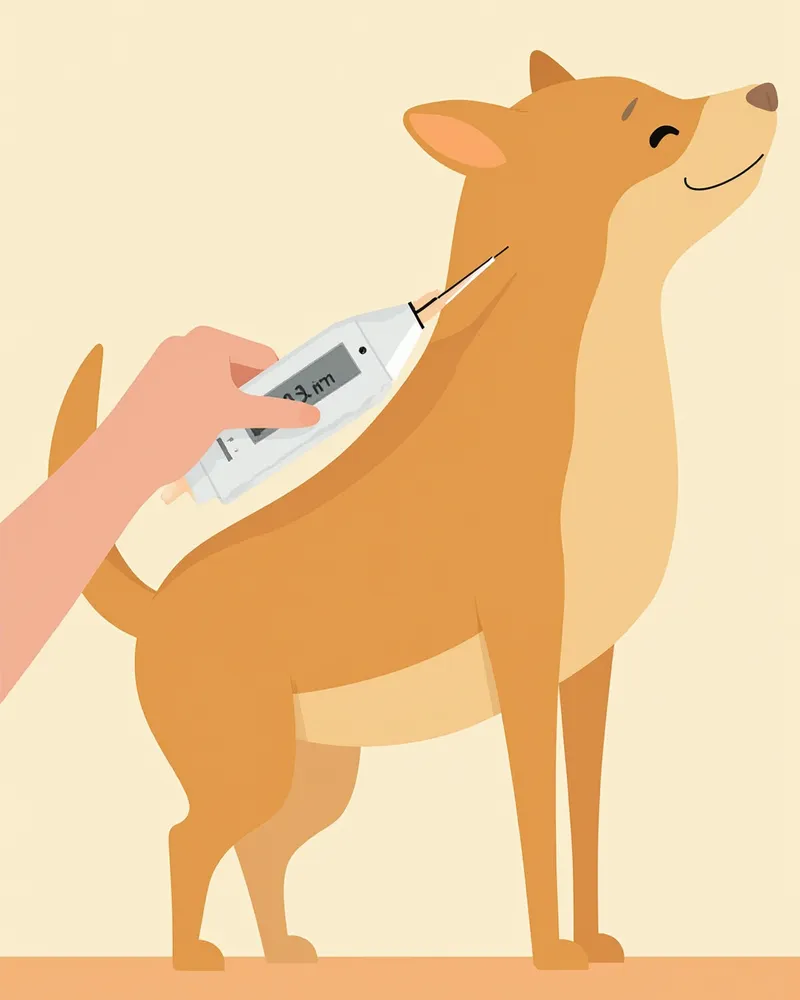
5 Steps to Measure Blood Glucose at Home — Ear and Paw Sampling Methods
What Is the Normal Blood Glucose Range for Dogs?
A dog’s normal fasting blood glucose level is approximately 70–120 mg/dL. Levels below 70 mg/dL may indicate hypoglycemia and should be evaluated accordingly, while consistently high blood glucose readings that significantly exceed the target range set by your veterinarian may require insulin adjustment. Since glucose meter readings can vary depending on the device, it is safest to assess your dog’s condition based on the target range prescribed by your veterinarian rather than relying on a single reading. During the first month, measuring blood glucose at the same time each day helps you understand your dog’s normal fluctuation range, enabling you to detect any abnormalities more quickly.
How to Create a 12-Hour Blood Glucose Curve

Signs of Hypoglycemia and Hyperglycemia and Immediate Response
These Values Require Immediate Visit to a 24-Hour Veterinary Hospital
If your pet is experiencing seizures, decreased consciousness, or loss of appetite for more than 12 hours, and blood glucose levels are below 50 mg/dL or above 400 mg/dL, this is an emergency. There is a high likelihood that a severe complication such as diabetic ketoacidosis is progressing. Rather than trying to determine the underlying cause, focus on keeping your pet warm and hydrated during transport. Record the time of the last insulin injection and the measured blood glucose values, and provide this information directly to the emergency veterinary team upon arrival.
Reviewed by a veterinarian

Dr. Tony — Punnawat Phongkittirak
VeterinarianA veterinarian who majored in veterinary medicine at Khon Kaen University, Thailand, and completed the IVSA program at North Carolina State University in the United States. Drawing on clinical experience at animal hospitals, he works in the pet healthcare field and is dedicated to building a digital care environment that connects pet parents with veterinarians.
Reviewed 2026-05-07
Home Blood Glucose Monitoring for Dogs — Frequently Asked Questions
How often should I check my dog’s blood sugar at home?
Can I use a human blood glucose meter?
My dog is terrified of having blood drawn. What should I do?
Is it normal for my readings to vary each time, even when I measure at the same time of day?
Can continuous glucose monitoring patches be used on dogs?
Share
Related Guides

Top 5 Prescription Dog Foods for Diabetes Recommended by Veterinarians — Blood Sugar-Stabilizing Food Comparison

7 Key Products for Managing Feline Hypercalcemia Recommended by Veterinarians and Selection Criteria

7 Key Points for Canine Thyroid T4 Testing by Veterinarians — From Timing to Result Interpretation

What Are Diabetic Cataracts in Dogs? — What Signs Appear Before Vision Loss

If Your Dog Can’t Keep Its Eyes Open — Causes of Corneal Ulcers and When to Visit the Vet

If You Suspect Your Dog’s Eye Has Perforated — Emergency Signs of Corneal Perforation and When to Seek Immediate Veterinary Care

What Is Canine Corneal Edema? — Causes of Cloudy Eyes and When to Visit the Vet

Frequently Asked Questions About Canine Conjunctivitis — Key Information for Pet Owners

If a Red Mass Protrudes from Your Dog’s Eye — Causes of Cherry Eye and When to Visit the Vet

Frequently Asked Questions on Caring for Blind Dogs and Cats — Key Points Owners Must Know
References
[1] Ettinger SJ, Feldman EC, Côté E. Textbook of Veterinary Internal Medicine, 8th Edition, Elsevier, 2017 — Canine Diabetes Mellitus chapter
[2] Reineke EL. Blood Glucose Monitoring and Glycemic Control. In: Advanced Monitoring for Small Animal Emergency and Critical Care, 2nd Edition
[3] Rand J, Gottlieb SA. Feline diabetes mellitus (glucometer calibration & home blood glucose curve methodology). In: The Cat, Clinical Medicine and Management, 2nd Edition
[4] Moretti S, Tschuor F, Osto M, et al. Evaluation of a novel real-time continuous glucose-monitoring system. J Vet Intern Med. 2010;24:120