
Like
Share
멍실장
고양이 신장 이식 자주 묻는 질문 Q&A — 보호자가 꼭 알아야 할 핵심

Is Kidney Transplantation in Cats Really Possible? — Surgical Criteria and Survival Rates

KidneyQ&AMeongsiljang Veterinary Advisory Board

Kidney transplantation in cats is one of the treatment options for end-stage renal disease. Here’s a summary of the key information pet owners need to know.

Kidney Transplantation in Cats Is One of the Treatment Options for End-Stage Renal Disease

A cat recovering after a kidney transplant
Kidney transplantation in cats is a surgical option considered for treating acute kidney injury or chronic kidney failure (end-stage CKD). The goal of treatment is to maintain a good quality of life if the transplant is successful. However, transplantation is not a cure for kidney disease, and the transplanted cat is still considered a CKD patient requiring lifelong management. The surgery is performed at specialized transplant centers, and immunological compatibility testing with the donor cat and strict patient selection are essential. Without immunosuppression, rejection can lead to death within 8 to 34 days, so lifelong immunosuppressive medication is necessary after the surgery. The longest reported survival period in veterinary literature is 13 years.

What Are the Indications and Criteria for Transplantation?

Kidney transplantation in cats is considered for end-stage chronic kidney disease (CKD) or acute kidney injury that cannot be controlled with medication. The decision to proceed with transplantation is based on a comprehensive assessment of the patient rather than a single metric, and it is reviewed when uremic symptoms such as loss of appetite, weight loss, and vomiting persist despite medical treatment. Before transplantation, a thorough evaluation of the urinary tract is essential, along with ruling out underlying infections or tumors. Cats that are FeLV/FIV positive, have recurrent urinary tract infections, uncontrolled hyperthyroidism, tumors, or are difficult to handle due to aggressive behavior are not good candidates. Conditions that could affect the transplanted kidney, such as amyloidosis or pyelonephritis, must also be carefully evaluated. Additionally, the owner’s ability to provide care and their financial situation are important factors in the assessment.
Results of the kidney transplant eligibility assessment for cats

What Is the Post-Transplant Survival Period and Recovery Process Like?

The survival period after a kidney transplant in cats varies significantly from one cat to another, with the longest reported survival time in veterinary literature being 13 years. It is difficult to determine an exact average survival period, as it largely depends on the success of the surgery and the level of post-operative care. Even transplanted cats are still considered CKD patients and require lifelong continuous monitoring. In the early post-operative period, close observation at the hospital is necessary, and appetite and activity levels gradually return during the recovery phase. - Initial Course: A normally functioning transplanted kidney typically enlarges during the first week after surgery and then gradually stabilizes. - Risk Factors for Rejection: Advanced age, intraoperative hypotension, and prolonged anesthesia time are risk factors associated with post-discharge survival. - Regular Check-ups: Kidney function should be monitored through blood and urine tests, and regular urine culture tests are also necessary due to cyclosporine treatment. Once this process stabilizes, the cat's quality of life improves.
A cat leading an active life after kidney transplantation

Pre- and Post-Transplant Comparison: Survival Period and Quality of Life

ItemMedication OnlyAfter Kidney Transplant
Survival TimeHighly variable between individualsHighly variable between individuals; longest reported survival of 13 years
Speed of Appetite RecoverySlowTends to recover
Normalization of Urine OutputOften unstableTends to recover
Activity Level & Quality of LifeLowImprovement is the goal once the transplant is established

A transplant is not a cure; even after transplant, lifelong CKD management and immunosuppressant medication are required, and survival time varies greatly depending on the patient's condition, surgical success, and level of care.

What Is the Most Important Aspect of Post-Transplant Care?

The cornerstone of post-transplant care is administering immunosuppressants exactly as prescribed. Missing doses or arbitrarily adjusting the dosage can trigger rejection; without immunosuppression, the transplanted kidney may be rejected within 8 to 34 days. Regular blood and urine tests are essential to monitor kidney function, and routine urine cultures are performed due to cyclosporine therapy. If high blood pressure is present, it must be managed consistently, and body weight should be monitored. Because immunosuppressed patients are vulnerable to infection, acute infections must be closely watched, and prophylactic antibiotics (such as clindamycin) may be used according to facility protocols to prevent toxoplasmosis. Dietary and fluid management should be determined in consultation with your veterinarian, following guidelines for kidney patients, and the owner’s consistent care is the key to success.
Medication and testing management after a cat's kidney transplant

Caution: Increased Risk of Infection After Transplantation

While taking immunosuppressants, your pet is highly susceptible to infections. If sudden fever, loss of appetite, lethargy, or difficulty breathing occurs, seek veterinary care immediately. Take precautions to avoid exposure to infections such as toxoplasmosis or FeLV/FIV, and avoid live vaccines during immunosuppressive therapy.

What Are the Costs of Transplantation and Is Insurance Coverage Available?
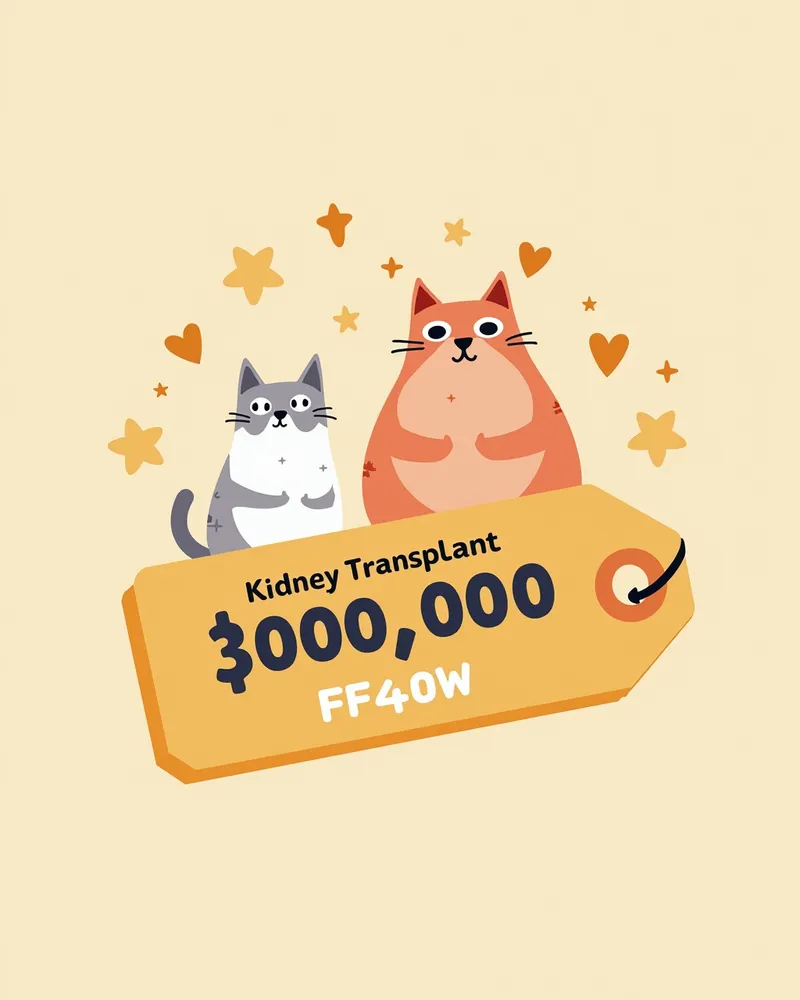
The total cost of a cat kidney transplant typically ranges from $18,000 to $29,000, covering surgery, hospitalization, medications, and routine check-ups. - Insurance Coverage: Some pet insurance plans cover transplant surgery, but it’s essential to carefully review the policy terms. - Coverage Scope: Be sure to confirm whether the plan includes medication and testing costs for at least one year before and after the surgery. - Financial Burden: Without insurance, the full cost can be substantial, so it’s important to plan your finances in advance. - Timing of Enrollment: If you’re considering a transplant, when you enroll in insurance matters greatly. Early enrollment often results in more favorable coverage terms. - Cost-Saving Strategies: Consult with your veterinary clinic to see if they offer additional support programs beyond standard insurance.
Guide to the Cost of Feline Kidney Transplants

Immediate Veterinary Visit Required for Signs of Transplant Rejection

Symptoms of kidney transplant rejection include loss of appetite, vomiting, lethargy, decreased urine output, and weight loss. Because these signs can be life-threatening, contact your veterinarian immediately if you notice them. Early detection and intervention are key to improving survival rates.

Reviewed by a veterinarian

Dr. Tony — Punnawat Phongkittirak

Dr. Tony — Punnawat Phongkittirak

Veterinarian

A veterinarian who majored in veterinary medicine at Khon Kaen University, Thailand, and completed the IVSA program at North Carolina State University in the United States. Drawing on clinical experience at animal hospitals, he works in the pet healthcare field and is dedicated to building a digital care environment that connects pet parents with veterinarians.

Frequently Asked Questions

Which cats are suitable candidates for a kidney transplant?
This option is considered for cats with end-stage renal disease where medication is ineffective and whose overall health is sufficient to withstand surgery. Conversely, cats with recurrent urinary tract infections, FeLV/FIV, tumors, or difficult-to-manage temperaments are not good candidates.
Do I need to give my pet immunosuppressants for life after a transplant?
Yes, a transplant is not a cure; lifelong medication is required to prevent rejection of the transplanted kidney. Without immunosuppressive therapy, the transplanted kidney may be rejected within 8 to 34 days, so stopping the medication can lead to serious complications.
Can a cat develop kidney disease again after a transplant?
Even cats that have received a kidney transplant should still be considered CKD patients and require lifelong monitoring. Regular blood and urine tests, along with urine cultures, can help detect any issues early on.
How do you find a cat for donation?
Specialized transplant centers recruit donor cats or identify suitable donors through immunological testing.
Can a cat return to a normal life after a transplant?
As your cat recovers, their appetite and activity levels will gradually return, and if the transplant takes hold well, their quality of life will improve. However, even after a successful transplant, your cat will need lifelong management of chronic kidney disease (CKD) and regular use of immunosuppressive medications.

Share

Related Guides

References

[1] Langston, C.E. et al. (2023) Small Animal Critical Care Medicine, 3rd Edition. Elsevier.

[2] The Cat, Clinical Medicine and Management, 2nd Edition (2022). Elsevier.

[3] Veterinary Workbook of Small Animal Clinical Cases (2021). Case 28: Chronic Kidney Disease in Cats.

This information is based on veterinary literature and does not replace diagnosis or treatment. Please consult a veterinarian for specific health concerns.

Metapet Co., Ltd. | CEO: Park Sung-yong | Business Reg. No. 417-88-02562 | Seoul, South Korea | Customer Center

Is a Kidney Transplant in Cats Possible? Criteria and Survival | Meongsiljang