

What is Canine Cognitive Dysfunction? — How to Spot Early Signs of Dementia
Veterinary answers to the most common questions from owners of senior dogs with canine cognitive dysfunction (CCD). We’ve summarized the essentials, from distinguishing symptoms to diagnosis, treatment, and home care.
What is Canine Cognitive Dysfunction?
What Symptoms Appear?

How to Distinguish Between Normal Aging and Cognitive Dysfunction
Comparison of Symptoms by Stage of Cognitive Dysfunction
| Item | Mild (Early) | Moderate | Severe (Late) |
|---|---|---|---|
| Sense of direction | Occasional pausing | Frequently gets lost | Persistent confusion |
| Sleep pattern | Slight change | Day-night reversal | Severe insomnia/wandering |
| Toileting accidents | Occasional | Frequent | Complete loss of house-training |
| Recognition of family | Normal | Slightly reduced | Fails to recognize |
| Activity level | Slightly reduced | Moderately reduced | Severe lethargy |
Staging is ultimately determined by a veterinarian based on clinical findings
How Is Diagnosis Made?
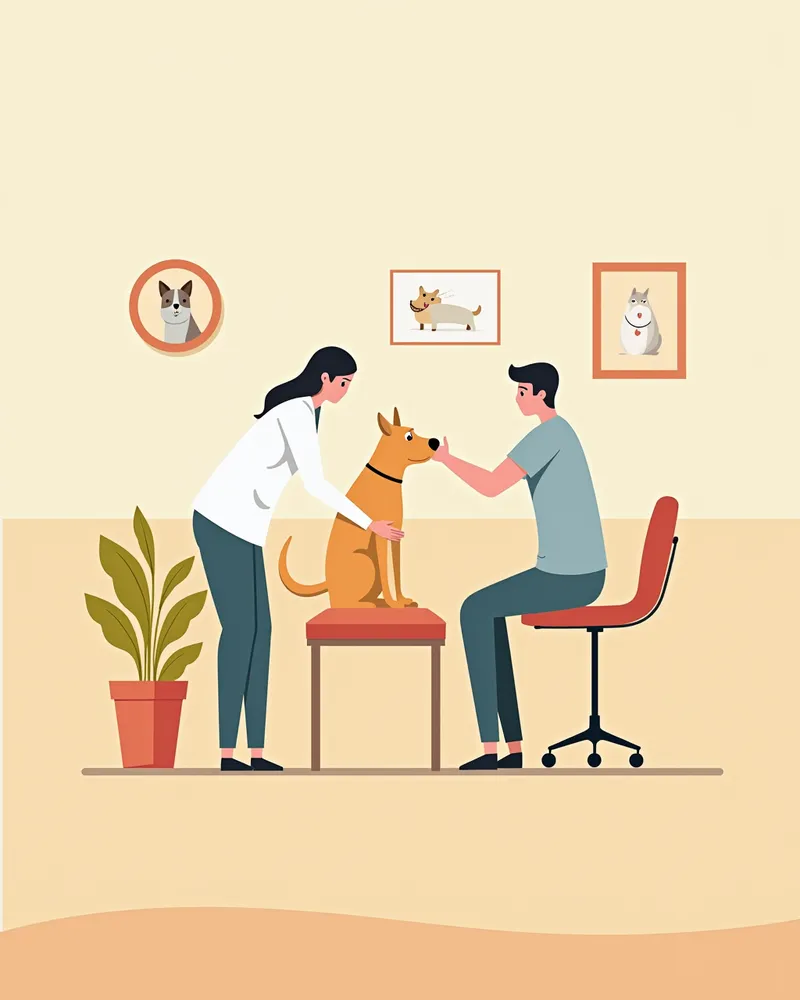
Visit a Veterinary Clinic Immediately If You See These Symptoms
The symptoms below may indicate an emergency neurological condition rather than CCD. Please visit a veterinary clinic immediately. • Sudden onset of seizures or convulsions • Eyes deviated to one side or head tilting (torticollis) • Weakness in the legs or inability to walk properly • Symptoms worsened significantly within 24 hours
What Are the Treatment Options?

How to Manage at Home?
What Owners Must Know
Canine cognitive dysfunction (CCD) is a progressive condition. The goal of treatment is not to cure the disease, but to maintain your dog’s quality of life. If your dog shows reduced responsiveness or behaves as if they don’t recognize you, it’s not their fault. Avoid scolding or isolating them; instead, providing a calm and stable environment is most important. Since this can be an emotionally challenging time for you as well, we recommend maintaining open and ongoing communication with your veterinarian.
Reviewed by a veterinarian

Dr. Tony — Punnawat Phongkittirak
VeterinarianA veterinarian who majored in veterinary medicine at Khon Kaen University, Thailand, and completed the IVSA program at North Carolina State University in the United States. Drawing on clinical experience at animal hospitals, he works in the pet healthcare field and is dedicated to building a digital care environment that connects pet parents with veterinarians.
Reviewed 2026-06-01
Frequently Asked Questions
At what age do dogs typically start showing signs of cognitive dysfunction?
Could my dog’s nighttime wandering and barking be caused by cognitive dysfunction?
Are there any supplements or foods that are good for cognitive dysfunction?
How much exercise should I give my dog with cognitive dysfunction?
What should I do if my pet starts not recognizing family members?
Share
Related Guides

7 Behavioral Enrichment Strategies for Mental Stimulation Recommended by Veterinarians

Top 5 Calming Supplements for Dogs and Cats in 2026

L-Theanine Effects and Calming Support

Pet Wearable Technology: From Types to Selection Guide
Surgical Abbreviation Dictionary — Essential Abbreviations for Pet Owners
Lab Report Abbreviation Dictionary: How to Read Your Pet’s Test Results

How does the pet traffic accident compensation process work?
What Is a Veterinary Technician? A Complete Guide to Their Roles and How to Become One
Long-Distance Car Safety (1, 3, and 8 Hours)

The Ultimate Guide to Domestic Flight Procedures for Dogs and Cats
References
[1] Landsberg, G., Nichol, J., and Araujo, J.A., Cognitive Dysfunction Syndrome: A Disease of Canine and Feline Brain Aging, Veterinary Clinics of North America: Small Animal Practice, 42(4), 2012
[2] Head, E., Brain aging in dogs: parallels with human brain aging and Alzheimer's disease, Veterinary Therapeutics, 2(3), 2001
[3] Halls, V. et al., Introduction to Animal Behavior and Veterinary Behavioral Medicine, Wiley Blackwell, 2022
[4] Fascetti, A.J. and Delaney, S.J. (eds.), Applied Veterinary Clinical Nutrition, 2nd Ed, Wiley Blackwell, 2021
[5] National Research Council, Nutrient Requirements of Dogs and Cats, National Academies Press, 2006