

When to Start Weaning Kittens? — Step-by-Step Dietary Transition Guide by Week (2–7 Weeks)
We’ve outlined step-by-step dietary transition methods and precautions for kittens during the weaning period from 2 to 7 weeks of age. Learn how to prepare weaning food and address common issues all in one place.
What Is the Weaning Period in Kittens?
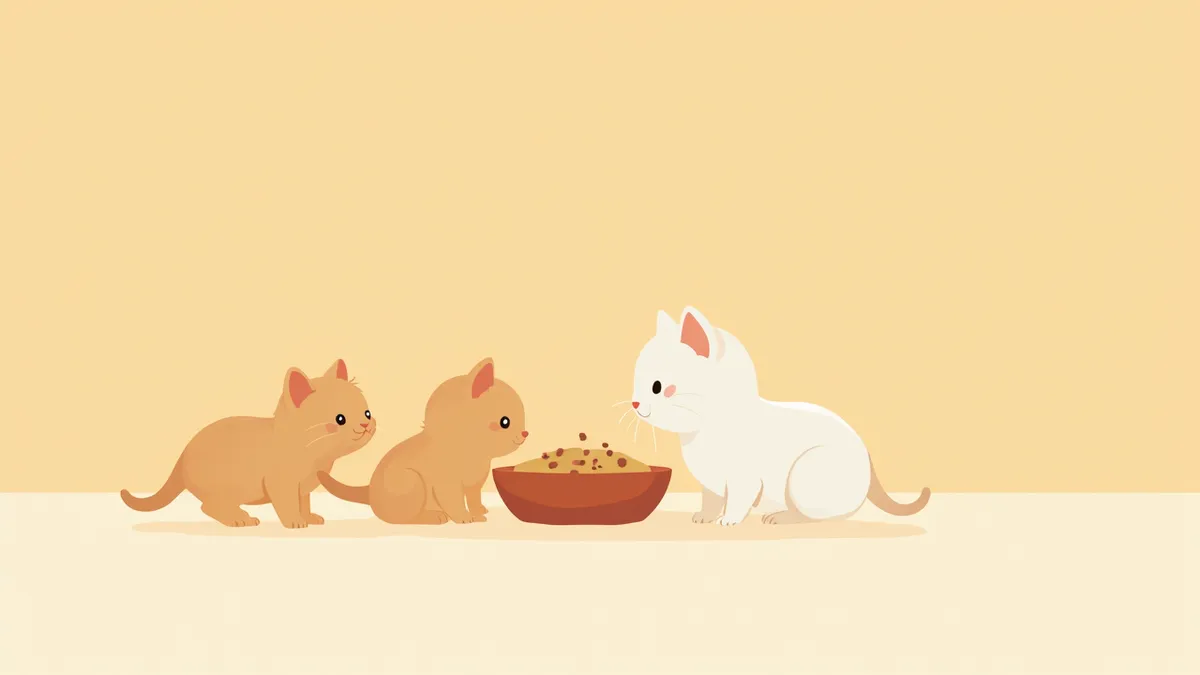
When Does Weaning Begin?
Weekly Dietary Transition Schedule
| Item | 2-3 weeks | 4 weeks | 5 weeks | 6 weeks | 7-8 weeks |
|---|---|---|---|---|---|
| Main food | Mother's milk or formula 100% | Formula 80% + weaning food 20% | Formula 50% + weaning food 50% | Formula 20% + weaning food 80% | Solid food 100% |
| Feeding frequency | Every 2-3 hours | 4-5 times/day | 4 times/day | 4 times/day | 3-4 times/day |
| Weaning food form | None | Porridge mixed with formula | Thin porridge with added water | Slightly moist kibble | Dry kibble + water or wet food |
| Weight change | Check for steady daily increase | Check for steady daily increase | Check for steady daily increase | Check for steady daily increase | Check for steady daily increase |
There is individual variation, so it's fine to stay at a stage 1-2 days longer while watching the kitten's response
How to Prepare Weaning Food

What to Absolutely Avoid During the Weaning Period
Never give kittens human milk, soy milk, raw meat, or adult cat food. Human milk can cause lactose intolerance, leading to diarrhea and dehydration, while adult cat food lacks sufficient protein, calcium, and DHA, which can result in developmental delays. Additionally, mixing formula with boiling water or serving it too cold can irritate the stomach and cause hypothermia. Always mix formula with lukewarm water, and do not leave prepared food out for more than two hours; instead, prepare fresh portions as needed.
What to Do If Your Kitten Refuses Weaning Food

Key Points to Monitor During the Weaning Period
Seek Immediate Veterinary Care If You Notice These Symptoms
Seek immediate veterinary care if watery diarrhea persists for more than six hours, if your kitten refuses to eat for over twelve hours, if you notice weight loss, or if the gums appear pale, wet, and cold. Kittens are particularly vulnerable because their small size allows dehydration and hypoglycemia to progress to life-threatening conditions within hours. This is especially urgent if your kitten is vomiting milk or starter food and becoming lethargic. While transporting your kitten to the clinic, keep them warm by wrapping them in a warm towel, and apply one or two drops of honey water to their gums to help prevent hypoglycemia.
Reviewed by a veterinarian

Dr. Tony — Punnawat Phongkittirak
VeterinarianA veterinarian who majored in veterinary medicine at Khon Kaen University, Thailand, and completed the IVSA program at North Carolina State University in the United States. Drawing on clinical experience at animal hospitals, he works in the pet healthcare field and is dedicated to building a digital care environment that connects pet parents with veterinarians.
Reviewed 2026-04-26
Frequently Asked Questions
When should orphaned kittens start transitioning to solid food?
Which is better to start with, wet or dry food?
When should you start offering water separately to a nursing kitten?
My puppy has had a brief episode of diarrhea. Is that okay?
Can I switch my cat to adult cat food right after the kitten stage ends?
Share
Related Guides

My Senior Cat Won’t Eat — A Complete Guide to Choosing Food for Cats with Weak Digestion

Top 5 Recommended Single-Protein Prescription Diets for Cats with Allergies — A Comparison Guide for Hydrolyzed and Novel Protein Diets
Top 5 Prescription Diets for Feline Pancreatitis Recommended by Veterinarians — Low-Fat, Highly Digestible Food Guide

What Is Canine Disc Surgery? — From Hemilaminectomy Procedure to Recovery
What is a Cystotomy in Cats? — From Preoperative Preparation to Recovery at a Glance

Corrective Surgery for Brachycephalic Airway Syndrome (BOAS)
Tumor Resection: What Are the Methods? — Why Margins Determine Recurrence

What is Feline Toxoplasmosis? — Risk of Human Infection and Prevention Guidelines

Complete Guide to IRIS Stages of Feline Chronic Kidney Disease
Stage-by-Stage Symptoms and Treatment Options for Feline Megacolon
References
[1] Little, S.E., The Cat: Clinical Medicine and Management, 2012, Chapter Pediatrics
[2] National Research Council, Nutrient Requirements of Dogs and Cats, 2006
[3] Hoskins, J.D., Veterinary Pediatrics: Dogs and Cats from Birth to Six Months, 3rd Ed