Like
Share
멍실장
고양이 우다다(좀비스) 원인과 대처법

Causes of Cat Zoomies and How to Handle Them

Brain & CognitionQ&AMeongsiljang Veterinary Advisory Board

We’ve put together a guide on why cats suddenly sprint around the house in what’s known as the “zoomies,” how to tell whether this behavior is normal or abnormal, and tips for pet owners on how to respond.

What Are Cat Zoomies?

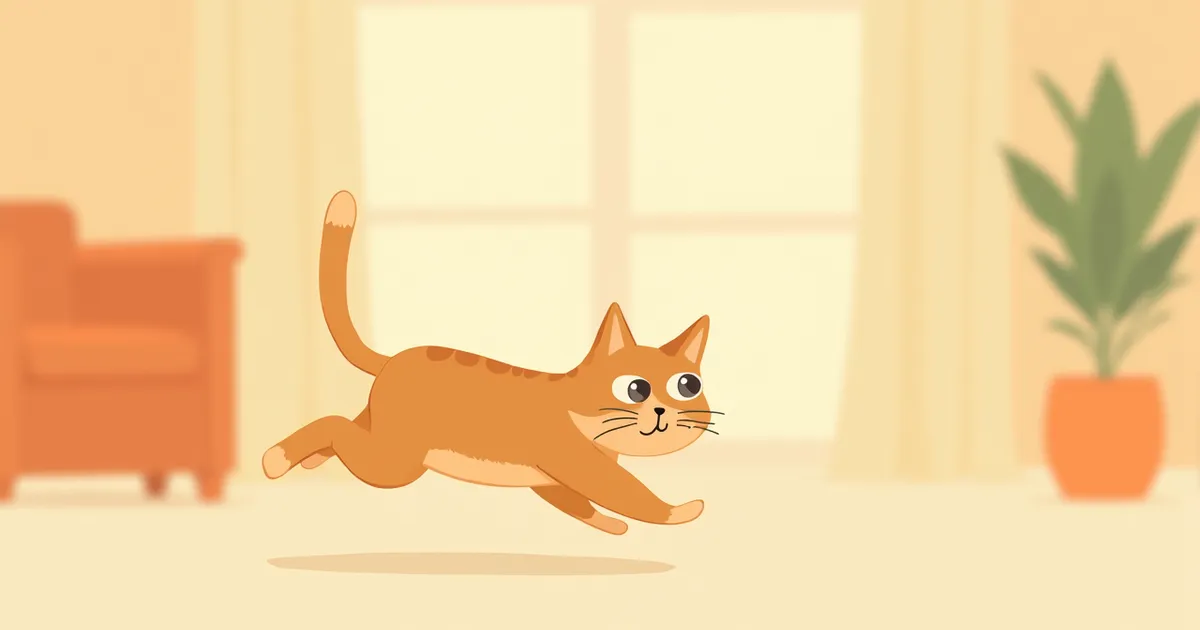
A cat sprinting across the living room floor
The "zoomies" (also known as FRAPs, or Frenetic Random Activity Periods) in cats are a normal behavioral phenomenon where pent-up energy is released in a sudden burst. The most important thing to remember is that this is usually not a problem. If the behavior subsides naturally within a short time and your cat returns to their usual routine, it is a sign of good health. However, if the episodes occur abnormally frequently or are accompanied by vocalizations, disorientation, or persistent hyperactivity, you should consult a veterinarian to rule out potential issues such as hyperthyroidism or neurological disorders.

Why Do They Suddenly Run Around?

Cats are naturally crepuscular hunters, meaning their biological rhythms are tuned to peak activity at dawn and dusk. Indoor cats, lacking opportunities to hunt, often release their built-up energy in sudden bursts, which can manifest as frantic running. Additionally, it’s quite common for cats to run shortly after using the litter box or eliminating. This behavior stems from an instinctual drive to quickly leave the area after defecating, a trait inherited from their wild ancestors who avoided leaving traces for predators.

Main Causes of Zoomies

The causes of a cat’s zoomies can be broadly divided into six categories. Check the table below to learn about the characteristics of each cause and whether it’s considered normal.

Comparison of Zoomie Causes

ItemNormalWatch closelyVeterinary visit
Releasing energy
Hunting instinct (dawn & evening)
Running after defecation
Hyperthyroidism
Fleas & skin itching
Cognitive dysfunction (senior cats)

If 'watch closely' persists for 1–2 weeks, a veterinary visit is recommended

Normal Zoomies vs. Abnormal Signs

Normal zoomies follow a short, predictable pattern. Use the checklist below to compare your cat’s behavior. - Normal duration: Stops on its own after a short burst and returns to calm - Normal frequency: A few times a day, mostly during dawn or dusk activity periods - Normal recovery: Drinks water or grooms itself as usual after the burst - Abnormal sign: Runs for a long time or cannot stop on its own - Abnormal sign: Accompanied by vocalizing, dilated pupils, or head-banging against walls - Abnormal sign: New-onset nighttime zoomies in senior cats (11 years or older)
A cat resting calmly after activity

When to Go to the Vet Immediately

If additional symptoms appear, the behavior may indicate an underlying medical condition rather than simple playfulness. In senior cats, sudden hyperactivity and nighttime vocalization can be signs of hyperthyroidism. Veterinary textbooks describe hyperthyroidism as a classic endocrine disorder that increases appetite, so it is important to monitor for weight loss despite normal or increased food intake. If your cat has a ravenous appetite but is losing weight, and exhibits loud nighttime crying or persistent hyperactivity, schedule an internal medicine consultation as soon as possible. Additionally, if your cat obsessively scratches its skin or chews at its tail while running around, suspect skin issues such as flea infestations or allergic dermatitis and seek veterinary care for these symptoms as well.

How Owners Can Respond

You can’t—and shouldn’t try to—completely stop the zoomies. Instead, the key is to strategically channel that energy. - Two hunting play sessions daily: Use a wand toy for 15 minutes each session, with one session mandatory before bedtime. - Provide vertical space: Let your cat climb and descend on cat trees and shelves to build up exercise. - Use puzzle feeders: Turn mealtime into a hunting activity. - Maintain a consistent feeding schedule: Feed your cat before the zoomies typically strike to establish a “hunt → eat → sleep” rhythm. - Dim the lights at night: To reduce nighttime activity, keep the environment darker starting in the evening.
A pet owner playing with their cat using a fishing rod toy

Senior Cat Zoomies Require a Different Perspective

If a cat aged 11 or older suddenly starts howling and running around in the early hours of the morning, it is likely not just a release of energy. Veterinary textbooks classify cats as senior between the ages of 11 and 14, and geriatric at 15 and older, noting that during these stages, multiple conditions can overlap and present with complex symptoms. In particular, hyperthyroidism is a representative endocrine disorder of old age characterized by increased appetite alongside changes in overall condition; therefore, if excessive activity and nighttime vocalization have newly appeared, this condition should be considered. In such cases, a comprehensive evaluation including thyroid hormone levels, blood pressure, and kidney function is necessary to identify the exact cause. The approach differs significantly from that for young cats.

Environment Check to Prevent Injuries During Zoomies

While the zoomies itself is perfectly healthy, injuries from slipping or colliding during high-speed runs are quite common. Hardwood and tile floors pose a risk of slipping and injury due to their slick surfaces. Please place rugs or non-slip mats along the pathways in hallways and living rooms. Additionally, move vases and glass ornaments into cabinets, and replace window screens with lockable ones to prevent falls.

Reviewed by a veterinarian

Dr. Tony — Punnawat Phongkittirak

Dr. Tony — Punnawat Phongkittirak

Veterinarian

A veterinarian who majored in veterinary medicine at Khon Kaen University, Thailand, and completed the IVSA program at North Carolina State University in the United States. Drawing on clinical experience at animal hospitals, he works in the pet healthcare field and is dedicated to building a digital care environment that connects pet parents with veterinarians.

Frequently Asked Questions

How many times a day is it normal for a cat to urinate?
Even if it happens several times a day, it’s considered normal as long as it stops naturally within a short time and your pet returns to their usual routine afterward. However, if the episodes become unusually frequent or persist without stopping on their own, it’s best to have your pet checked at a veterinary clinic.
Is it okay if my pet always licks its anus after defecating?
Yes, this is a very common and normal behavior. It is believed to be a remnant of the instinct to quickly leave the defecation area in the wild. However, if your pet cries out immediately after coming out of the litter box, there may be a possibility of cystitis or constipation, so please also check their defecation condition.
My pet’s nighttime barking at 3–4 a.m. is keeping me from sleeping. What should I do?
Engaging your cat in 15 minutes of hunting play right before bedtime, followed immediately by dinner, establishes a “hunt-eat-sleep” cycle. This is the most effective way to reduce early morning restlessness.
My senior cat has suddenly started pacing around. Is this normal?
Please be cautious. New-onset hyperactivity in cats aged 11 years or older may signal hyperthyroidism, hypertension, or cognitive dysfunction syndrome (CDS). For safety, we recommend an internal medicine consultation for T4 hormone testing and blood pressure measurement.
Is it dangerous if my pet bumps into walls or furniture while walking in circles?
Running at full speed without a clear view can lead to injuries. Place non-slip mats and remove any hazardous objects. If your pet limps or cries out when touched after a collision, seek veterinary care promptly.

Share

Related Guides

References

[1] Ellis, S.L.H. et al., Feline Behavioral Health and Welfare, Elsevier, 2015

[2] Rodan, I. & Heath, S., Feline Behavioral Medicine, Chapter on Normal Feline Behavior, 2016

[3] Bradshaw, J.W.S., The Behaviour of the Domestic Cat, 2nd Ed, CABI, 2012

This information is based on veterinary literature and does not replace diagnosis or treatment. Please consult a veterinarian for specific health concerns.

Metapet Co., Ltd. | CEO: Park Sung-yong | Business Reg. No. 417-88-02562 | Seoul, South Korea | Customer Center

Why Cats Zoom: Causes of Sudden Running Bursts and How to Respond | Meongsiljang