Like
Share
멍실장
강아지 반려동물 연령 환산 공식 자주 묻는 질문 Q&A — 보호자가 꼭 알아야 할 핵심

Dog Age Conversion Formula FAQ — Key Points Every Owner Must Know

Lifestyle & Age CareQ&AMeongsiljang Veterinary Advisory Board

To accurately determine your dog’s true age, you need to consider their biological age, which varies by breed and body size, rather than relying on the simplistic “1 year equals 7 human years” formula. We’ve summarized the key points in this article.

The Dog Age Conversion Formula Is Not Simply 1 Year = 7 Years
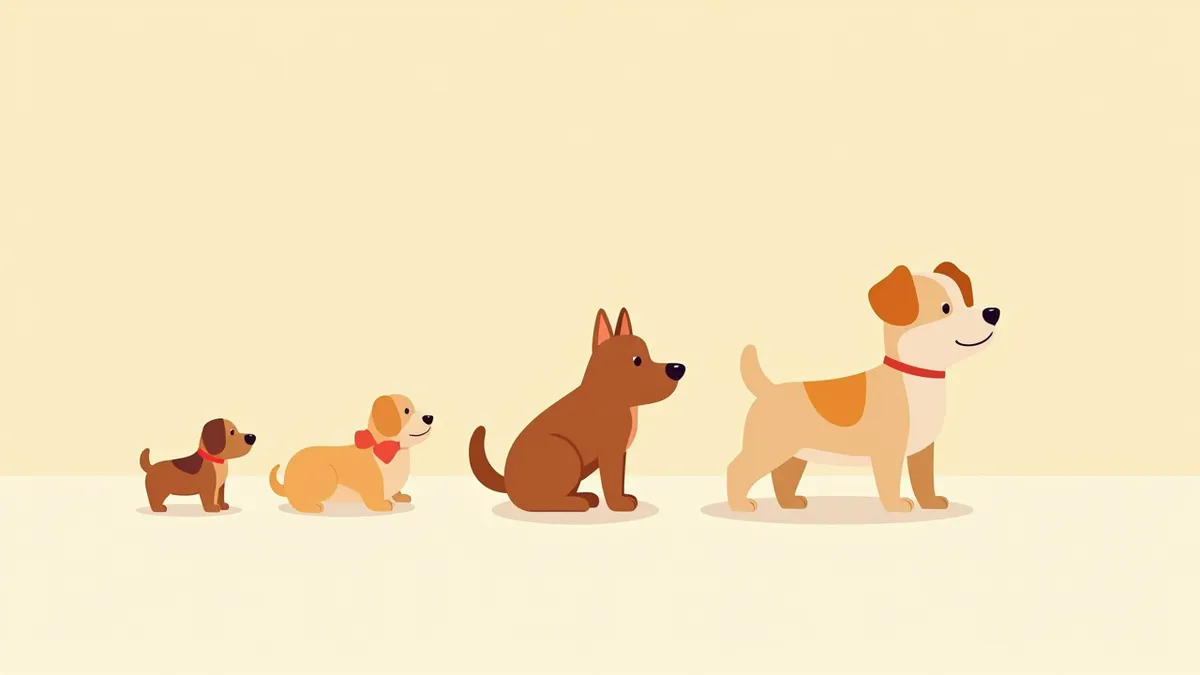
A visualization graph showing the changes in biological age by dog breed
A dog’s actual biological age varies significantly depending on its breed and body weight. - Small breeds: Their smaller size generally correlates with a longer average lifespan and a relatively slower rate of biological aging. As a result, small dogs tend to enter their senior years later than large dogs. - Medium breeds: These dogs have an intermediate average lifespan and a corresponding moderate rate of biological aging. It is important to carefully monitor for signs of aging as they grow older. - Large breeds: Large dogs typically have a shorter average lifespan and a faster rate of biological aging. Therefore, it is crucial to begin senior care earlier than for small dogs, even at the same chronological age. A comprehensive assessment considering breed, body weight, and overall health status is essential. Failing to account for these differences in aging rates across breeds and sizes can lead to inaccurate health assessments. Consequently, the simple “one human year equals seven dog years” formula is not reliable.

Why Is the 1 Year = 7 Years Formula Incorrect?

This formula starts from the mistaken assumption that all dogs age at the same rate. However, veterinary literature indicates that large-breed dogs generally have shorter lifespans and age more quickly than small-breed dogs. For example, while an 11-year-old large-breed dog is already considered very senior, an 11-year-old small-breed dog may still be in late middle age, highlighting a significant difference. Additionally, dogs grow much faster than humans, typically reaching sexual maturity and adult body size by around one year of age. Because the rate of aging varies depending on breed and body size, a single formula cannot accurately determine a dog’s age. Therefore, pet owners should evaluate their dog’s age by comprehensively considering breed, weight, and overall health status.
A visual example comparing the biological age differences between small and large dog breeds.

The Key Criteria for Dog Age Conversion Are Breed and Body Weight

To determine a dog’s true biological age, breed and body weight are the most important factors. Small breeds (3–10 kg): With longer average lifespans, they tend to enter their senior years later, so it’s best to gradually begin senior health care around age 10. Medium breeds (10–25 kg): Their aging rate is moderate, making preventive care increasingly important depending on their health status. Large breeds (over 25 kg): Due to shorter average lifespans and faster biological aging, they may enter their senior years earlier than smaller dogs, making early senior care essential. These differences stem from variations in biological aging rates, meaning simple chronological age calculations are insufficient. Therefore, referring to breed-specific age conversion charts or consulting with a veterinarian provides more accurate guidance.
A veterinarian assessing a dog’s age based on its breed and weight during a consultation.

Dog Age Conversion: Actual Age Comparison Chart by Breed

Item1 year5 years10 years15 years
Small dogs (3–10 kg)Sexual maturityAdulthoodAround entering the senior stageGeriatric stage
Medium dogs (10–25 kg)Sexual maturityAdulthoodSenior stageGeriatric stage
Large dogs (25 kg or more)Sexual maturityAdult/middle ageGeriatric stageBeyond life expectancy (rare)

This table conservatively estimates the life stages by dog age group, reflecting differences in aging rate by breed and body size. Aging rate varies greatly between individuals and does not apply equally to all dogs, so an accurate assessment requires a veterinary examination.

Using Dog Age Conversion Makes Preventive Care Much More Effective

Understanding your dog’s life stages helps you time vaccinations, health check-ups, and dietary adjustments more appropriately. For example, a 10-year-old large-breed dog is already considered senior in terms of average lifespan, so you may need to monitor areas like the heart and joints more closely. Older dogs often develop multiple health issues simultaneously. In contrast, a 10-year-old small-breed dog may still be in an active phase. Tailoring care based on biological age can aid in the early detection and prevention of diseases, and enable you to share more accurate information during veterinary consultations. Therefore, age conversion is not just about numbers—it’s a valuable tool for managing your dog’s health.
Preventive health care scenarios tailored to your dog’s biological age

Caution: The 1 Year = 7 Years Formula Has No Scientific Basis

This equation is simply a misconception and should not be used to assess a dog’s health. Accurate age assessment requires a comprehensive evaluation of breed, weight, and overall health status.

How to Accurately Determine Your Dog’s Biological Age

To determine your dog’s biological age, you should evaluate it based on breed and weight. - Small breeds: Due to their smaller size, they tend to have longer lifespans. Around 10 years of age, they gradually enter the senior stage. Their rate of biological aging is relatively slow. - Medium breeds: They have an average lifespan, so it is important to closely monitor the transition into the senior stage. Regular health checks are essential. - Large breeds: They have shorter lifespans and age biologically faster, often entering the senior stage earlier than small breeds. Therefore, early senior care is crucial. This difference stems from variations in the rate of biological aging, making simple chronological age calculations unreliable. For the most accurate assessment, consult your veterinarian or refer to breed-specific age conversion charts. Accurately understanding your dog’s age is the first step in proper health management.
A conversation between a pet owner using an app to calculate their dog's biological age and a veterinarian.

Reviewed by a veterinarian

Dr. Tony — Punnawat Phongkittirak

Dr. Tony — Punnawat Phongkittirak

Veterinarian

A veterinarian who majored in veterinary medicine at Khon Kaen University, Thailand, and completed the IVSA program at North Carolina State University in the United States. Drawing on clinical experience at animal hospitals, he works in the pet healthcare field and is dedicated to building a digital care environment that connects pet parents with veterinarians.

Frequently Asked Questions

How many human years does one year of a dog’s life equal?
It varies depending on the breed and weight. While small and large dogs generally age at different rates, there’s no exact formula to say “one dog year equals exactly X human years.” As a reference, small dogs tend to live longer and enter their senior years later compared to larger breeds.
Why is the “1 dog year equals 7 human years” formula inaccurate?
Not all dogs age at the same rate. Large breeds tend to age faster than small breeds and have shorter average lifespans. Additionally, dogs grow much faster than humans, reaching adult size by around one year of age.
How can you determine your dog’s actual age?
Please consult with your veterinarian or refer to reliable veterinary resources, taking into account your pet’s breed, weight, and overall health. Assessing biological age goes beyond simple numbers—it requires a comprehensive evaluation.
When should you start managing the health of an aging dog?
It varies depending on breed, weight, and biological age. While senior care is generally recommended starting around 7–8 years for large-breed dogs and 10 years for small-breed dogs, a veterinarian’s assessment is needed to determine the precise timing.
Where can I find a chart that converts dog years to human years?
You can refer to materials provided during veterinary consultations or information from reputable veterinary websites. In particular, information about breed-specific aging rates can be very helpful.

Share

Related Guides

References

[1] Salt, C., Morris, P.J., German, A.J. et al. (2017) Growth standard charts for monitoring bodyweight in dogs of different sizes. PLOS ONE 12, e0182064.

[2] Hofman, J.M., Creevy, K.E. and Promislow, D.E.L. (2013) Reproductive capability is associated with lifespan and cancer risk in dogs. Nature Communications 4, 1577.

[3] Harper, E.J., Hackett, R.M., Wilkinson, J. et al. (2003) Age-related variations in hematologic and plasma biochemical test results in Beagles and Labrador retrievers. J. Am. Vet. Med. Assoc. 223: 1436.

This information is based on veterinary literature and does not replace diagnosis or treatment. Please consult a veterinarian for specific health concerns.

Metapet Co., Ltd. | CEO: Park Sung-yong | Business Reg. No. 417-88-02562 | Seoul, South Korea | Customer Center

Dog Age Conversion Formula FAQ: Key Points for Owners | Meongsiljang