
Like
Share
멍실장
고양이 촌충(테이프웜) 자주 묻는 질문 Q&A — 보호자가 꼭 알아야 할 핵심

Cat Tapeworm (Tapeworm) Frequently Asked Questions Q&A — Key Information Pet Owners Must Know

Infection/ParasitesQ&AMeongsiljang Veterinary Advisory Board

Cat tapeworms are a common parasitic infection, typically contracted through exposure to household flies or ticks. Here’s a summary of the key information pet owners should know.

What Are Cat Tapeworms (Tapeworms)?

Magnified image of a cat’s tapeworm segments, showing small ring- and rod-shaped structures.
Tapeworms are intestinal parasites that live in a cat’s small intestine, with Dipylidium caninum and Taenia taeniaeformis being the most common species. These worms appear as small, white or cream-colored segments (proglottids) that may be found on the floor after defecation or attached to the fur around the cat’s anus or tail, resembling grains of rice. Infection with Dipylidium caninum occurs when a cat accidentally ingests an intermediate host, such as a flea (specifically the cat flea, Ctenocephalides felis), during grooming. Taenia taeniaeformis infection happens when a cat hunts and consumes prey like rodents or birds. Therefore, fleas and hunted prey, rather than flies or ticks, are the primary routes of infection. While many infected cats show mild or no symptoms, signs such as weight loss or changes in bowel habits like diarrhea can occur, making early diagnosis and treatment essential.

What Are the Main Causes of Cat Tapeworm Infection?
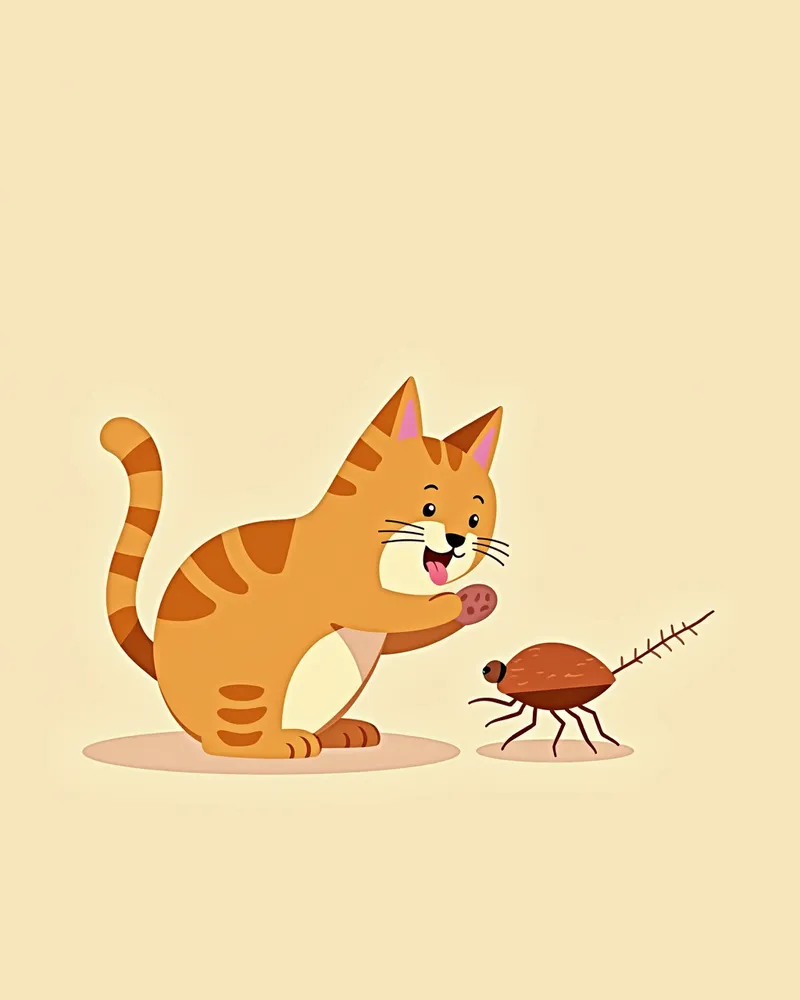
The most common way cats become infected with tapeworms is by accidentally swallowing fleas, which serve as intermediate hosts. Specifically, the cat flea (Ctenocephalides felis)—not ticks or flies—acts as the intermediate host for Dipylidium caninum. When flea larvae ingest tapeworm eggs shed in the environment, those eggs develop into infective larvae (cysticercoids) inside the flea. If a cat swallows an infected flea while grooming, the larvae mature into adult tapeworms in the small intestine, initiating the infection. Additionally, cats that hunt or eat rodents or birds outdoors may become infected with other tapeworm species, such as Taenia taeniaeformis. The risk of infection increases with inadequate flea control or frequent hunting and consumption of outdoor prey, making preventive measures like flea treatment and environmental management essential.
A scene showing a tick jumping onto a cat while it licks its paw, and a close-up view of tapeworm eggs inside the tick.

What Are the Main Symptoms of Cat Tapeworms?

The most common sign of tapeworm infection in cats is the passage of small, white or cream-colored segments during defecation. These segments resemble grains of rice and may even move. - Segments found during defecation: White fragments may be seen falling onto the floor or in the feces. - Increased scooting or scratching around the tail: The irritation caused by the parasites can lead to repeated scratching or scooting. - Decreased appetite: Tapeworms residing in the small intestine can interfere with normal digestive function. - Weight loss: Impaired nutrient absorption may result in weight loss. In most cases, symptoms are mild and easy to overlook, making regular veterinary check-ups essential.
A cat sitting on a carpet with small white tapeworm segments near its tail

When to Seek Immediate Veterinary Care

If your cat experiences significant weight loss, repeated vomiting, or the persistent passage of large, segmented segments in its stool, seek veterinary care immediately. Tapeworms can migrate upward from the intestines to the stomach, triggering vomiting, and young cats with a high parasite burden are particularly at risk of deteriorating nutritional status. Be especially vigilant if diarrhea or constipation accompanies these signs, or if your cat appears lethargic and reluctant to move. The more severe the symptoms, the greater the benefit of early diagnosis and treatment for recovery, so it is best to visit a clinic as soon as possible.

How Is Cat Tapeworm Treated?

Tapeworm treatment in cats involves deworming medication prescribed by a veterinarian. Drugs such as praziquantel target both adult tapeworms and immature stages (larvae), damaging the parasite’s cuticle to cause paralysis and digestion, allowing natural expulsion from the intestines. The medication is available as oral tablets or topical spot-on formulations applied to the back, with dosages adjusted according to the cat’s body weight. However, if the underlying causes of tapeworm infection—such as fleas or hunting prey—are not addressed, reinfection can occur. Therefore, follow-up examinations may be necessary after treatment, and it is important to consult your veterinarian to determine the proper administration method and re-dosing schedule.
A scene of a veterinarian administering deworming medication to a cat, including a close-up image of the medication.

Management Methods to Prevent Reinfection

To prevent reinfection, environmental management and regular prevention are essential. First, clean your cat’s living space and ensure that tapeworm segments (proglottids) or flea eggs and larvae do not remain on carpets, bedding, or floors. Most importantly, controlling the intermediate host—fleas—is critical. This is because Dipylidium caninum reinfection can only be prevented by eliminating fleas. Additionally, limiting your cat’s hunting or consumption of prey caught outdoors is effective in reducing the risk of Taenia tapeworm reinfection. Finally, since deworming and prevention schedules vary depending on your cat’s living environment and infection risk, it is safest to follow the regular management plan set by your veterinarian.
Regular environmental cleaning: Clean carpets, bedding, and floors on a regular basis.
Use of flea control products: Use them consistently according to the schedule recommended by your veterinarian.
Limiting hunting and outdoor feeding: Reduce the intake of prey such as mice and birds.
Regular check-ups: Consult with your veterinarian and undergo periodic fecal examinations.
Administration of preventive medication: Administer regularly as directed by your veterinarian.
A cat sitting on a clean floor with cleaning tools and tick repellent nearby

Cat Tapeworm Treatment Comparison Chart

ItemMain IngredientAdministration MethodUsage Cycle
Droncit®PraziquantelTabletSingle dose
Drontal® PlusPraziquantel + pyrantel + febantelTabletSingle dose
Zilex®PraziquantelLiquidSingle administration

All products must be used according to a veterinary prescription, and the dosage is adjusted based on body weight.

Precautions and Contraindications

Praziquantel is generally considered a relatively safe deworming medication for cats. However, it’s best to consult your veterinarian before administering it to kittens, frail cats, or those with underlying health conditions. Since praziquantel specifically targets tapeworms, cats co-infected with other parasites like roundworms may require a combination product containing pyrantel or febantel, or additional treatment. If your cat experiences adverse symptoms such as vomiting or diarrhea after taking the medication, contact your veterinarian immediately. Never self-prescribe dewormers; always follow your veterinarian’s instructions and use the correct dosage based on your cat’s weight.

Reviewed by a veterinarian

Dr. Tony — Punnawat Phongkittirak

Dr. Tony — Punnawat Phongkittirak

Veterinarian

A veterinarian who majored in veterinary medicine at Khon Kaen University, Thailand, and completed the IVSA program at North Carolina State University in the United States. Drawing on clinical experience at animal hospitals, he works in the pet healthcare field and is dedicated to building a digital care environment that connects pet parents with veterinarians.

Frequently Asked Questions

Can cat tapeworms be transmitted to humans?
Cat tapeworms, particularly Dipylidium caninum, are not directly transmitted to humans. However, people can become infected if they accidentally ingest an infected flea, which serves as an intermediate host; this is rare but can occur in young children. Therefore, flea control and environmental cleaning are essential.
How long does it take for a cat to pass a tapeworm after ingesting it?
After administering the medication, parasites are typically paralyzed, digested, and expelled relatively quickly, though the exact timeframe varies depending on the cat and the specific drug used. If you notice any unusual symptoms after giving the medication, please consult your veterinarian.
How long should my pet stay on regular preventive medications?
The schedule for regular preventive medication depends on your cat’s living environment and risk of infection, so it’s safest to consult with your veterinarian to tailor the plan accordingly.
If my cat gets tapeworms, can other pets in the house also get infected?
While tapeworms don’t spread directly from one animal to another, they can be transmitted to other cats or dogs in the same household through fleas. Infection can also occur through prey caught during hunting, so it’s important to ensure all pets receive proper flea treatment and prevention.
Do tapeworms in cats go away on their own?
No, parasites can live inside the body for several months and won’t go away on their own unless the underlying cause is addressed. Veterinary diagnosis and treatment are essential.

Share

Related Guides

References

[1] The Veterinary Workbook of Small Animal Clinical Cases, Case 14, 2022

[2] Handbook of Veterinary Pharmacology, Answers and Explanations, 2021

[3] Plumb's Veterinary Drug Handbook, 10th Edition, 2023

This information is based on veterinary literature and does not replace diagnosis or treatment. Please consult a veterinarian for specific health concerns.

Metapet Co., Ltd. | CEO: Park Sung-yong | Business Reg. No. 417-88-02562 | Seoul, South Korea | Customer Center

10 Common Questions About Tapeworms in Cats | Meongsiljang