Like
Share
멍실장
고양이 다낭성 신장 질환 자주 묻는 질문 Q&A — 보호자가 꼭 알아야 할 핵심

What is Feline Polycystic Kidney Disease (PKD)? — Genetics, Symptoms, and Management

KidneyQ&AMeongsiljang Veterinary Advisory Board

Feline polycystic kidney disease is a chronic kidney condition caused by genetic factors, making early detection and management crucial. We’ve compiled the essential information every pet owner should know in a Q&A format.

What is Feline Polycystic Kidney Disease?
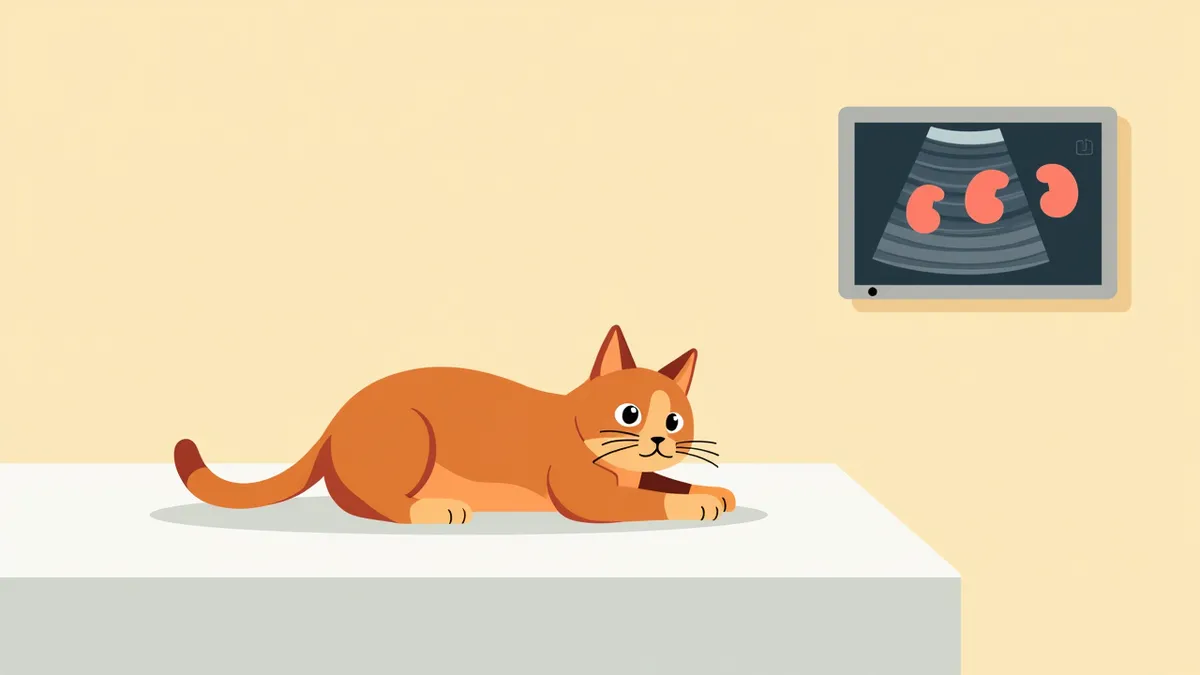
A veterinarian examining a cat's kidneys using ultrasound.
Feline polycystic kidney disease (PKD) is a hereditary chronic kidney disease characterized by the formation of multiple cysts within the kidneys. - Cyst formation: Genetic factors trigger apoptosis (programmed cell death) in the renal parenchyma, and the proliferation of cyst epithelial cells leads to the development of multiple cysts of varying sizes. - Decline in kidney function: As the kidney’s filtration capacity decreases, waste products such as uremic toxins accumulate in the body. - Chronic progression: Persian cats often appear normal as kittens, with kidney enlargement and chronic kidney disease (CKD) becoming apparent only in adulthood, making early detection key to effective management. - Breed predisposition: The condition is primarily reported in Persian-related breeds, though cysts have also been identified in some other breeds, including Siberians. - Importance of early management: It is advisable to identify the disease through regular check-ups even before symptoms appear.

What are the main causes of this disease?
Feline polycystic kidney disease (PKD) is a genetic disorder caused by gene mutations. However, the exact cellular changes in the kidneys that lead to cyst formation have not yet been fully elucidated. - Gene mutations: The leading theory suggests that genetic mutations trigger apoptosis in the renal parenchyma, followed by the proliferation of cystic epithelial cells, resulting in cyst formation. In Siberian cats, mutations in the PKD2 (polycystin 2) gene have been reported. - Inheritance pattern: In Persian cats, the condition is inherited in an autosomal dominant manner, meaning there is approximately a 50% chance of transmission to offspring if one parent is a carrier. - Breed predisposition: The disease is particularly common in certain breeds, with up to 40% of Persian cats known to be carriers. - Need for preventive testing: Genetic testing prior to adoption can help assess the risk in advance. - Importance of early intervention: Test results enable the development of an early management plan.
A diagram illustrating the genetic pathway of polycystic kidney disease in cats

What are the main symptoms?

In the early stages of feline polycystic kidney disease, there are usually no noticeable symptoms. However, as the cysts grow, the following signs may appear: - Increased urination and thirst: Your cat will drink more water and use the litter box more frequently. - Weight loss: Muscle mass decreases, leading to noticeable weight loss. - Decreased appetite: Your cat may show less interest in treats and eat smaller amounts of food. - Recurring vomiting: As the kidneys struggle, nausea and frequent vomiting can occur. - Lethargy: Your cat may sleep more than usual and show a sudden drop in activity levels, which is often due to declining kidney function.
A daily scene of a cat with access to water and a litter box.

Signs Requiring Immediate Veterinary Visit

If your cat suddenly loses its appetite, experiences repeated vomiting, or shows a sharp increase in water consumption, these are signs of rapidly worsening kidney function. This condition can lead to acute kidney failure, so it’s essential to consult a veterinarian immediately.

What is the accurate diagnostic method?

Feline polycystic kidney disease is most accurately diagnosed through ultrasound examination. - Ultrasound examination: This allows for precise assessment of the size, number, and location of cysts. - Blood tests: These check kidney function markers, specifically blood urea nitrogen (BUN) and creatinine levels. - Urinalysis: This evaluates urine concentration and checks for the presence of protein. - Genetic testing: This enables breed-specific genetic risk assessment prior to adoption. - Comprehensive evaluation: Combining multiple tests provides an accurate understanding of the disease's progression.
A veterinarian performing an abdominal ultrasound on a cat.

What are the treatment methods?

While polycystic kidney disease cannot currently be cured, we can manage symptoms and slow disease progression. Treatment is approached in stages:
Hydration: We encourage increased water intake and provide intravenous fluids when necessary.
Dietary Management: We recommend a diet low in protein, phosphorus, and sodium. Canned food is often beneficial due to its higher moisture content.
Medication: We may prescribe medications to control high blood pressure, protect kidney function, and suppress nausea or vomiting.
Regular Monitoring: We periodically check kidney function through blood and urine tests.
A scene showing a cat eating canned food with medicine placed nearby.

Comparison of Management Strategies by Disease Stage

ItemMain symptomsMain treatmentPrognosis
Early (Stage 1)No symptoms, small cystsRegular checkups, dietary managementRelatively favorable with early management
Middle (Stage 2)Polyuria, weight loss, decreased appetiteDietary management, start medicationSurvival time varies greatly between individuals
Late (Stage 3)Vomiting, lethargy, hypertensionIntravenous fluids, medicationSurvival time may shorten as it progresses

The rate of disease progression and survival time vary greatly between individuals and depend heavily on the timing of diagnosis and treatment. Early diagnosis and management are recommended.

Essential Checks Before Adoption

When adopting cats of certain breeds (such as Persians or Siberians), be sure to review the results of genetic or ultrasound testing. If the results are positive, long-term care and associated costs will be required, so it’s important to carefully consider these factors in advance.

Reviewed by a veterinarian

Dr. Tony — Punnawat Phongkittirak

Dr. Tony — Punnawat Phongkittirak

Veterinarian

A veterinarian who majored in veterinary medicine at Khon Kaen University, Thailand, and completed the IVSA program at North Carolina State University in the United States. Drawing on clinical experience at animal hospitals, he works in the pet healthcare field and is dedicated to building a digital care environment that connects pet parents with veterinarians.

Frequently Asked Questions

Is feline polycystic kidney disease hereditary?
Yes, it is a genetic disorder. In Persian cats, it is inherited in an autosomal dominant pattern, meaning that if one parent is a carrier, there is approximately a 50% chance of passing it on to their offspring.
Is genetic testing necessary before adoption?
Yes, it is particularly common in Persian cats and has also been reported in Siberians and other breeds, so genetic testing and ultrasound screening are recommended before adoption.
How should I manage my pet’s diet?
We recommend a low-protein, low-phosphorus diet. Canned food is beneficial for increasing water intake, so we recommend it, and always ensure fresh water is available for your pet to drink.
Is your cat suffering from this condition?
Early management can minimize discomfort. If symptoms worsen, pain and discomfort may occur, so regular check-ups are important.
How long do they live?
Survival times vary greatly from pet to pet and depend heavily on the stage at diagnosis and the treatment approach. Early detection and proper management can lead to a relatively longer survival period, but if the condition progresses to a later stage, the survival time may be shorter.

Share

Related Guides

References

[1] Kirk, C. W., & Bunch, S. D. (2020). Feline Polycystic Kidney Disease: A Comprehensive Review. Journal of Feline Medicine and Surgery, 22(5), 456–468.

[2] The Cat, Clinical Medicine and Management, 2nd Edition. (2021). Chapter 35: Renal Diseases. Elsevier Health Sciences.

[3] American Association of Feline Practitioners (AAFP). (2022). Feline Chronic Kidney Disease Guidelines. Journal of Feline Medicine and Surgery, 24(1_suppl), S1–S35.

This information is based on veterinary literature and does not replace diagnosis or treatment. Please consult a veterinarian for specific health concerns.

Metapet Co., Ltd. | CEO: Park Sung-yong | Business Reg. No. 417-88-02562 | Seoul, South Korea | Customer Center

Feline Polycystic Kidney Disease (PKD): Genetics to Management | Meongsiljang