

Why Do Cats Sit on Keyboards? Is It to Get Attention or for Warmth?
Cats sit on keyboards for instinctual reasons such as seeking warmth, attracting attention, or marking their territory. Rather than forcibly shooing them away, it is more effective to provide them with an alternative space.
Why Do Cats Sit on Keyboards?
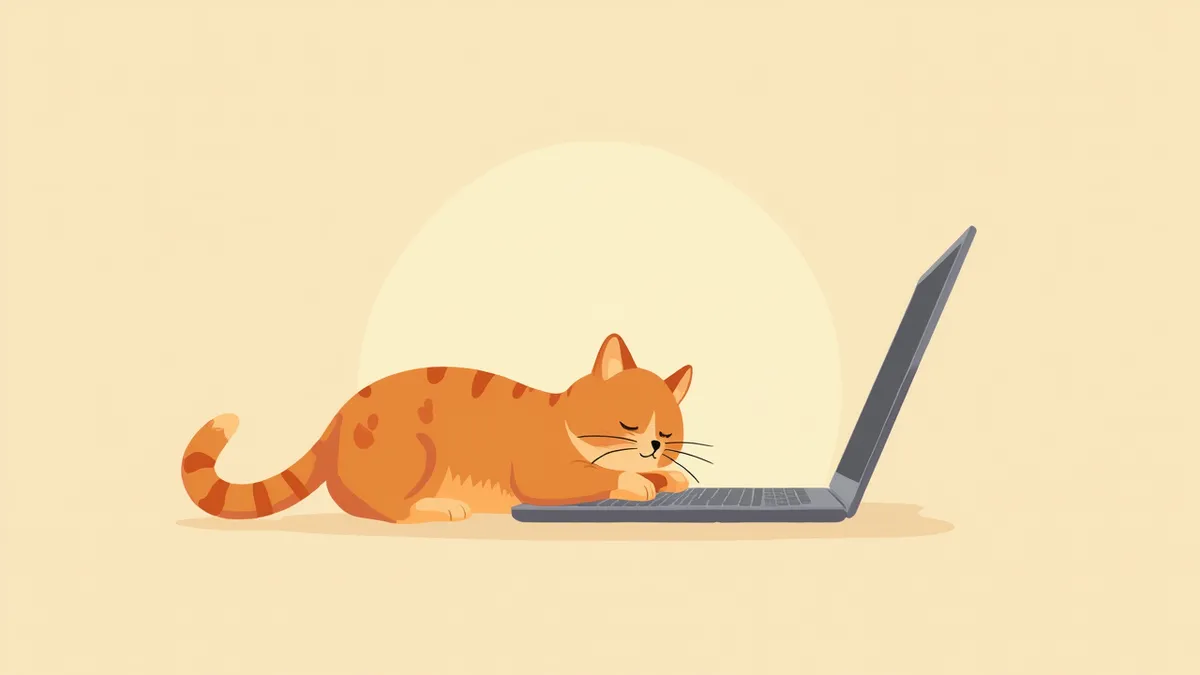
Reason 1: Keyboards Are Warm
Reason 2: They Want to Attract Your Attention

Reason 3: They Are Marking Their Territory with Scent
Comparing the Hidden Reasons Why Cats Sit on Keyboards
Quick Comparison of Causes and Responses by Situation
| Item | Seeking Warmth | Demanding Attention | Territorial Marking |
|---|---|---|---|
| When it mainly appears | Dawn, evening, winter | When the owner is focused for a long time | When an unfamiliar object is placed |
| Behavioral features | Curls up and sleeps | Walks over you and meows | Rubs cheeks and chin |
| What the owner should do | Provide a heated cushion | Short play sessions | Leave it as is |
| Discipline needed | False | False | False |
All three are normal behaviors, so adjusting the environment takes priority over discipline.
When Behavioral Assessment Is Needed
Sitting on the keyboard itself isn’t a problem, but if the behavior suddenly increases in frequency or your pet starts crying and scratching at the keyboard when you’re away, it could be a sign of separation anxiety. Additionally, if your pet chews on electrical cords or chargers in addition to the keyboard, it may indicate pica or stress, and a consultation with a veterinarian is recommended.
5 Effective Solutions
What to Avoid
While spraying water or using loud noises to intimidate may seem effective in the short term, it can damage the bond with your owner in the long run and lead to stress-related conditions such as cystitis or excessive grooming. The American Association of Feline Practitioners (AAFP) also clearly does not recommend punishment-based training.
Reviewed by a veterinarian

Dr. Tony — Punnawat Phongkittirak
VeterinarianA veterinarian who majored in veterinary medicine at Khon Kaen University, Thailand, and completed the IVSA program at North Carolina State University in the United States. Drawing on clinical experience at animal hospitals, he works in the pet healthcare field and is dedicated to building a digital care environment that connects pet parents with veterinarians.
Reviewed 2026-04-28
Frequently Asked Questions
Should I discipline my cat when it sits on the keyboard?
Could the heat from a laptop be harmful to my cat’s health?
My pet keeps stepping on the keyboard and causing typos. Is there a solution?
My new kitten is suddenly obsessed with the keyboard. Why?
Is the same reason why they climb on top of the monitor instead of the keyboard?
Share
Related Guides

Primary vs. Secondary Veterinary Hospitals: A Comparison
5 Easy-to-Raise Cat Breeds for First-Time Owners — Grooming Difficulty Comparison

Top 7 Short-Legged Dog Breeds

Dog Seasonal Parasite Prevention Strategy FAQ — Key Points Every Pet Owner Must Know

Canine Lung Fluke FAQ — Key Information Every Pet Owner Should Know

Dog Lice Infestation FAQ — Key Information Pet Owners Must Know

Dog Echinococcus FAQ — Key Information Every Owner Must Know

Frequently Asked Questions on Drug Resistance in Dog Parasite Preventives — Key Information Pet Owners Must Know
Cat Tapeworm (Tapeworm) Frequently Asked Questions Q&A — Key Information Pet Owners Must Know

Cat Fecal Parasite Testing Methods FAQ — Key Information Every Pet Owner Should Know
References
[1] Bradshaw, J. W. S., Casey, R. A., & Brown, S. L., The Behaviour of the Domestic Cat, 2nd Ed, CABI, 2012
[2] Turner, D. C., & Bateson, P., The Domestic Cat: The Biology of its Behaviour, 3rd Ed, Cambridge University Press, 2014
[3] Ellis, S. L. H. et al., AAFP and ISFM Feline Environmental Needs Guidelines, Journal of Feline Medicine and Surgery, 2013