

Cat Grooming Frequency and Its Meaning
Here’s a breakdown of how much time cats normally spend grooming each day, along with the health signals that excessive or insufficient grooming can send.
Cat Grooming Frequency: How Much Is Normal Per Day?
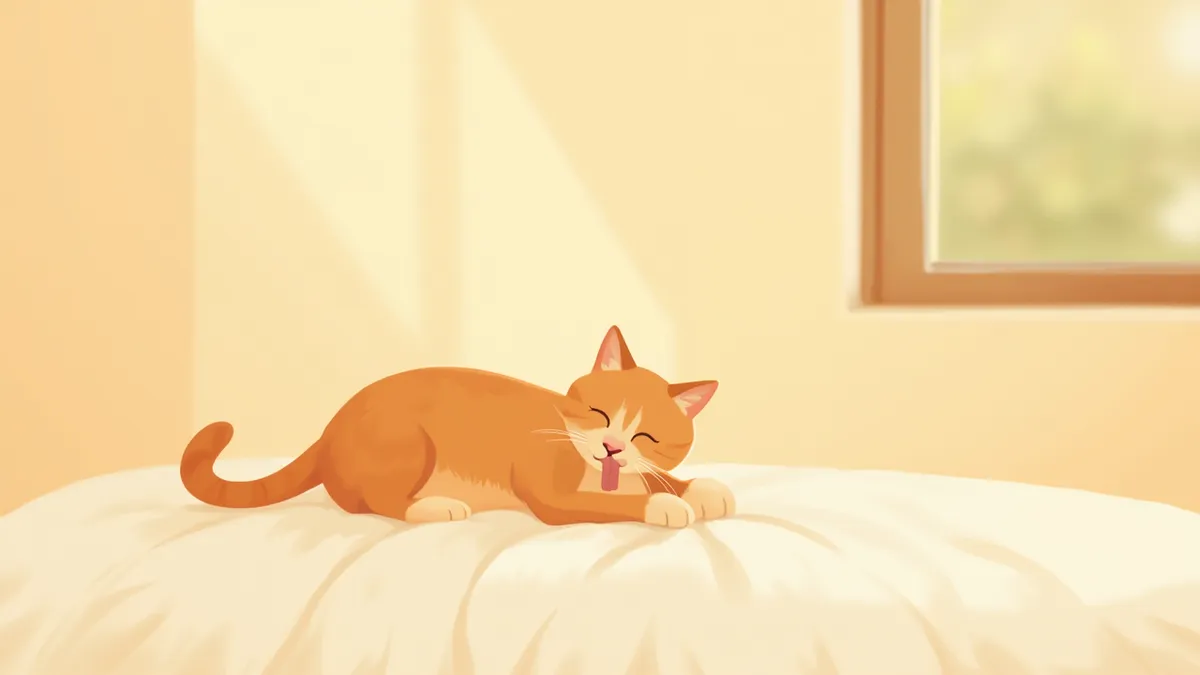
The Meaning of Grooming for Cats
Comparison of Normal, Excessive, and Insufficient Grooming
| Item | Normal grooming | Excessive grooming | Insufficient grooming |
|---|---|---|---|
| Daily time | About 1 hour | Markedly increased and persistent compared to usual | Markedly decreased compared to usual |
| Coat condition | Glossy and even | Partial hair loss·short-cut hair | Matting·clumping·dandruff |
| Skin condition | No wounds | Redness·saliva marks·scabs | Oily·odor |
| Main causes | Instinct·habit | Allergies·stress·pain | Old age·obesity·disease |
Do not judge based on a single indicator; observe two or more together
Checklist for Signs of Over-grooming
When to Visit the Vet Immediately
If you notice any of the following signs, it could indicate a skin issue, internal illness, or behavioral disorder. Please consult a veterinarian if symptoms persist for more than 24 hours or worsen. - Licking the same area repeatedly to the point of bleeding - Noticeably expanding hair loss or spreading to multiple areas - Completely stopping grooming, resulting in matted fur (a sign of pain or discomfort) - Accompanied by vomiting, decreased appetite, or weight loss
Health Signals Sent by Insufficient Grooming

Management Tips for Owners
If Hairballs Are Frequent
Hair swallowed during grooming can clump together in the stomach to form a hairball. While occasional hairball expulsion is normal, you should consult your veterinarian if the frequency suddenly increases or if your pet repeatedly dry-heaves without vomiting, as these may indicate reduced gastrointestinal motility or the presence of a foreign body. The most fundamental prevention method is brushing to reduce the amount of hair ingested. Additionally, hairball-control diets, fiber-rich treats, and adequate water intake can provide supplementary support.
Reviewed by a veterinarian

Dr. Tony — Punnawat Phongkittirak
VeterinarianA veterinarian who majored in veterinary medicine at Khon Kaen University, Thailand, and completed the IVSA program at North Carolina State University in the United States. Drawing on clinical experience at animal hospitals, he works in the pet healthcare field and is dedicated to building a digital care environment that connects pet parents with veterinarians.
Reviewed 2026-04-26
Frequently Asked Questions
My cat grooms itself all day long. Is that normal?
Do kittens need to be groomed as often as adult cats?
What does it mean when my cat licks me?
I often see clumps of fur. Should I take my pet to the vet?
How can you tell if your pet is over-grooming due to stress?
Share
Related Guides

Top 5 Medicated Dog Shampoos — For Pyoderma and Bacterial Infections

Veterinarian-Recommended Top 5 Medicated Shampoos for Canine Yeast Dermatitis — Relieves Itching and Greasiness
Top 5 Medicated Cat Shampoos Recommended by Veterinarians — Fungal Dermatitis and Fungal Care

If Your Dog Is Anxious After Moving — How to Reduce Environmental Change Stress
Why Is My Puppy Eating Poop? — Q&A on Coprophagia Causes and When to See the Vet

Why Does Your Dog Tremble in the Car? — Causes of Car Anxiety and Motion Sickness, and Adaptation Training
What is dog pheromone therapy? — A guide to calming puppy anxiety and usage instructions

What Is Behavioral Enrichment for Dogs? Practical Strategies to Reduce Problem Behaviors

Is medication really necessary for correcting puppy behavior? — How do the effects and side effects differ?
My Cat Panics at the Vet — How to Reduce Veterinary Fear
References
[1] Eckstein, R.A. & Hart, B.L., The organization and control of grooming in cats, Applied Animal Behaviour Science, 2000
[2] Overall, K.L., Manual of Clinical Behavioral Medicine for Dogs and Cats, Elsevier, 2013
[3] Ettinger, S.J. et al., Textbook of Veterinary Internal Medicine, 8th Edition, Elsevier, 2017