Like
Share
멍실장
고양이 그르렁 vs 야옹 차이, 같은 소리 아닌가요?

Cat Purr vs. Meow: Aren't They the Same Sound?

Brain & CognitionQ&AMeongsiljang Veterinary Advisory Board

A cat’s purr and meow differ completely in both vocal structure and meaning. Here’s a guide to distinguishing the emotions and health signals associated with each type of sound.

Cat Purr vs. Meow: What’s the Difference?
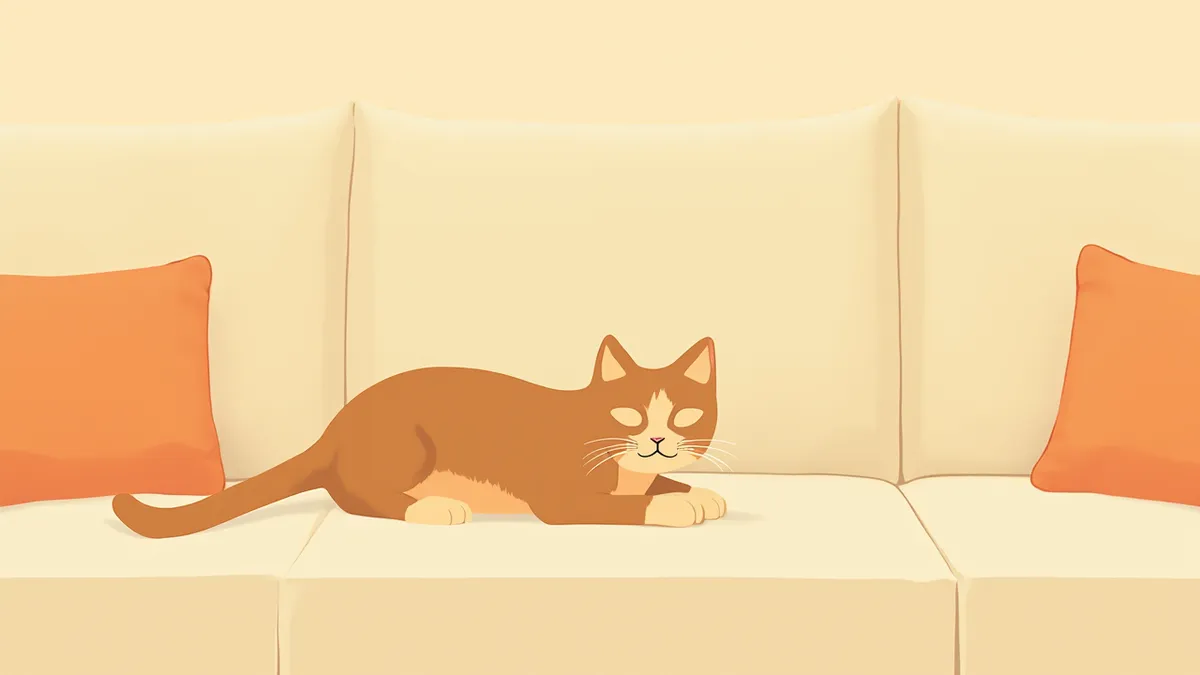
A Thai cat purring comfortably on the sofa
Purring and meowing are two distinct vocalizations that differ in how they’re produced and who they’re directed toward. What truly matters is understanding who the cat is addressing and why. Purring is a continuous sound generated by low-frequency, self-sustaining vibrations of the larynx (the area around the vocal folds) while the mouth is closed. Recent research has revealed that a specialized connective tissue structure in the cat’s short vocal folds produces these low-frequency vibrations. In contrast, meowing is a sound made with the mouth open and is almost exclusively a communication signal directed at humans. Since even the same cat may alternate between these two sounds depending on the situation, it’s essential to interpret the context rather than just the sound itself to accurately understand the cat’s emotions and health signals.

The Mechanisms Behind the Sounds Are Different

Purring is the sound produced when the vocal fold folds and surrounding structures in the larynx vibrate at low frequencies. Recent research suggests that cats can purr through a "self-sustained" mechanism, where low-frequency vibrations continue on their own without significant muscle effort, thanks to connective tissue pads within their short vocal folds. This allows purring to continue relatively long and continuously, even with the mouth closed. On the other hand, meowing is an "open-mouth" vocalization, where air from the lungs passes through the vocal cords and out through an open mouth. Meows are typically short and do not continue as long as purrs. Since the physical mechanisms behind these sounds differ, their meanings inevitably differ as well.

Purr vs. Meow: A Quick Comparison

ItemPurrMeow
Vocalization methodSelf-sustained vibration of the vocal folds with the mouth closedPasses through the vocal cords with the mouth open
DurationContinuous for a few seconds to a few minutesShort and single
Inhale/exhaleBoth possibleMainly on exhale
Main targetItself, mother, guardianAlmost always humans (rare between adult cats)
Typical meaningComfort, self-soothing, requests (also possible when in pain or afraid)Requests, greetings, protests
Pathological signalAlso possible during pain, fear, or respiratory distressExcessive crying can be a clue to illness

The table shows general tendencies; individual variation is large.

Purring Doesn’t Just Mean “Happy
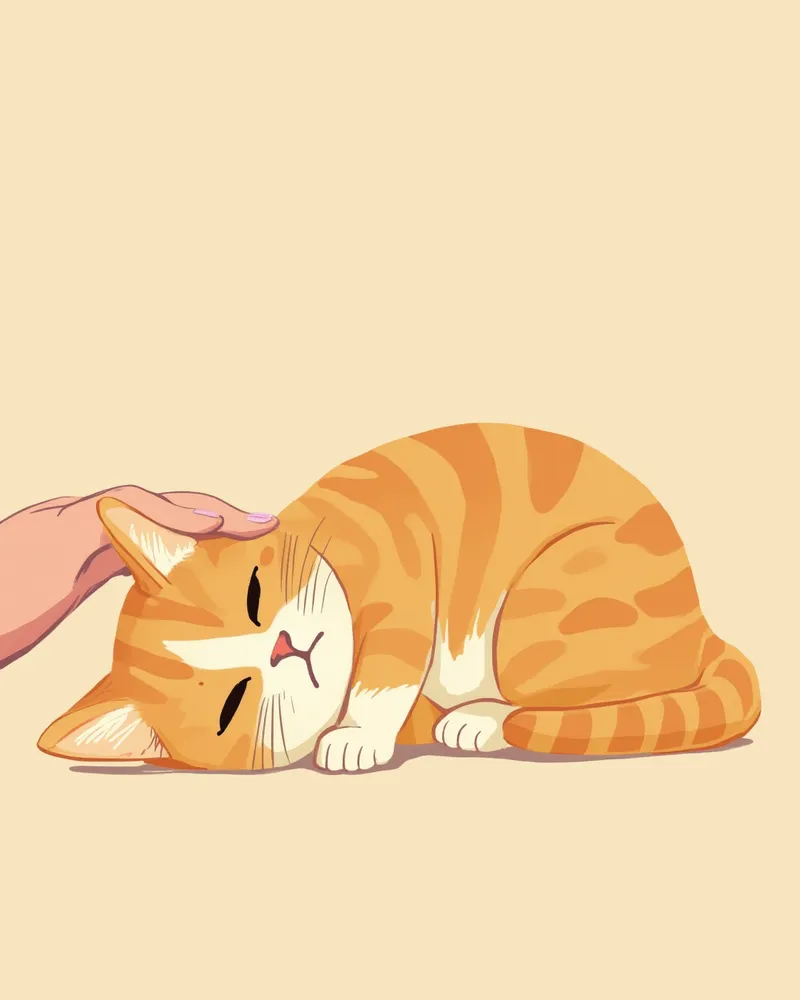
Purring isn’t just a sign that a cat is feeling good. According to veterinary textbooks, cats purr not only when they’re content but also during stressful moments, such as when they’re in pain or afraid. As a result, purring is seen as a self-soothing behavior that also serves to seek contact and care. In fact, cats quickly learn to elicit human responses to obtain food and attention, and they may use purring to request care. Therefore, rather than assuming a cat is happy based solely on its purring, it’s important to observe its posture, ears, and tail together to accurately interpret its emotions.
A cat that purrs contentedly while enjoying gentle strokes.

Meowing Evolved to Communicate with Humans

Adult cats rarely meow at each other. Research suggests that meowing is primarily a vocalization directed at humans, considered a product of domestication. Over time, domestic cats have refined meowing as a communication tool to elicit responses from their caretakers. In other words, meowing is more of a customized signal aimed at people rather than other cats. The meaning varies depending on tone and context, such as a short greeting meow, a drawn-out demanding meow, or a low, grumbly meow of dissatisfaction. Domestic cats have been reported to use over 20 distinct vocalizations, and even the same sound can carry different meanings depending on the situation.

When Vocal Changes Mean It’s Time to See the Vet

Changes in your cat’s vocalizations can signal an underlying health issue. If your cat’s meow suddenly becomes hoarse, if they cry out repeatedly throughout the night, or if you hear a growling sound with each breath, it’s not just an emotional expression. In cats over 10 years old, excessive nighttime vocalization is often linked to hyperthyroidism, high blood pressure, or cognitive decline. If your cat’s purr sounds rougher than usual or they appear to be struggling to breathe, there may be an underlying heart or respiratory condition, and veterinary care is needed within 24 hours.

Emotion Checklist: Reading Your Cat’s Sounds
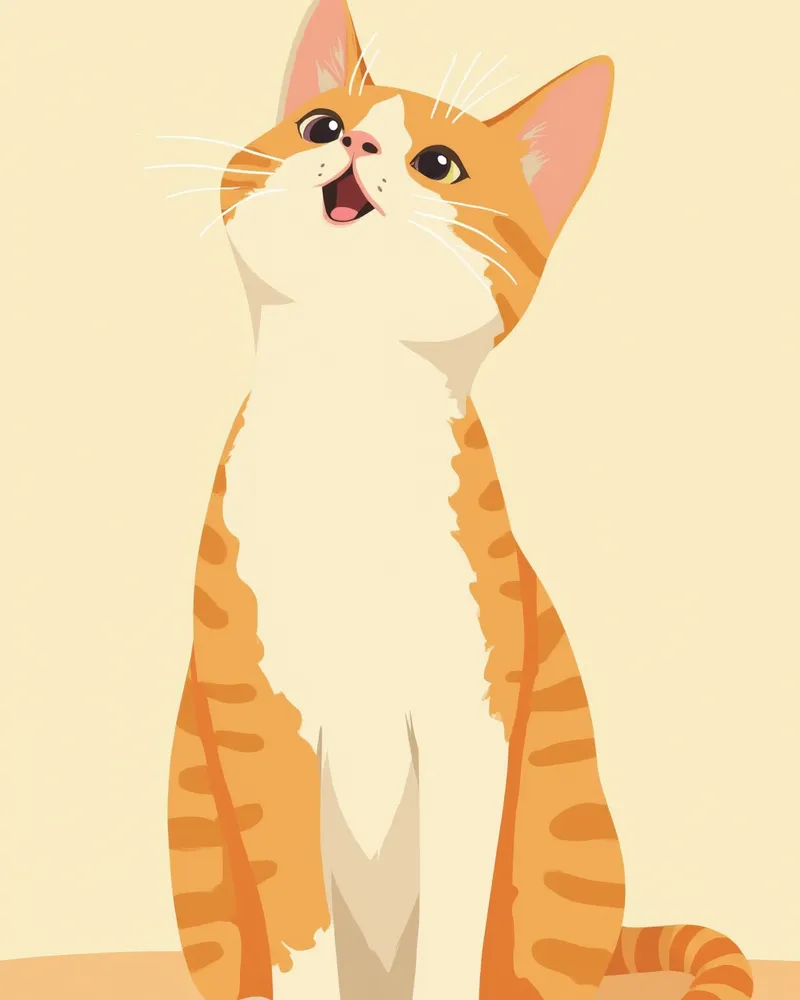
Understanding the context makes a cat’s vocalizations much clearer. - Short, high-pitched meow: A friendly greeting or a way to check on you - Long, drawn-out meow: A request for food, treats, or to have a door opened - Low, rumbling meow: Discomfort or protest, often heard when being held against their will - Growling with mouth open: Rare, but can signal pain or difficulty breathing - Quiet purring + relaxed body: A sign of contentment and affection - Solicitation purr (with high-pitched elements): An active demand for food Don’t rely on vocalizations alone; also observe ear position, tail movement, and pupil size.
A cat perking up its ears and looking up at its owner

Observation Tips You Can Do at Home

Recording changes in your pet’s vocalizations can be very helpful during veterinary visits. Use your smartphone to capture 10–20 seconds of video whenever you notice unusual sounds. Note the time of day and the context (e.g., before or after meals, during bathroom breaks, or before sleep) to help your veterinarian distinguish between neurological, respiratory, and behavioral issues. If nighttime vocalizations become more frequent or prolonged, first check your home environment: lighting, temperature, litter box cleanliness, and feeding intervals. While environmental stress can increase vocalization, if it persists for more than two weeks, a health checkup is recommended.

Reviewed by a veterinarian

Dr. Tony — Punnawat Phongkittirak

Dr. Tony — Punnawat Phongkittirak

Veterinarian

A veterinarian who majored in veterinary medicine at Khon Kaen University, Thailand, and completed the IVSA program at North Carolina State University in the United States. Drawing on clinical experience at animal hospitals, he works in the pet healthcare field and is dedicated to building a digital care environment that connects pet parents with veterinarians.

Frequently Asked Questions

My cat is purring but also shaking its body. Is this normal?
A purr when your cat is comfortable is a gentle vibration that indicates relaxation. However, if your cat’s entire body is trembling or their breathing appears rapid, it could be a sign of pain, hypothermia, or a neurological issue, and prompt veterinary care is necessary.
Is it normal for a cat that rarely meows?
Yes, the frequency of meowing varies greatly depending on breed and personality. If a normally quiet cat suddenly starts meowing a lot, or a typically chatty cat suddenly goes silent, that change is an important signal.
My cat meows loudly every night, keeping me from sleeping. What should I do?
Try starting with 15 to 20 minutes of playtime in the evening, a small bedtime snack, and a calm, well-lit environment. For pets aged 10 and older, thyroid and blood pressure tests are essential.
Your cat’s purr sounds rougher than usual.
The quality of your pet’s cough or breathing sounds may change in cases of laryngeal or upper respiratory inflammation, or in the early stages of heart disease. If you notice harsh breathing sounds or rapid, labored respiration, it could be an emergency—please seek veterinary care immediately.
Your cat is silently meowing with its mouth open. Is this a problem?
This behavior, often called a "silent meow," is usually normal and a sign of affection. However, if your cat suddenly stops vocalizing when it normally would, it's important to check for any issues with the vocal cords or larynx.

Share

Related Guides

References

[1] Turner DC, Bateson P, The Domestic Cat: The Biology of its Behaviour, 3rd Ed, Cambridge University Press, 2014

[2] Bradshaw JWS, The Behaviour of the Domestic Cat, 2nd Ed, CABI, 2012

[3] Schötz S et al., A phonetic pilot study of vocalisations in three cats, Proceedings of Fonetik, 2016

This information is based on veterinary literature and does not replace diagnosis or treatment. Please consult a veterinarian for specific health concerns.

Metapet Co., Ltd. | CEO: Park Sung-yong | Business Reg. No. 417-88-02562 | Seoul, South Korea | Customer Center

Cat Purr vs. Meow: What Each Sound Really Means | Meongsiljang